Some animals move by jumping or hopping instead of walking or running. Hop animals names include kangaroo, rabbit, frog, grasshopper, hare, and wallaby. These animals use strong legs to bounce forward on land or leap in water. Their movement helps them travel fast, escape danger, or reach food. Pictures make it easy to spot how each one moves and connects names to action.
Learning hop animals names helps students talk clearly about animal motion in science, reading, or picture-based English lessons.
List of Hop Animals Names
These animals move by hopping, bouncing, or leaping as their main form of movement. Below is a full list of hop animals names that learners can use to improve vocabulary and understand animal movement.
- Frog
- Rabbit
- Kangaroo
- Grasshopper
- Cricket
- Hare
- Toad
- Wallaby
- Jumping Spider
- Jerboa
- Springbok
- Tree Frog
- Bush Baby
- Flea
- Locust
- Kangaroo Rat
- Hopping Mouse
- Galago
- Lemur
- Antelope
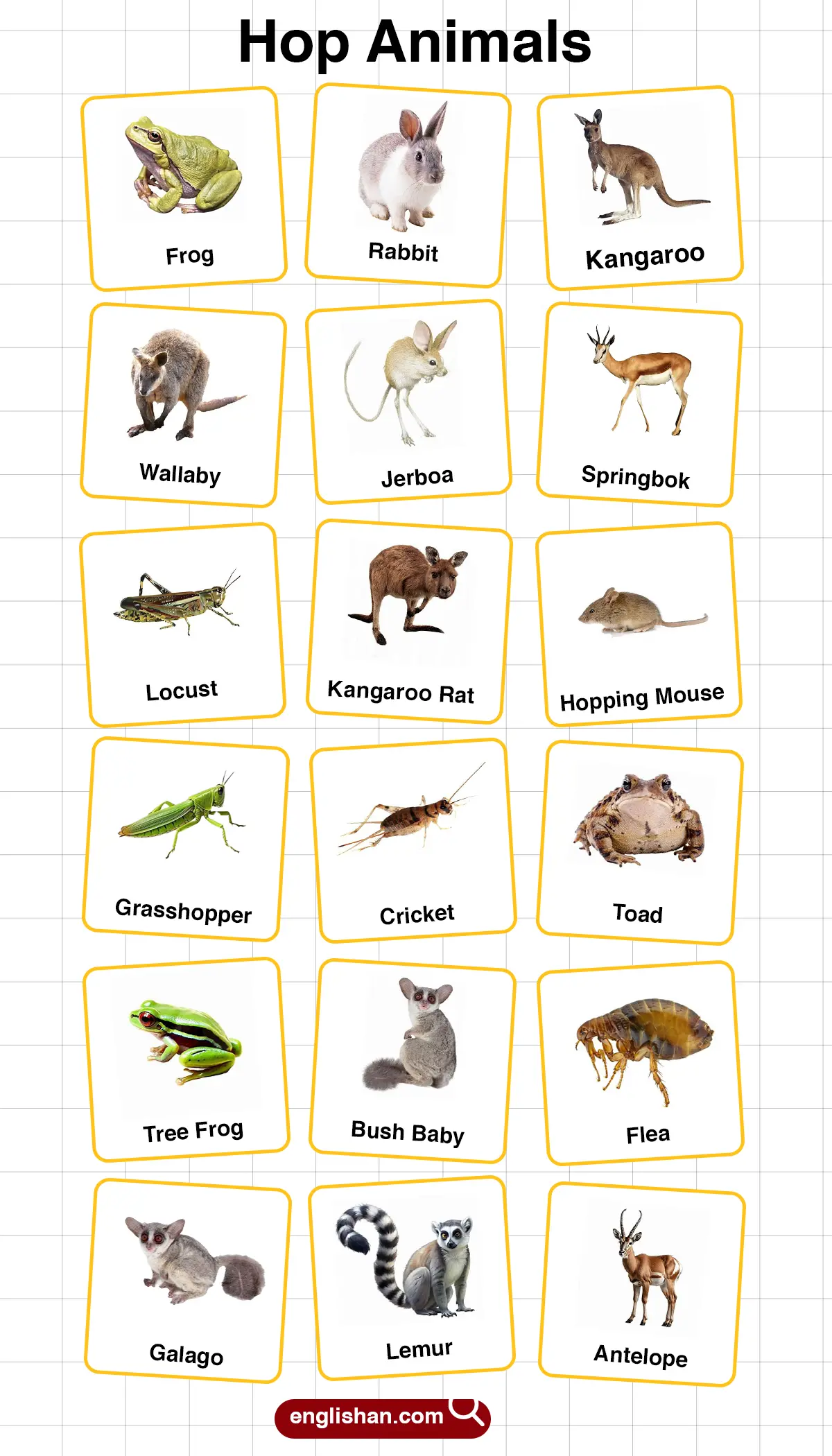
Some animals hop, while others crawl close to the ground. You can check the difference in Crawl Animals Names.
Animals That Move by Jumping
These animals are known for their jumping motion. Some use strong legs to hop on land, while others leap between trees or in tall grass.
Insects That Hop or Jump
Below is a list of hopping insects. They often jump to escape danger or reach food.
- Grasshopper: Uses strong hind legs to leap through grass and crops.
- Cricket: Known for its quick, springy jumps and loud sounds at night.
- Flea: Tiny insect that can jump up to 200 times its body length.
- Locust: Looks like a grasshopper and moves in swarms using powerful hops.
- Jumping Spider: Uses quick jumps to catch prey or move from leaf to leaf.
Amphibians Known for Their Jumping
These creatures live near water and are natural jumpers.
- Frog: Uses its strong back legs to leap from pond to pond.
- Toad: Similar to frogs but usually hops in short, slow movements.
- Tree Frog: Lives in trees and jumps between branches using sticky feet.
Jumping Mammals
Mammals that hop use strong leg muscles and tail support to move fast.
- Rabbit: Known for quick hopping in gardens and forests.
- Hare: Larger than rabbits and hops faster in open fields.
- Kangaroo: Large marsupial that uses strong legs and tail to hop long distances.
- Wallaby: Smaller cousin of the kangaroo, also hops but over shorter ranges.
- Kangaroo Rat: Small desert rodent with strong legs for quick hopping.
- Hopping Mouse: Tiny rodent that bounces quickly across dry areas.
- Jerboa: Has long legs and tail, hops in a zigzag motion in deserts.
- Bush Baby: Small primate that jumps between trees using strong legs.
- Galago: Another name for bush baby, known for fast, springy jumps.
- Lemur: Uses leaping to move between trees in Madagascar.
- Antelope: Some species use bouncing movement, called “pronking,” to escape predators.
- Springbok: Known for its high and fast hops during running, especially in Africa.
Examples of Jumping Animals With Names
Let’s look at more categories and examples to better understand how animals jump in their natural environment. These examples help you learn the names of jumping animals clearly.
Small Jumping Animals in Nature
These creatures are tiny but powerful jumpers.
- Flea
- Hopping Mouse
- Jumping Spider
- Bush Baby
- Cricket
- Grasshopper
They use jumping to avoid threats or catch prey.
Big Hopping Animals in the Wild
Large animals that rely on hopping for long-distance travel or speed.
- Kangaroo
- Wallaby
- Springbok
- Antelope
- Hare
These animals live in open spaces and use powerful jumps to move quickly.
Farm Animals That Can Hop
These animals might not always be known for hopping, but they do use it in bursts.
- Rabbit
- Hare
They often jump to play, escape, or search for food in farmland areas.
Purpose of Hopping Animals
Here are some reasons why animals hop:
- Speed: Hopping helps escape quickly from danger.
- Energy Saving: Some animals use bouncing to travel with less energy.
- Survival: Jumping helps animals stay hidden or unpredictable.
- Adaptation: Species like kangaroos evolved to hop across open land.
- Feeding: Some animals hop to reach food or hunt prey.
Conclusion
You’ve learned hop-moving animals like frogs and kangaroos with pictures. This builds vocabulary and helps beginners understand animal movement through easy examples.
Master all animals names in English and build strong vocabulary with this complete post.
FAQs About Hop Animals
These animals depend mostly on hopping to get around:
Kangaroo
Rabbit
Flea
Grasshopper
Jerboa
Hopping Mouse
Not exactly. Some frogs leap far, while others do short, quick hops depending on their body size and legs.
Yes. Hopping usually means moving with both feet together in a steady pattern. Jumping can be sudden and single.
You May Also Like
- Domestic Animals
- Omnivores Animals
- Shy Animals
- Desert Animals
- Extinct Animals
- Farm Animals Names for Kids
- Animals that Start with K
- Insects Names in English
- Animals that Start with J