Learning leaves names is helpful for understanding trees, herbs, and edible plants. Each leaf has its own shape, texture, and purpose. Knowing them improves your ability to describe plants clearly in English.
Many leaves are used in food, health, or decoration. Some are found on trees, others in kitchens or gardens. This article groups them by types, use, and region to help you recognize them easily.
List of Leaves Names in English
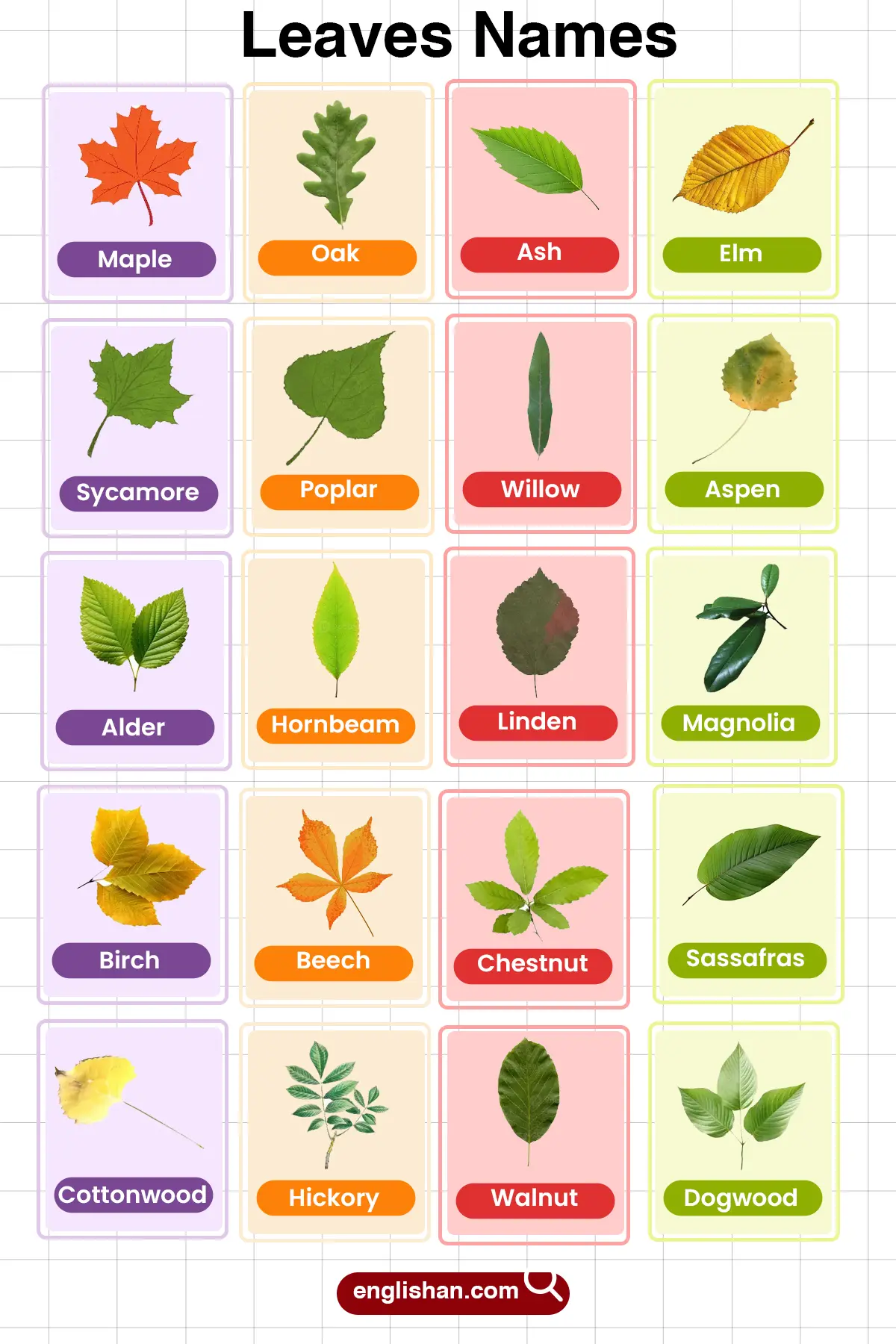
This list shows common leaf names in English from trees, plants, and herbs. It helps learners identify leaves by name and type. Useful for nature study, vocabulary building, and classroom activities. Simple terms are used for easy understanding.
- Maple
- Oak
- Ash
- Elm
- Birch
- Beech
- Chestnut
- Sycamore
- Poplar
- Willow
- Aspen
- Cottonwood
- Hickory
- Walnut
- Alder
- Hornbeam
- Linden
- Magnolia
- Dogwood
- Sassafras
- Ginkgo
- Eucalyptus
- Bamboo
- Cedar
- Fir
- Spruce
- Pine
- Redwood
- Cypress
- Palm
Tree Leaves Types and Examples
Tree leaves come in different forms. Below is a list of common types based on leaf shape and how trees grow.
Broadleaf Leaves
Broadleaf leaves are wide and flat. These trees often lose leaves in autumn. Below is a list of broadleaf tree types.
- Maple: Has lobed leaves that turn bright red or yellow in fall.
- Oak: Deeply lobed leaves with rounded or pointed tips.
- Birch: Small, triangular leaves with fine serrated edges.
- Beech: Smooth-edged, oval leaves with visible veins.
- Elm: Oval leaves with saw-toothed edges and strong midribs.
- Chestnut: Large, pointed leaves with sharp teeth on the sides.
- Sycamore: Broad leaves with three to five lobes and deep veins.
- Poplar: Triangular leaves with long stems that tremble in the wind.
- Willow: Long, narrow leaves with soft edges and drooping shape.
- Aspen: Rounded leaves that flutter due to flat stems.
- Cottonwood: Heart-shaped leaves with coarse teeth.
- Sassafras: Leaves shaped like mittens, some with three lobes.
- Ginkgo: Fan-shaped leaves with two lobes and smooth edges.
- Magnolia: Thick, glossy leaves with smooth or slightly wavy edges.
- Dogwood: Oval leaves with curved veins and soft tips.
- Linden: Heart-shaped leaves with serrated edges and fragrant flowers.
- Hornbeam: Ribbed leaves with sharp edges and a leathery feel.
- Alder: Round leaves with uneven edges and a shiny surface.
Needle Leaves Names
Needle leaves are thin, pointed, and stay on the tree year-round. Below is a list of trees with needle-shaped leaves.
- Pine: Long, slender needles grouped in clusters.
- Fir: Flat needles with smooth edges that don’t roll easily.
- Spruce: Sharp, square needles that are easy to roll between fingers.
- Cedar: Soft needles growing in spirals or clusters.
- Redwood: Short, flat needles arranged in two rows.
- Cypress: Scale-like or needle-shaped leaves that overlap tightly.
Forest Leaves List
Forests are home to many trees identified by their unique leaf shapes. Below is a list of common forest leaf types.
- Maple Leaf: Lobed with pointed tips and deep sinuses.
- Oak Leaf: Rounded or pointed lobes arranged along a central vein.
- Birch Leaf: Triangular with serrated edges and a sharp point.
These leaves help identify tree species found in temperate forests.
Common Edible Leaves
Many leaves are used in meals across different cultures. Below is a list of leaves commonly eaten in raw or cooked form.
- Spinach Leaf: Soft, round or arrow-shaped leaves high in iron and vitamins.
- Mustard Leaf: Large, green, and slightly peppery in taste.
- Lettuce Leaf: Light green, crisp or soft, used in salads and wraps.
- Cabbage Leaf: Thick and smooth, often forming tight, layered heads.
- Kale Leaf: Curly or flat with a tough texture and rich nutrients.
- Fenugreek Leaf: Small, clover-like leaves with a slightly bitter flavor.
- Arugula Leaf: Spiky edges and peppery taste used in salads and sandwiches.
- Collard Green Leaf: Large, sturdy leaves often used in southern cooking.
Popular Herb Leaf Names
Herbs are known for strong scents and flavors. Below is a list of herb leaves used in cooking and herbal remedies.
- Mint Leaf: Oval, bright green leaves with a cooling smell.
- Basil Leaf: Soft and sweet-smelling with a pointed tip.
- Thyme Leaf: Tiny, dark green leaves on woody stems.
- Oregano Leaf: Small, fuzzy, and strong-smelling; often dried.
- Dill Leaf: Feathery, thread-like leaves used in pickles and fish dishes.
- Cilantro Leaf: Flat and jagged, known for its strong aroma.
- Parsley Leaf: Curly or flat, used as garnish or in sauces.
Cooking Leaves Used in Meals
Some leaves are used during cooking for flavor but not eaten directly. Below is a list of such cooking leaves.
- Curry Leaf: Glossy and aromatic, added to hot oil in Indian dishes.
- Bay Leaf: Stiff and dry, added to stews and removed before eating.
- Pandan Leaf: Long and narrow, adds a sweet aroma to rice and desserts.
- Kaffir Lime Leaf: Shiny and double-lobed, used in Thai cooking.
- Perilla Leaf: Broad and flat with serrated edges, used in Korean cuisine.
Names of Special Leaf Shapes
Leaf shape affects how a leaf functions and is classified. Below is a list of common leaf structure types.
- Simple Leaf: A single, undivided blade on a stem, like mango or guava.
- Compound Leaf: A leaf divided into leaflets, like neem or tamarind.
This helps in identifying trees by how their leaves are built.
Regional Plant Leaves
Certain leaves are well known in specific regions for food, medicine, or tradition. Below is a list of regional leaves.
- Tulsi Leaf: Small, oval, and sacred in Indian culture, used in tea.
- Neem Leaf: Serrated and bitter, used in herbal health remedies.
- Mango Leaf: Long and leathery, often used in rituals and home décor.
- Guava Leaf: Oval with uneven edges, used in herbal teas.
- Jamun Leaf: Elliptical with shiny surfaces, linked to digestive benefits.
Conclusion
Learning leaves names builds useful English vocabulary for food, nature, and regional knowledge. Each leaf tells something about the plant it belongs to.
By knowing their shapes, names, and uses, you can describe plants more clearly in English. This makes it easier to talk about herbs, trees, and meals with confidence.
FAQs About Leaves Names
Broadleaf leaves are flat and wide, found on deciduous trees. Needle leaves are thin and pointed, found on evergreens like pine or fir.
Leaves like spinach, mustard, curry leaf, bay leaf, and basil are commonly used in cooking for flavor, aroma, or direct consumption.
You May Also Like