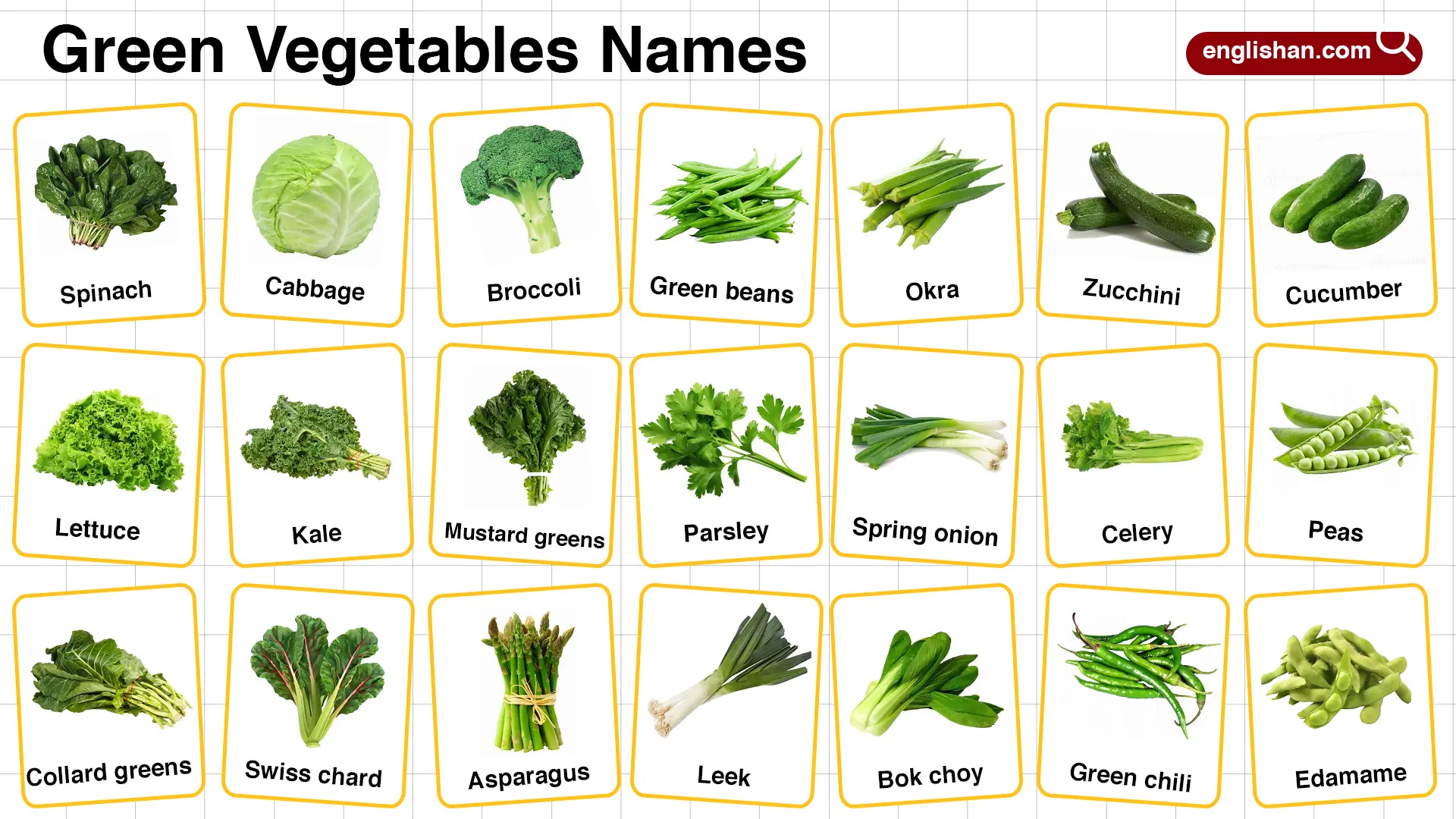
Learning the names of green vegetables helps students and beginners use the right English words for plants we eat. Examples include spinach, cabbage, and peas. These names are common in gardens, markets, and cooking. By making clear connections between words and pictures, learners can remember each vegetable better. This vocabulary list includes leafy, stem, and pod vegetables to help with daily conversations and school learning.
List of Green Vegetables Names
Here is a list of green vegetables names in English that are commonly used in homes, markets, and schools:
- Spinach
- Cabbage
- Broccoli
- Green beans
- Okra
- Zucchini
- Cucumber
- Lettuce
- Kale
- Mustard greens
- Parsley
- Spring onion
- Celery
- Peas
- Collard greens
- Swiss chard
- Green bell pepper
- Asparagus
- Leek
- Bok choy
- Green chili
- Edamame
- Brussels sprouts
- Arugula
- Watercress
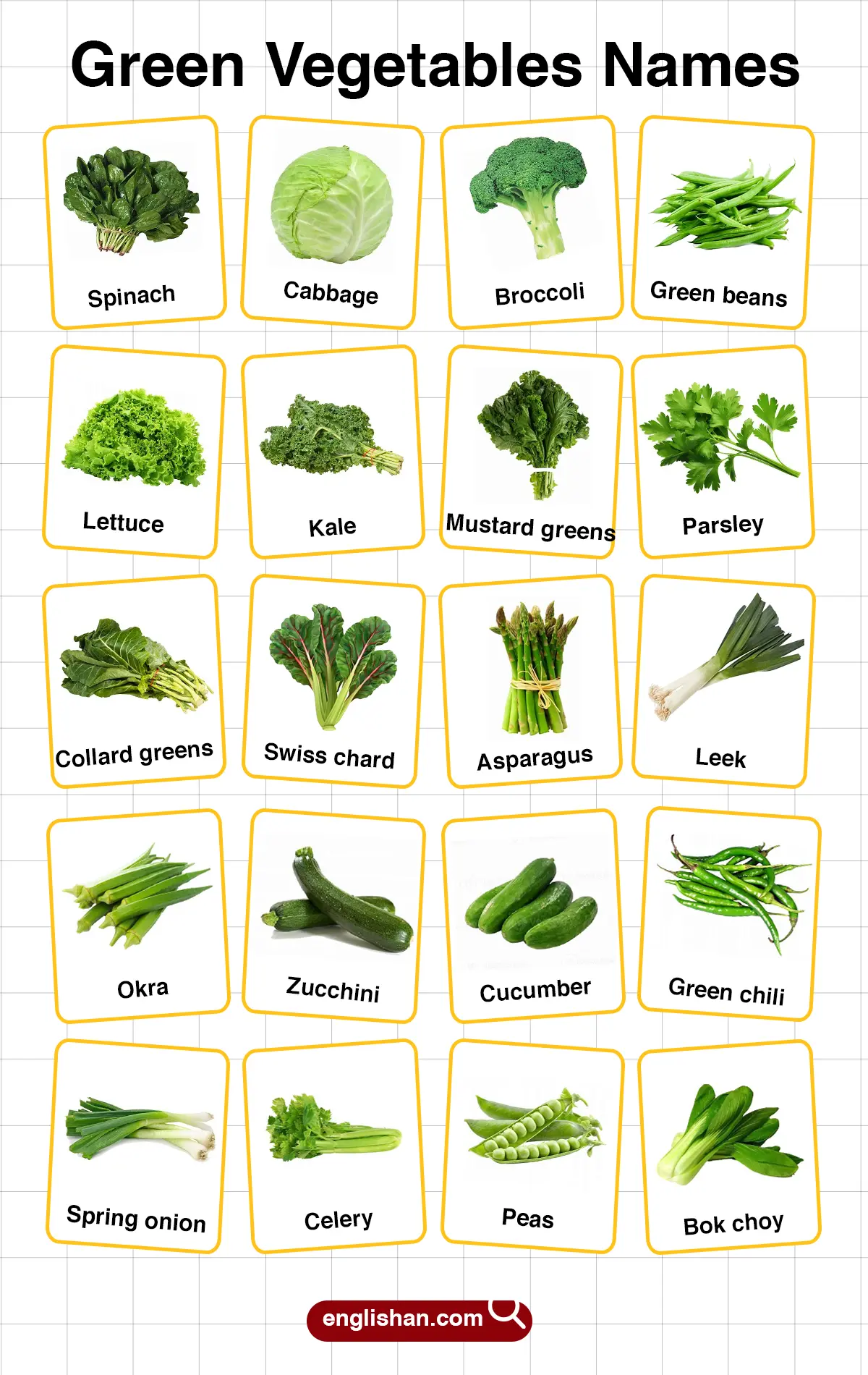
Types of Green Vegetables in English
Green vegetables come in different types based on their structure. Below is a categorized list with descriptions.
Leafy Green Vegetables
- Spinach: A soft, leafy green often used in salads and cooked dishes.
- Lettuce: Common in salads, it has light green leaves with a mild flavor.
- Kale: A curly or flat leaf vegetable known for its strong taste.
- Mustard greens: Have a sharp, spicy flavor and are used in cooked meals.
- Collard greens: Large, flat leaves with a thick texture and earthy taste.
- Swiss chard: A leafy green with colorful stems and mild-tasting leaves.
- Arugula: A peppery-flavored green often used in fresh salads.
- Watercress: Grows in water and has small round leaves with a tangy taste.
- Parsley: A leafy herb with a fresh, slightly bitter flavor.
- Cabbage: Dense, round leafy vegetable with thick green layers.
- Bok choy: A Chinese cabbage with white stalks and green leaves.
Pod and Bean Vegetables
- Green beans: Long, thin vegetables eaten whole, either cooked or steamed.
- Peas: Small green seeds that grow inside a pod, often used in soups.
- Okra: A ridged green pod used in cooking for its unique texture.
- Edamame: Young soybeans in the pod, commonly eaten as snacks or side dishes.
Stem and Shoot Vegetables
- Celery: Long green stalks with crisp texture, often eaten raw.
- Spring onion: Also called green onion, has a mild onion flavor and green stalks.
- Asparagus: Tall green shoots with soft tips, usually steamed or grilled.
- Leek: Looks like a large spring onion with a mild, sweet onion flavor.
Gourd and Fruit
- Zucchini: A green summer squash with soft skin, eaten cooked or raw.
- Cucumber: A watery green vegetable often used in salads and pickles.
- Green bell pepper: A mild-tasting, thick-skinned vegetable used in cooking.
Cruciferous and Spicy
- Broccoli: Tree-like green heads with thick stalks, commonly boiled or steamed.
- Brussels sprouts: Small round vegetables that grow in bunches on stalks.
- Green chili: A spicy vegetable used to add heat to many dishes.
FAQs About Green Vegetables
Spinach, lettuce, cabbage, broccoli, green beans, and cucumbers are among the most commonly known.
Yes, knowing these names makes it easier to read labels, ask for items, and follow English recipes.
Most green vegetables are considered healthy as they contain fiber, vitamins, and minerals, but balance matters.
You May Also Like
- Indian Vegetables Names
- Winter Vegetables Names
- Fruits And Vegetables Names
- Summer Vegetables Names
- Vegetables Names For Kids
- Yellow Vegetables Names
- Green Leafy Vegetables Names
- Vegetables Worksheets And Exercises