Leafy greens often get confused in the market or halfway through a recipe when spinach, kale, chard, and mustard greens are all sitting in front of you. That is when learning green leafy vegetables names matter most, because these leaves are not all the same in shape, texture, or taste.
Some are soft and mild, while others have thick ribs, curly edges, or a sharper, slightly bitter bite. Spinach, lettuce, cabbage, fenugreek, chard, and mustard greens all belong to the leafy vegetable group, but they do not look the same in the basket or cook the same on the plate.
Once those details stand out, the names stop running together. That makes it easier to choose the right leaves for salads, soups, curries, and the kinds of dishes you cook every week.
Leafy Vegetables with Pictures and Names
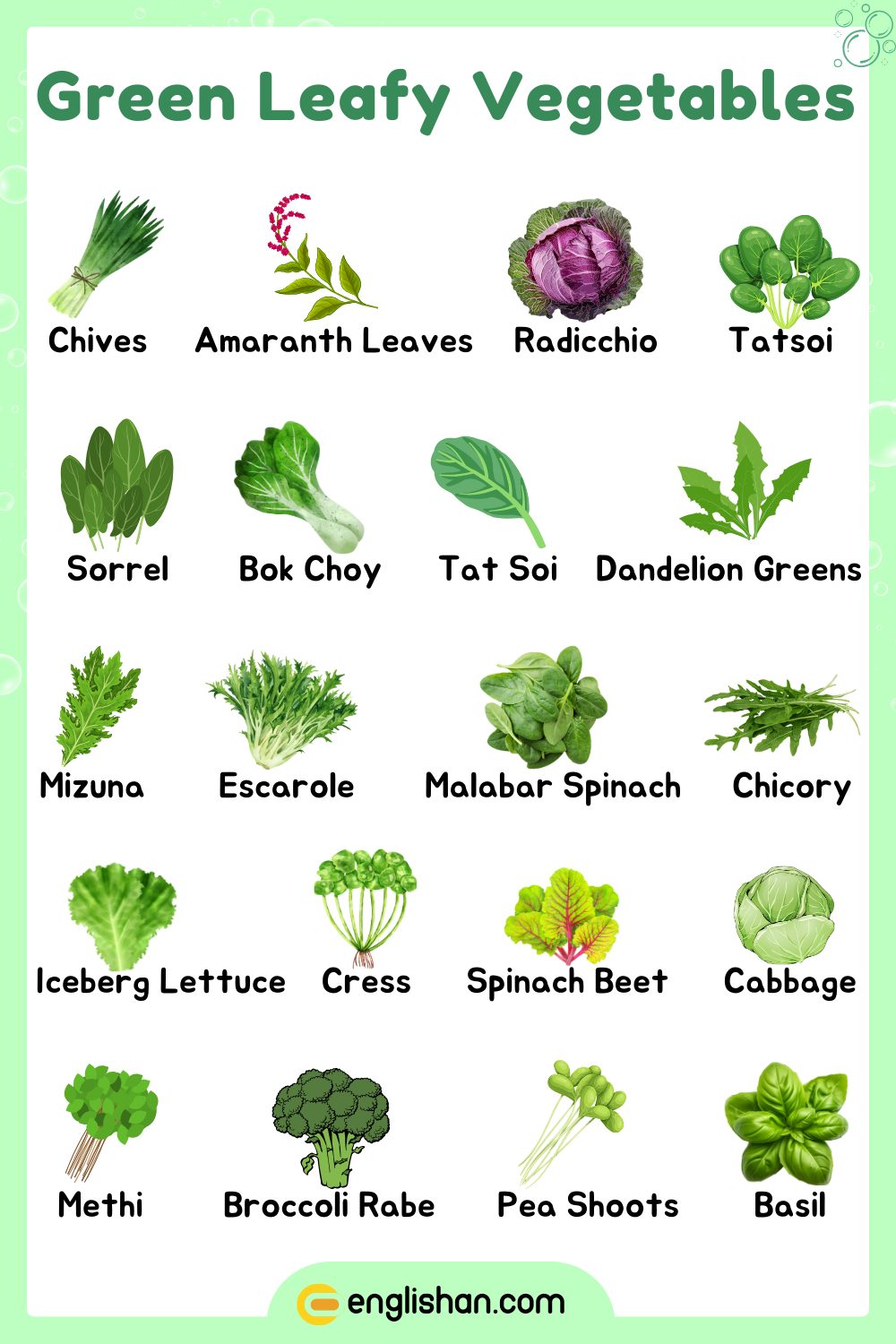
Below is a list of common green leafy vegetables with their names. This helps in identifying them while shopping or reading recipes:
- Spinach
- Lettuce
- Kale
- Mustard greens
- Fenugreek leaves
- Amaranth leaves
- Water spinach
- Arugula
- Swiss chard
- Collard greens
- Beet greens
- Turnip greens
- Sorrel
- Radish leaves
- Malabar spinach
- Celery leaves
- Bok choy
- Dandelion greens
- Purslane
- Curry leaves
- Romaine lettuce
- Iceberg lettuce
- Mizuna
- Tatsoi
- Endive
- Escarole
- Napa cabbage
- Cabbage greens
- Grape leaves
- Chaya leaves
- Vietnamese coriander
- Pumpkin leaves
- Sweet potato leaves
- Taro leaves
- Mustard spinach
- Wild rocket
- Pea shoots
- Broccoli leaves
- Basil leaves
- Mint leaves
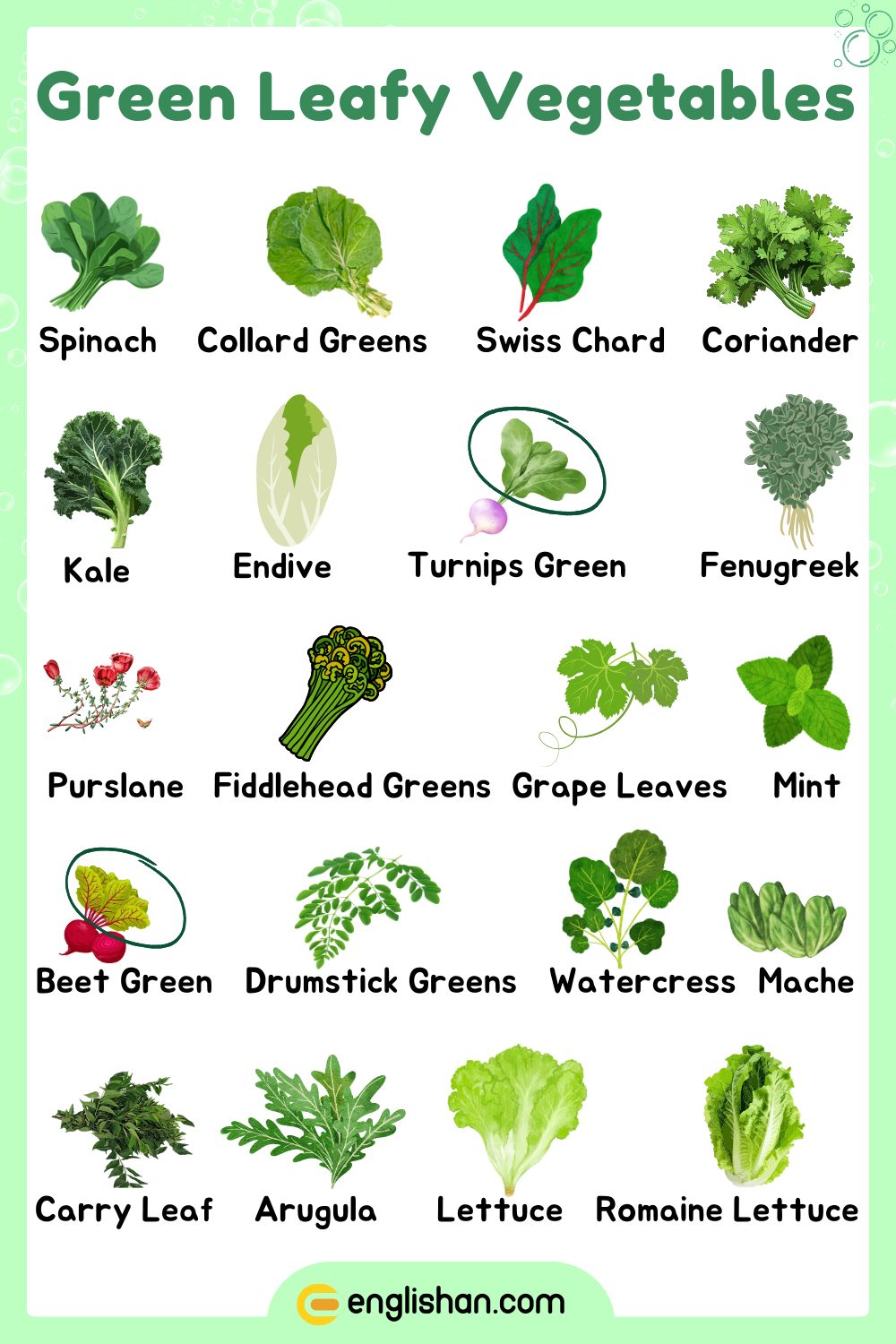
These leaves are often used in dishes for their nutritional value and taste. For example, spinach is used in soups, and mustard greens are common in Indian saag recipes.
Green Leafy Vegetables Produced in India
Many green leafy vegetables are commonly grown and consumed in India. Here is a list of popular ones:
- Palak (Spinach)
- Methi (Fenugreek leaves)
- Sarson (Mustard greens)
- Bathua (Chenopodium)
- Chaulai (Amaranth)
- Hara Dhaniya (Coriander leaves)
- Pudina (Mint leaves)
- Curry Patta (Curry leaves)
- Shepu (Dill leaves)
- Kachnar leaves
- Colocasia leaves (Arbi ke patte)
- Neem leaves (used for medicinal purposes)
- Malabar spinach (Poi saag)
- Patra leaves (Alu or colocasia)
- Gongura (Sour sorrel)
- Poi saag (Basella alba)
- Kulfa (Purslane)
- Singri leaves
- Lal saag (Red amaranth)
- Chakramuni (Star gooseberry leaves)
These names help in recognizing local vegetables during grocery shopping or cooking regional dishes. Knowing both the English and Indian terms improves food vocabulary.
Scientific Names of Green Leafy Vegetables
Below is a table of scientific names for popular green leafy vegetables. This is useful for understanding plant categories and reading botanical information.
| Common Name | Scientific Name |
| Spinach | Spinacia oleracea |
| Lettuce | Lactuca sativa |
| Kale | Brassica oleracea var. acephala |
| Mustard greens | Brassica juncea |
| Fenugreek | Trigonella foenum-graecum |
| Amaranth leaves | Amaranthus spp. |
| Arugula | Eruca vesicaria |
| Swiss chard | Beta vulgaris subsp. vulgaris |
| Collard greens | Brassica oleracea |
| Beet greens | Beta vulgaris |
| Watercress | Nasturtium officinale |
| Malabar spinach | Basella alba |
| Curry leaves | Murraya koenigii |
| Mint | Mentha arvensis |
| Dill leaves | Anethum graveolens |
| Sweet potato leaves | Ipomoea batatas |
| Pumpkin leaves | Cucurbita moschata |
| Taro leaves | Colocasia esculenta |
| Broccoli leaves | Brassica oleracea var. italica |
| Pea shoots | Pisum sativum |
| Radicchio | Cichorium intybus var. foliosum |
| Tatsoi | Brassica rapa subsp. narinosa |
| Sorrel | Rumex acetosa |
| Bok Choy | Brassica rapa subsp. chinensis |
| Tat Soi | Brassica rapa var. rosularis |
| Dandelion Greens | Taraxacum officinale |
| Mizuna | Brassica rapa var. nipposinica |
| Escarole | Cichorium endivia var. latifolium |
| Chicory | Cichorium intybus |
| Iceberg Lettuce | Lactuca sativa var. capitata |
| Cress | Lepidium sativum |
| Spinach Beet | Beta vulgaris subsp. vulgaris |
| Cabbage | Brassica oleracea var. capitata |
| Basil | Ocimum basilicum |
FAQs
Green leafy vegetables are healthy and full of nutrients! Here are some simple examples:
Spinach
Kale
Lettuce
Swiss chard
Collard greens
Mustard greens
Arugula
Bok choy
Watercress
You can use these in salads, stir-fries, or soups to make your meals healthier and tastier!
Here areof the best leafy greens:
1. Spinach
2. Kale
3. Swiss chard
4. Arugula
5. Collard greens
These are healthy, tasty, and easy to add to salads, soups, or stir-fries!
A leafy vegetable that starts with B is bok choy. It’s a type of Chinese cabbage that’s great for stir-fries, soups, or steaming!
The “king” of leafy vegetables is often considered to be kale because it’s packed with nutrients. Kale is rich in vitamins A, C, and K, along with antioxidants, calcium, and fiber.
A leafy vegetable that starts with K is kale. It’s super nutritious and can be used in salads, soups, or smoothies!
Spinach is one of the most common green leafy vegetables. It is high in iron and can be eaten raw or cooked.
Two common green leafy vegetables are:
Lettuce: a salad vegetable
Fenugreek leaves: used in Indian flatbreads and curries
You May Also Like
- Indian Vegetables In English
- Winter Vegetable Names
- Fruits With Vegetables
- Summer Vegetables List
- Green Vegetable Words
- Vegetables For Kids
- Yellow Vegetables Names
- Vegetables Worksheets