Artichoke hides a tender heart under tough, scaly leaves, and it’s one of the most recognizable vegetables that start with A. The letter covers more produce than most shoppers expect, stretching from grocery aisles to home gardens and coastal kitchens.
Arugula sharpens a salad with a peppery bite, and avocado brings the buttery texture people put on toast or mash into guacamole. Past those familiar picks, aubergine, acorn squash, adzuki beans, and sea greens like aonori and arame all earn a place on the same list.
You’ll walk away with 25 vegetables that start with A, each shown with a clear picture, a quick flavor note, and a simple cooking idea you can use. Pick the ones that catch your eye, and you’ll know exactly what to reach for the next time you shop.
List Of Vegetables That Start With A
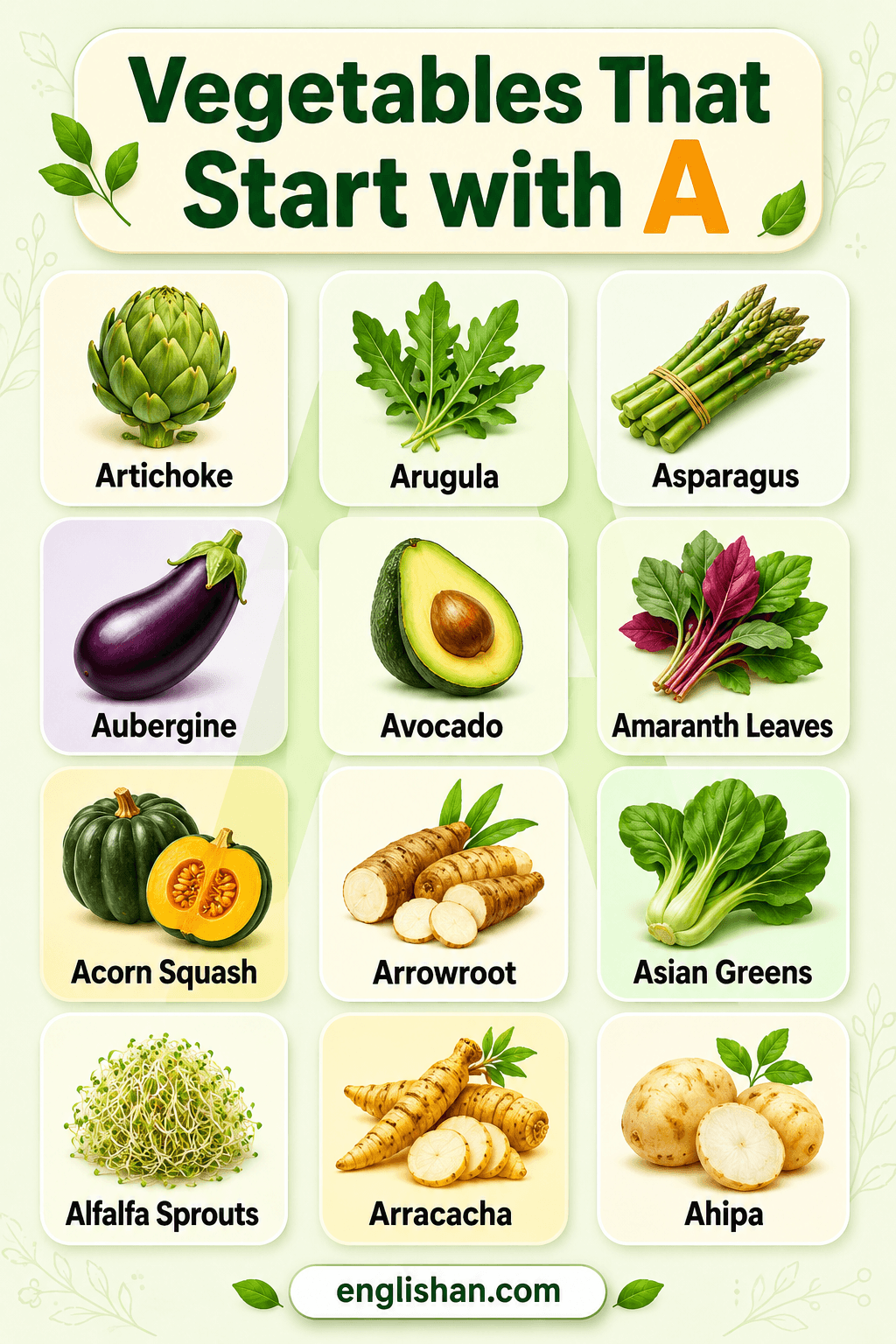
Here are 25 vegetables that start with A, including common staples, leafy greens, roots, squashes, pods, sprouts, edible flowers, legumes, and sea vegetables.
- Acorn Squash
- Adzuki Beans
- African Eggplant
- Agati
- Alfalfa Sprouts
- Amaranth Leaves
- Ambada
- Ambercup Squash
- Ahipa
- Aonori
- Apazote
- Apple Gourd
- Arame
- Armenian Cucumber
- Arracacha
- Arrowhead
- Arrowroot
- Artichoke
- Arugula
- Ash Gourd
- Asian Greens
- Asparagus
- Asparagus Pea
- Aubergine
- Avocado
If you only need the most familiar answers, start with artichoke, asparagus, arugula, aubergine, avocado, acorn squash, and alfalfa sprouts. The rest of the list moves into regional greens, sea vegetables, roots, gourds, and lesser-known produce worth recognizing when you see them.
Vegetables That Start With A With Pictures
The descriptions below give you more than a name. You’ll get a quick sense of how each vegetable looks, tastes, cooks, or shows up in real kitchens, without turning the list into a recipe book.
Acorn Squash
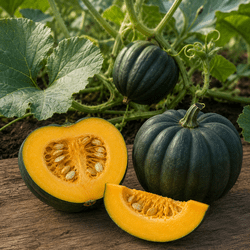
Ever picked up acorn squash and wondered whether that ridged shell is worth the effort? It is, because the golden flesh turns sweet, nutty, and tender once roasted. Split it in half, scoop out the seeds, then bake it for stuffed squash, creamy soup, mash, or a warm fall side dish.
Do you know, acorn squash is usually cooked with the skin on, and once roasted properly, the thin rind can become tender enough to eat.
Adzuki Beans
You may know adzuki beans from sweet red bean paste, but they have a savory side too. These small red legumes cook into a smooth, neat bite with a mild sweetness that works in rice bowls, soups, stews, and grain salads.
They feel lighter than many larger beans, which makes them a good choice when you want comfort without a heavy, starchy finish.
African Eggplant
African eggplant proves that eggplant does not have to be long, glossy, and purple. These smaller round varieties can be green, ivory, yellow, orange, or red, with firm flesh and a faint bitterness that holds its own in bold cooking.
That slight bitter edge is not a flaw. It is exactly why African eggplant works so well in West and Central African stews, peanut sauces, tomato gravies, and palm oil dishes.
Agati
Agati flowers are not decorative blossoms pretending to be food. They are edible flowers from the Sesbania grandiflora tree, used in parts of South and Southeast Asia for their gentle bitterness and soft cooked texture.
Add them to lentil curries, coconut dishes, stir-fries, or sambar when you want a vegetable that feels delicate but still brings character to the pot.
Alfalfa Sprouts
Need freshness without adding bulk? Alfalfa sprouts do that job quietly, with pale stems, tiny green leaves, a mild grassy flavor, and a light crunch. They fit sandwiches, wraps, salads, and avocado toast especially well.
Freshness matters here more than almost anything else. Buy them crisp, keep them chilled, rinse them well, and use them before the leaves look tired.
Amaranth Leaves
If you like cooked spinach but want something earthier, amaranth leaves are worth noticing. The leaves cook down into a tender green, often with red or purple stems that make the bunch easy to recognize at market.
They belong in dals, stews, soups, sautés, and coconut-based dishes across Indian, African, Caribbean, and Southeast Asian kitchens. The same plant can produce edible seeds, but in many homes the leaves are the everyday vegetable.
Ambada
Ambada is the leafy green you reach for when a dish needs sourness without lemon or vinegar. Also called Indian sorrel or roselle leaves, it has red-tinged stems and a sharp lemony bite.
Maharashtrian kitchens use it in ambadi bhaji, often with dal, garlic, chili, and spices. If a rich curry feels too heavy, ambada cuts through it with a natural tang.
Ambercup Squash
Ambercup squash can be easy to confuse with other orange winter squashes, but the dense, sweet flesh is what makes it stand out. It roasts into a rich, almost chestnut-like texture rather than turning watery.
Use it where you want body: soups, mash, baked wedges, casseroles, or brown butter squash dishes. Sage, chili, cinnamon, toasted nuts, and maple all suit it well.
Ahipa
Ahipa is one of the rare names on this list, and you probably will not see it in an ordinary supermarket. This Andean root has pale, juicy flesh with a crisp bite, close enough to jicama to give unfamiliar readers a useful comparison.
Peel it and slice it raw when you want crunch in salads, or cook it lightly in soups and vegetable dishes. Its quiet sweetness works best when you do not bury it under heavy seasoning.
Aonori
Aonori is the green seaweed flake that makes Japanese street food smell instantly savory. Sprinkle it over takoyaki, okonomiyaki, yakisoba, rice balls, or fried snacks, and it adds a grassy ocean note without overwhelming the dish.
A little goes a long way, which is exactly why cooks use it as a finishing touch rather than a bulky side vegetable.
Apazote
Apazote, more widely known as epazote, is one of those greens you smell before you understand it. The aroma is strong, resinous, citrusy, and slightly medicinal, but in the right dish it becomes deeply savory.
Mexican kitchens often drop a small sprig into black beans, quesadillas, squash dishes, stews, and moles. You do not need much, and that is part of its power.
Apple Gourd
Apple gourd, better known as tinda in Indian cooking, looks modest beside louder vegetables, but it has the same useful mildness that makes summer squash so dependable. The small round gourds have thin green skin and pale flesh that softens quickly.
Cook tinda in stuffed curries, tomato gravies, or quick sabzis with ginger, garlic, cumin, coriander, and chili. It takes on the flavor of the masala instead of competing with it.
Arame
If seaweed usually feels too intense, arame is a gentler place to start. This dark Japanese sea vegetable is sold in fine dried strands that soften quickly after soaking.
Once rehydrated, arame turns tender and lightly sweet, without the heavy briny punch some people expect. Fold it into salads, rice dishes, stir-fries, or sesame-dressed vegetable bowls.
Armenian Cucumber
Look closely at Armenian cucumber and you’ll see why it catches attention: it is long, ribbed, pale green, and often slightly curved. Botanically, it is closer to a melon, but on the plate it behaves like a crisp, mild cucumber.
Slice it into tabbouleh, yogurt dishes, pickles, mezze platters, and summer salads when you want crunch without bitterness.
Arracacha
Arracacha is an Andean root vegetable for anyone who likes potatoes but wants a deeper flavor. Beneath its rough skin, the flesh may be creamy yellow, white, or pale purple, with a taste that leans toward celery root, parsnip, and roasted chestnut.
It works well boiled, mashed, simmered into stews, blended into soups, or sliced thin and fried until the edges crisp.
Arrowhead
You might know arrowhead as a wetland plant before you think of it as food. The arrow-shaped leaves rise above the water, but the edible part is the starchy tuber below the surface.
In North America, some types are known as duck potato, while related tubers appear in Chinese cooking. Once cooked, they taste mildly nutty and firm, which suits braises, stir-fries, soups, and festive dishes.
Arrowroot
You probably know arrowroot as a fine white powder before you know it as a fresh rhizome. The plant’s underground stem has mild, starchy flesh, while its processed starch is prized because it thickens without feeling heavy.
Use arrowroot powder in sauces, custards, puddings, fruit fillings, and gluten-free bakes when you want a glossy finish. Fresh arrowroot, where available, can be boiled and eaten more like a mild root vegetable.
Artichoke
Artichoke looks intimidating until you understand the reward hiding inside. It is the unopened bud of a thistle, with tough green leaves wrapped around a tender heart.
Steam it, grill it, roast it, stuff it, or braise it with lemon, garlic, olive oil, butter, herbs, or parmesan. Choose artichokes that feel heavy for their size, with leaves that look tight rather than dry and loose.
Arugula
Arugula, called rocket in many countries, is the salad green that refuses to taste sleepy. Its leaves are peppery, slightly bitter, and lively enough to wake up mild ingredients like mozzarella, avocado, eggs, potatoes, and pasta.
Eat it raw with lemon and olive oil, toss it over hot pizza, or fold it into pasta just before serving so it wilts without losing its bite.
Ash Gourd
Ash gourd is a large winter melon with pale green skin, cool watery flesh, and a chalky white coating that gives it the name. On its own, the flavor is quiet, but that is exactly why it carries spices, lentils, yogurt, and coconut so well.
South Indian kitchens cook it into kootu, sambar, and yogurt gravies, while North Indian sweet shops turn it into the candy known as petha.
Asian Greens
If dinner needs a green vegetable in minutes, Asian greens are the group to know. Bok choy brings crisp pale stems, gai lan has a firmer broccoli-like bite, choy sum stays tender, and tatsoi offers small spoon-shaped leaves.
Stir-fry them with garlic and ginger, drop them into noodle soup, or add them to hot pots, dumplings, and brothy bowls. Most cook quickly, which is why they are so useful on busy nights.
Asparagus
Asparagus is one of the first vegetables that makes spring feel official. The spears can be green, white, or purple, with tight tips and stems that turn tender when roasted, grilled, steamed, or quickly sautéed.
Snap or trim the woody base, then pair the spears with lemon, butter, olive oil, parmesan, eggs, hollandaise, risotto, pasta, tarts, or soups.
Asparagus Pea
Asparagus pea is the kind of unusual pod vegetable that makes gardeners curious. Also called winged pea or square-podded pea, it grows small green pods with four ruffled edges.
Pick the pods young, before they toughen, then steam or stir-fry them whole. The flavor lands somewhere between fresh peas and asparagus tips, which explains the name.
Aubergine
Aubergine is the British and European name for eggplant, and few vegetables soak up flavor so readily. The soft flesh drinks in olive oil, tomato, garlic, smoke, herbs, and spices.
That is why aubergine anchors so many famous dishes, from baba ganoush, ratatouille, moussaka, and caponata to baingan bharta and eggplant parmesan.
Avocado
Avocado is botanically a fruit, but in everyday cooking it behaves like a vegetable because it belongs in savory food. Its buttery flesh gives body to guacamole, toast, salads, sushi, tacos, sandwiches, and grain bowls.
Want the easiest ripeness test? Press gently near the stem. A ripe avocado gives slightly, while a hard one needs more time on the counter.
Common Types Of A-Named Vegetables
After you scan the full list, one pattern becomes obvious: vegetables that start with A are not all the same kind of produce. They come from different plant parts, which explains why their textures, flavors, and cooking uses vary so much.
- Leaves: Arugula, amaranth leaves, ambada, apazote, and Asian greens bring peppery, earthy, tangy, pungent, or fresh flavors to salads, sautés, soups, dals, and broths.
- Roots and rhizomes: Arracacha, ahipa, arrowhead, and arrowroot offer starch, crunch, body, or thickening power, depending on how they are prepared.
- Stems and sprouts: Asparagus and alfalfa sprouts sit at opposite ends of texture, from firm spring spears to delicate fresh shoots.
- Flowers and flower buds: Artichoke and agati show that edible flowers can be substantial vegetables, not only decoration.
- Fruits used as vegetables: Acorn squash, ambercup squash, African eggplant, apple gourd, Armenian cucumber, ash gourd, aubergine, and avocado belong here by culinary habit.
- Sea vegetables: Aonori and arame bring coastal flavor into the list, one as a bright finishing flake and the other as a tender soaked strand.
- Legumes and pods: Adzuki beans and asparagus pea add protein, texture, and regional character to the letter A list.
FAQs
Avocado is botanically a fruit, more specifically a single-seeded berry, but kitchens usually treat it like a vegetable because it belongs in savory dishes. For a culinary list of vegetables that start with A, avocado fits comfortably.
Green vegetables that start with A include arugula, asparagus, artichoke, alfalfa sprouts, amaranth leaves, agati flowers, Asian greens, asparagus pea, apazote, ambada, aonori, and Armenian cucumber.
The main root and underground vegetables that start with A are arracacha, ahipa, arrowhead, and arrowroot. Arracacha is starchy and aromatic, ahipa is crisp and mild, arrowhead produces edible aquatic tubers, and arrowroot is best known for its starch.
Leafy vegetables that start with A include arugula, amaranth leaves, ambada, apazote, and Asian greens. Their flavors range from peppery and earthy to lemony, pungent, and mildly sweet.
Arracacha is one of the rarest vegetables that start with A outside its native Andean region. Ahipa, agati flowers, ambada, aonori, arame, arrowhead, and asparagus pea are also uncommon in many mainstream grocery stores.
Indian kitchens use several A-named vegetables, including amaranth leaves, apple gourd, ash gourd, ambada, agati flowers, and aubergine. Apple gourd is widely known as tinda, ash gourd appears in curries and sweets, and aubergine is commonly cooked as baingan.
The most common vegetables that start with A are artichoke, asparagus, arugula, aubergine, avocado, acorn squash, alfalfa sprouts, and amaranth leaves. Depending on the region, ash gourd, apple gourd, and Asian greens may also be everyday vegetables.
Yes. Aubergine and eggplant are two common names for the same vegetable. Aubergine is the usual name in British English and much of Europe, while eggplant is the standard name in North American English.
Arugula, alfalfa sprouts, Armenian cucumber, avocado, artichoke hearts, and young amaranth leaves work especially well in salads. Aonori can also be sprinkled over salads when you want a light seaweed flavor.
Asian cooking uses many A-named vegetables, including Asian greens, ash gourd, amaranth leaves, adzuki beans, aonori, arame, arrowhead, aubergine, asparagus, and agati flowers. Their roles range from stir-fried greens and simmered melons to seaweed toppings and bean-based dishes.
You May Also Like
Vegetables That Start With A Quiz
Vegetables That Start With A
Which of these vegetables begins with the letter A?
The part eaten is an unopened flower bud, which is why it is fiddly and mostly leaf.
Read the first letter before anything else.
Artichoke begins with A.
Name a vegetable beginning with this letter.
A vegetable whose name begins with A is ___.
Accepted here: Artichoke, Asparagus, Aubergine.
More than one answer is right; any vegetable starting with the letter counts.
Artichoke begins with A.
Which vegetable does this describe? Young shoots cut before they open out, and the season lasts only a few weeks.
Young shoots cut before they open out, and the season lasts only a few weeks.
Match the description to the fruit rather than to the letter.
Young shoots cut before they open out, and the season lasts only a few weeks.
Which of these is a flower bud eaten as a vegetable?
Artichoke is a flower bud eaten as a vegetable. The part eaten is an unopened flower bud, which is why it is fiddly and mostly leaf.
Group by what the thing actually is, not by where it turns up.
Artichoke is a flower bud eaten as a vegetable.
Two of these vegetables begin with A. Which one does not?
Garlic begins with G, so it is the one that does not belong.
Check each first letter before reading further.
Garlic is the odd one out.
Turn on JavaScript for the interactive quiz. The full practice set is shown above.