

Most people think of herbs first, but vegetables that start with H bring a lot more to the table than seasoning. This letter covers everything from thick, starchy roots to tender greens that cook down in minutes.
Horseradish has a sharp bite nothing else quite matches, and hearts of palm taste mild enough to slip into almost any salad. Then there’s hubbard squash, which needs a good knife and some oven time but pays off in flavor.
Whether you’re sorting through a food list or looking for something new to cook, every H vegetable worth knowing is right here.
List Of Vegetables That Start With H
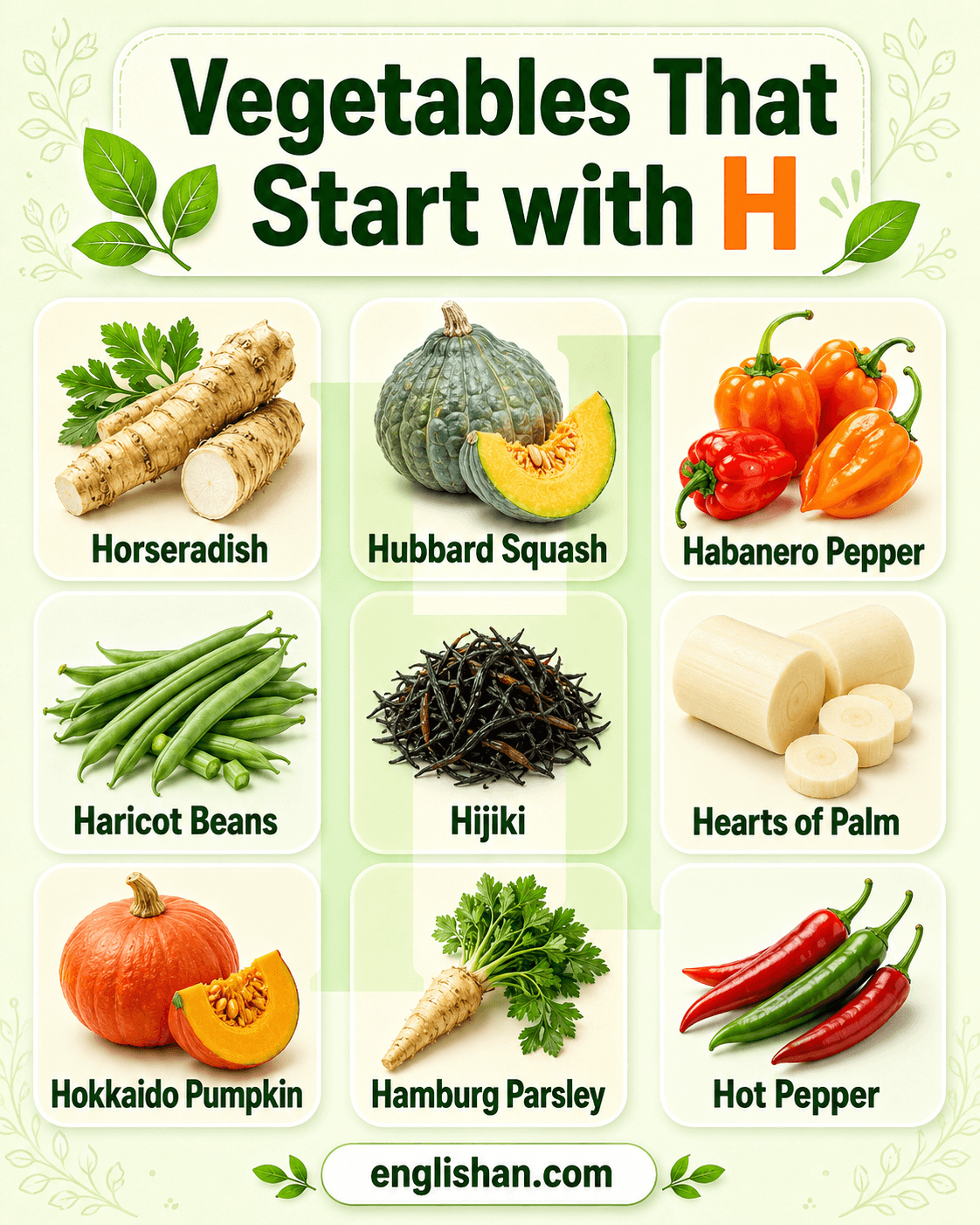
Here are 25 vegetables that start with H, ranging from hot peppers and beans to squashes, roots, leafy vegetables, seaweed, and edible fungi.
- Habanero pepper
- Habanada pepper
- Hamburg parsley
- Haricot beans
- Haricot verts
- Hass avocado
- Hatch chile
- Hearts of palm
- Heirloom tomato
- Hijiki
- Hispi cabbage
- Hokkaido squash
- Honey Bear squash
- Honeynut squash
- Hongo mushroom
- Horse bean
- Horse gram
- Horseradish
- Hot pepper
- Hothouse cucumber
- Huauzontle
- Hubbard squash
- Huitlacoche
- Hungarian wax pepper
- Hyacinth bean
For the most familiar answers, remember habanero pepper, haricot beans, haricot verts, horseradish, hot pepper, hearts of palm, and Hubbard squash. The rarer names, such as huauzontle, hijiki, huitlacoche, and hyacinth bean, add the kind of culinary range that makes the letter H more interesting than it first looks.
Vegetables That Start With H With Pictures
Habanero Pepper
Habanero pepper is not the chili to toss into a pot without thinking. Small, glossy, and often orange or red, it carries serious heat with a fruity edge that suits hot sauce, salsa, marinades, Caribbean dishes, and chili pastes.
Handle it with respect. A little habanero can lift a whole dish, while too much will take over every other flavor.
Habanada Pepper
Habanada pepper looks like a friendly cousin of the habanero, and that is close to the truth. It has the fruity aroma of a habanero without the fierce burn, which makes it fascinating for anyone who loves chili flavor but not mouth-numbing heat.
Use it raw in salads, roast it for sauces, or chop it into salsas where sweetness and perfume matter more than fire.
Hamburg Parsley
Hamburg parsley looks like parsley above the soil, but the real vegetable is the pale, tapered root underneath. It tastes like a cross between parsley, celery root, and parsnip, with a fresh herbal note running through the flesh.
Slice it into soups, roast it with other roots, or simmer it into broths when ordinary parsley leaves feel too delicate for the job.
Haricot Beans
Haricot beans are small white beans with a creamy texture and a mild flavor that accepts seasoning beautifully. They are the beans behind many baked bean recipes, but they also work in soups, stews, casseroles, salads, and slow-cooked tomato dishes.
Their quiet flavor is their strength. Give them garlic, herbs, olive oil, tomato, smoked paprika, or stock, and they become far more interesting than their plain appearance suggests.
Haricot Verts
Haricot verts are slender French green beans, thinner and more delicate than standard green beans. They cook fast, stay elegant on the plate, and bring a crisp-tender bite that suits butter, almonds, lemon, shallots, and herbs.
They are best treated gently. A short steam, sauté, or blanch keeps their color bright and their texture lively.
Hass Avocado
Hass avocado is the dark, pebbled avocado many shoppers know best. Botanically, it is a fruit, but its savory role in toast, guacamole, salads, sushi, tacos, and bowls gives it a solid place in culinary vegetable lists.
The flesh turns buttery when ripe, and the skin darkens as it softens. Press gently near the stem for the best ripeness clue.
Hatch Chile
Hatch chile comes from the Hatch Valley region of New Mexico, and its flavor has a loyal following for good reason. The chiles can be mild or hot, but the real appeal is their roasted, smoky, green-chile depth.
Roast them until the skins blister, then peel and chop them into stews, sauces, burgers, eggs, cornbread, enchiladas, and green chile stew.
Hearts Of Palm
Hearts of palm are the tender inner cores of certain palm stems, usually sold in jars or cans. They have a pale ivory color, a soft bite, and a mild flavor that lands somewhere between artichoke heart and white asparagus.
Slice them into salads, toss them with citrus and herbs, or shred them into plant-based seafood-style dishes when a delicate texture matters.
Heirloom Tomato
Heirloom tomato is botanically a fruit, but cooks treat it like a vegetable because it belongs in savory dishes. The appeal is variety: ridged shapes, uneven colors, thin skins, juicy flesh, and flavors that range from sweet to sharp.
A ripe heirloom tomato deserves very little fuss. Salt, olive oil, basil, mozzarella, toast, or a simple summer salad lets its flavor lead.
Hijiki
Hijiki is a dark brown sea vegetable sold dried in thin strands. Once soaked and simmered, it turns tender and brings a deep ocean flavor to Japanese-style side dishes, rice bowls, and vegetable mixtures.
It has a stronger taste than lighter seaweeds such as aonori, so a small portion usually goes further than expected.
Hispi Cabbage
Hispi cabbage is the pointed cabbage to know when regular cabbage feels too heavy. The leaves are tightly layered, sweet, and quick to soften, which makes the whole head excellent for wedges, grilling, roasting, slaw, and buttered sautés.
Char the cut sides in a hot pan, then finish with butter, lemon, miso, or herbs. Hispi turns tender fast without losing its shape.
Hokkaido Squash
Hokkaido squash, also called red kuri squash, has deep orange skin and dense orange flesh with a sweet, nutty flavor. One reason cooks love it: the skin becomes tender after roasting, so peeling is usually unnecessary.
Roast it in wedges, blend it into soup, or cube it for curries and grain bowls. It gives rich color and body without much effort.
Honey Bear Squash
Honey Bear squash is a small acorn-type squash bred for sweetness and compact size. Its dark green shell hides golden flesh that roasts into a soft, nutty, lightly sweet vegetable.
The size makes it perfect for halving and stuffing. Grains, mushrooms, herbs, sausage, nuts, or lentils all sit well inside those little roasted bowls.
Honeynut Squash
Honeynut squash looks like a tiny butternut squash, but the flavor is often deeper, sweeter, and more concentrated. Its small size also makes it easier to roast on a weeknight.
Cut it lengthwise, scoop the seeds, and roast until the edges caramelize. Butter, chili, maple, sage, tahini, and yogurt all work beautifully with its dense orange flesh.
Hongo Mushroom
Hongo mushroom uses the Spanish word hongo, meaning mushroom or fungus, and it may refer to edible mushrooms used in Latin American cooking. Mushrooms are fungi, not botanical vegetables, but cooks often treat them like vegetables because of their savory depth.
Their best quality is umami. Sauté them until the moisture cooks off, then add them to tacos, soups, rice, eggs, sauces, and vegetable fillings.
Horse Bean
Horse bean is an older name tied to broad beans or field beans, depending on region and variety. The beans are large, starchy, and earthy, with a flavor that becomes richer after boiling or simmering.
Young beans can be tender and green, while mature beans need longer cooking. They work in soups, stews, mash, dips, and rustic bean dishes.
Horse Gram
Horse gram is a small brown legume with a deep, earthy flavor and a reputation for hearty cooking in parts of India. It has a firmer, more rustic bite than many everyday lentils and beans.
Use it in rasam, curries, soups, chutneys, and sprouted dishes. Soaking and thorough cooking bring out its best texture.
Horseradish
Horseradish looks like a rough, pale root, but the drama begins the moment it is grated. Its sharp heat rises through the nose rather than sitting only on the tongue, which gives it a very different bite from chili peppers.
Pair it with roast beef, smoked fish, potatoes, beetroot, pickles, sandwiches, or creamy sauces. Freshly grated horseradish is far stronger than most jarred versions.
Hot Pepper
Hot pepper is a broad kitchen name for spicy peppers, from mild heat to serious fire. The shape, color, and burn vary widely, but most bring some mix of heat, fruitiness, bitterness, grassiness, or smoke.
Use hot peppers in sauces, salsas, stir-fries, pickles, curries, marinades, and spice pastes. The safest rule is to start small, then build heat gradually.
Hothouse Cucumber
Hothouse cucumber is the long, smooth cucumber often grown under controlled conditions and sold wrapped in plastic. It has thin skin, mild flesh, and fewer noticeable seeds than many field cucumbers.
Slice it into salads, sandwiches, yogurt dishes, pickles, and cold noodle bowls. Its gentle crunch works best in fresh dishes rather than long cooking.
Huauzontle
Huauzontle is a Mexican green related to lamb’s quarters and quinoa, with tender stems and clustered flower buds. At first glance, it may look unusual, but in the kitchen it behaves like a hearty green with a slightly earthy flavor.
Mexican cooks often blanch the stems, form them into patties, dip them in egg batter, and serve them in tomato sauce. It is one of the most distinctive H-named vegetables on the list.
Hubbard Squash
Hubbard squash is the heavy winter squash that looks almost prehistoric beside smaller grocery-store varieties. Its thick rind protects dense orange flesh that turns sweet and rich after roasting.
Because many Hubbards are large, they suit batch cooking. Roast chunks for soup, mash, casseroles, pies, and freezer-friendly purees.
Huitlacoche
Huitlacoche is the famous Mexican corn fungus sometimes called corn smut, although that plain name does not capture its culinary value. It has an earthy, smoky, mushroom-like flavor with a soft, almost inky texture.
Use it in quesadillas, soups, sauces, tamales, and fillings. It is fungus rather than a botanical vegetable, but cooks prize it like a savory vegetable ingredient.
Hungarian Wax Pepper
Hungarian wax pepper looks mild at first because of its pale yellow skin, but it often carries a lively medium heat. The flesh is crisp and slightly tangy, with enough strength for pickling and cooking.
Slice it into salads, stuff it, roast it, pickle it, or cook it into stews and sauces. It brings brightness before the heat catches up.
Hyacinth Bean
Hyacinth bean is grown for its attractive vines, purple pods, and edible beans, but it deserves careful handling. Young pods and beans are eaten in several cuisines, while mature beans require proper preparation and thorough cooking.
Do not treat hyacinth bean as a casual raw snack. Cook it well, follow trusted regional methods, and respect the variety being used.
Common Types Of H-Named Vegetables
After the full list, one thing becomes obvious: vegetables that start with H come from many different plant parts and culinary traditions. That variety explains why one name leads to fiery peppers, another to roots, another to seaweed, and another to tender squash.
- Peppers: Habanero pepper, habanada pepper, Hatch chile, hot pepper, and Hungarian wax pepper bring heat, fruitiness, smoke, sweetness, or crunch to sauces, salsas, stews, pickles, and marinades.
- Beans and legumes: Haricot beans, horse bean, horse gram, and hyacinth bean add starch, protein, earthiness, and substance to soups, curries, stews, and rustic dishes.
- Squashes: Hokkaido squash, Honey Bear squash, honeynut squash, and Hubbard squash bring dense flesh, sweetness, and roasting power to cold-weather cooking.
- Roots and stems: Hamburg parsley, horseradish, and hearts of palm show how roots and stem cores can bring herbal sharpness, nasal heat, or tender mildness.
- Leafy vegetables: Hispi cabbage and huauzontle bring very different green textures, one sweet and tender, the other earthy and distinctive.
- Fruits used as vegetables: Hass avocado, heirloom tomato, and hothouse cucumber belong here because cooks use them in savory dishes.
- Sea vegetables and fungi: Hijiki, hongo mushroom, and huitlacoche sit outside strict botany, but they behave like vegetables in the kitchen through flavor, texture, and savory use.
Frequently Asked Questions About Vegetables That Start With H
Q1. What Are Some Common Vegetables That Start With H?
Common vegetables that start with H are habanero pepper, haricot beans, haricot verts, horseradish, hot pepper, hearts of palm, Hispi cabbage, hothouse cucumber, and Hubbard squash.
Q2. What Green Vegetables Start With H?
Green vegetables that start with H are haricot verts, Hispi cabbage, hothouse cucumber, huauzontle, hearts of palm, and young hyacinth bean pods. Hijiki also belongs on culinary lists as a sea vegetable, although it turns dark after drying.
Q3. What Spicy Vegetables Start With H?
Spicy vegetables that start with H are habanero pepper, Hatch chile, hot pepper, Hungarian wax pepper, and horseradish. Habanero brings chili heat, while horseradish delivers sharp heat through the nose.
Q4. What Squash Starts With H?
Squashes that start with H are Hokkaido squash, Honey Bear squash, honeynut squash, and Hubbard squash. They all work well roasted, although their size, sweetness, skin texture, and density vary.
Q5. What Root Vegetables Start With H?
Horseradish and Hamburg parsley are the strongest root vegetables that start with H. Horseradish is sharp and pungent when grated, while Hamburg parsley tastes herbal, earthy, and slightly celery-like.
Q6. Is Hass Avocado A Vegetable That Starts With H?
Hass avocado is botanically a fruit, but it belongs in this culinary list because cooks use it in savory dishes such as toast, guacamole, salads, tacos, sushi, and bowls.
Q7. Are Heirloom Tomatoes Vegetables?
Heirloom tomatoes are botanical fruits, but kitchens treat them as vegetables because they appear in salads, sandwiches, sauces, savory tarts, and cooked dishes rather than desserts.
Q8. What Sea Vegetable Starts With H?
Hijiki is the main sea vegetable that starts with H. It is a dark edible seaweed usually sold dried, then soaked and simmered for Japanese-style side dishes and rice bowls.
Q9. What Rare Vegetables Start With H?
Rare vegetables that start with H are huauzontle, huitlacoche, Hamburg parsley, hyacinth bean, horse gram, and habanada pepper. Their availability depends heavily on region, season, and specialty markets.
Q10. Are Mushrooms Vegetables?
Mushrooms are fungi, not botanical vegetables, but cooks often use them like vegetables because they bring savory flavor, texture, and substance to soups, sauces, stir-fries, tacos, fillings, and grain dishes.
You May Also Like
Vegetables That Start With H Quiz
Vegetables That Start With H
Which vegetable does this describe? The inner core of a palm stem, harvested at the cost of the tree.
The inner core of a palm stem, harvested at the cost of the tree.
Match the description to the fruit rather than to the letter.
The inner core of a palm stem, harvested at the cost of the tree.
Which of these is a root vegetable?
Horseradish is a root vegetable. A root grated raw for heat that fades within minutes of exposure to air.
Group by what the thing actually is, not by where it turns up.
Horseradish is a root vegetable.
Two of these vegetables begin with H. Which one does not?
Nettle begins with N, so it is the one that does not belong.
Check each first letter before reading further.
Nettle is the odd one out.
Which of these vegetables begins with the letter H?
A root grated raw for heat that fades within minutes of exposure to air.
Read the first letter before anything else.
Horseradish begins with H.
Name a vegetable beginning with this letter.
A vegetable whose name begins with H is ___.
Accepted here: Hearts of palm, Horseradish.
More than one answer is right; any vegetable starting with the letter counts.
Hearts of palm begins with H.
Turn on JavaScript for the interactive quiz. The full practice set is shown above.