Vegetables that start with O bring together familiar kitchen staples, regional produce, sea vegetables, herbs, roots, and a few savory plant foods that people often treat like vegetables in cooking. Onion and okra are the easiest names to recognize, but the letter also reaches into oca, orach, opo squash, ogonori, Okinawan sweet potato, and oyster plant.
Some O vegetables are everyday ingredients. Onions build the base of soups, sauces, curries, stews, and roasted dishes. Okra thickens gumbo and shines in fried, stewed, and sautéed recipes. Others are more specialized. Oca is a tangy Andean tuber, orach is an old leafy green related to amaranth, and ogonori is an edible seaweed used in salads and coastal cooking.
This guide gives you a confident way to learn each name, understand the flavor, and connect the vegetable to real cooking. Several names are strict vegetables, while a few, such as olive, oregano, and oyster mushroom, belong here through culinary use rather than botanical classification.
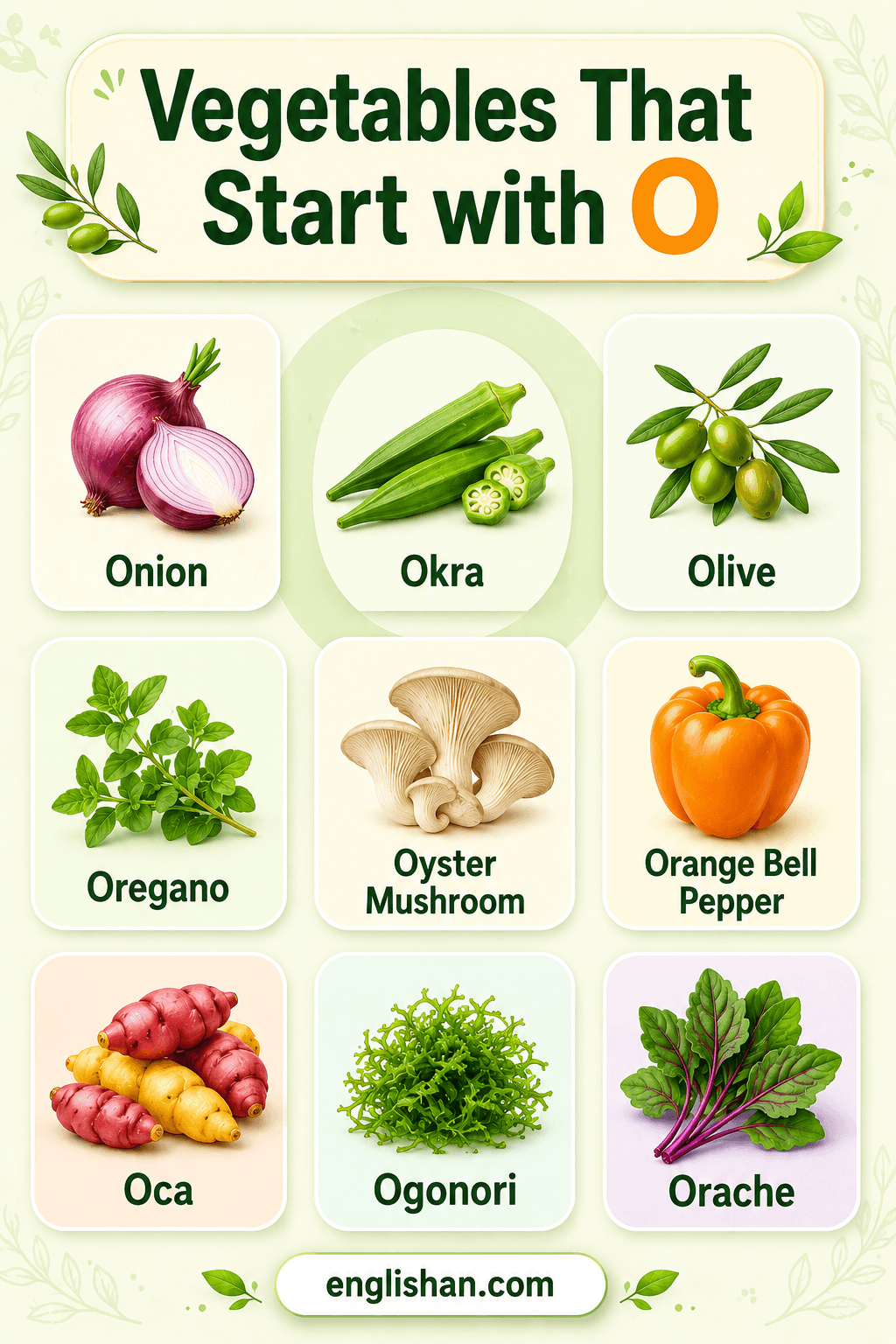
List Of Vegetables That Start With O
- Oakleaf lettuce
- Oca
- Ogo (ogonori)
- Okinawa spinach
- Okinawan sweet potato
- Okra
- Olive
- Onion
- Orach
- Opo squash
- Orange bell pepper
- Orange cauliflower
- Oregano
- Oyster plant
- Oyster mushroom
O Vegetables At A Glance
| Vegetable | Type | Flavor profile | Best known for |
|---|---|---|---|
| Onion | Bulb vegetable | Sharp raw, sweet when cooked | Soups, sauces, curries, roasts |
| Okra | Fruit vegetable | Grassy, mild, slightly mucilaginous | Gumbo, frying, stews, bhindi dishes |
| Oca | Tuber | Tangy, waxy, lightly lemony | Roasting, boiling, Andean cooking |
| Opo squash | Gourd | Mild, tender, faintly sweet | Soups, stir-fries, curries, steaming |
| Oakleaf lettuce | Leafy green | Mild, soft, delicate | Salads, sandwiches, wraps |
| Orach | Leafy green | Earthy, salty, spinach-like | Sautéed greens, salads, soups |
| Okinawan sweet potato | Root vegetable | Sweet, dense, nutty | Roasting, steaming, desserts, mash |
| Ogo | Sea vegetable | Briny, crisp, oceanic | Seaweed salads, poke, coastal dishes |
| Orange bell pepper | Fruit vegetable | Sweet, crisp, juicy | Salads, roasting, stuffing, fajitas |
| Orange cauliflower | Flower vegetable | Mild, nutty, slightly sweet | Roasting, gratins, vegetable trays |
| Oyster plant | Root vegetable | Mild, earthy, oyster-like | Soups, gratins, roasting, purées |
| Oyster mushroom | Fungus | Savory, delicate, lightly earthy | Stir-fries, sautés, soups, vegan dishes |
Vegetables That Start With O With Pictures
Oakleaf Lettuce
Oakleaf lettuce is a loose-leaf lettuce with soft, lobed leaves shaped somewhat like oak leaves. The leaves can be green, red, or bronze, and they have a tender texture that works best in fresh dishes rather than long cooking.
The flavor is mild and lightly sweet, with less bitterness than many darker salad greens. Because the leaves are delicate, oakleaf lettuce pairs well with lighter dressings, soft herbs, sliced radishes, cucumbers, goat cheese, citrus, and toasted nuts. Heavy creamy dressings can flatten its texture, while sharp vinaigrettes give it more life.
In the kitchen, oakleaf lettuce is most valuable when freshness matters. It belongs in salads, sandwiches, wraps, and cold plates where crispness and leaf shape add more than bulk.
Oca
Oca is a small, colorful tuber from the Andes, also sold in some markets as New Zealand yam. The tubers often come in red, yellow, orange, pink, or purple shades, with a knobbly shape and a bright, waxy surface.
Fresh oca has a tangy, lightly lemony flavor because it contains oxalic acid. After a few days of sun-curing, the sharpness softens and the tuber becomes sweeter. That change makes oca flexible in the kitchen. It can be boiled, roasted, baked, or sliced thin for raw dishes when the flavor is still lively.
Cooked oca keeps its shape better than many starchy roots. Roasting gives the skin a gentle chew and turns the inside tender, while boiling keeps the flavor brighter and cleaner.
Ogo (Ogonori)
Ogo, also known as ogonori, is an edible red seaweed used in Hawaiian, Japanese, and other coastal cuisines. It has a crisp bite, a briny flavor, and a fresh ocean aroma that makes it especially good in cold dishes.
In Hawaii, ogo is often mixed into poke with raw fish, soy sauce, sesame oil, scallions, and chile. In Japan and other parts of Asia, related seaweeds are served in salads, pickles, and noodle dishes. The texture matters as much as the flavor because ogo adds snap and salinity without heaviness.
Ogo is a sea vegetable rather than a land vegetable. In culinary terms, it belongs beside nori, wakame, and other edible seaweeds used for their mineral flavor and coastal character.
Okinawa Spinach
Okinawa spinach is a leafy tropical green with green leaves and purple undersides. It is not true spinach, but cooks use the young leaves in a similar way, especially in warm climates where regular spinach struggles.
The flavor is mild, slightly earthy, and gently vegetal. Young leaves can go into salads, while mature leaves are better lightly cooked. A quick sauté with garlic, oil, and soy sauce brings out its color and gives the leaves a tender texture. It also works in soups, omelets, noodle dishes, and vegetable stir-fries.
Okinawa spinach is valued as a perennial green in tropical and subtropical gardens. It grows steadily in heat, which gives it an advantage over cooler-season greens.
Okinawan Sweet Potato
Okinawan sweet potato is a purple-fleshed sweet potato with beige skin and a dense, creamy interior. Its color is one of its strongest traits, but the flavor matters too. The flesh tastes sweet, nutty, and slightly floral, with a drier texture than orange sweet potatoes.
Steaming and roasting are the best ways to appreciate it. Steaming keeps the flesh moist and vivid, while roasting deepens the sweetness and gives the edges a firmer bite. It also works in mashed dishes, pies, cakes, sweet potato fries, and Hawaiian-style plates.
The purple color comes from anthocyanins, the same family of pigments found in blueberries and purple cabbage. That visual strength makes Okinawan sweet potato one of the most recognizable vegetables that start with O.
Okra
Okra is a green pod vegetable with ridged sides, pale seeds, and a tender interior. It is famous for its mucilage, the natural gel that thickens stews and gives okra its signature texture.
That texture divides opinions, but it also explains why okra holds such an important place in cooking. In Louisiana gumbo, okra thickens the broth and adds body. In Indian cooking, sliced okra becomes bhindi, often stir-fried with spices until the edges turn crisp. In the American South, okra is breaded and fried into crunchy pieces with a soft center.
Cooking style controls the texture. High heat, acid, and dry cooking reduce the slippery quality, while long simmering draws it out. Both results have value, depending on the dish.
Olive
Olive is botanically a fruit, but it often appears in vegetable lists because it functions as a savory plant food. Cured olives bring salt, bitterness, fat, and depth to salads, breads, relishes, pasta, tapenade, and Mediterranean vegetable dishes.
Fresh olives are too bitter to eat straight from the tree. Curing changes them completely. Brine, dry salt, lye, or oil curing softens the harsh compounds and develops the familiar flavor. Green olives taste firmer and sharper, while ripe black or purple olives tend to be softer, richer, and more mellow.
Olives are not strict vegetables. Still, in the kitchen, they behave like a savory produce ingredient, especially beside tomatoes, cucumbers, onions, peppers, herbs, cheese, grains, and roasted vegetables.
Onion
Onion is the most widely known vegetable that starts with O. It is a bulb vegetable with sharp sulfurous bite when raw and deep sweetness once cooked. Few ingredients move as easily across cuisines.
Raw onion adds crunch and heat to salads, sandwiches, salsas, pickles, and burgers. Cooked slowly, it turns golden, sweet, and jammy. Fried onion brings crispness, while caramelized onion adds depth to soups, tarts, gravies, and roasted meats. In many dishes, onion is not a garnish. It is the flavor base.
Different onion types create different results. Yellow onions are reliable for cooking, red onions are excellent raw or pickled, white onions have a clean sharpness, and sweet onions soften quickly with less bite.
Orach
Orach, also spelled orache, is an old leafy green related to amaranth and sometimes called mountain spinach or saltbush. The leaves can be green, red, purple, or golden, which gives the plant strong visual appeal in gardens and salads.
The flavor is mild, earthy, and lightly salty, with a spinach-like character. Young leaves can be eaten raw, while larger leaves are better cooked like chard or spinach. Orach wilts quickly in a pan with olive oil, garlic, lemon, and herbs, and it also works in soups, tarts, egg dishes, and grain bowls.
Unlike delicate lettuce, orach has enough character for warm dishes. Its old-fashioned reputation deserves a second look, especially for cooks who enjoy leafy greens beyond spinach and kale.
Opo Squash
Opo squash is a long, pale green gourd with tender white flesh and a mild, faintly sweet flavor. It is also known as bottle gourd, calabash, lauki, doodhi, or Chinese long squash, depending on the region.
The texture becomes soft and silky when cooked. Because the flavor is gentle, opo squash absorbs broth, spices, aromatics, and sauces beautifully. It is common in South Asian curries, Chinese soups, Vietnamese dishes, and light stir-fries. Sliced thin, it cooks quickly. Cut into larger pieces, it becomes tender in stews without turning heavy.
Young opo squash is preferred for cooking because the skin is thinner and the seeds are softer. Mature gourds become firmer and are often used differently.
Orange Bell Pepper
Orange bell pepper is a sweet pepper variety with crisp flesh, juicy walls, and a bright orange color. Like other bell peppers, it is botanically a fruit but treated as a vegetable in everyday cooking.
The flavor is sweeter than green bell pepper and slightly less sugary than many red peppers. Raw slices work in salads, wraps, snack plates, and slaws. Roasting brings out a deeper sweetness, while sautéing keeps the pepper tender but still lively. Orange bell peppers also work well stuffed with rice, beans, meat, cheese, or grains.
Their color gives dishes a warm look without the heat of chile peppers. That makes them popular in family cooking, meal prep, and vegetable trays.
Orange Cauliflower
Orange cauliflower is a colored cauliflower variety with a golden-orange head and a mild, nutty flavor. The color comes from higher levels of beta-carotene compared with white cauliflower.
It cooks like regular cauliflower. Roasting gives the florets browned edges and a sweeter flavor, while steaming keeps the color bright. It also works in gratins, soups, mash, curries, cauliflower rice, and raw vegetable platters.
Orange cauliflower has a visual advantage on the plate. It brings color without changing the cooking method, which makes it especially good for mixed roasted vegetables and vegetable boards.
Oregano
Oregano is an herb rather than a standard vegetable, but it belongs in many culinary O lists because it is an edible plant used heavily in savory cooking. Its flavor is warm, peppery, slightly bitter, and intensely aromatic.
Fresh oregano tastes greener and softer, while dried oregano has a stronger, more concentrated punch. It is central to Mediterranean, Mexican, and Middle Eastern cooking, where it seasons tomato sauces, grilled vegetables, beans, meats, breads, soups, and marinades.
Oregano should be understood as an herb, not a vegetable in the strict sense. Its place here comes from culinary use, especially in dishes where it shapes the flavor of vegetables rather than serving as the main ingredient.
Oyster Plant
Oyster plant is another name for salsify, a root vegetable with long, pale roots and a mild flavor often compared to oysters. The name sounds unusual, but the vegetable has a long history in European cooking.
The root tastes earthy, gentle, and slightly sweet, with a faint seafood-like note after cooking. It can be boiled, roasted, fried, mashed, or simmered into soups and gratins. Cream, butter, parsley, lemon, potatoes, leeks, and white pepper pair naturally with its quiet flavor.
Salsify darkens quickly after peeling, so many cooks place it in acidulated water with lemon or vinegar before cooking. Once prepared well, oyster plant becomes tender, subtle, and more refined than its rough skin suggests.
Oyster Mushroom
Oyster mushroom is a fungus, not a vegetable, yet it often appears in vegetable cooking because it behaves like a savory produce ingredient. The caps are tender, the stems are firmer, and the flavor is mild, earthy, and lightly anise-like in some varieties.
Oyster mushrooms cook quickly and brown well in a hot pan. Their texture makes them excellent for stir-fries, soups, noodle dishes, tacos, vegan “scallops,” and crispy mushroom sides. They absorb garlic, soy sauce, butter, herbs, and chile without losing their own delicate flavor.
Because they are fungi, oyster mushrooms should be labeled honestly. In everyday cooking, though, they occupy the same plate space as vegetables and bring savory depth that many plant-based dishes depend on.
Common Types Of O Vegetables
Vegetables beginning with O come from several kitchen families, which is why the list feels more varied than the letter first suggests.
- Bulb vegetables: Onion is the strongest O-name bulb, valued for raw bite, cooked sweetness, and deep flavor-building power.
- Leafy greens: Oakleaf lettuce, orach, and Okinawa spinach bring salad texture, sautéed greens, and warm-climate leaf harvests.
- Roots and tubers: Oca, Okinawan sweet potato, and oyster plant bring color, starch, tang, sweetness, and earthiness.
- Gourds and fruit vegetables: Okra, opo squash, orange bell pepper, and orange cauliflower work as everyday savory produce despite different botanical categories.
- Sea vegetables: Ogo, also called ogonori, brings briny flavor and crisp texture to salads, poke, and coastal dishes.
- Herbs, fungi, and savory plant foods: Oregano, olive, and oyster mushroom are not strict vegetables, but they play important roles in vegetable-forward cooking.
FAQs
What Vegetables Start With The Letter O?
Vegetables that start with the letter O are onion, okra, oca, opo squash, oakleaf lettuce, orach, Okinawa spinach, Okinawan sweet potato, orange bell pepper, orange cauliflower, oyster plant, and ogonori. Olive, oregano, and oyster mushroom also appear in culinary O lists, though they are not strict vegetables.
What Is The Most Common Vegetable That Starts With O?
Onion is the most common vegetable that starts with O. It is used across global cooking as a flavor base, raw topping, roasted vegetable, pickled ingredient, and aromatic foundation for sauces, soups, curries, stews, and rice dishes.
Is Okra A Vegetable?
Okra is treated as a vegetable in cooking, although botanically it is a fruit because it develops from the flower and contains seeds. In the kitchen, okra belongs with savory vegetables and is cooked in gumbo, stews, fried dishes, curries, and stir-fries.
Is Olive A Vegetable Or A Fruit?
Olive is botanically a fruit. In everyday cooking, cured olives behave more like a savory plant ingredient than a sweet fruit. That is why olives often appear in vegetable lists, Mediterranean salads, antipasti, tapenade, breads, and roasted vegetable dishes.
What Is Oca?
Oca is a small Andean tuber with a tangy, waxy texture and bright colors such as red, yellow, orange, pink, and purple. It is also known as New Zealand yam in some markets. Oca can be roasted, boiled, baked, or eaten raw in thin slices.
What Is Opo Squash?
Opo squash is a long, pale green gourd with mild white flesh. It is also called bottle gourd, calabash, lauki, doodhi, or Chinese long squash. It is common in South Asian, Chinese, Vietnamese, and other Asian cuisines, especially in soups, curries, steaming, and stir-fries.
Is Oregano A Vegetable?
Oregano is an herb, not a strict vegetable. It belongs in culinary O lists because it is an edible savory plant used to season vegetables, sauces, beans, breads, meats, soups, and marinades.
What Green Vegetables Start With O?
Green vegetables that start with O are okra, oakleaf lettuce, orach, Okinawa spinach, opo squash, orange bell pepper before ripening fully from green stages, and ogonori. Onion tops are also green and edible, though the bulb is the part most people recognize.
What Root Vegetables Start With O?
Root and tuber vegetables that start with O are oca, Okinawan sweet potato, and oyster plant. Oca is tangy and waxy, Okinawan sweet potato is dense and sweet with purple flesh, and oyster plant has a mild earthy flavor often compared to oysters.
What Asian Vegetables Start With O?
Asian vegetables and culinary plant foods that start with O are okra, opo squash, Okinawa spinach, Okinawan sweet potato, onion, and ogonori. Opo squash is especially common in South Asian and East Asian cooking, while ogonori belongs to seaweed-based coastal dishes.
Vegetables That Start With O Quiz
Vegetables That Start With O
Two of these vegetables begin with O. Which one does not?
Radish begins with R, so it is the one that does not belong.
Check each first letter before reading further.
Radish is the odd one out.
Which of these vegetables begins with the letter O?
Releases a thickening mucilage when cut, which is why it suits stews.
Read the first letter before anything else.
Okra begins with O.
Name a vegetable beginning with this letter.
A vegetable whose name begins with O is ___.
Accepted here: Okra, Olive, Onion.
More than one answer is right; any vegetable starting with the letter counts.
Okra begins with O.
Which vegetable does this describe? Cutting it releases a compound that reacts with moisture in the eye.
Cutting it releases a compound that reacts with moisture in the eye.
Match the description to the fruit rather than to the letter.
Cutting it releases a compound that reacts with moisture in the eye.
Which of these is botanically a fruit, despite being cooked as a vegetable?
Okra is botanically a fruit, despite being cooked as a vegetable. Releases a thickening mucilage when cut, which is why it suits stews.
Group by what the thing actually is, not by where it turns up.
Okra is botanically a fruit, despite being cooked as a vegetable.
Turn on JavaScript for the interactive quiz. The full practice set is shown above.