

Japan’s Sakurajima daikon is the world’s largest radish, with the biggest specimens weighing more than 60 pounds. Stories like that run through vegetables that start with D more often than you’d expect.
Take drumstick, the long green pod from the moringa tree, used in South Indian sambar and curries. Dandelion greens turn peppery salads into something with a real kick, and delicata squash has skin so tender it doesn’t need peeling before roasting.
Each of these names brings something worth knowing, and so do all the others that start with D. Students, parents helping with homework, quiz fans, and curious eaters will all come away knowing each one well.
Quick List Of Vegetables That Start With D
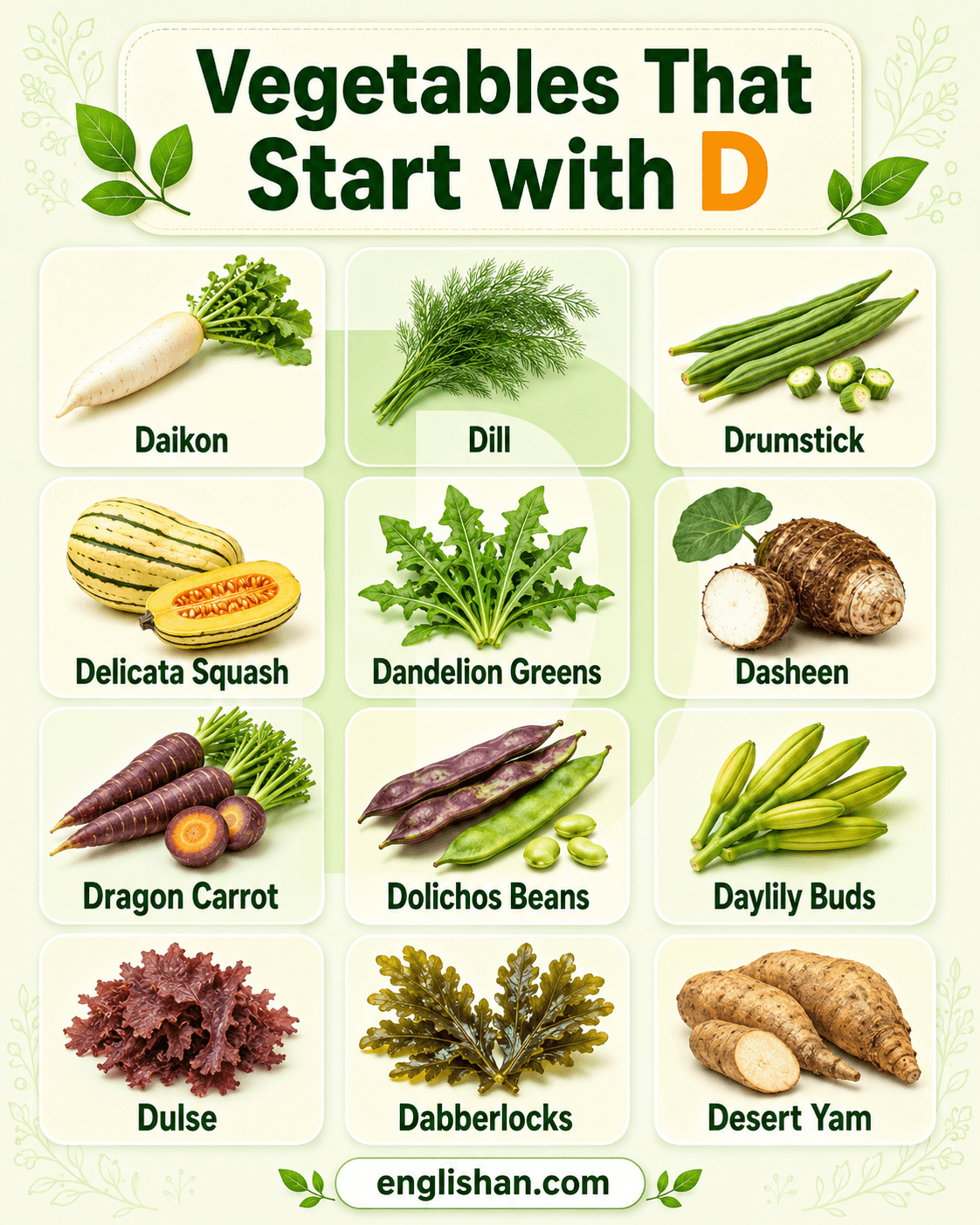
Here are 15 vegetables that start with D, ranging from common grocery-store choices to regional and specialty ingredients.
- Daikon radish
- Dandelion greens
- Dasheen
- Datil pepper
- Daylily
- Delaware sweet corn
- Delicacy white kohlrabi
- Delicata squash
- Dickinson pumpkin
- Dill
- Dinosaur kale
- Dragon tongue bean
- Drumstick
- Drumstick tree leaves
- Dulse
If you want the most recognizable D vegetables first, start with daikon radish, dandelion greens, delicata squash, dill, dinosaur kale, and dulse. The rest of the list moves into regional produce, edible flowers, tropical roots, heirloom varieties, and specialty market finds.
Before Tasting The Less Familiar Picks
A few D vegetables deserve careful handling. Dasheen, which belongs to the taro family, should be cooked before eating because raw taro-type roots can irritate the mouth and throat. Daylily must also be identified correctly, since edible daylily buds are not the same as every plant people casually call a lily.
For everyday cooking, buy unfamiliar vegetables from trusted markets, cook roots and tubers properly, and avoid foraging flowers or wild greens without reliable identification. Good food knowledge starts with curiosity, but it also respects the plant.
Vegetables That Start With D With Pictures
Daikon Radish
If red radishes taste too sharp for you, daikon feels calmer, juicier, and easier to use. This long white radish has crisp flesh and a mild peppery bite that works raw, pickled, grated, or simmered.
Japanese, Korean, Chinese, and South Asian kitchens treat daikon as more than salad crunch. It softens beautifully in broths, stews, curries, and braises, where it turns mellow and slightly sweet.
Dandelion Greens
Dandelion greens are the vegetable that makes you look twice at a plant many people dismiss as a lawn weed. The jagged leaves taste bitter, earthy, and bold, especially when mature.
Young leaves can go into salads, while older leaves shine better when sautéed with garlic, olive oil, chili, or lemon. That bitterness is the point, not a problem, especially beside rich beans, eggs, potatoes, or roasted meat.
Dasheen
Dasheen is a starchy tropical root closely connected to taro, and it behaves like a serious comfort vegetable once cooked. The flesh turns dense, smooth, and satisfying, somewhere between potato and yam.
Caribbean kitchens use dasheen in soups, stews, provisions, and boiled vegetable plates. Cook it thoroughly before eating, since raw taro-family roots can irritate the mouth and throat.
Datil Pepper
Datil pepper looks small, but it carries serious heat with a fruity, almost tropical sweetness. It is strongly associated with St. Augustine, Florida, where cooks turn it into hot sauces, relishes, marinades, and pepper jellies.
Use datil pepper when a dish needs heat with personality rather than blunt fire. A little can wake up beans, seafood, soups, sauces, and grilled vegetables.
Daylily
Daylily buds are edible in several culinary traditions, especially in parts of East Asian cooking where dried daylily buds appear in soups and stir-fries. They have a tender bite and a lightly floral, vegetable-like flavor when prepared properly.
This is one vegetable to treat with respect. Use edible daylilies from trusted food sources, cook them well, and never assume that every ornamental lily in a garden is safe to eat.
Delaware Sweet Corn
Delaware sweet corn earns its place because the state is known for warm-season sweet corn production, especially crisp, sugary varieties harvested in summer. Fresh ears should feel heavy, with plump kernels and green husks that still look lively.
Boil, grill, steam, or roast it, then finish with butter, salt, herbs, chili, lime, or a dusting of cheese. Few D vegetables taste as instantly seasonal as sweet corn at its peak.
Delicacy White Kohlrabi
Delicacy white kohlrabi is the kind of vegetable that looks unusual until you slice it open. The pale bulb-like stem has crisp white flesh with a mild sweetness, somewhere between broccoli stem, cabbage, turnip, and apple.
Eat it raw in slaws and salads when you want crunch, or cook it in stir-fries, soups, roasted vegetable trays, and gratins. Smaller bulbs usually stay sweeter and less woody.
Delicata Squash
Delicata squash is the winter squash for anyone who hates peeling winter squash. Its cream-colored skin with green or orange stripes turns tender in the oven, so you can roast the whole sliced rings without wrestling with a hard rind.
The flesh tastes sweet, nutty, and creamy, with a cleaner texture than many heavier squashes. Roast it with olive oil, maple, chili, sage, or brown butter for an easy side dish.
Dickinson Pumpkin
Dickinson pumpkin does not look like the bright orange jack-o-lantern pumpkin many people picture first. It is usually tan, oblong, and grown for smooth flesh that suits baking, purées, pies, soups, and preserves.
This is a practical pumpkin rather than a porch decoration. When cooked down, the flesh gives body and sweetness without becoming stringy or watery.
Dill
Dill is a fresh herb rather than a classic vegetable, but its feathery green leaves work like a savory green in the kitchen. The flavor is grassy, bright, and slightly anise-like, which makes it instantly recognizable.
Use dill with cucumbers, potatoes, yogurt sauces, pickles, eggs, fish, lentils, and roasted vegetables. Fresh dill fades under long heat, so add it near the end when you want the aroma to stay lively.
Dinosaur Kale
Dinosaur kale is the leafy green you recognize by its dark blue-green color and bumpy, almost pebbled surface. Also called lacinato kale or Tuscan kale, it tastes deeper and slightly sweeter than curly kale.
Strip out the tough center ribs, then slice the leaves for soups, sautés, salads, grain bowls, and braised greens. A little olive oil and salt soften raw dinosaur kale quickly for salads.
Dragon Tongue Bean
Dragon tongue bean is one of the most eye-catching vegetables on the list, with pale yellow pods splashed in purple streaks. The pods are tender when young, with a sweet, fresh bean flavor.
Eat them raw, steam them briefly, or sauté them with butter, garlic, and herbs. The purple streaks usually fade with heat, so enjoy the color before they hit the pan.
Drumstick
Drumstick refers to the long green pods of the moringa tree, not a chicken leg. The pods have a ridged skin and a soft interior that releases a distinctive earthy flavor into broths and curries.
South Indian sambar is one of the best-known dishes for drumstick pods. The outer pod is fibrous, so cooks usually chew or scrape the tender pulp and seeds rather than eating the whole pod like a snap bean.
Drumstick Tree Leaves
Drumstick tree leaves come from the same moringa tree as the pods, but they behave like a leafy green. The small leaves have a green, slightly earthy flavor and cook quickly.
They are used in dals, soups, stir-fries, omelets, and regional vegetable dishes. Dried moringa leaf powder is common too, but fresh leaves give a more direct vegetable flavor.
Dulse
Dulse is a red sea vegetable harvested from cold coastal waters, with a savory, salty, mineral-rich flavor. It is sold dried as flakes, strips, or whole pieces, and it brings a deep ocean note without needing much volume.
Crumble dulse over soups, potatoes, salads, rice, or eggs, or pan-fry small pieces until crisp. If you are new to sea vegetables, dulse is bold but easy to use in small amounts.
Common Types Of D-Named Vegetables
Once the full list is in front of you, the variety becomes obvious. D vegetables are not one style of produce, and their cooking personalities change according to the plant part you are eating.
- Roots and tubers: Daikon radish and dasheen bring crispness, starch, body, and comfort to pickles, broths, stews, and boiled vegetable plates.
- Leafy greens: Dandelion greens, dinosaur kale, drumstick tree leaves, and dill give the list its bitter, grassy, earthy, and aromatic side.
- Squashes and pumpkins: Delicata squash and Dickinson pumpkin bring sweetness, dense flesh, roasting power, and smooth purées.
- Pods and beans: Dragon tongue bean and drumstick pods add shape, texture, and strong visual identity.
- Peppers: Datil pepper brings fruity heat, especially in sauces, relishes, and marinades.
- Edible flowers: Daylily buds belong to the flower side of vegetable cooking, especially when dried or cooked properly.
- Sea vegetables: Dulse adds a salty coastal flavor that works best in flakes, strips, or crisp pan-fried pieces.
- Kohlrabi varieties: Delicacy white kohlrabi gives crunch, mild sweetness, and a brassica flavor that works raw or cooked.
- Sweet corn: Delaware sweet corn brings summer sweetness, juicy kernels, and easy cooking appeal.
Frequently Asked Questions About Vegetables That Start With D
Q1. What Are Some Vegetables That Start With D?
Vegetables that start with D include daikon radish, dandelion greens, dasheen, datil pepper, daylily buds, Delaware sweet corn, delicata squash, dinosaur kale, dragon tongue bean, drumstick pods, drumstick tree leaves, and dulse.
Q2. What Is The Most Common Vegetable That Starts With D?
Daikon radish, dandelion greens, delicata squash, dill, and dinosaur kale are among the most recognizable vegetables that start with D. The most common one depends on region, since daikon is everyday produce in many Asian kitchens, while dill and kale are more familiar in many Western markets.
Q3. What Green Vegetables Start With D?
Green vegetables that start with D include dandelion greens, dill, dinosaur kale, drumstick tree leaves, dragon tongue beans, and young daylily shoots or buds when used as a cooked vegetable.
Q4. What Root Vegetables Start With D?
Daikon radish and dasheen are the strongest root or tuber vegetables that start with D. Daikon is crisp, juicy, and mild when raw, while dasheen is starchy and must be cooked before eating.
Q5. Is Dill A Vegetable That Starts With D?
Dill is a fresh herb rather than a classic vegetable, but it belongs in culinary vegetable lists because cooks use its green leaves as a savory plant ingredient. It is especially common with pickles, cucumbers, potatoes, fish, eggs, and yogurt sauces.
Q6. Is Dulse A Vegetable?
Dulse is a sea vegetable, not a land vegetable. It is an edible red seaweed used in flakes, strips, snacks, soups, salads, potatoes, rice dishes, and savory toppings.
Q7. Are Drumstick And Drumstick Tree Leaves The Same Plant?
Yes. Drumstick pods and drumstick tree leaves both come from the moringa tree. Drumstick usually refers to the long green pods, while drumstick tree leaves refers to the small edible leaves.
Q8. Which Vegetables That Start With D Are Best For Cooking?
Daikon radish, dasheen, delicata squash, Dickinson pumpkin, dinosaur kale, drumstick pods, dandelion greens, dragon tongue beans, and datil peppers are especially good for cooking. They hold up well in roasting, simmering, sautéing, soups, curries, stews, and sauces.
Q9. Which Vegetables That Start With D Are Rare?
Dasheen, datil pepper, daylily buds, delicacy white kohlrabi, Dickinson pumpkin, dragon tongue bean, drumstick pods, drumstick tree leaves, and dulse may be rare in many mainstream grocery stores. Specialty markets, farmers’ markets, Asian groceries, Caribbean stores, Indian markets, and garden seed catalogs are better places to find them.
You May Also Like
Vegetables That Start With D Quiz
Vegetables That Start With D
Which of these is a root vegetable?
Daikon is a root vegetable. A long white radish, mild enough to eat raw in quantity.
Group by what the thing actually is, not by where it turns up.
Daikon is a root vegetable.
Two of these vegetables begin with D. Which one does not?
Mangetout begins with M, so it is the one that does not belong.
Check each first letter before reading further.
Mangetout is the odd one out.
Which of these vegetables begins with the letter D?
A long white radish, mild enough to eat raw in quantity.
Read the first letter before anything else.
Daikon begins with D.
Name a vegetable beginning with this letter.
A vegetable whose name begins with D is ___.
Accepted here: Daikon, Dandelion greens.
More than one answer is right; any vegetable starting with the letter counts.
Daikon begins with D.
Which vegetable does this describe? Bitter young leaves picked before the plant flowers.
Bitter young leaves picked before the plant flowers.
Match the description to the fruit rather than to the letter.
Bitter young leaves picked before the plant flowers.
Turn on JavaScript for the interactive quiz. The full practice set is shown above.