Most people can name napa cabbage off the top of their head, but vegetables that start with N go far beyond that single leafy green. From earthy nettles and buttery navy beans to the crunchy, tangy pads of nopales, this letter holds some genuinely underrated ingredients that deserve a spot in your kitchen.
Each one brings its own flavor, texture, and cooking personality. New potatoes roast up golden with almost no effort, while napa cabbage stays crisp and fresh inside stir-fries, slaws, and kimchi. Nettles taste like a richer, more peppery version of spinach once they’re blanched.
Whether you’re building a bigger grocery rotation or just settling a food trivia debate, you’ll find every N vegetable worth knowing right here — with real flavor notes, cooking uses, and the details that actually matter at the stove.
List Of Vegetables That Start With N
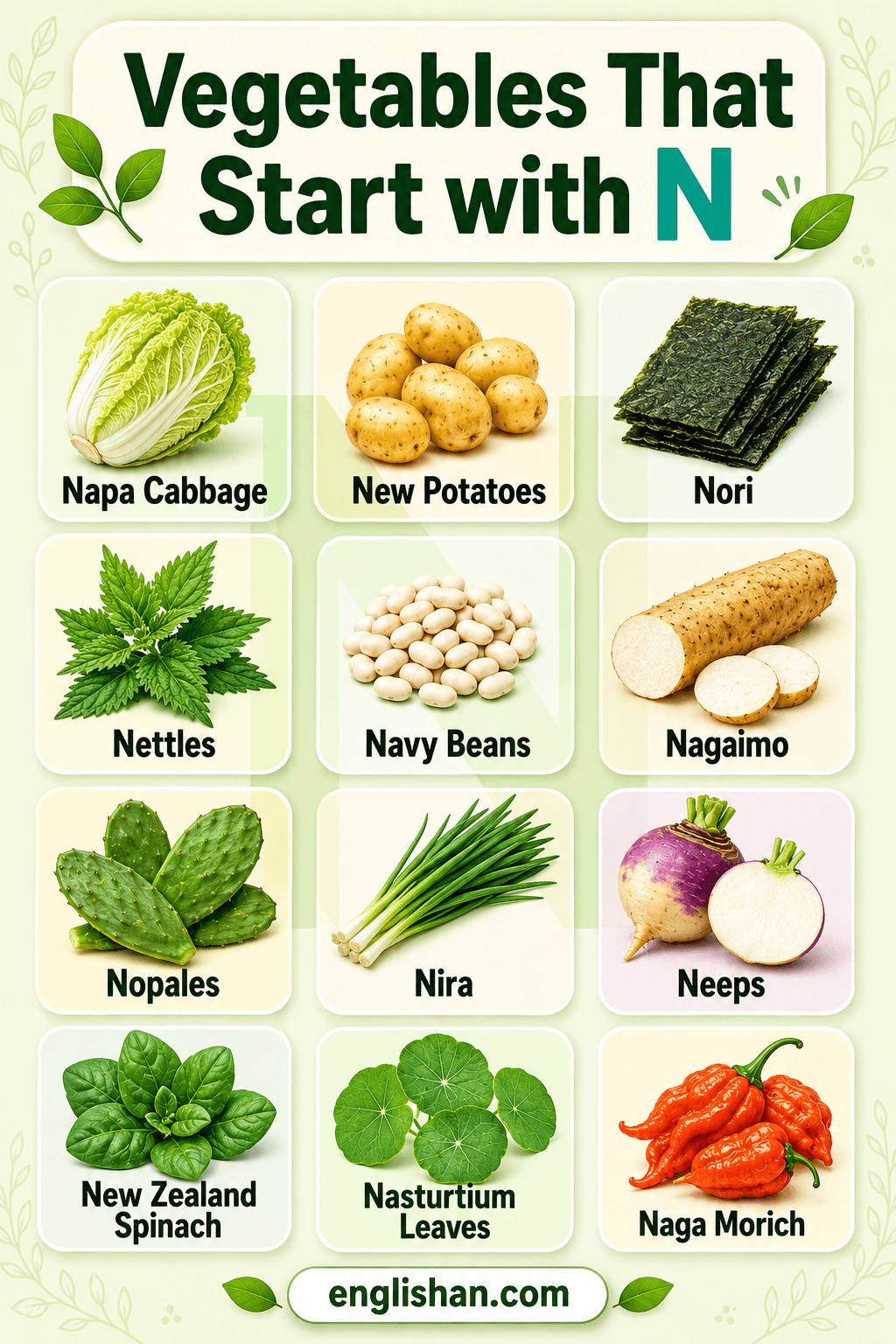
- Nagaimo (Chinese yam)
- Naga pepper (ghost pepper)
- Nanohana (rapeseed greens)
- Nantes carrot
- Napa cabbage
- Napini (kale raab)
- Nasturtium
- Navy bean
- Neem leaf
- Neep (turnip or swede)
- Negi (Japanese scallion)
- Nettle (stinging nettle)
- New potato
- New Zealand spinach
- New Zealand yam (oca)
- Nigella seeds (kalonji)
- Nira (garlic chives)
- Nopales (cactus pads)
- Nori
- Norland potato
- NuMex chile pepper
- Nutmeg flower (mace)
N Vegetables At A Glance
| Vegetable | Type | Flavor profile | Best known for |
|---|---|---|---|
| Napa cabbage | Leafy brassica | Mild, sweet, crisp | Kimchi, hot pots, stir-fries |
| Nopales | Cactus vegetable | Tart, green, faintly citrusy | Tacos, salads, grilled cactus pads |
| Nori | Sea vegetable | Briny, nutty, umami-rich | Sushi, onigiri, rice bowls |
| Navy bean | Legume | Mild, creamy, starchy | Baked beans, soups, stews |
| Nettle | Wild green | Earthy, mineral, spinach-like | Nettle soup, pesto, spring greens |
| Nagaimo | Root or tuber | Mild, crisp raw, slippery grated | Tororo, soba topping, okonomiyaki |
| Naga pepper | Chile pepper | Extremely hot, smoky, fruity | Hot sauces, chutneys, curries |
| Nantes carrot | Root vegetable | Sweet, tender, crisp | Raw snacking, roasting, salads |
| Neep | Root vegetable | Sweet, earthy, mild | Mashed neeps, Scottish suppers, stews |
| Nira | Allium | Garlicky, mild onion flavor | Dumplings, stir-fries, pancakes |
| New Zealand spinach | Leafy green | Mild, fleshy, slightly salty | Warm-weather spinach substitute |
| Nigella seeds | Culinary seed | Oniony, nutty, lightly bitter | Naan, pickles, panch phoron |
Vegetables That Start With N With Pictures
Nagaimo
Nagaimo is a long, pale yam known in Japanese cooking for a texture unlike most roots. Raw slices taste crisp, mild, and faintly sweet, close to a starchier jicama. Once grated, the flesh turns glossy and viscous, forming the paste known as tororo.
That slippery texture gives nagaimo its place in Japanese food. Grated tororo is poured over hot rice or soba noodles, where it adds cool, starchy richness. Mixed into okonomiyaki batter, it lightens the pancake and gives the interior a softer structure. Thin matchsticks of raw nagaimo also work well with soy sauce, bonito flakes, and shredded nori.
Nagaimo can surprise first-time eaters, but the texture is prized rather than tolerated. In the right dish, it tastes refreshing, delicate, and deeply tied to Japanese home cooking.
Naga Pepper
Naga pepper refers to a family of extremely hot chile peppers from northeastern India and Bangladesh. The best-known types are bhut jolokia, often called ghost pepper, and naga morich. These peppers can rise beyond one million Scoville heat units, placing them among the fiercest cultivated chiles in the world.
Under the heat, naga peppers carry a smoky, fruity, faintly sweet flavor. In Nagaland, Assam, and nearby regions, they sharpen chutneys, pickles, dried spice blends, and pork curries. A single minced pepper can dominate a whole pot, so cooks usually treat naga peppers as a controlled accent rather than an ordinary vegetable serving.
Handle them with care. The oils linger on skin, cutting boards, and knives, and the heat builds long after the first bite.
Nanohana
Nanohana is the Japanese name for the young flowering shoots of rapeseed, harvested before the plant opens fully into yellow blossom. The tender stems, leaves, and tight flower buds taste gently bitter, faintly sweet, and brassica-like, close to a softer version of broccoli rabe.
In Japanese kitchens, nanohana often arrives in late winter and early spring. It is blanched briefly, chilled, and dressed with soy sauce, dashi, or Japanese mustard in dishes such as karashi-ae and ohitashi. The small yellow buds give the vegetable strong seasonal identity, especially on spring menus.
Once the flowers open widely, the stems become firmer and the bitterness grows sharper. The best nanohana tastes fresh, green, and lightly peppery.
Nantes Carrot
Nantes carrot is a sweet, cylindrical carrot variety with rounded shoulders and a blunt tip. It was named after Nantes in western France and remains valued by gardeners for its tender flesh, reliable shape, and fine-grained texture.
Unlike long tapered carrots, Nantes carrots stay relatively uniform from top to tip. That shape works well for roasting, slicing, and raw snacking because the pieces cook or crunch evenly. Fresh Nantes carrots taste sweet enough for salads and crudités, while roasting deepens their sugars without turning the core woody.
Home gardeners often favor Nantes in heavier soils where very long carrot types struggle to develop neatly.
Napa Cabbage
Napa cabbage is one of the most recognizable vegetables that start with N. This tall, oblong Chinese cabbage has pale green crinkled leaves, thick white ribs, and a milder flavor than ordinary green cabbage. The leaves soften quickly, while the ribs keep a pleasant crunch in soups, stir-fries, and braises.
In Korean cooking, napa cabbage is known as baechu and forms the base of baechu kimchi. Whole leaves are salted, coated with a paste of gochugaru, garlic, ginger, fish sauce, and salted shrimp, then left to ferment into a tangy, spicy, savory side dish.
Chinese kitchens use napa cabbage in dumpling fillings, stir-fries, hot pots, and braised dishes. In Japan, hakusai is common in nabemono, where the leaves simmer with tofu, mushrooms, seafood, or thinly sliced meat. Raw napa cabbage also works beautifully in slaws because the crinkled leaves hold sesame dressing, rice vinegar, ginger, and toasted nuts.
Napini
Napini is the tender flowering shoot that kale plants produce after overwintering. Before the plant fully bolts, the small leaves, stems, and tight buds taste peppery, green, and faintly sweet, with the earthiness of kale and the snap of young broccoli shoots.
Gardeners often treat napini as a bonus spring harvest. It cooks quickly, especially when sautéed with garlic and olive oil or blanched and finished with lemon, Parmesan, or chile flakes. The stems stay tender when picked young, while older shoots turn tougher and more bitter.
Napini belongs on the same mental shelf as broccoli rabe, mustard shoots, and other spring brassica greens.
Nasturtium
Nasturtium is an edible flowering plant with peppery leaves, bright blossoms, and picklable seed pods. The round leaves taste sharper than they look, with a bite similar to watercress. The orange, yellow, and red flowers bring color to salads while adding real flavor rather than decoration alone.
The green seed pods are prized in pickles. When soaked in vinegar and salt, they become a condiment often called “poor man’s capers,” carrying a briny, mustardy edge that suits sandwiches, salads, and cold plates.
Nasturtium grows vigorously in poor soil, so it is popular with home gardeners who want edible flowers without delicate maintenance.
Navy Bean
Navy bean is a small white bean with creamy flesh and a mild, starchy flavor. Though botanically a legume, it belongs in a culinary vegetable list because beans function as savory plant foods in soups, stews, casseroles, and salads.
The name comes from the bean’s long history as a staple food for the United States Navy. Dried navy beans were cheap, shelf-stable, protein-rich, and well suited to long storage. Today, they remain the classic bean for many familiar dishes:
- American baked beans simmered with molasses, mustard, brown sugar, and pork
- Senate bean soup made with navy beans, ham, onion, and broth
- British baked beans in tomato sauce served over toast
- White bean stews where navy beans stand in for other small white beans
Soaked navy beans usually cook in about 60 to 90 minutes. Canned navy beans work well for faster soups, dips, and warm bean salads.
Neem Leaf
Neem leaf comes from the neem tree and has an intense bitter flavor. It is more common in traditional medicine than everyday cooking, but young leaves hold a place in parts of South Asian and Southeast Asian food culture.
A small quantity of neem leaf can sharpen dals, chutneys, rasam, and festival dishes. The bitterness is powerful, so cooks use it sparingly and often balance it with tamarind, lentils, rice, spices, or fat. In Ayurvedic and Siddha traditions, neem is associated with bitter tonics and seasonal cleansing foods.
Neem leaf is not a casual salad green. Its culinary role is closer to a bitter medicinal herb than a familiar vegetable.
Neep
Neep is the Scottish and Northern English name commonly tied to turnip, although in Scotland it often refers to swede or rutabaga. That distinction explains why “neeps and tatties” served with haggis usually means mashed swede and mashed potatoes, not the small white turnips many English and American readers picture.
Neeps taste sweet, earthy, and mellow once boiled and mashed with butter, black pepper, and salt. They also belong in Scottish stews and clapshot, a mash of turnip or swede with potatoes.
On Burns Night, January 25, neeps sit beside haggis and tatties as part of the traditional supper honoring Robert Burns. Few vegetables carry a stronger Scottish food identity.
Negi
Negi is a Japanese bunching onion with a long white shaft and dark green tops. It is thicker and firmer than many Western green onions, so it holds its shape under grilling, simmering, and high heat.
When grilled whole, negi turns sweet, smoky, and soft inside. Sliced thin, it garnishes ramen, miso soup, udon, rice bowls, and cold tofu. In yakitori restaurants, pieces of negi are threaded between chicken on negima skewers, where the onion chars at the edges and stays juicy in the center.
Negi brings onion sweetness without the harsh bite of raw bulb onion, making it one of the most versatile alliums in Japanese cooking.
Nettle
Nettle, especially stinging nettle, is a wild spring green covered in tiny hollow hairs that deliver a sharp sting when touched raw. Heat changes everything. Blanching, cooking, or drying collapses the hairs and turns nettle into a safe, mineral-rich vegetable.
Cooked nettle tastes earthy, green, and spinach-like, with a deeper, almost nutty quality. Nettle soup is a spring tradition in Britain, Scandinavia, and Central Europe, often made with onion, potato, stock, and cream. Blanched nettles also blend into pesto with garlic, Parmesan, nuts, and olive oil.
Foragers harvest young nettle tops with gloves before the stems toughen. Once prepared properly, nettle becomes one of the most rewarding wild greens of early spring.
New Potato
New potatoes are potatoes harvested young, while their skins are still thin and their flesh remains waxy. The name refers to maturity rather than a single variety, so many potato types can be sold as new potatoes.
Their texture separates them from starchy baking potatoes. New potatoes hold together when boiled, roasted, steamed, or braised, which makes them ideal for potato salads, warm side dishes, and spring plates. In Britain, boiled new potatoes tossed with butter, fresh mint, and salt are a seasonal classic.
The skin is tender enough to eat without peeling. Halved and roasted with rosemary or thyme, new potatoes develop crisp edges while staying creamy inside.
New Zealand Spinach
New Zealand spinach is not true spinach, but it fills the same culinary role in warm weather. True spinach often bolts in summer heat, while New Zealand spinach thrives through hot months and produces thick, triangular, slightly fleshy leaves.
The flavor is mild, green, and faintly salty. The texture is more succulent than regular spinach, so it works especially well sautéed with garlic, wilted into soups, or added to egg dishes. Young leaves can be eaten raw, though older leaves are better cooked.
The plant grows along coastal areas of New Zealand, Australia, and parts of South America. European gardeners adopted it after Pacific voyages brought the plant into wider cultivation.
New Zealand Yam
New Zealand yam is another name for oca, a small, knobbly tuber originally from the Andes. The tubers come in vivid shades of red, yellow, orange, pink, and purple, giving them stronger visual appeal than most root vegetables.
Fresh oca tastes tangy, waxy, and lightly lemony because it contains oxalic acid. Sun-curing the tubers for several days softens the acidity and draws out more sweetness. Once cured, New Zealand yams roast, boil, and bake well, keeping their shape while becoming tender.
Although the name points to New Zealand, the crop began in the Andes, especially Peru and Bolivia. It became established in New Zealand gardens during the 19th century, which is why some English-speaking markets still sell oca under that name.
Nigella Seeds
Nigella seeds, also called kalonji, are tiny black seeds with an oniony, nutty, lightly bitter flavor. They are not vegetables in the narrow produce-aisle sense, but they belong in a broader savory plant-food list because they season breads, pickles, curries, and vegetable dishes.
Kalonji is familiar on naan, where the seeds add crunch and aromatic depth. In Bengali cooking, nigella seeds are one of the five whole spices in panch phoron, alongside fenugreek, cumin, mustard, and fennel. The seeds bloom in hot oil at the start of cooking, releasing a savory fragrance that pairs well with potatoes, lentils, greens, and pickles.
Despite the name, nigella seeds are not onion seeds. Their flavor only suggests onion, oregano, and black pepper in the same small bite.
Nira
Nira is the Japanese name for garlic chives, a flat-leaved allium with a strong garlic aroma and a mild onion finish. The leaves are wider than common chives and carry more savory force once chopped or crushed.
In Chinese cooking, garlic chives appear in dumpling fillings, scrambled eggs, stir-fries, and savory pancakes. Korean cooks know the same plant as buchu and turn it into buchujeon, a crisp chive pancake served as a side dish or snack. Japanese dishes pair nira with pork, liver, eggs, ramen, and gyoza fillings.
Nira tastes best when fresh. Long cooking dulls the aroma, so stir-fries usually receive it near the end.
Nopales
Nopales are the flat, paddle-shaped pads of the prickly pear cactus. Harvested young, the pads taste mildly tart and green, somewhere between asparagus, green beans, and okra, with a faint citrus edge.
Before cooking, the spines and tiny hair-like glochids must be scraped away. The cleaned pads may be grilled whole, sliced into strips called nopalitos, sautéed with onions and tomatoes, or mixed into salads with cilantro, lime, and chile. In Mexico, nopales also pair naturally with eggs in huevos con nopales and with tortillas in tacos.
Nopales have deep roots in Mexican food culture. The prickly pear cactus was cultivated long before the Spanish arrived, and the plant remains central enough to appear on Mexico’s national emblem.
Nori
Nori is a dried sheet of edible seaweed, most often associated with sushi rolls and onigiri. Culinary nori comes from red algae traditionally classified under Porphyra and related genera, then processed into thin sheets through a method similar to papermaking.
The flavor is briny, nutty, and deeply savory. Toasted nori, known as yaki-nori, has a crisp texture and stronger aroma than untoasted sheets. It wraps sushi, holds rice balls, and crumbles easily over ramen, rice bowls, noodles, and ochazuke.
Korean gim is closely related in culinary use, often toasted with sesame oil and salt. Both belong to the wider world of sea vegetables, even though seaweed is algae rather than a true land plant.
Norland Potato
Norland potato is an early-season red-skinned potato variety with white flesh and a smooth, round shape. It matures quickly, which makes it popular with gardeners who want an early harvest.
The texture is waxy rather than fluffy, so Norland potatoes hold their shape in potato salads, soups, roasted sides, and boiled dishes. Their thin red skin adds color without demanding peeling, and the mild flavor works with herbs, butter, olive oil, sour cream, mustard, and vinaigrettes.
Norland is especially valuable when a dish needs potato pieces that stay intact rather than breaking down into mash.
NuMex Chile Pepper
NuMex chile pepper refers to a series of chile varieties developed through New Mexico State University’s chile breeding work. These peppers range from mild to moderately hot, with sweet, fruity flesh and the distinctive character associated with New Mexican green and red chile.
Fresh NuMex chiles are often roasted until the skins blister, then peeled and chopped into stews, sauces, enchiladas, burgers, eggs, and salsas. In New Mexico, the smell of roasting green chiles marks late summer and autumn as strongly as any harvest food.
NuMex Big Jim is one of the most famous varieties. It can grow very long and works beautifully for stuffed chiles, especially chiles rellenos, because the pods are broad, flavorful, and mild enough to eat as a main ingredient.
Nutmeg Flower
Nutmeg flower, better known as mace, is the lacy red aril that wraps around the nutmeg seed inside the fruit of the nutmeg tree. Once dried, mace turns orange-amber and develops a flavor similar to nutmeg but lighter, more floral, and slightly peppery.
Mace is not a table vegetable, but it is an edible plant part with a strong place in savory cooking. Whole mace blades season biryanis, rice dishes, masalas, broths, and slow-cooked stews. Ground mace also flavors sausages, pâtés, cream sauces, and some baked goods.
Its place in this list is best understood as spice-like rather than vegetable-like. Among N plant foods used in savory kitchens, mace carries enough culinary importance to earn recognition.
Common Types Of N Vegetables
Vegetables beginning with N come from several culinary families rather than one narrow produce category. That variety is what makes the letter more interesting than it first seems.
- Leafy greens: Napa cabbage, nanohana, napini, nasturtium leaves, nettle, neem leaf, New Zealand spinach, and nira bring everything from sweet crunch to bitterness, garlic aroma, and wild mineral depth.
- Roots and tubers: Nagaimo, Nantes carrot, neep, new potato, New Zealand yam, and Norland potato range from crisp raw roots to mashed comfort food and waxy roasting potatoes.
- Legumes: Navy bean is the main N legume, valued for creamy soups, baked beans, and long-simmered stews.
- Cactus vegetables: Nopales are young prickly pear cactus pads, central to Mexican tacos, salads, and breakfast dishes.
- Sea vegetables: Nori brings briny umami to sushi, rice balls, noodles, snacks, and Korean gim-style seaweed sheets.
- Chiles: Naga pepper and NuMex chile pepper sit at very different heat levels, from extreme fire to sweet New Mexican warmth.
- Alliums and aromatics: Negi, nira, nigella seeds, and mace add onion, garlic, spice, and fragrance to savory cooking.
Frequently Asked Questions
What Vegetables Start With The Letter N?
Vegetables that start with the letter N include napa cabbage, nopales, nori, navy beans, nettles, nagaimo, Naga pepper, Nantes carrot, neep, nira, nanohana, New Zealand spinach, New Zealand yam, nasturtium, negi, and new potatoes.
Some entries, such as nori, nigella seeds, and mace, are better understood as sea vegetables or savory plant products rather than ordinary produce-aisle vegetables.
What Is The Most Common Vegetable That Starts With N?
Napa cabbage is one of the most common vegetables that starts with N, especially across East Asian cooking. In Western grocery stores, navy beans, new potatoes, and nori are also widely available. In Mexican markets and kitchens, nopales are everyday staples.
Is Nori A Vegetable?
Nori is a sea vegetable in culinary language. Biologically, it is algae rather than a land plant, but cooks treat it as a vegetable-like ingredient because it is edible seaweed used in savory dishes.
Nori is best known for sushi rolls, onigiri, rice bowls, ramen toppings, and crisp seaweed snacks.
What Are Nopales?
Nopales are the young pads of the prickly pear cactus. After the spines are removed, the pads are grilled, boiled, sautéed, or sliced into nopalitos. Their flavor is mildly tart and green, with a texture that can turn slightly slippery when cooked.
Nopales are especially common in Mexican tacos, salads, egg dishes, and market-style vegetable plates.
What Is Napa Cabbage Used For?
Napa cabbage is used for Korean kimchi, Chinese dumpling fillings, stir-fries, hot pots, soups, braises, and raw slaws. Its leaves are tender, while the white ribs stay crisp, so it works in both quick-cooked and fermented dishes.
Are Nettles Safe To Eat?
Nettles are safe to eat once cooked, blanched, or dried. Raw stinging nettles have tiny hairs that irritate the skin, but heat neutralizes the sting. Cooked nettles taste earthy and spinach-like, making them excellent for soup, pesto, pasta fillings, and spring greens.
What Is The Difference Between Neep And Turnip?
In Scotland, “neep” usually refers to swede or rutabaga, although the word is tied historically to turnip. In many English and American contexts, turnip means the smaller white-rooted vegetable. On Burns Night, “neeps and tatties” usually means mashed swede and mashed potatoes.
What Asian Vegetables Start With N?
Asian vegetables that start with N include nagaimo, nanohana, napa cabbage, negi, nira, nori, neem leaf, nigella seeds, and Naga pepper. These ingredients belong to Japanese, Chinese, Korean, South Asian, and northeastern Indian food traditions.
What Green Vegetables Start With N?
Green vegetables that start with N include napa cabbage, nanohana, napini, nettle, neem leaf, New Zealand spinach, nira, nasturtium leaves, and nopales. Nori is also green once processed into dried seaweed sheets, though it is a sea vegetable rather than a land vegetable.
You May Also Like
Vegetables That Start With N Quiz
Vegetables That Start With N
Which of these is a leafy vegetable?
Napa cabbage is a leafy vegetable. A loose-headed Chinese cabbage, milder than the European kind.
Group by what the thing actually is, not by where it turns up.
Napa cabbage is a leafy vegetable.
Two of these vegetables begin with N. Which one does not?
Queensland blue pumpkin begins with Q, so it is the one that does not belong.
Check each first letter before reading further.
Queensland blue pumpkin is the odd one out.
Which of these vegetables begins with the letter N?
A loose-headed Chinese cabbage, milder than the European kind.
Read the first letter before anything else.
Napa cabbage begins with N.
Name a vegetable beginning with this letter.
A vegetable whose name begins with N is ___.
Accepted here: Napa cabbage, Nettle, Nopal.
More than one answer is right; any vegetable starting with the letter counts.
Napa cabbage begins with N.
Which vegetable does this describe? The sting disappears entirely once the leaves are cooked or dried.
The sting disappears entirely once the leaves are cooked or dried.
Match the description to the fruit rather than to the letter.
The sting disappears entirely once the leaves are cooked or dried.
Turn on JavaScript for the interactive quiz. The full practice set is shown above.