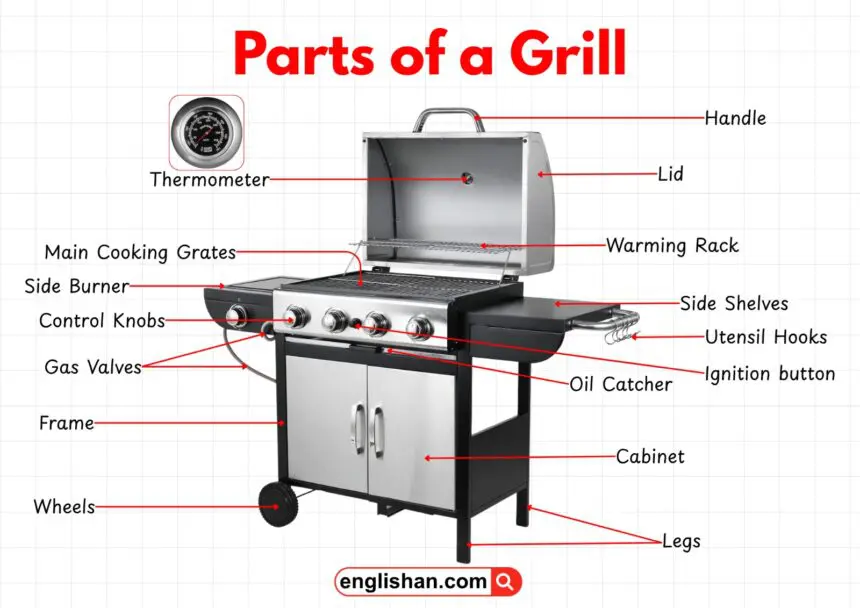
Grilling is not just about tossing food on the heat—knowing your grill makes a huge difference! Whether you’re a beginner or just curious, understanding the different parts of a grill can help you cook more efficiently and safely. In this article, we’ll break down each part of a grill with a labelled diagram so you can see exactly what does what. By the end, you’ll know your grill inside out and be ready to fire it up like a pro!
List of Grill Parts With Names
- Thermometer
- Handle
- Lid
- Warming Rack
- Main Cooking Grates
- Side Burner
- Control Knobs
- Gas Valves
- Side Shelves
- Utensil Hooks
- Ignition Button
- Oil Catcher
- Cabinet
- Frame
- Legs
- Wheels
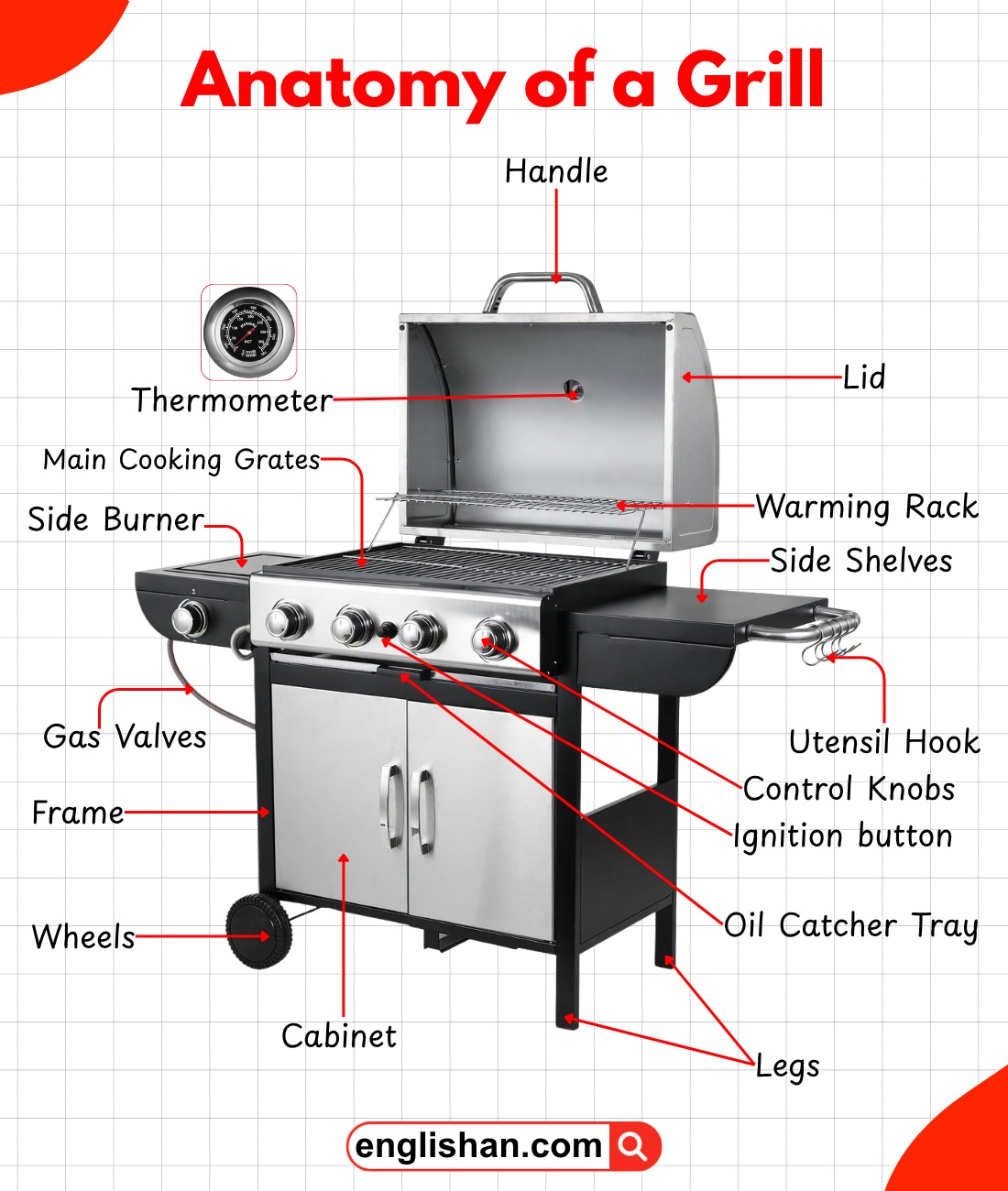
Parts of a Grill Diagram With Names
A grill has many parts that work together to help you cook food perfectly. The lid covers the cooking area and keeps heat and smoke inside. The cooking grates hold your food and make grill marks. Burners, or the firebox in a charcoal grill, provide the heat for cooking. Control knobs let you adjust the temperature. The warming rack keeps cooked food hot without burning it. Other parts, like drip trays, side shelves, and hooks, help manage grease, tools, and accessories. Every part, from the grates to the knobs, has an important role in making the grill work safely and efficiently.
Cooking Components
These parts are directly used for cooking food and handling heat.
Main Cooking Grates
The main cooking grates are the flat metal bars where you place your food. They sit directly above the heat source and get very hot, allowing you to grill meat, vegetables, and other items. These grates also create those classic grill marks on food and help cook it evenly.
Warming Rack
The warming rack is placed above the main grates. It is used to keep cooked food warm without overcooking it. You can also use it to gently heat buns or cook delicate items that need less direct heat.
Side Burner
The side burner is an extra cooking area located on the side of the grill. It works like a small stove and is useful for preparing sauces, boiling water, or cooking side dishes while you grill.
Control & Fuel System
These parts help you control temperature, gas flow, and ignition.
Control Knobs
Control knobs are the primary interface for managing the grill’s heat. By turning a knob, you can increase or decrease the gas flow to the burners, which directly controls the flame size. This allows precise temperature control, so delicate foods like fish don’t burn, while steaks and burgers get seared perfectly. They are designed for easy grip and smooth rotation.
Gas Valves
Gas valves act like the gatekeepers of fuel. They regulate how much gas flows from the propane or natural gas tank into the burners. Working in tandem with control knobs, gas valves ensure the flame stays consistent. Without properly functioning gas valves, the grill could produce uneven heat or become unsafe.
Ignition Button
The ignition button provides a safe and convenient way to light your grill. Pressing it creates an electric spark that ignites the gas in the burners instantly. This eliminates the need for matches or lighters, making startup quick and safe. Many ignition systems also have a fail-safe to prevent accidental sparking.
Thermometer
Built into the grill lid, the thermometer measures the internal temperature of the cooking area. It allows you to monitor heat levels without opening the lid, which helps retain heat and prevents flare-ups. Some thermometers show both Fahrenheit and Celsius, while more advanced models might offer digital readouts for precise cooking.
Structural Parts
These parts form the backbone of the grill, giving it strength, stability, and support.
Frame
The frame is the core structure of the grill. It supports all other components and maintains the grill’s overall shape. A strong frame is essential, especially for large grills, to prevent wobbling or collapse during use. Most frames are made of steel or durable metal to withstand high heat and outdoor conditions.
Legs
Legs elevate the grill off the ground, providing stability and balance. Properly designed legs ensure the grill doesn’t tip over while cooking, even if someone bumps into it. Some grills have adjustable legs to accommodate uneven surfaces.
Wheels
Wheels make moving the grill effortless. They are usually attached to the bottom of one side of the legs so you can lift the opposite side and roll the grill wherever needed. This is especially handy for outdoor spaces, patios, or storage.
Cabinet
The cabinet is the enclosed storage area beneath the grill. It provides a place to safely store the gas tank, grilling tools, or other accessories. This helps keep the cooking area organized and protects items from rain or dirt. Some cabinets have doors or panels to keep everything hidden yet easily accessible.
External & Utility Parts
These parts enhance the grill’s usability, convenience, and overall cooking experience.
Handle
The handle is attached to the grill lid for safe opening and closing. It is designed to stay cool to the touch, even when the grill is hot, preventing burns. Handles are often made from heat-resistant materials like stainless steel or silicone-coated metal.
Lid
The lid covers the cooking area, trapping heat and smoke inside. This creates an oven-like effect, cooking food evenly while adding a smoky flavor. Some lids are hinged for easy lifting, while others may have a removable design for flexibility.
Side Shelves
Side shelves are flat surfaces attached to either side of the grill. They provide convenient space to keep plates, raw ingredients, spices, or grilling tools within reach. Some shelves even include built-in features like cutting boards or utensil holders for added functionality.
Utensil Hooks
Utensil hooks are small hooks on the grill designed to hang spatulas, tongs, brushes, or other grilling tools. They keep everything organized and easily accessible, preventing tools from cluttering the cooking surface or falling to the ground.
Oil Catcher (Grease Tray)
The oil catcher, or grease tray, collects excess grease and oil that drips from the food during cooking. This helps prevent flare-ups caused by dripping grease hitting the flames. It also makes cleaning the grill easier, as the collected grease can be removed and disposed of safely.
Key Takeaway
As we learned, a grill has different parts that work together to make cooking easy and safe. The cooking components, like grates, warming racks, and side burners, handle the heat and cook food evenly. The control and fuel system, including knobs, valves, ignition button, and thermometer, lets you manage flame and temperature safely. Structural parts such as the frame, legs, wheels, and cabinet provide stability, support, and storage. External parts like the handle, lid, side shelves, hooks, and oil catcher make the grill convenient to use and easy to clean. Knowing these parts helps you grill better and keep your equipment in good condition.
You May Also Like