A bathtub might seem like just a simple fixture in your bathroom, but it’s actually made up of several important parts that work together to make bathing comfortable and safe. From the main structure that holds everything in place to the faucets, pipes, and drains that control water flow, each component has its own role. In this article, we’ll explore all the essential parts of a bathtub and how they work.
List of Bathtub Parts With Names
- Rim
- Two-hole mixer faucet
- Abutment where tub meets wall is sealed with silicone
- Gasket
- Retaining nut
- Overflow pipe
- Flexible connector
- Cold-water supply pipe
- Hot-water supply pipe
- Isolation valve
- Drain
- Waste outlet
- Trap
- Decorative panel
Parts of a Bathtub Diagram With Names
A bathtub is a complete bathing system made up of several essential components that work together to provide comfort, safety, and proper water flow. The fixture body forms the main structure, giving the tub its shape and stability. Water enters through the faucet and valve assembly, allowing you to mix hot and cold water to the right temperature. The water supply pipes carry water to the tub, while the drain, overflow pipe, and trap manage wastewater and prevent leaks or odors. Each part, from the rim and decorative panels to the faucet and waste assembly, plays an important role in smooth operation, hygiene, and a relaxing bathing experience.
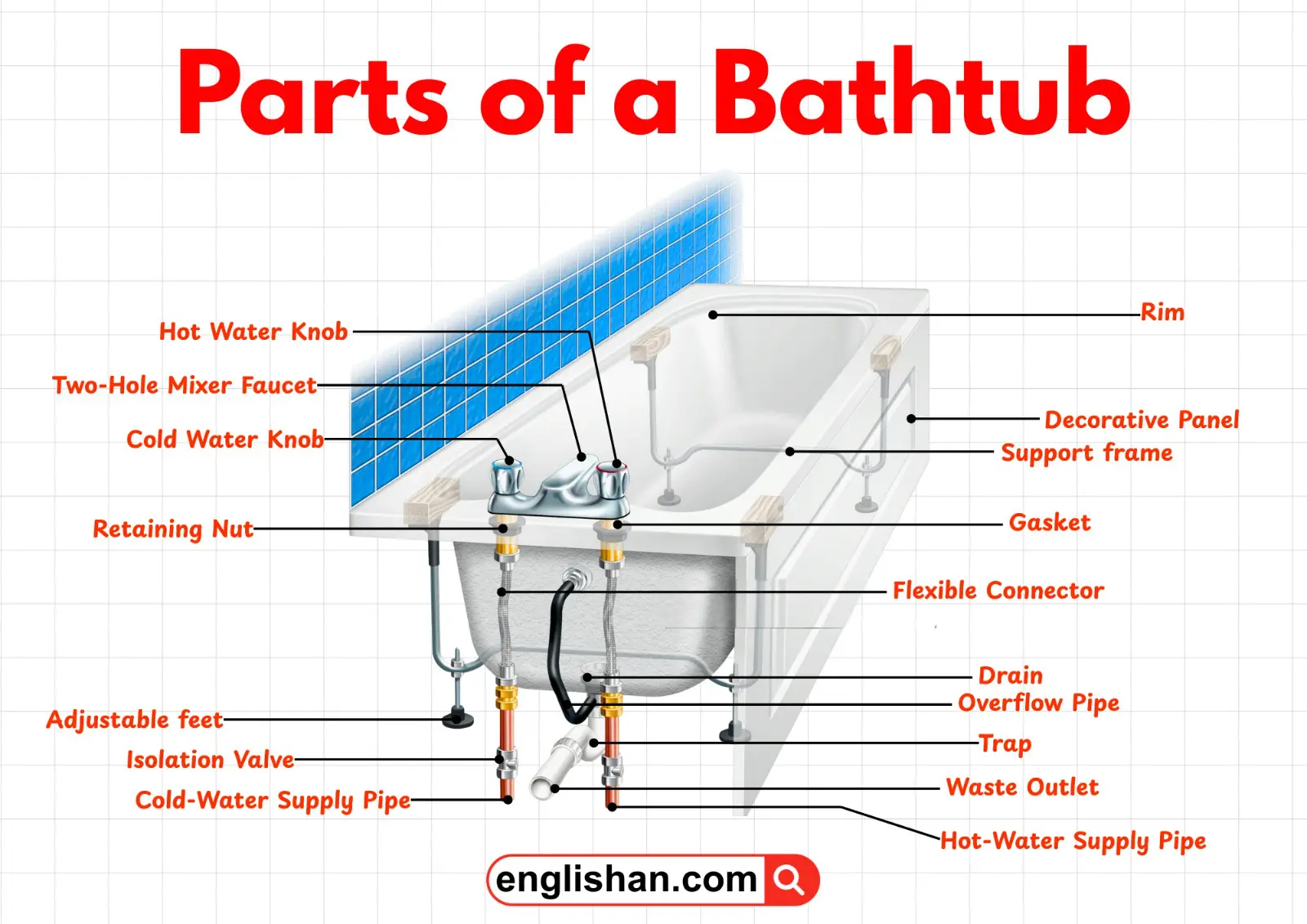
Fixture Body Components (Bathtub Structure)
The fixture body forms the main structure of the bathtub, providing support, shape, and aesthetic appeal. These components are essential for stability and finishing.
Rim
The rim is the top edge of the bathtub that runs along the entire perimeter. It provides a smooth, finished look and serves as a surface for mounting faucets, handles, or other bathtub accessories.
Decorative Panel
This is the panel that covers the front or sides of the bathtub. Its primary purpose is to hide plumbing connections while enhancing the visual appeal of the bathroom. Decorative panels can be made of acrylic, wood, or composite materials.
Abutment Where Tub Meets Wall (Sealed with Silicone)
This is the joint between the bathtub and the wall. It is sealed with silicone to prevent water leakage, keeping the surrounding walls safe from moisture damage. Proper sealing also ensures hygiene by preventing mold or mildew growth.
Faucet / Valve Assembly (Water Mixing & Control)
These components manage the flow and mixing of hot and cold water into the bathtub, allowing the user to adjust temperature and water pressure.
Two-Hole Mixer Faucet
A faucet with separate controls for hot and cold water. Users can mix water to their preferred temperature and adjust the flow rate for a comfortable bathing experience.
Gasket
A rubber or silicone seal placed between the faucet and the tub surface. It prevents water from leaking at the point where the faucet is mounted.
Retaining Nut
A nut that secures the faucet from underneath the tub rim. It ensures that the faucet stays firmly in place and maintains a watertight connection.
Water Supply Piping System (Pressurized Supply Side)
These parts carry water from the main supply lines to the bathtub. They must be durable and properly connected to ensure a consistent and leak-free water supply.
Cold-Water Supply Pipe
A pipe that delivers cold water from the main supply to the bathtub faucet. It is usually made of PVC, PEX, or copper.
Hot-Water Supply Pipe
A pipe that delivers hot water from the water heater to the bathtub faucet, ensuring comfortable bathing temperatures.
Flexible Connector
A flexible hose that connects the supply pipes to the faucet. This allows for slight movements, adjustments during installation, and easier maintenance.
Isolation Valve
A shut-off valve installed in the water supply line to allow maintenance or repairs without shutting off water to the entire plumbing system.
Tub Waste & Overflow Assembly (DWV – Drain, Waste & Vent Side)
These components manage drainage and prevent overflow, keeping the bathtub safe, hygienic, and functional.
Drain
The main opening at the bottom of the bathtub where water exits. The drain is connected to the waste piping system to guide used water safely into the sewer.
Overflow Pipe
A pipe located near the top of the bathtub. It prevents water from spilling over the rim by redirecting excess water into the drain.
Waste Outlet
The connection between the drain and the plumbing system. It channels water from the bathtub into the main sewer or drainage pipe.
Trap
A curved section of the drain pipe that retains a small amount of water. This water barrier prevents sewer gases from entering the bathroom, maintaining hygiene and safety.
Key Takeaway
As we learned, a bathtub is made up of different parts that work together to make bathing safe, comfortable, and leak-free. The fixture body gives it shape and support, the faucet and valves control water flow and temperature, the water supply pipes bring hot and cold water to the tub, and the drain and overflow system make sure water goes out properly without spilling or letting bad odors in. Each part has its own job, but together they make your bathtub work smoothly and keep your bathroom clean and safe.
You May Also Like
- Parts of a Door Knob
- Bicycle Parts Names
- Parts of a Toilet with Labeled Diagram
- Parts of a Monitor with Labeled Diagram