When you look at a house, the roof might seem like just a simple covering, but it’s actually made up of many important parts that work together to keep the building safe and dry. From the edges and slopes to the ridges, valleys, and even skylights, every part has a specific purpose. In this article, we’ll walk you through all the main parts of a roof with a clear, labeled diagram, so you can easily understand how a roof is built and what each component does.
List of Roof Parts With Names
- Skylight
- Ridge
- Valley
- Chimney flashing
- Gable / Rake
- Gable end
- Fascia
- Eave
- Sidewall
- Soffit (underside)
- Abutment
- Dormer
- Downspout
- Drip Edge
- Hip
- Hipped edge
- Rain gutter
- Flat roof
- Flashing
Parts of a Roof Diagram With Names
A roof is a protective structure made up of several key components that work together to shield a building from weather and provide structural stability. The main roof framework gives shape and support, while surfaces like shingles or panels protect against rain, snow, and sunlight. Water is guided safely off the roof through edges, gutters, and downspouts. Each part, from the ridge and valleys to eaves, fascia, and flashing, plays an important role in maintaining strength, durability, and proper water drainage.
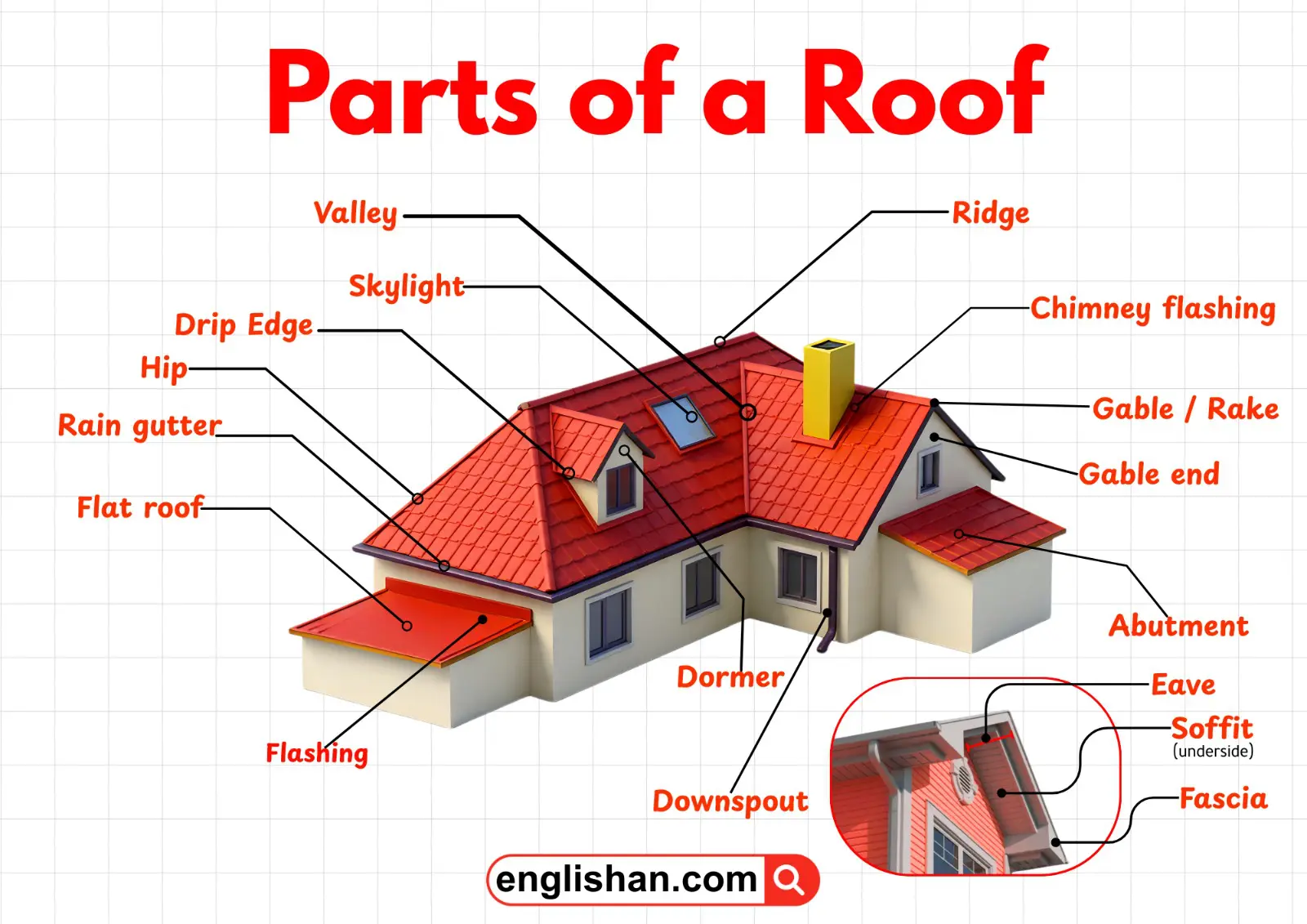
Surface & Shape
The roof’s shape and surface define how a house handles rain, sunlight, and overall protection. These parts make up the main structure of the roof.
Skylight
A skylight is a window installed directly into the roof. It brings natural light into the room and can make spaces feel open and bright. Many skylights also allow ventilation, helping with airflow in the house.
Flat roof
A flat roof is mostly horizontal rather than sloped. It is often used on modern houses and commercial buildings. Flat roofs can provide extra usable space, such as for terraces or gardens, and are easier to access for maintenance.
Hip
A hip is the angled edge where two sloping roof planes meet. Hip roofs are strong and stable, and they help water and snow slide off efficiently.
Hipped edge
The hipped edge is the sloping boundary along the side of a hip roof. It provides a neat finish and reinforces the structure of the roof.
Valley
A valley is formed where two roof slopes meet at an inward angle. Water naturally flows through the valley, so it needs strong construction and proper flashing to prevent leaks.
Ridge
The ridge is the highest horizontal line of the roof where two slopes meet. It completes the roof’s peak and provides a structural backbone.
Dormer
A dormer is a small roofed structure with a window that projects from the main roof. It adds headroom, natural light, and architectural character to attics or upper floors.
Edges & Eaves
The edges of the roof not only complete its shape but also protect the walls, foundation, and structural elements from weather damage.
Gable / Rake
The gable or rake is the sloping edge of a gable roof. It forms the triangular side profile of the house and directs water away from the walls.
Gable end
The gable end is the vertical triangular section of the wall beneath the gable roof. It provides structural support and contributes to the overall design of the house.
Eave
The eave is the overhanging lower edge of the roof. It protects the walls from rain and sunlight and can help reduce water damage to the foundation.
Fascia
The fascia is the horizontal board along the roof’s edge. It supports the gutters, gives the roof a finished look, and helps keep water away from the building structure.
Soffit (underside)
The soffit is the underside of the eave. It can include vents for airflow and protects the roof structure from pests, moisture, and decay.
Drip Edge
The drip edge is a metal strip installed at the roof’s edge. It guides water into the gutters, preventing it from damaging the fascia or the walls.
Penetrations & Flashings
Where the roof meets chimneys, walls, or other structures, extra protection is needed to prevent leaks. Flashings and abutments handle these junctions.
Chimney flashing
Flashing around a chimney seals the gap between the chimney and the roof. It prevents water from leaking into the house through this junction.
Abutment
An abutment is any point where the roof meets a wall or another roof structure. It requires flashing or sealing to keep water from entering the building.
Flashing
Flashing is thin metal installed wherever the roof has joints, penetrations, or intersections. It directs water away from vulnerable areas, ensuring the roof remains waterproof.
Rainwater Management
Rainwater needs to be directed safely away from the house to protect walls, the foundation, and landscaping. Gutters and downspouts manage this flow.
Rain gutter
The rain gutter runs along the edge of the roof to collect water from rainfall. It channels the water safely to the downspout and away from the walls and foundation.
Downspout
The downspout is the vertical pipe that carries water from the gutter to the ground or drainage system. It prevents water from pooling around the building and causing damage.
Key Takeaway
As we learned, a roof works as a complete protective and drainage system. The main structure, including the ridge, hips, valleys, and slopes, gives it its shape and strength. Edge components such as the eaves, fascia, soffit, and drip edge shield the walls and guide water away. Areas like chimneys, dormers, and skylights depend on proper flashing and sealed joints to prevent leaks. Gutters and downspouts then carry rainwater safely away from the foundation. Although materials and designs vary, all parts work together to ensure stability, weather protection, and durability.
You May Also Like