When a sink leaks, clogs, or needs a replacement part, the hardest part is often knowing what to call each piece. This affects students learning basic home fixtures, homeowners dealing with repairs, and buyers standing at a hardware counter. Without the correct names, even a small issue becomes harder to explain or fix.
In this article, we teach you the names of the parts of a sink by breaking them down one by one. You will learn parts such as the basin, faucet, spout, handles, aerator, drain, stopper, P-trap, tailpiece, and supply lines. A labeled diagram is included so you can see each part and connect the name directly to its place on the sink.
Parts Of A Sink and Their Functions
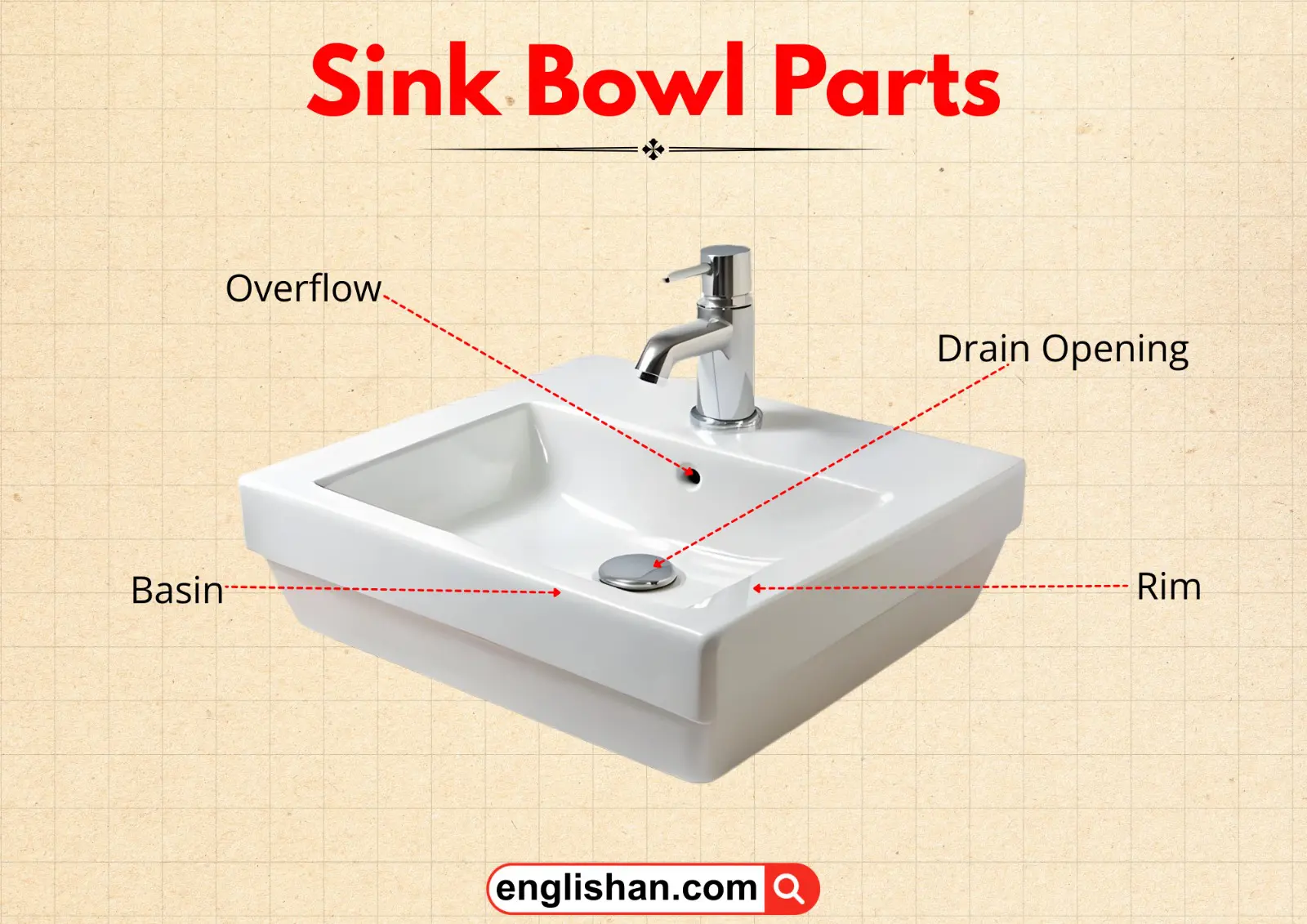
Sink Bowl Parts
Basin
It holds water during washing and rinsing tasks. Depth and contour shape water capacity and influence how easily contents move toward the drain.
Rim
This edge frames the basin and supports attachments or sealing surfaces. Its profile affects spill control and the feel during contact.
Deck
The flat surface accommodates faucet mounts and accessories as one plane. Finish and thickness influence mount stability and resistance to wear.
Drain Opening
This cutout allows water to pass into the drain assembly below. Diameter and finish affect flow clearance and sealing with connected parts.
Overflow
A secondary passage limits water level rise during filling. The channel maintains overflow control and reduces spill risk when flow continues.
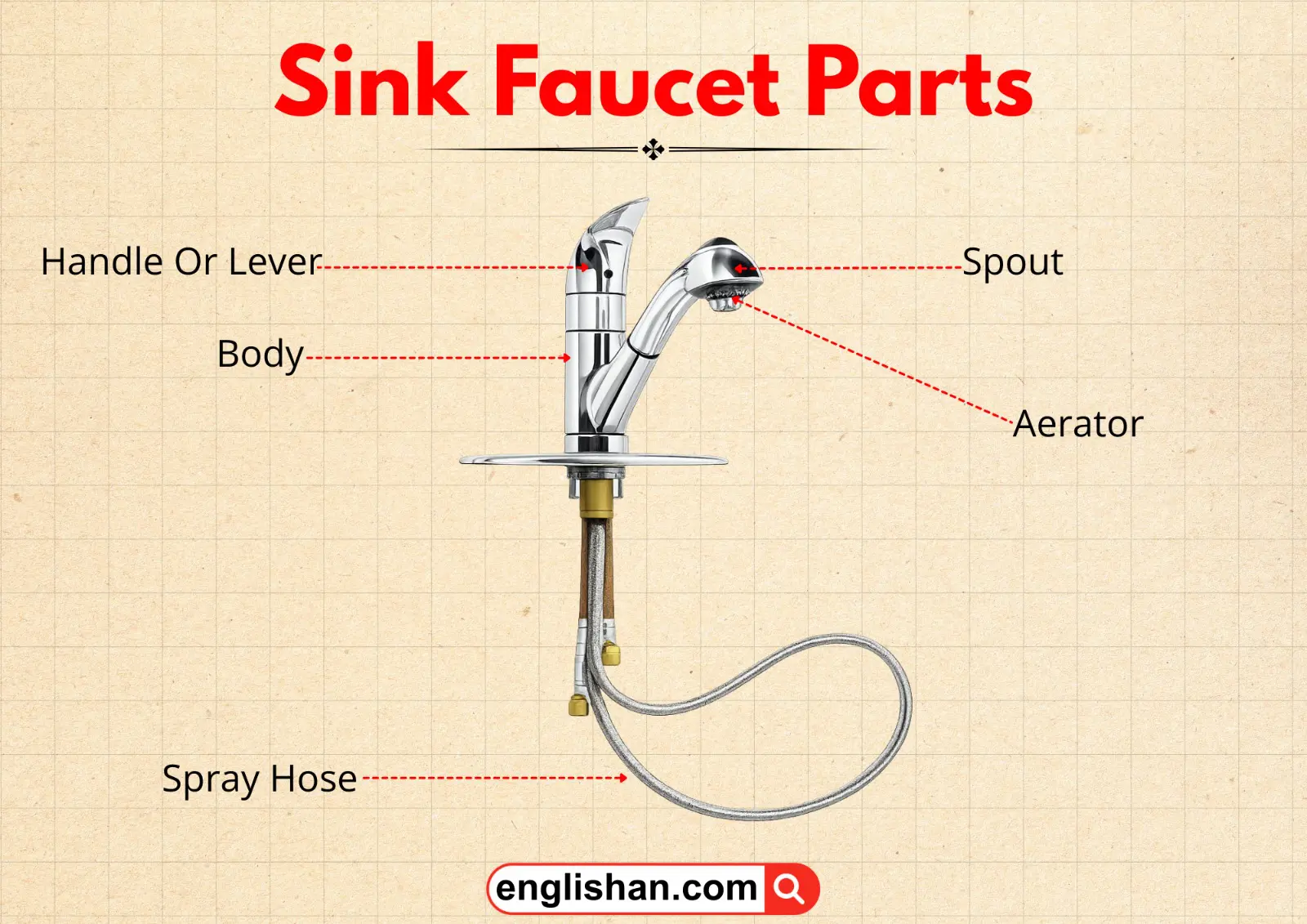
Sink Faucet Parts
Spout
It directs water outward from the faucet body and defines the reach of the stream. Its curve and height influence water delivery and clearance during use.
Aerator
This fitting blends air into the water stream as it exits the spout. The mix shapes flow rate and reduces splash without lowering pressure.
Handle Or Lever
Used to start, stop, and adjust water flow through simple motion. Movement range controls temperature blending and output strength.
Faucet Body
It contains the internal valve and joins all working sections into one solid unit. Strong construction preserves internal sealing and steady operation.
Spray Hose
This flexible line feeds water to a pull out or side spray head. Flexibility allows extended reach while maintaining consistent flow.
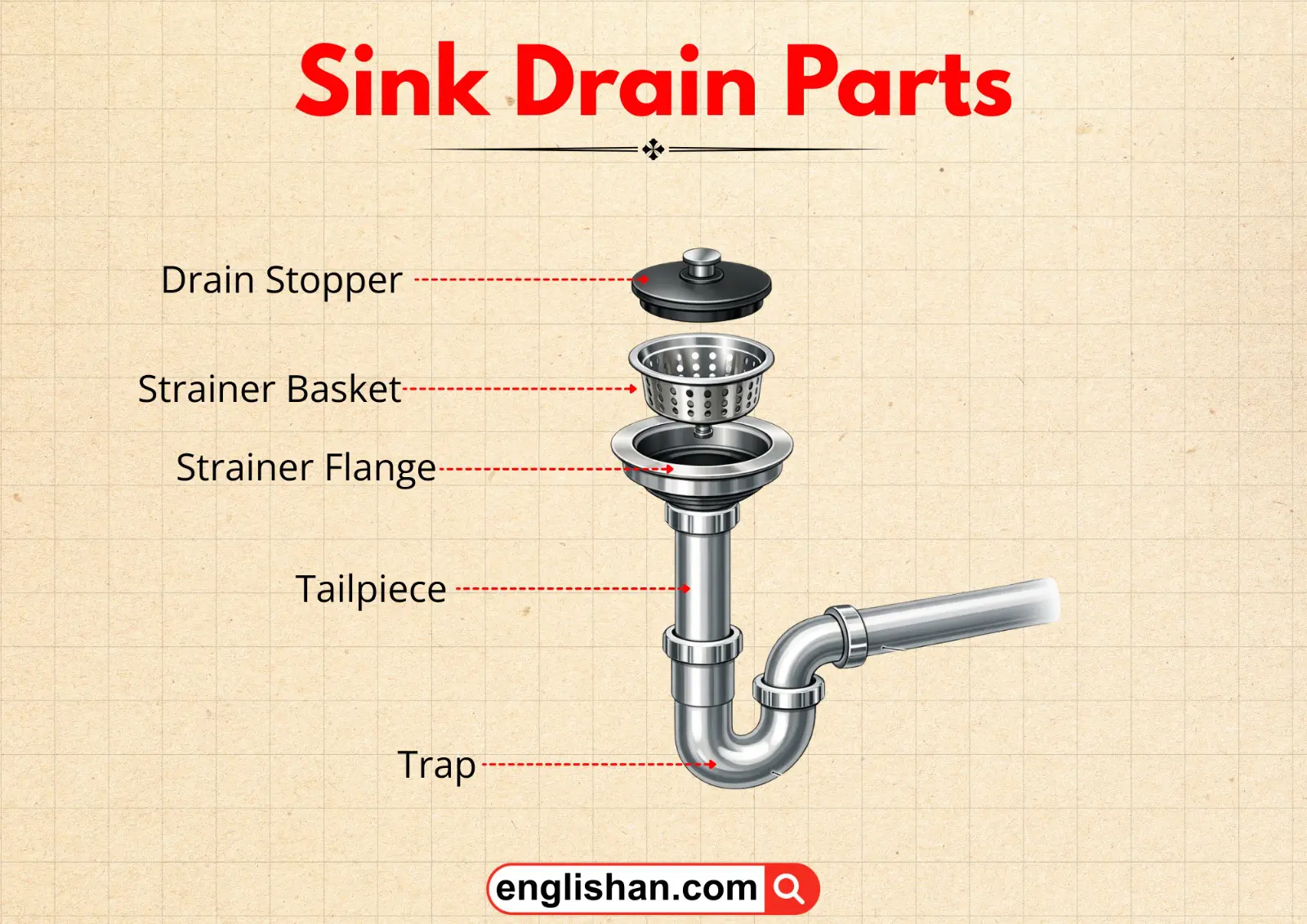
Sink Drain Parts
Drain Stopper
It seals the drain opening when water needs to stay in the basin. A proper seal controls water retention and releases cleanly when opened.
Strainer Basket
This insert catches food scraps and debris before they move into the drain line. Openings allow steady water flow while limiting clogs.
Strainer Flange
The flange forms the connection between the sink opening and the drain assembly. A tight fit maintains leak resistance at the joint.
Tailpiece
It carries wastewater downward from the drain opening into the trap. Length and diameter affect flow continuity and proper alignment.
Trap
The curved section holds a small amount of water after each use. That seal blocks sewer gases from moving back into the sink area.
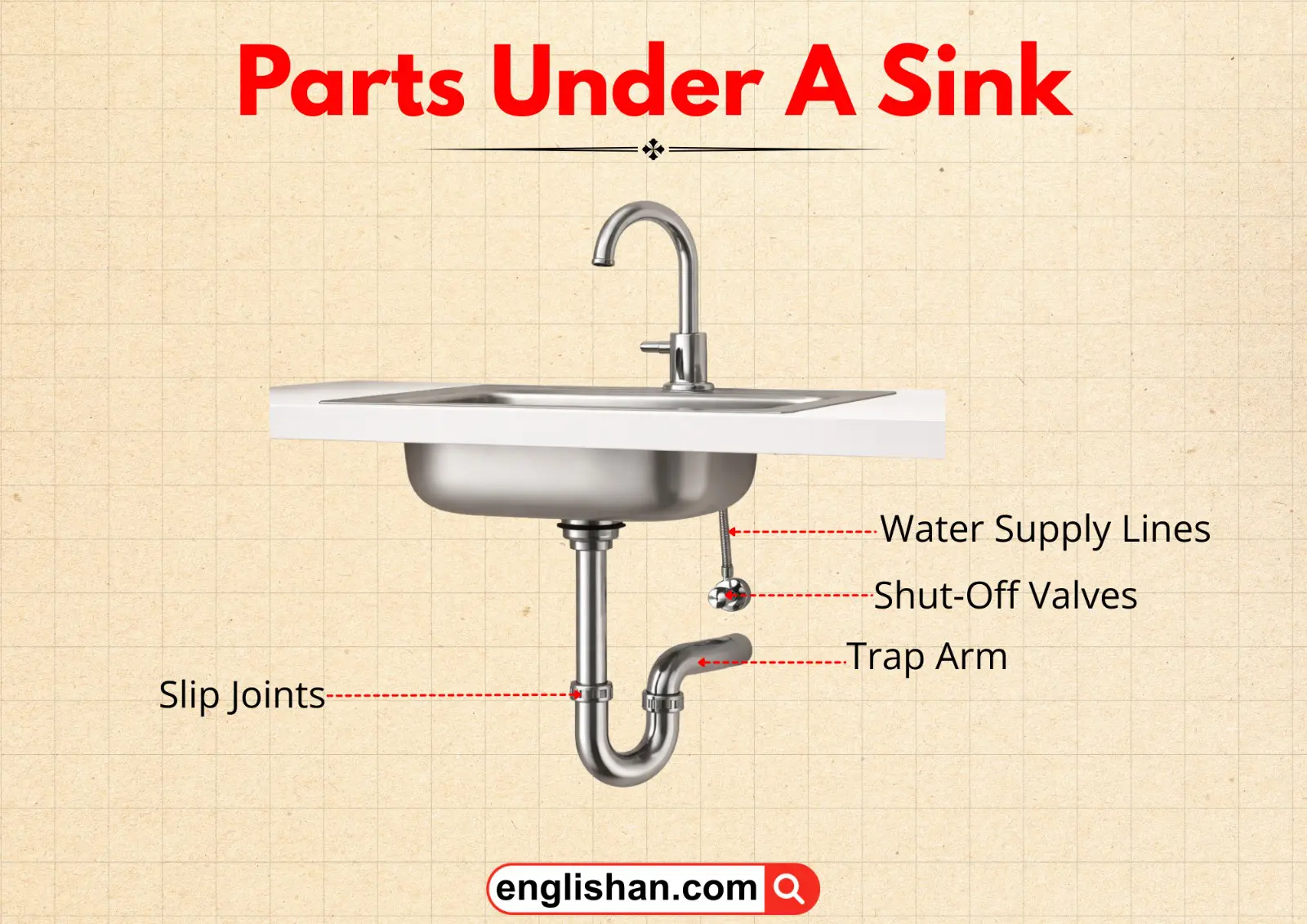
Parts Under A Sink
Shut-Off Valves
They control water flow to the faucet without affecting the rest of the system. Turning them stops local supply, which isolates the sink during changes or adjustments.
Water Supply Lines
These lines carry water from the shut-off valves to the faucet in a sealed path. Their flexibility supports pressure stability and proper alignment.
Trap Arm
It moves wastewater from the trap toward the branch drain in a straight section. Correct sizing maintains flow continuity while keeping the seal effective.
Slip Joints
Threaded connectors join drain sections using compression washers. This setup allows adjustable alignment and a tight seal without permanent bonding.
Sink Key Takeaways
Knowing the parts of a sink helps connect water flow, drainage, and control into one system. The faucet manages delivery while valves regulate pressure and mix. The basin contains water as surfaces guide it toward the drain. Drain components move water away while trapping odors and debris. Mounting and sealing elements keep the unit stable and leak free. We use these names as a shared reference when discussing cleaning, plumbing checks, or replacement without confusion. Together, each part works in sequence so flow, control, and removal stay coordinated.
You May Also Like