A trumpet might look simple at first glance, but it’s actually made up of several important parts that all work together to create its bright, powerful sound. Whether you’re a beginner, a student, or just curious about how this instrument works, understanding its anatomy can make a big difference. In this article, we’ll explore the different parts of a trumpet in a clear and easy way, so you can recognize each piece and understand what it does without feeling overwhelmed.
List of Trumpet Parts With Names
- Mouthpiece
- Mouthpiece Receiver
- Leadpipe
- Valves (1st, 2nd, 3rd)
- Finger Buttons
- Finger Hook
- Tuning Slide (Main Slide)
- Bell
- Valve Casing
- 1st Valve Saddle (Thumb Saddle/Ring)
- Valve Slides
- 3rd Valve Ring (Finger Ring)
- Valve Caps
- Braces
- Water Key (Spit Valve)
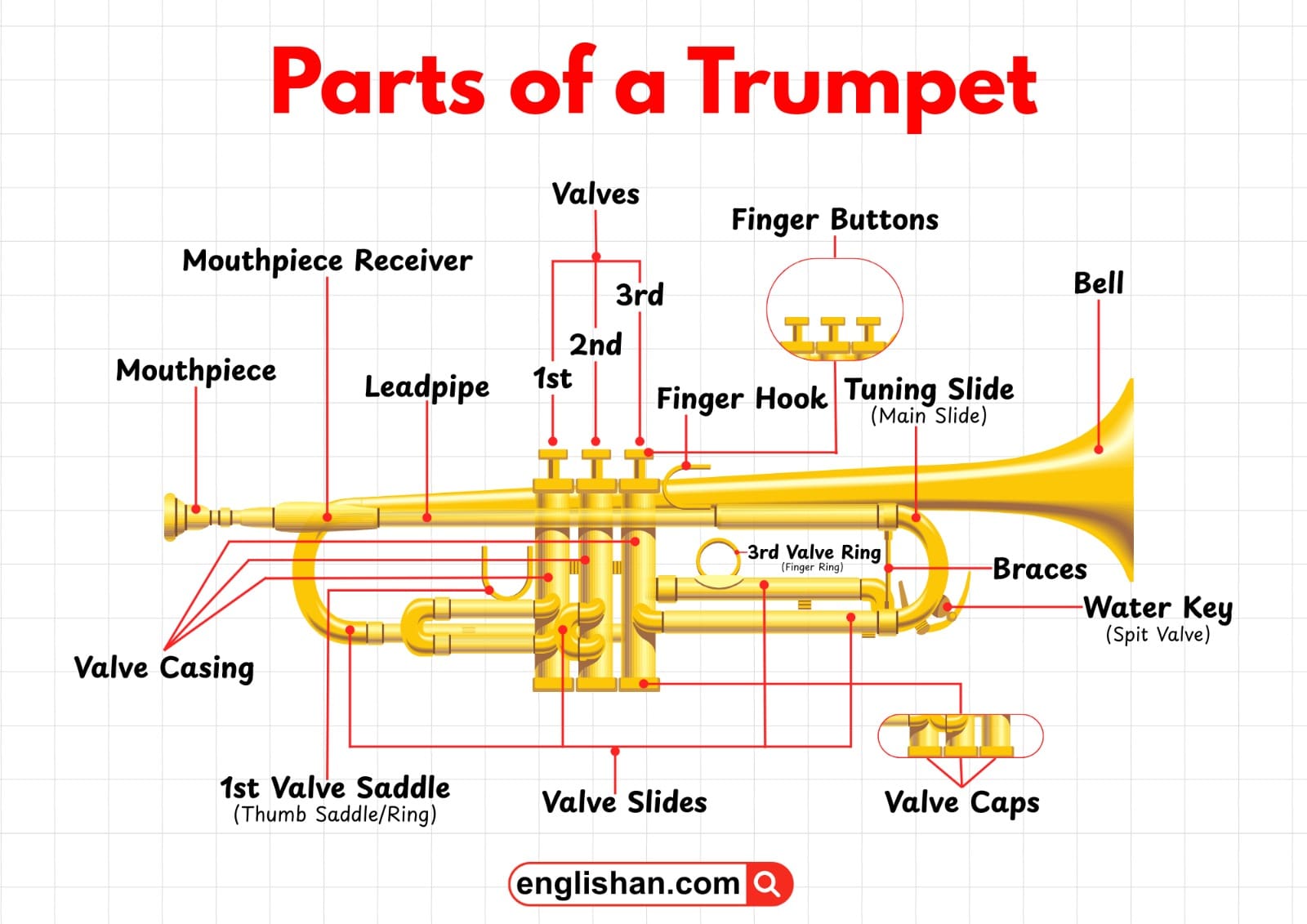
Parts of a Trumpet Diagram With Names
A trumpet is made up of several key parts that work together to produce its clear and powerful sound. The mouthpiece is where the player blows air, while the leadpipe carries it into the instrument. Valves and valve slides help control the pitch, allowing different notes to be played. The tuning slide adjusts the overall tuning, and the bell amplifies and projects the sound outward. Finger buttons, water keys, and braces add control, maintenance, and support. Each part plays an important role in helping the trumpet sound its best and function smoothly.
Sound Production Parts
These parts are responsible for creating and shaping the trumpet’s sound. They determine how the air is directed and how the instrument projects its tone.
Mouthpiece
The mouthpiece is where the player blows air into the trumpet. It shapes the sound and influences how easy or difficult it is to play. Different mouthpieces can slightly change tone, comfort, and response.
Mouthpiece Receiver
This part holds the mouthpiece securely in place. It connects the mouthpiece to the rest of the trumpet so that air flows smoothly into the instrument.
Leadpipe
The leadpipe is the first tube the air passes through after leaving the mouthpiece. It guides the airflow into the trumpet and affects the instrument’s responsiveness and tone quality.
Bell
The bell is the flared end of the trumpet. It projects the sound outward and contributes to the trumpet’s bright, resonant, and powerful tone.
Pitch Control Parts
These parts help the player change the notes and adjust the tuning of the trumpet.
Valves (1st, 2nd, 3rd)
Valves redirect air through different tubing paths when pressed, changing the pitch and allowing the player to produce a wide range of notes.
Valve Slides
Valve slides are small adjustable tubes connected to each valve. They fine-tune the pitch of specific notes and help maintain proper tuning throughout playing.
Tuning Slide (Main Slide)
The main tuning slide controls the overall pitch of the trumpet. Pulling it out makes the instrument flatter, while pushing it in sharpens the notes slightly.
Control & Handling Parts
These parts help the player hold, control, and manipulate the trumpet comfortably while playing.
Finger Buttons
These are the tops of the valves pressed by the player’s fingers. They provide grip, comfort, and precise control over valve operation.
Finger Hook
The finger hook offers additional support for holding the trumpet securely. It gives stability and makes handling easier, especially for beginners.
1st Valve Saddle (Thumb Saddle/Ring)
This small ring or curved piece allows the player to rest the thumb while making slight adjustments during playing, improving control and comfort.
3rd Valve Ring (Finger Ring)
This ring is used to adjust the third valve slide while playing. It helps fine-tune certain notes for more accurate intonation.
Structural Parts
These parts keep the trumpet stable, aligned, and properly functioning.
Valve Casing
The valve casing houses and aligns the valves. It ensures smooth movement and proper function, which is essential for precise note production.
Braces
Braces are small supports that connect different parts of the trumpet. They strengthen the instrument and maintain its structural integrity.
Valve Caps
Valve caps cover the tops and bottoms of the valves. They protect internal parts and help keep the valves secure and aligned.
Maintenance Part
This part helps keep the trumpet clean and playable during use.
Water Key (Spit Valve)
The water key is used to release moisture that builds up inside the trumpet while playing. Removing this moisture maintains sound quality and keeps the instrument clean and well-functioning.
Key Takeaway
As we learned, a trumpet has different parts that work together to create sound, control pitch, and make playing easier. The mouthpiece, leadpipe, and bell produce and project the sound. Valves, valve slides, and the tuning slide control the notes and tuning. Finger buttons, hooks, and rings help hold and play the instrument comfortably. Valve casings, braces, and caps keep it stable, while the water key removes moisture to keep it clean and playable.
You May Also Like