Many plants called shrubs grow in gardens, forests, and even deserts. Shrubs are smaller than trees and have many woody stems that grow close to the ground. They can be flowering, thorny, or evergreen, and are used in landscaping, medicine, and even food.
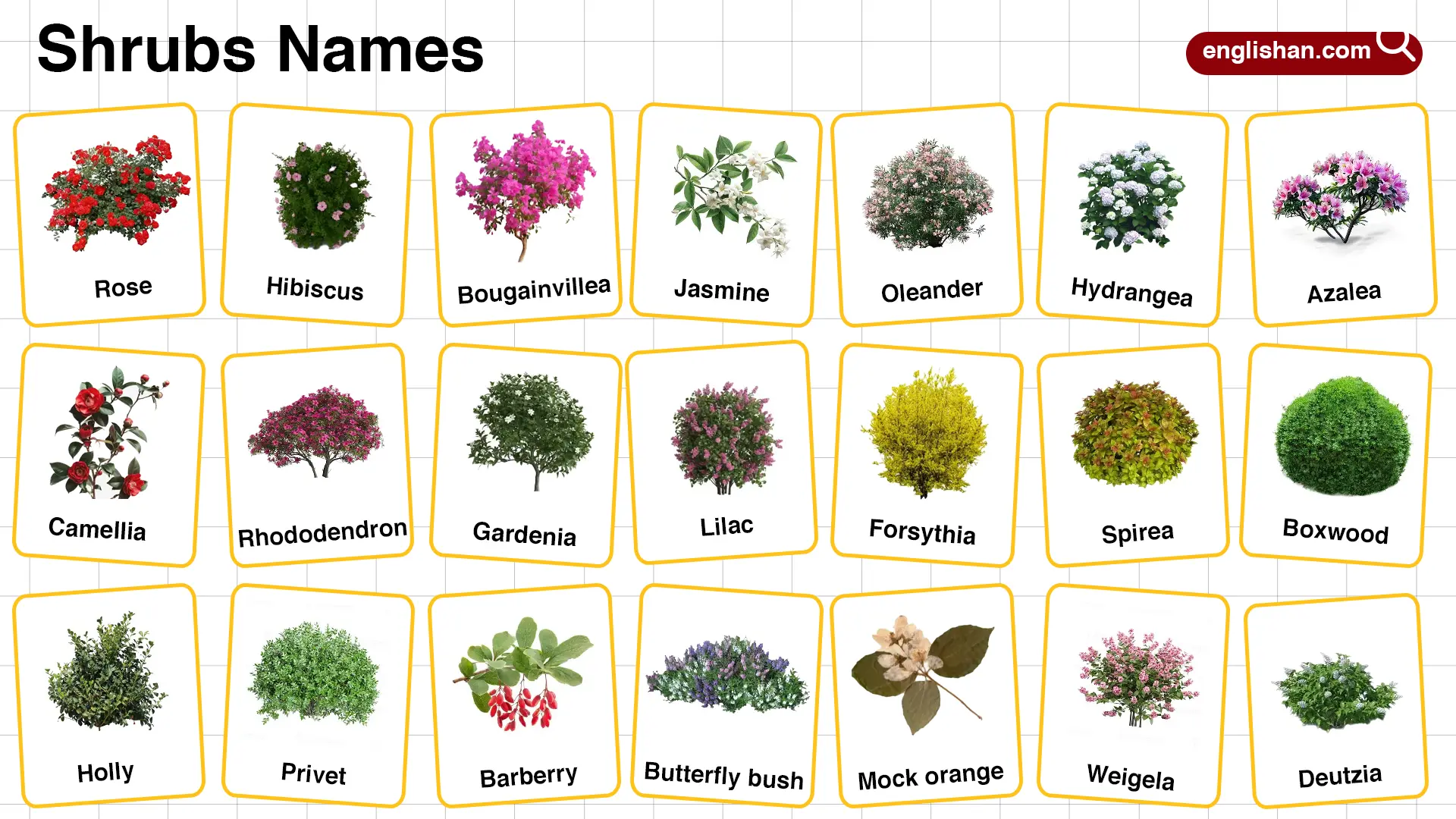
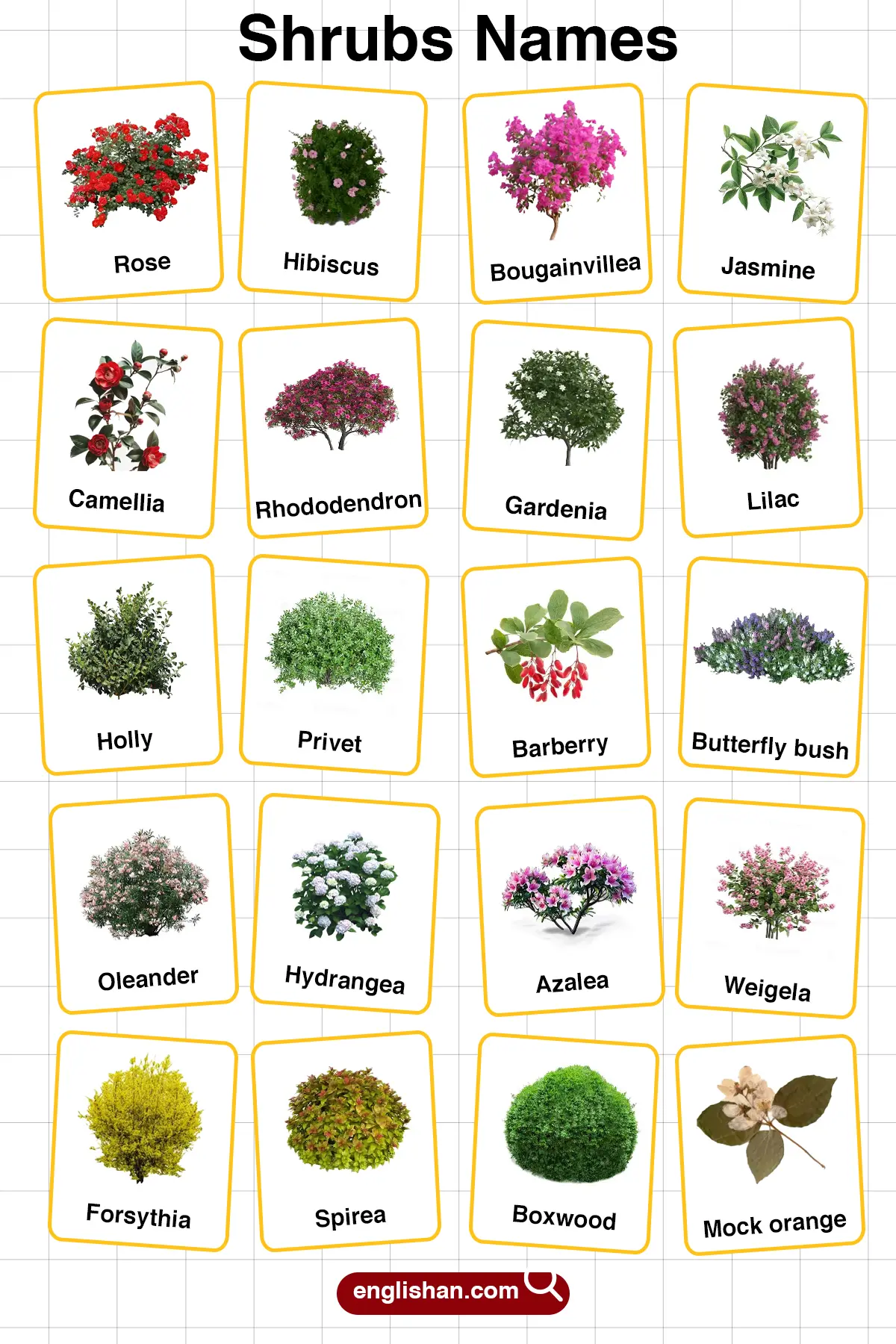
This post lists shrubs names with pictures. You’ll learn common types of shrubs found in different regions, grouped to support clear and simple vocabulary building.
What Is a Shrub?
A shrub is a woody plant smaller than a tree and has multiple stems. It stays close to the ground and is often used in gardens or landscapes. Some shrubs remain green all year, while others shed their leaves during colder seasons. Learning shrub names helps understand plant types used in different settings like parks, homes, and pathways.
List of Shrubs Names
Below is a list of commonly known shrubs seen in gardens, walkways, and open spaces. Each name adds to your plant vocabulary and helps you recognize popular shrubs in English.
- Rose
- Hibiscus
- Bougainvillea
- Jasmine
- Oleander
- Hydrangea
- Azalea
- Camellia
- Rhododendron
- Gardenia
- Lilac
- Forsythia
- Spirea
- Boxwood
- Holly
- Privet
- Barberry
- Butterfly bush
- Mock orange
- Firethorn
- Deutzia
- Weigela
- Abelia
- Dogwood
- Fuchsia
- Viburnum
- Indian hawthorn
- Wintercreeper
- Pittosporum
- Nandina
Types of Shrubs
Shrubs can be divided into two main types based on how they grow throughout the year. Below is the list grouped by their leaf habits.
Evergreen Shrubs
These shrubs keep their green leaves year-round and stay lush in all seasons.
- Boxwood: Commonly used in hedges and borders.
- Holly: Known for glossy leaves and red berries.
- Privet: Often trimmed for shape and density.
- Pittosporum: Has rounded leaves and grows compact.
- Indian hawthorn: Small shrub with white or pink flowers.
- Nandina: Also called heavenly bamboo, with red-tinted leaves.
- Wintercreeper: A creeping evergreen ideal for ground cover.
Deciduous Shrubs
These shrubs lose their leaves in the fall and regrow them in spring.
- Hydrangea: Famous for large, ball-shaped flowers.
- Forsythia: Bright yellow flowers bloom in early spring.
- Lilac: Fragrant purple or white flowers in spring.
- Spirea: Delicate clusters of pink or white flowers.
- Rose: Comes in many colors and blooms for long periods.
- Butterfly bush: Attracts butterflies with long cone flowers.
- Weigela: Bell-shaped flowers bloom in late spring.
- Deutzia: White or pink flowers with dense growth.
- Abelia: Graceful arching branches with fragrant blooms.
Names of Flowering Shrubs
Flowering shrubs produce colorful blooms that enhance outdoor spaces. Below is the list grouped by when they bloom.
Spring Flowering Shrubs
These bloom in early months and are among the first signs of warm weather.
- Forsythia: Yellow flowers appear before leaves.
- Lilac: Purple blooms with a strong fragrance.
- Azalea: Bright pink, red, or white blossoms.
- Rhododendron: Large clusters of showy flowers.
- Camellia: Rose-like blooms appear before spring.
Summer Flowering Shrubs
These bloom in warm months and often continue into early fall.
- Rose: Multiple varieties bloom repeatedly.
- Hibiscus: Tropical-looking flowers in bright shades.
- Hydrangea: Large flower heads in pink, blue, or white.
- Bougainvillea: Vivid purple or magenta bracts surround small blooms.
- Butterfly bush: Spikes of flowers attract pollinators.
- Gardenia: Creamy-white flowers with sweet scent.
- Weigela: Continues blooming well into summer.
Ornamental Shrubs
Ornamental shrubs are grown mainly for decoration. Some are used for shape, others for color or texture.
Shrubs for Hedges
Used for shaping borders or creating living fences.
- Boxwood: Easy to shape into neat rows.
- Privet: Fast-growing and fills space quickly.
- Holly: Offers color with its berries.
- Barberry: Spiky branches with small colorful leaves.
Shrubs for Borders
Used along paths or around flowerbeds for definition.
- Spirea: Adds color and shape to edges.
- Nandina: Delicate look with changing leaf color.
- Abelia: Soft flowers and graceful shape.
- Deutzia: Clean shape with seasonal flowers.
List of Fast-Growing Shrubs
These shrubs grow quickly and help fill spaces or create privacy faster than slow-growing types.
Privacy Shrubs
Used to block noise, view, or divide areas.
- Oleander: Grows tall and flowers often.
- Viburnum: Thick leaves make it ideal for screening.
- Pittosporum: Forms dense, lush walls.
- Firethorn: Has berries and dense foliage.
Screening Shrubs
Help cover fences or unattractive areas.
- Bougainvillea: Climbs well and flowers boldly.
- Jasmine: Fragrant and fast-growing vine-like shrub.
- Butterfly bush: Covers spaces quickly and adds color.
- Mock orange: White, citrus-scented flowers.
Native Shrubs
Native shrubs grow naturally in certain regions. They are usually hardy and adapt well to the local climate.
North American Shrubs
Native to the U.S. and Canada.
- Dogwood: Grows as a shrub or small tree.
- Viburnum: Varied species with flowers and berries.
- Fuchsia: Bell-shaped flowers attract hummingbirds.
- Abelia: Attractive in natural or designed landscapes.
Asian Native Shrubs
Found in regions like China, Japan, and Southeast Asia.
- Camellia: Symbol of Asia, grows in cool climates.
- Azalea: Popular in Asian and American gardens.
- Jasmine: Strong scent and soft leaves.
- Pittosporum: Grows well in warm Asian areas.
Mediterranean Shrubs
Adapted to dry summers and cool winters.
- Oleander: Loves heat and sun.
- Bougainvillea: Drought-tolerant and thrives in poor soils.
- Rosemary: Shrub form with fragrant leaves.
- Lavender: Used in scents and gardens.
Names of Wildlife Shrubs
These shrubs support local wildlife by giving food or shelter.
Bird-Attracting Shrubs
Birds nest in them or eat their fruits.
- Holly: Provides berries in winter.
- Firethorn: Dense branches perfect for nesting.
- Viburnum: Birds eat the small berries.
- Indian hawthorn: Has dense growth and pink flowers.
Names of Shrubs with Berries
Their fruits feed birds, squirrels, and insects.
- Nandina: Red berries through winter.
- Barberry: Small red or orange fruits.
- Dogwood: Produces berries after flowering.
- Wintercreeper: Spreads fast and bears berries.
Conclusion
Understanding shrubs names improves your knowledge of garden plants in English. With clear categories like flowering, evergreen, and native types, this list helps you learn and remember them easily. Keep practicing to recognize more shrubs wherever you see them.
FAQs About Shrubs Names
A shrub is a woody plant with several stems growing near the ground. A bush is often a casual term for a shrub, but shrubs are defined more clearly in gardening and botany.
Yes. Many flowering shrubs like azalea, hydrangea, and gardenia grow well in containers with proper care and sunlight.
Evergreen shrubs like boxwood, holly, and privet are ideal for year-round greenery. They keep their leaves through all seasons and provide consistent color.
You May Also Like