
Snakes are found in deserts, forests, rivers, and even city edges. They differ by color, habitat, and how they protect themselves. Some are harmless, while others are dangerous.
This post lists snake names in English with pictures and groups them by type. You’ll learn words used in school and science, sorted by venom, habitat, and color.
Master all animals names in English and build strong vocabulary with this complete post.
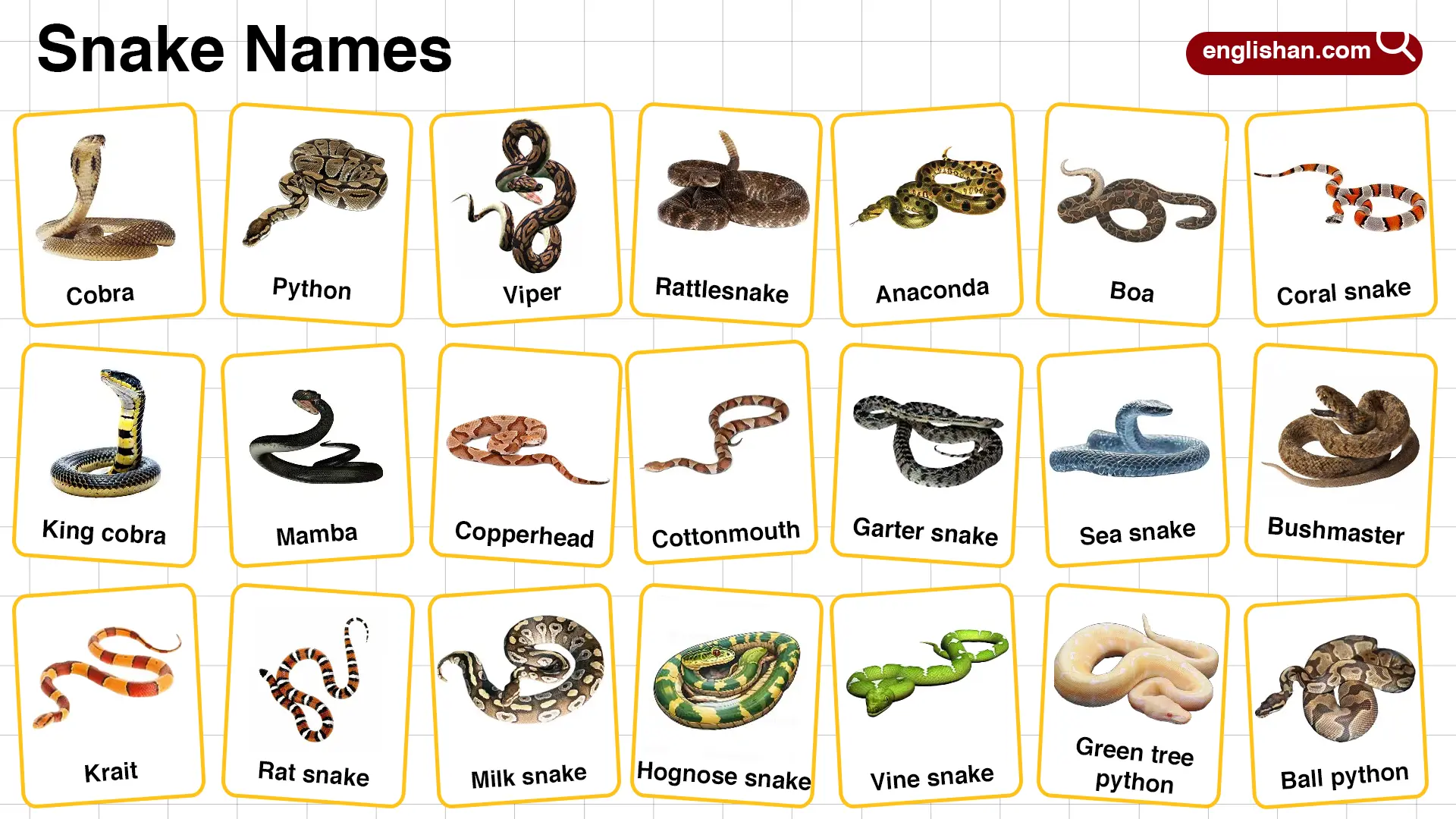
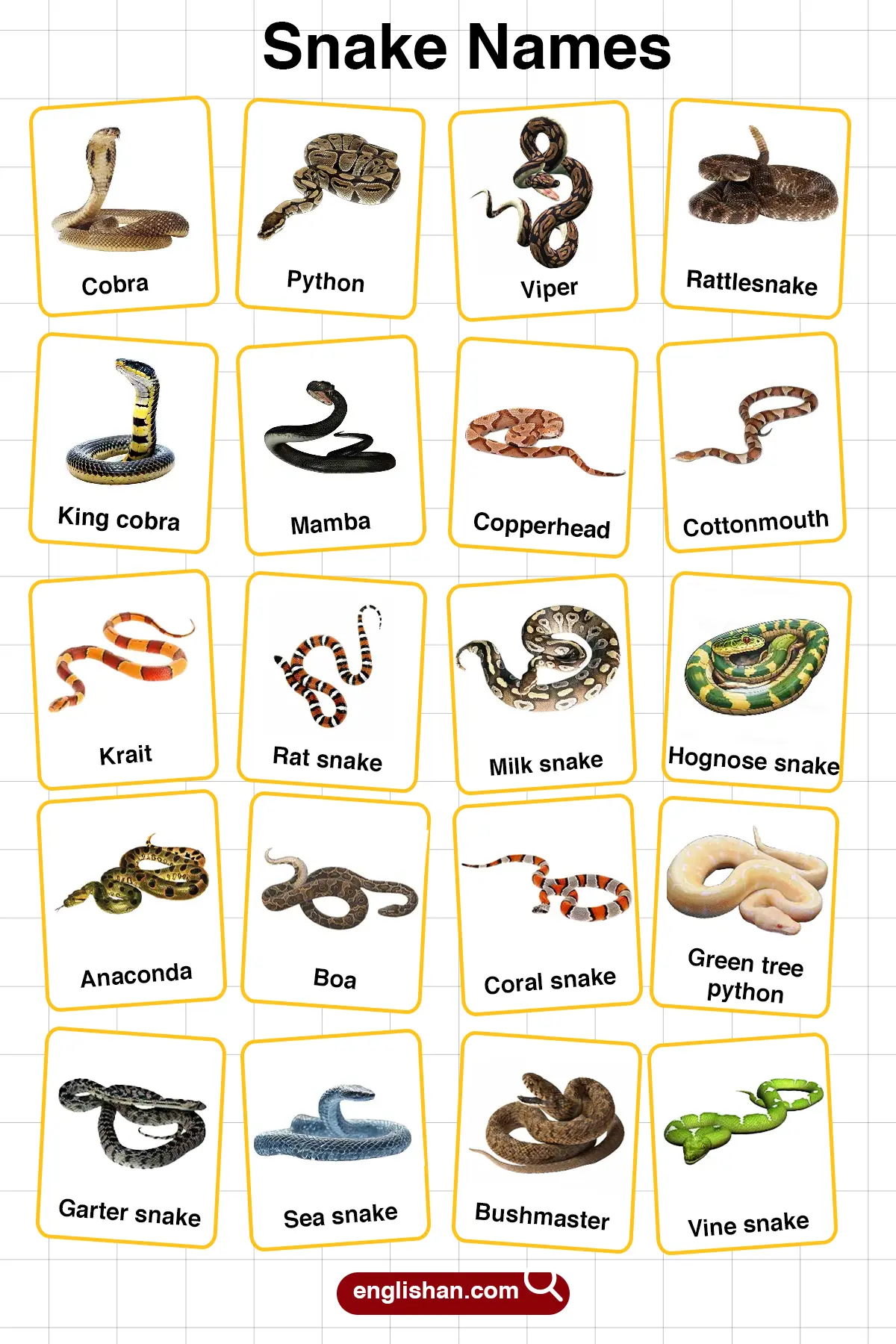
List of Snake Names
This part contains many snake names used in English learning. Below is a helpful list to recognize snakes by how they look, where they live, and what kind they are.
- Cobra
- Python
- Viper
- Rattlesnake
- Anaconda
- Boa
- Coral snake
- King cobra
- Mamba
- Copperhead
- Cottonmouth
- Garter snake
- Sea snake
- Bushmaster
- Krait
- Rat snake
- Milk snake
- Hognose snake
- Vine snake
- Green tree python
- Ball python
- Sand boa
- Indigo snake
- Corn snake
- Taipan
- Sidewinder
- Boomslang
- Racer snake
- Night snake
- Keelback
Non-Venomous Snake Names
Non-venomous snakes do not use venom to harm prey or defend themselves. Below is a list of commonly known harmless species.
- Corn Snake: This snake is calm, colorful, and often kept as a pet because it’s safe and easy to handle.
- Garter Snake: Found in many gardens, it’s harmless and active during the day, making it easy to spot.
- Ball Python: Known for curling into a ball, it’s gentle and slow-moving, often recommended for new snake owners.
- Rosy Boa: It’s a small desert snake with soft colors, known for being docile and rarely bites.
- Milk Snake: Brightly banded and often confused with venomous coral snakes, but completely harmless.
- Green Tree Python: Lives in trees and has a bright green body, mainly found in rainforests.
- Kenyan Sand Boa: A short, chunky snake that burrows into sand and has a calm personality.
- California Kingsnake: This black-and-white striped snake is friendly and often seen in pet collections.
- Rat Snake: Farmers like it because it eats rodents, and it’s not dangerous to people at all.
- Dekay’s Brown Snake: A small and shy species that hides under leaves or rocks and poses no threat to humans.
Dangerous Snake Names
Dangerous snakes are known for their venom strength or aggressive nature. Below is a list of such venomous species.
- King Cobra: The world’s longest venomous snake, famous for raising its hood and hissing when threatened.
- Inland Taipan: Often called the most venomous land snake, though it’s rarely seen because it hides well.
- Black Mamba: Fast, nervous, and highly venomous, this snake can be deadly if not treated quickly.
- Eastern Brown Snake: Found in Australia, this slender snake causes more bites there than any other species.
- Russell’s Viper: Common in Asia, its bite can cause severe pain and needs fast medical attention.
- Coral Snake: Bright red, yellow, and black bands warn of its strong venom, though it’s shy by nature.
- Fer-de-Lance: A pit viper found in Central and South America, known for its aggressive defense behavior.
- Puff Adder: Thick-bodied and slow-moving, it puffs up and hisses loudly when disturbed.
- Saw-scaled Viper: Small but responsible for many bites in its native regions due to its hidden movement.
- Tiger Snake: Named for its banded pattern, it’s common in southern Australia and delivers strong venom.
Snakes by Environment
Snakes are found in different environments depending on their survival needs. Below is a list of species based on where they live.
Desert Snakes
Desert snakes live in dry, sandy areas and have special traits for heat survival. Below is a list of well-known desert dwellers.
- Sidewinder: It moves sideways to glide over hot sand without burning its body in harsh desert heat.
- Mojave Rattlesnake: Has strong venom and blends well with the dry, rocky landscape it calls home.
- Horned Viper: This snake has horn-like scales above its eyes and hides by burying itself in sand.
- Desert Kingsnake: Eats other snakes and lizards, including rattlesnakes, and can handle dry heat well.
Forest Snakes
Forest snakes are usually camouflaged and live in trees or ground layers. Below is a list of snakes commonly found in forests.
- Green Tree Python: Curled on branches, it waits for prey and blends in with leaves.
- Boomslang: A rear-fanged snake that lives in trees and has excellent vision for catching prey.
- Vine Snake: Slim and long like a twig, making it hard to see in leafy areas.
- Eyelash Viper: Small, colorful, and named for its scales above the eyes, it hides in branches.
Water Snakes
Water snakes live in or near freshwater and marine areas. Below is a list of common aquatic snake species.
- Sea Krait: A venomous but calm snake that swims well and often rests on land.
- Cottonmouth: Opens its white mouth as a warning when scared, and it lives near swamps.
- Banded Water Snake: Non-venomous but often confused with venomous snakes due to its dark bands.
- Yellow-bellied Sea Snake: A true sea snake that never touches land and floats in open ocean areas.
- Mangrove Snake: A rear-fanged tree-dwelling snake that often enters shallow water and feeds on fish.
- Nerodia (Common Water Snakes): Non-venomous but mistaken for cottonmouths due to similar shape and habitat.
- Crayfish Snake: A small snake that prefers slow streams and marshes where it hunts crayfish.
Snakes by Color
The color of a snake often helps in recognizing its species. Below is a list grouped by major snake color types.
- Black Rat Snake: A common black snake that climbs trees and eats rodents.
- Blue Racer: Bright blue and very fast, it’s one of the more energetic species in North America.
- Red-bellied Snake: Small and shiny, with a bright red belly and brown back, often found under leaves.
- Green Vine Snake: Thin and bright green, it stretches out on tree branches like a vine.
- Yellow Anaconda: Smaller than the green one, this snake still lives in swamps and can grow quite long.
- White-lipped Python: Named for its pale jaw area, it’s found in forests and has smooth scales.
- Brown House Snake: Often lives near homes, and helps control rodent populations.
- Albino Burmese Python: A large snake with white and yellow scales, popular in reptile shows and collections.
- Green Tree Python: Bright green and often mistaken for vines, it rests in loops across tree branches.
- Red Spitting Cobra: Reddish-orange in color, this cobra sprays venom when it feels threatened.
- White Snake (Leucistic): Extremely pale or pure white, found in rare genetic variations of other snakes.
- Black-headed Python: Has a striking black head and pale body, used for heat absorption.
- Yellow Rat Snake: Found in southeastern US, bright yellow with brown stripes and great for pest control.
Pet Snake Names
Some snakes are easy to care for and safe to keep at home. Below is a list of species commonly raised as pet snakes.
- Ball Python: Calm, small, and slow-moving, making it a great choice for beginner snake owners.
- Corn Snake: Active and colorful, it adapts well to home environments and handles well.
- California Kingsnake: Eats many pests and can be easily trained to feed from tongs.
- Kenyan Sand Boa: A burrowing snake that stays hidden most of the time and grows to a small size.
- Milk Snake: Brightly colored and friendly, it is often mistaken for venomous species.
- Rosy Boa: A slow and easy-going pet, often found curled up in hides or under rocks.
- Children’s Python: Despite the name, it’s a small python native to Australia and safe to keep.
- Hognose Snake: Known for its upturned nose and dramatic bluff when scared.
- Gopher Snake: Looks like a rattlesnake but is non-venomous and helps control pests.
Conclusion
Learning snake names in English builds vocabulary through real examples grouped by habitat, region, danger level, and appearance. Whether it’s recognizing a non-venomous corn snake, a brightly colored coral snake, or an aquatic sea krait, each name helps students understand how words relate to the natural world. With this organized list and explanations, readers can remember, identify, and describe snakes more confidently in English. These names also support topic-based learning for ESL and vocabulary-building goals.
FAQs About Snake Names in English
The most common snake name in English is “python”, especially because of its popularity in both nature and pet contexts.
Short and widely used names like boa, asp, mamba, and cobra are easier for beginners to memorize.
You May Also Like