Stative verbs are verbs that show a feeling, thought, or state instead of an action. Examples include “know,” “love,” “believe,” and “seem.” Learning stative verb examples helps learners understand how these verbs are used in sentences.
Reading these 100 examples improves English and helps learners write sentences using stative verbs correctly.
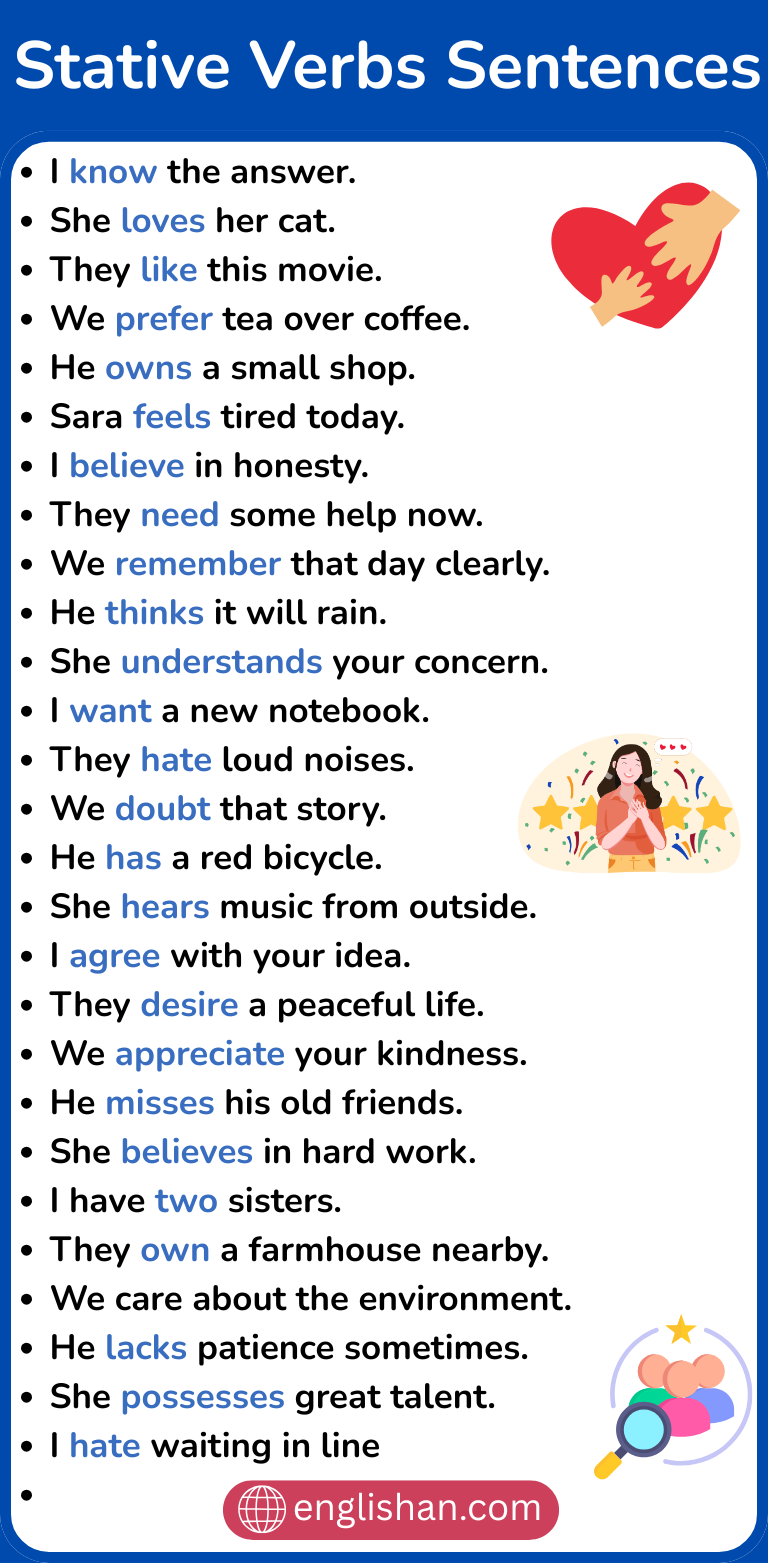
What is a Stative Verb?
A stative verb describes a state rather than an action. These verbs express feelings, thoughts, possession, or senses, such as know, love, or belong. They are usually not used in continuous tenses. For example, “She loves chocolate” shows a state of feeling rather than an ongoing action.
Stative Verb Examples In Sentences
Below is a list showing how stative verbs appear naturally in everyday English to build clear and correct sentences.
- I know the teacher well.
- She likes chocolate cake.
- They believe in hard work.
- He owns a red bicycle.
- We prefer quiet places.
- The book belongs to Sara.
- She loves her little cat.
- I understand your point.
- They remember the old house.
- He needs some help today.
- We hate loud noises.
- She feels tired this morning.
- I agree with your idea.
- They doubt the story.
- He hears the music outside.
Positive Stative Verb Sentences
Below is a list using positive sentence forms with stative verbs to see how they form clear, direct thoughts in English.
- I love this song.
- She knows the answer already.
- They believe in kindness.
- We want some rest.
- He owns a large farm.
- I like sunny days.
- She understands the lesson.
- We remember the event well.
- They prefer quiet evenings.
- He needs a new phone.
- She feels happy today.
- We agree with the plan.
- They respect their parents.
- I believe in myself.
- She wants to learn more.
Negative Stative Verb Sentences
Below is a list showing negative forms of stative verbs, helping learners see how to express negation naturally.
- I don’t know the details.
- She doesn’t like cold weather.
- They don’t believe that story.
- He doesn’t own a car.
- We don’t prefer loud music.
- She doesn’t remember the name.
- I don’t agree with this idea.
- They don’t want more food.
- He doesn’t understand the topic.
- We don’t need any help.
- She doesn’t love spicy food.
- They don’t feel well today.
- I don’t believe in luck.
- He doesn’t hear the noise.
- We don’t know the address.
Questions Using Stative Verbs
Below is a list of question forms using stative verbs to help build sentence confidence while practicing this verb type.
- Do you know her well?
- Does she like coffee?
- Do they believe in magic?
- Does he own this house?
- Do you prefer tea or coffee?
- Does she remember the place?
- Do you agree with me?
- Do they want more time?
- Does he understand the rule?
- Do we need to leave now?
- Does she love reading?
- Do they feel ready?
- Do you believe in yourself?
- Does he hear that sound?
- Do we know what to do?
Stative Verbs Showing Feelings In Sentences
Below is a list with stative verbs that express feelings, showing natural patterns for emotional states in English.
- I love rainy days.
- She hates being late.
- They like quiet mornings.
- We prefer simple meals.
- He fears the dark.
- She adores her little dog.
- They enjoy your company.
- I dislike loud music.
- He detests being ignored.
- We appreciate your help.
- She cares about her family.
- They respect each other.
- I miss my old school.
- She values honesty.
- We cherish these moments.
Stative Verbs Showing Opinions And Beliefs In Sentences
Below is a list with stative verbs related to thoughts, opinions, and beliefs to see how they build clear expressions in English.
- I believe in hard work.
- She thinks it’s a good idea.
- They know the truth.
- We doubt his story.
- He considers it important.
- She understands your feelings.
- I assume you’re right.
- They guess it will rain.
- We suppose it’s true.
- He realizes the problem now.
- She recognizes his talent.
- They imagine a better future.
- I suspect he is tired.
- We remember your kindness.
- He agrees with your plan.
Stative Verbs Showing Possession In Sentences
Below is a list using stative verbs that show possession to help learners form clear ownership expressions.
- I have two brothers.
- She owns a bookstore.
- They possess great skills.
- We have a meeting today.
- He has an old bike.
- She has a lovely smile.
- I own a small car.
- They have many friends.
- We possess the documents.
- He has a pet dog.
- She has a kind heart.
- They own a large farm.
- I have a question.
- We have a plan.
- He owns a café downtown.
Short Stative Verb Sentences For Practice
Below is a list of short, clear sentences using stative verbs to support quick practice and review.
- I know him.
- She likes tea.
- They need help.
- We love music.
- He owns this.
- She feels fine.
- I want coffee.
- They agree fully.
- We believe that.
- He remembers it.
- She hates noise.
- I hear you.
- They prefer this.
- We miss you.
- He thinks so.
Sentences With Common Stative Verbs
Below is a list using frequent stative verbs to build comfort and familiarity with sentence patterns.
- I know the rules.
- She loves her cat.
- They like the idea.
- We have extra time.
- He owns a laptop.
- She feels excited.
- I believe in you.
- They want answers.
- We remember that day.
- He needs a pencil.
- She understands now.
- I hear the birds.
- They prefer early walks.
- We agree completely.
- He doubts the story.
You May Also Like