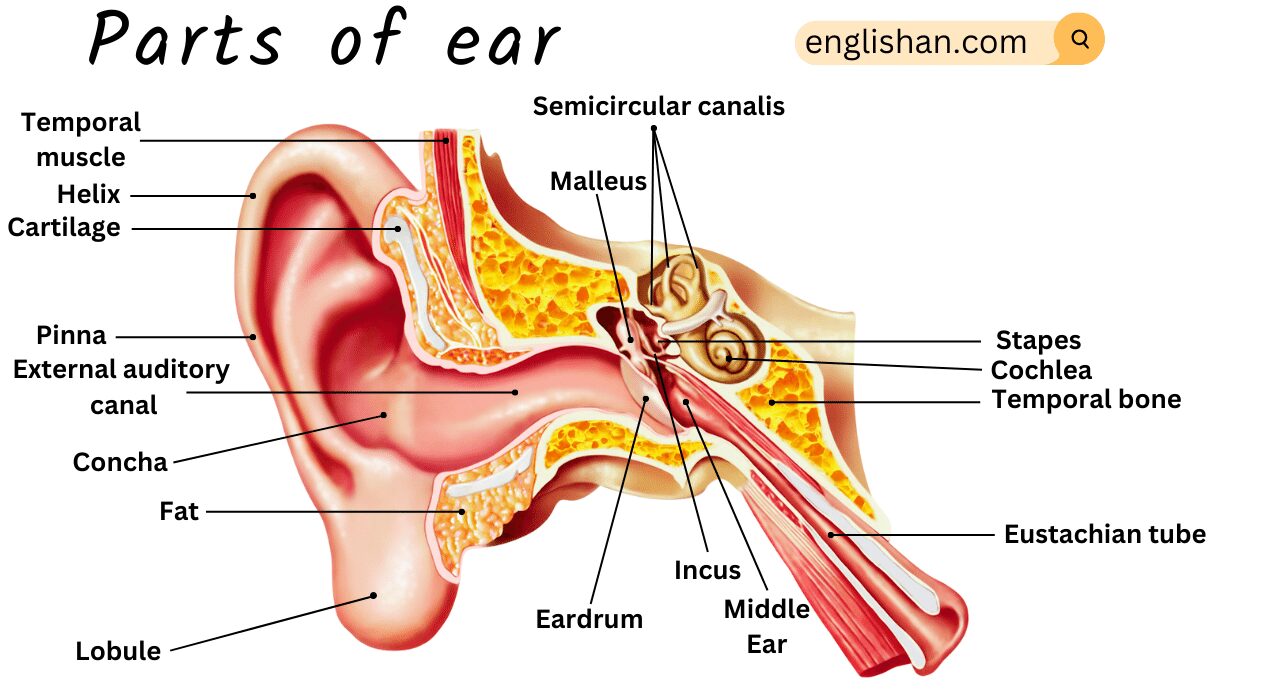
Did you know your hearing relies on the three smallest bones in your body vibrating together? It is incredible how the pinna catches sound waves and directs them straight to the eardrum. When we examine the parts of the ear, we find a system designed for both listening and balance.
Whether you are curious about ear infections or the auditory system, knowing how the middle ear functions is key. I find that understanding the cochlea and auditory nerve helps explain exactly why hearing loss or dizziness happens.
I have broken down the outer, middle, and inner ear sections below to clarify how these organs work. You will find a practical guide to human anatomy that simplifies the science immediately. Let’s dive into how you hear.
What is the Ear?
The ear is the part of the body that lets us hear and helps us keep balance. It has three main parts—outer, middle, and inner—that work together to send sound to the brain.
What Are the Main Parts of the Human Ear?
The ear is divided into three parts: the outer ear, middle ear, and inner ear. Together, they collect sound, send it inward, and turn it into signals that the brain understands. A diagram here can help you:
- Identify each part and where it’s located
- Understand how sound moves through the ear
- Learn how each part plays a role in hearing or balance
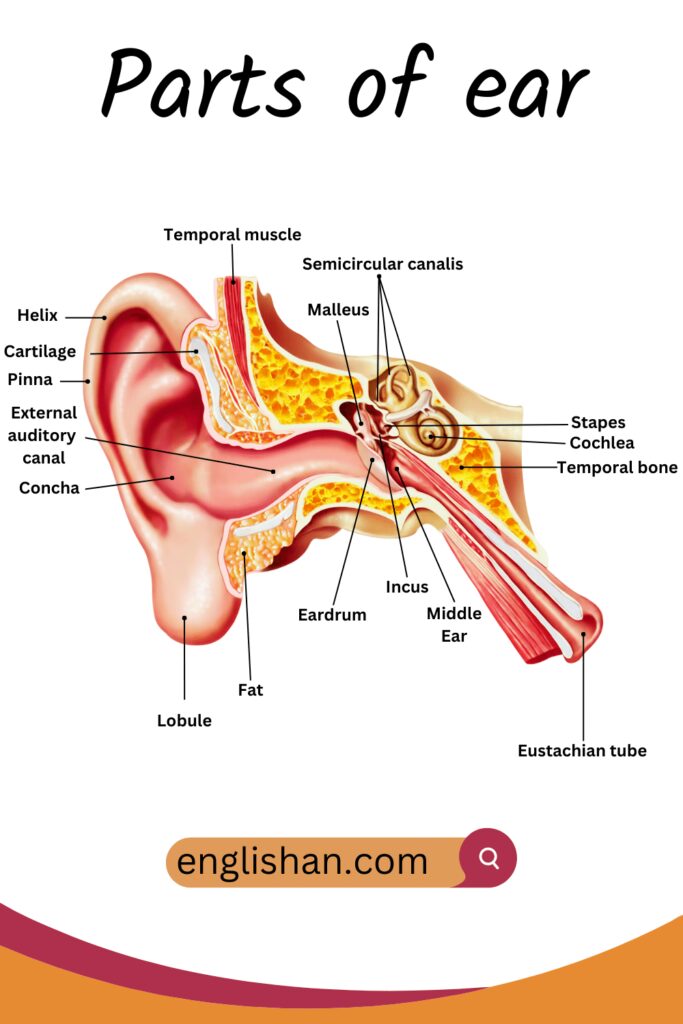
These parts will be explained one by one in the sections below.
Parts of the External Ear (Outer Ear)
The outer ear is the part you can see on the outside. It collects sound from the environment and sends it through the ear canal. Below is a list of the main outer ear parts and what each one does:
Pinna (auricle): The curved outer flap that collects sound and sends it to the ear canal.
External auditory canal: A narrow tube that carries sound to the eardrum and protects the ear with wax and hairs.
Tragus: A small bump in front of the ear canal that helps block dust and extra noise.
Antitragus: A small part opposite the tragus that helps shape the lower ear.
Helix: The outer rim of the ear that supports its shape.
Lobule (earlobe): The soft lower part of the ear, which doesn’t help with hearing but contains many nerves and blood vessels.
Parts of the Middle Ear and Their Roles
The middle ear is a small space filled with air. It sends sound from the outer ear to the inner ear using three tiny bones. These bones are the smallest in the human body.
Tympanic membrane (eardrum): A thin layer that vibrates when sound hits it. It separates the outer ear from the middle ear.
Ossicles: The three small bones that carry sound from the eardrum to the inner ear. These are:
Malleus (hammer): First bone attached to the eardrum.
Incus (anvil): Connects the malleus and stapes.
Stapes (stirrup): Smallest bone that sends vibrations into the inner ear.
Eustachian tube: A small tube that connects the middle ear to the throat. It balances air pressure on both sides of the eardrum.
Parts of the Inner Ear and Their Function
The inner ear is filled with fluid and helps with both hearing and balance. It sends messages to the brain about sounds and body movement.
Cochlea: A spiral-shaped part that turns sound vibrations into signals for the brain to understand.
Vestibule: The middle part between the cochlea and semicircular canals. It helps the body stay upright and balanced.
Semicircular canals: Three fluid-filled loops that sense head movement and help with balance.
Auditory nerve: Sends hearing signals from the cochlea to the brain.
Vestibular nerve: Sends balance signals from the semicircular canals and vestibule to the brain.
Functions of Each Part of the Ear Explained
Each part of the ear has a special job. Here’s what they do:
Outer ear: Collects sound and sends it into the ear canal.
Middle ear: Changes sound into vibrations using tiny bones.
Inner ear: Turns vibrations into signals and keeps the body balanced.
Auditory nerve: Carries sound messages to the brain.
Vestibular system: Helps with body position and head movement.
Parts of the Ear Diagram for Learning
Use a labeled diagram here to show:
- The full structure of the outer, middle, and inner ear
- Names like pinna, cochlea, ossicles, and semicircular canals
- Arrows showing how sound travels through the ear
A labeled chart helps learners remember where each part is and what it does. It’s especially helpful for students and ESL learners who are building science vocabulary.
FAQs about Ear Parts and Hearing
The outer ear, middle ear, and inner ear. They work together to help us hear.
The inner ear, especially the semicircular canals and vestibule, helps you stay steady.
It vibrates when sound hits it and passes the sound to the middle ear bones.
They are tiny bones that carry sound vibrations from the eardrum to the inner ear.
You May Also Like