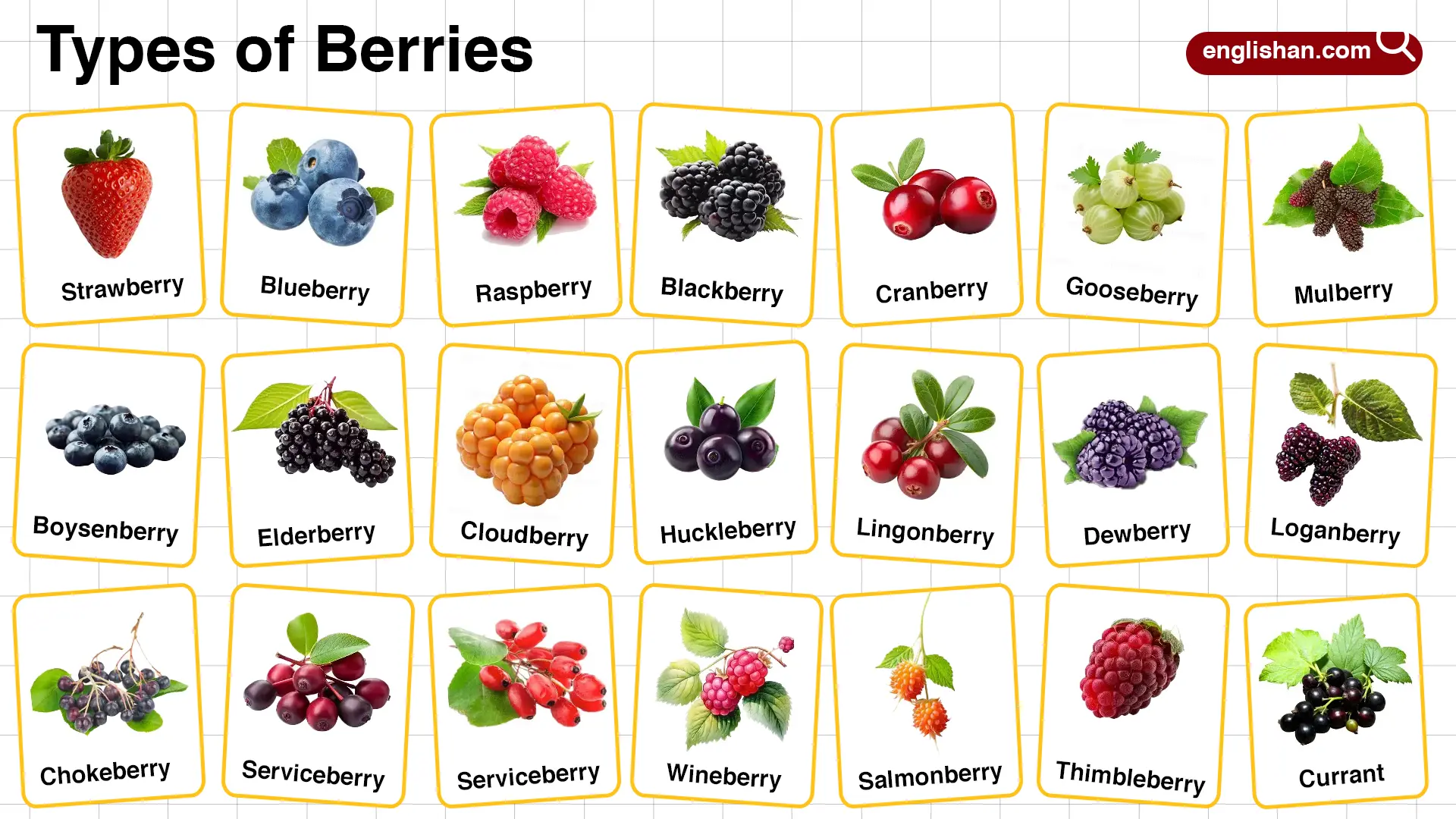
Many berries grow in forests, gardens, and wild areas, each with different colors, tastes, and uses. These types of berries include strawberries, blueberries, raspberries, and blackberries, which are often eaten fresh or used in jams and desserts.
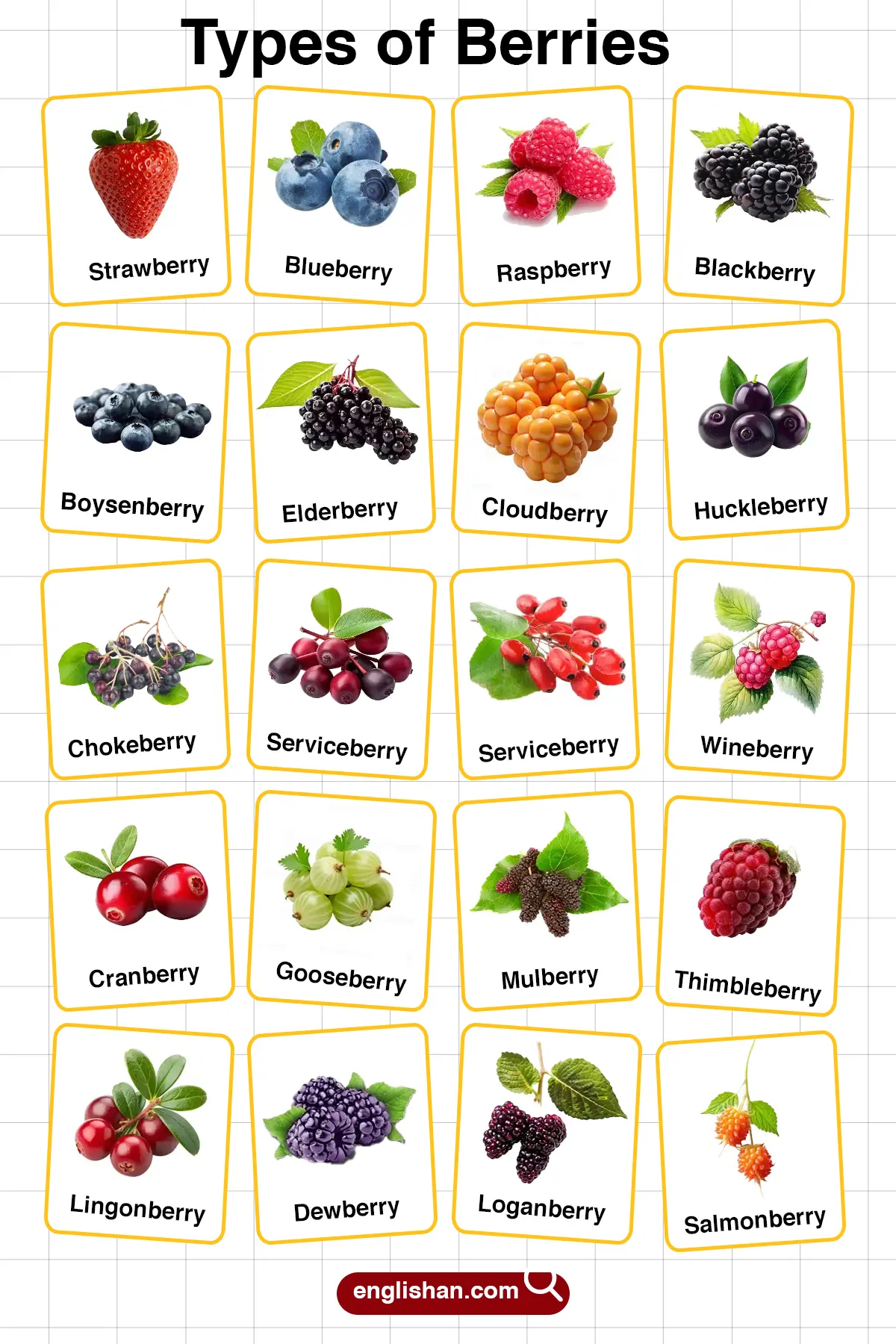
This post lists their names with pictures. You’ll learn common berry varieties grouped by color and type to support vocabulary growth and nature knowledge.
What Is a Berry?
A berry is a small, soft fruit that often has seeds inside. Berries can be sweet or tart. They come in many colors and grow in different places. Pictures will help you learn the shapes and colors of berries.
List of Different Types of Berries
Berries are classified based on how they grow, their taste, and their structure. Below is a list that names different berry types across edible, wild, and tropical categories for clear understanding.
- Strawberry
- Blueberry
- Raspberry
- Blackberry
- Cranberry
- Gooseberry
- Mulberry
- Boysenberry
- Elderberry
- Cloudberry
- Huckleberry
- Marionberry
- Lingonberry
- Dewberry
- Loganberry
- Chokeberry
- Serviceberry
- Barberry
- Wineberry
- Salmonberry
- Thimbleberry
- Currant
- Sea buckthorn
- Cape gooseberry
Botanical vs Culinary Berries
Botany uses a strict rule. A true berry grows from one flower with one ovary and has soft flesh and many seeds. In common use, many “berries” are actually aggregate fruits or drupes.
- True berries: banana, grape, blueberry, cranberry, currant, tomato, pepper.
- Not true berries (common use): strawberry, raspberry, blackberry, mulberry.
- Takeaway for readers: the kitchen name may differ from the plant type, but both groups appear in stores and recipes.
Types of Berries
Berries come in many types based on where they grow and how they’re used. These include edible, wild, tropical, and lesser-known berries, each with unique flavors, colors, and benefits.
Edible Berries
Commonly used in everyday meals, edible berries such as strawberries, blueberries, and raspberries are safe to eat, offering sweet, tart, or tangy flavors for various dishes.
- Strawberry: Red, heart‑shaped, and juicy; perfect for snacks or cereal.
- Raspberry: Soft, red, and full of tiny drupelets that pop in your mouth.
- Blueberry: Small, dark‑blue, mildly sweet, and great in muffins and pancakes.
- Blackberry: Larger than blueberries, dark and slightly tart when fully ripe.
- Cranberry: Bright red and very tart; often cooked into sauce or juice.
- Gooseberry: Green or red, tangy, and often used in pies and jams.
- Mulberry: Long, dark fruit that grows on trees; sweet when ripe.
- Elderberry: Small, dark berries often used in syrups and cold remedies.
- Huckleberry: Deep purple, rare, and tastes like a mix of blueberry and tang.
- Boysenberry: A cross between raspberry and blackberry; juicy and rich.
- Lingonberry: Small, red, tart berries common in Scandinavian jams.
- Cloudberry: Amber‑orange, soft, and prized in northern desserts.
- Serviceberry: Small, purple, and sweet sometimes used fresh or dried.
- Chokeberry: Dark purple, very astringent, and best cooked into jams.
- Dewberry: Similar to blackberry but ripens earlier and is sweeter.
List of Wild Berries
Naturally growing in forests and fields, wild berries like wineberries, salmonberries, and marionberries offer unique tastes and often appear during specific seasons without cultivation.
- Marionberry: A type of blackberry that tastes rich and complex.
- Wineberry: Bright red and hairy berry often found in thickets.
- Salmonberry: Orange‑red berry that grows near streams and coastal areas.
Names of Tropical Berries
Found in warm climates, tropical berries such as acai, goji, and jabuticaba are rich in flavor and nutrients, often used in juices, bowls, and supplements.
- Acai: Deep purple superfruit often used in smoothie bowls.
- Goji: Bright red and tangy; often dried for snacks or teas.
- Maqui: Dark purple, full of antioxidants, and used in juices.
- Camu Camu: Very sour, bright orange; used in vitamin C supplements.
- Jabuticaba: Grape‑like fruit that grows right on tree trunks.
Types of Berries by Color
Red Berries with Pictures
Good for pies, sauces, and fresh snacks.
- Strawberry: sweet, fragrant, short shelf life; peak in late spring.
- Raspberry: soft, seedy, bright flavor; crushes fast, best the day you buy.
- Cranberry: very tart; sold fresh in fall and frozen year-round.
- Redcurrant: glossy clusters; sharp taste for jelly and glazing.
- Lingonberry: tart northern berry; great for jam and meat dishes.
- Goji: chewy when dried; mild sweetness for teas and mixes.
- Salmonberry: Pacific Northwest wild fruit; soft and lightly sweet.
- Rowan berry: astringent; use cooked into jelly only.
- Hawthorn berry: mealy flesh; used in jelly and herbal tonics.
- Winterberry: bright garden shrub; berries are for birds, not for eating.
Blue and Purple Berries with Pictures
Rich color often signals antioxidants.
- Blueberry: sweet to mildly tart; top pick for breakfast and baking.
- Huckleberry: wild mountain crop; intense flavor and higher price.
- Bilberry: European cousin of blueberry; deep stain and strong taste.
- Blackberry: juicy, seedy; great for crumbles and syrups.
- Elderberry: must be cooked; popular for syrup and cordials.
- Blackcurrant: sharp and aromatic; classic for ribena-style drinks.
- Aronia (chokeberry): very astringent; blend into juices.
- Serviceberry (saskatoon, juneberry): almond-like notes; nice in pies.
- Sloe: very tart; used for liqueur after frost.
- Juniper “berry”: flavoring cone; culinary use in small amounts only.
Black and Very Dark Berries
Bold taste, good for jam and sauces.
- Black raspberry: smaller than blackberry; deep color, floral notes.
- Boysenberry: raspberry–blackberry hybrid; juicy and rich.
- Marionberry: Oregon cultivar; firm, complex flavor.
- Dewberry: trails along the ground; sweet and early season.
- Mulberry: tree fruit; sweet, stains easily, great dried.
Types of Berries by Fruit and Plant
Berry Bush Varieties
- Blueberry (highbush, lowbush), raspberry (red, golden, black), blackberry, currant (red, black, white), gooseberry, aronia.
Tip for readers: bushes need sun, acidic soil for blueberries, and pruning for canes.
Tree and Large Shrub Berries in North America
- Mulberry, serviceberry, elderberry, hackberry, hawthorn, rowan, holly (ornamental, not for eating), dogwood (many are for birds), yew (arils around toxic seeds; avoid).
Rule of thumb: if you are not sure, do not eat.
Vine and Ground Berries
- Cranberry (bog vine), dewberry (trailing), boysenberry (caned vine), ground strawberry in gardens and fields.
Lesser-Known Berries
Often overlooked, lesser-known berries like cloudberries, boysenberries, and huckleberries have distinct flavors and uses, especially in regional recipes, jams, and traditional remedies.
- Elderberry: Usually made into syrup or juice, elderberries are known for their dark color and health-related uses.
- Huckleberry: These small berries taste sweet or tart and are often added to pancakes, muffins, or pies.
- Boysenberry: A mix of raspberry and blackberry, this berry is large, juicy, and great for making desserts.
- Cloudberry: Yellow-orange in color, it grows in cool regions and is used in jams and even some sauces.
Seasonal and Winter Berries
- Spring: strawberry, serviceberry.
- Summer: blueberry, raspberry, blackberry, huckleberry.
- Fall: cranberry, elderberry, aronia, late blackberry.
- Winter interest: winterberry, holly, cotoneaster for gardens and birds.
Where Berries Grow
Berries grow on bushes, vines, or small trees. Many thrive in temperate forests and fields. Tropical berries grow near the equator. Some berries grow wild. Others are farmed. Understanding where they grow helps you know their climate and uses.
Conclusion
Learning berry types boosts your vocabulary and helps you recognize fruits by name and group. With this list and images, you can identify edible, wild, and tropical berries easily in both English and science contexts. Keep practicing regularly.
FAQs About Types of Berries
Tomatoes and bananas are true berries in science. They fit the rule of a berry because their seeds come from just one flower. Surprising, right? Knowing this helps you understand how we classify fruits.
Strawberries aren’t true berries in botanical terms. They develop from multiple ovaries in one flower, so they’re classified as aggregate fruits, not berries.
No. Raspberries are not true berries either. Like strawberries, they form from several ovaries and are called aggregate fruits.
A berry is defined by three key traits:
It develops from a single flower with one ovary
It has three fleshy layers (exocarp, mesocarp, endocarp)
Seeds are embedded within the flesh.
You May Also Like