EnglishanEnglishan
  • Home
  • Grammar
    • Parts of speech
    • Tenses
    • Example Sentences
    • Other Ways to Say
  • Vocabulary
    • Picture Vocabulary
      • Parts of Things
      • Animals
      • Insects
      • Foods
      • Fruits
      • Things
    • Vocabulary for Kids
    • Descriptive Words
    • Synonyms
    • Antonyms
    • Confused Words
    • One Word Substitution
    • Phrasal Verbs
    • Positive Words
    • Verbs List
    • Adjectives List
      • Positive Adjectives
  • Words Lists
    • 5 Letter Words
    • Words Start With
    • Long Words
  • Worksheets
    • Kindergarten Worksheets
  • English Composition
    • Applications
    • Essay Writing
    • Letters
    • Comprehension
  • Wishes and Quotes
  • Contact
Reading: Types of Soil with Pictures and Simple Explanations
Share
Font ResizerAa
EnglishanEnglishan
Font ResizerAa
Search
  • Home
  • Vocabulary
    • Vocabulary for Kids
    • Internet Slangs
    • Synonyms
    • Antonyms
    • Confused Words
    • Descriptive Words
    • Phrasal Verbs
    • One Word Substitution
    • Adjectives List
    • Positive Adjectives
    • Verbs List
    • Positive Words
  • Picture Vocabulary
    • Parts of Things
    • Animals
    • Foods
    • Fruits
    • Insects
    • Things
  • Words List
    • 5 Letter Words
    • Long Words
    • Words Start With
  • Grammar
    • Parts of speech
    • Tenses
    • Example Sentences
    • Other Ways to Say
  • Worksheets
  • Wishes and Quotes
  • Positive Adjectives
Follow US
  • About
  • Contact
  • Privacy Policy
  • Terms of Service
Copyright © 2026 englishan.com All Rights Reserved.
Home > Vocabulary > Picture Vocabulary > Types of Soil with Pictures and Simple Explanations
Picture Vocabulary

Types of Soil with Pictures and Simple Explanations

Julian Mercer
By
Julian Mercer
Last updated: May 19, 2025
5 Min Read
Types of Soil – Different Soil Categories with Pictures
Learn the different types of soil with visuals and descriptions.
SHARE

Types of soil help us understand how land supports plants, farming, and buildings. This post shows common soil types with pictures so you can see how each one looks and where it’s used. From sandy soil to clay and loamy soil, knowing these helps you learn more about the land around you.
In This Page
  • What Is Soil Made Of?
  • Different Types of Soil Explained
    • Coarse-Grained Soils
    • Fine-Grained Soils
    • Organic Soils and Peat-Based Types
    • Agricultural and Geologically Important Soils
  • Interesting Facts About Types of Soil
  • FAQs
Soil Types and Their Names – Visual Learning Guide
Explore soil types with images for easy identification and learning.
Advertisement

What Is Soil Made Of?

Soil is made of four key parts that help plants grow:

  1. Minerals – tiny rock pieces like sand, silt, and clay
  2. Organic matter – decayed plants and animals
  3. Water – moisture that feeds roots
  4. Air – oxygen for roots and microbes

The mix of these parts gives each soil its texture and use.

Different Types of Soil Explained

Coarse-Grained Soils

These soils have large particles and drain quickly, making them ideal for specific types of agriculture and landscaping.

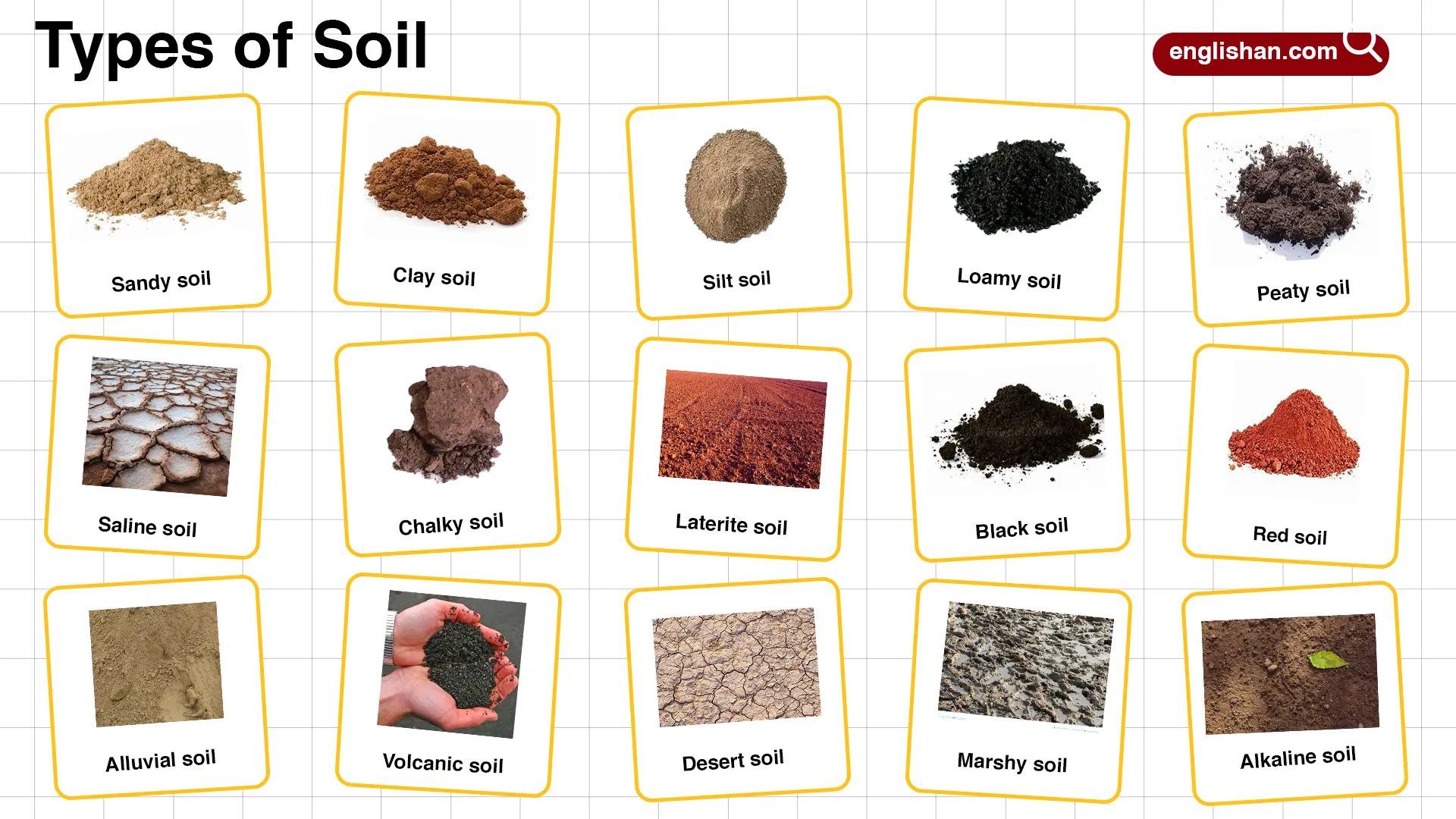
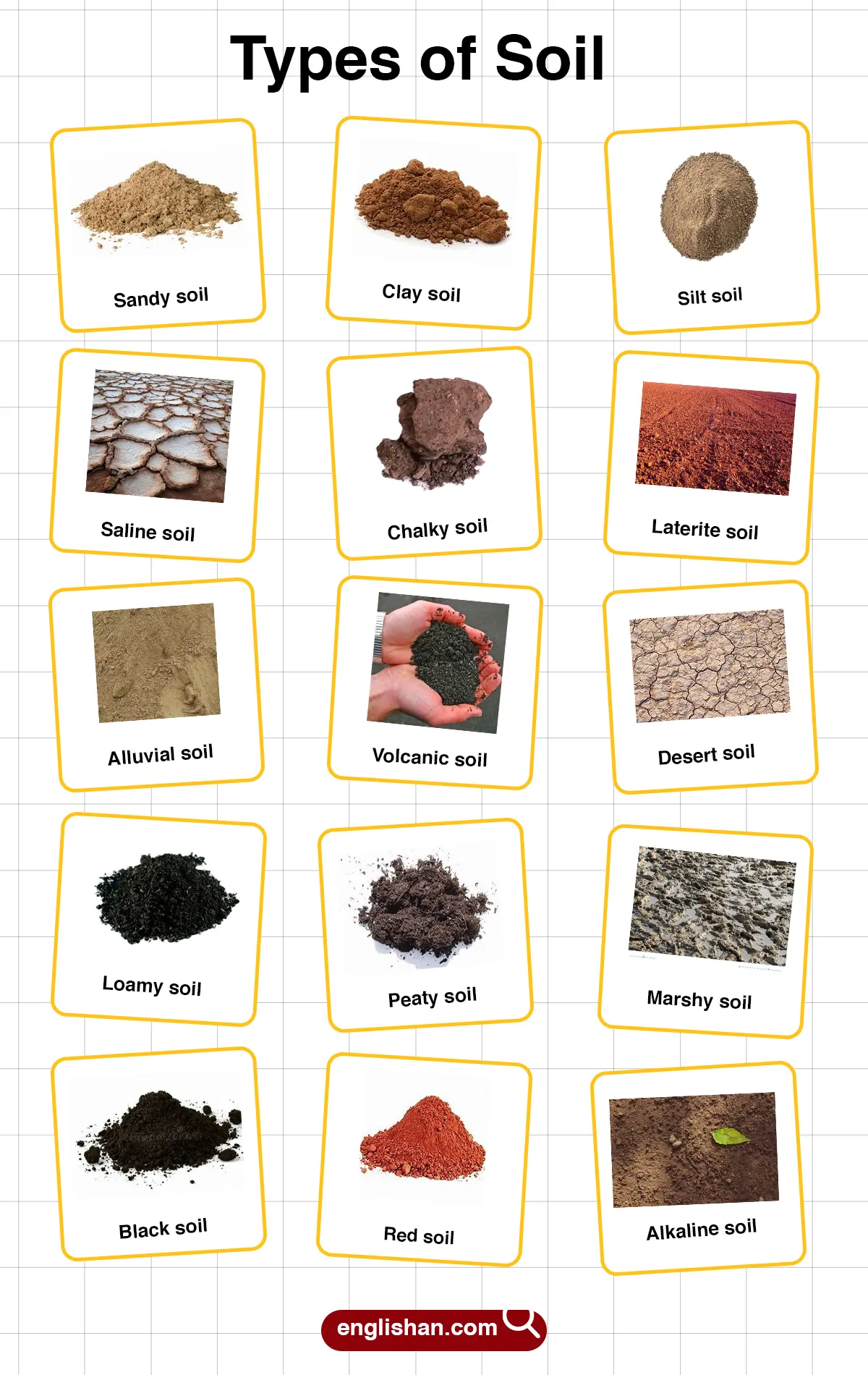
Sandy Soil
A soil with large, coarse particles that drains water quickly and lacks nutrients.

Chalky Soil
A type of alkaline soil rich in calcium carbonate, often found in dry regions.

Desert Soil
A dry, sandy soil found in arid regions, low in organic matter and water retention.

Fine-Grained Soils

These soils have smaller particles and retain water well, making them ideal for crops and gardening.

Clay Soil
A dense soil with fine particles that holds water but is prone to becoming hard when dry.

Silt Soil
A smooth soil with fine particles that retains water better than sandy soil but drains slower.

Loamy Soil
A balanced mix of sand, silt, and clay, considered ideal for farming due to its good drainage and nutrient retention.

Organic Soils and Peat-Based Types

These soils contain high organic matter or unique properties that influence their use.

Peaty Soil
A dark, moisture-rich soil high in organic content, often found in wetlands.

Saline Soil
A soil with high salt content, commonly found in coastal or dry regions, which affects plant growth.

Marshy Soil
A waterlogged soil found in swamps and wetlands, rich in decomposed organic material.

Agricultural and Geologically Important Soils

These soils are significant for farming and geological processes.

Laterite Soil
A reddish soil rich in iron and aluminum, commonly found in tropical regions.

Black Soil
A nutrient-rich soil ideal for growing cotton, known for its moisture retention.

Red Soil
A soil with high iron content, giving it a red color, commonly found in tropical and subtropical regions.

Alluvial Soil
A fertile soil deposited by rivers, found in floodplains and ideal for agriculture.

Volcanic Soil
A highly fertile soil formed from volcanic ash, rich in minerals that support plant growth.

Alkaline Soil
A soil with a high pH, often requiring treatment to support plant growth.

Interesting Facts About Types of Soil

Soil plays a vital role in the Earth’s ecosystem, supporting plant growth and filtering water. Here are some fascinating facts:

  • Soil formation takes hundreds to thousands of years.
  • Black soil is ideal for cotton farming due to its moisture retention.
  • Volcanic soil is one of the most fertile soils due to mineral-rich ash deposits.
  • Alluvial soil supports large-scale agriculture, especially in river valleys.
  • Sandy soil drains quickly but requires fertilizers to support crops.

FAQs

1. What is the most fertile type of soil?
Loamy soil is considered the most fertile because it has a balanced mixture of sand, silt, and clay, providing good drainage and nutrient retention.

2. What is the difference between clay soil and sandy soil?
Clay soil holds water well but becomes hard when dry, while sandy soil drains quickly and is loose in texture, making it less fertile.

3. Why is black soil important for farming?
Black soil retains moisture well and is rich in minerals, making it ideal for growing crops like cotton and cereals.

You May Also Like

  • Names of Gardening Tools
  • Parts of Seed Names in English
  • Types of Trees: Names and Facts
  • Separable and Inseparable Phrasal Verbs
  • Farm Animals Names for Kids
Advertisement
Share This Article
Facebook Pinterest Whatsapp Whatsapp LinkedIn Reddit Copy Link
Julian Mercer
ByJulian Mercer
Follow:
Julian Mercer is the founder of Englishan.com and has spent over a decade helping English learners improve through online lessons and practical writing. Having worked with students across many countries, he knows the questions people repeat, the mistakes that slow progress, and the moments that make English click. On Englishan, he writes about vocabulary, picture vocabulary, grammar, and everyday English to help readers speak with ease, read with less strain, and write with more confidence.
270KLike
82KPin
- Advertisement -

You Might Also Like

14 Parts of a Mushroom: Labeled Diagram and Anatomy Overview

4 Min Read
Insects that start with F – full list
Insects

Insects That Start With F – 115+ Complete Vocabulary List

6 Min Read
Foods That Start With Q with Names and Pictures
Foods

30 Foods That Start With Q with Names and Pictures

13 Min Read
Names of Hat Styles for Men
Picture Vocabulary

Hat Styles for Men – Popular Men’s Hat Styles

9 Min Read
Englishan-Logo-resized Englishan-Logo-resized

Englishan.com is a blog for better writing, speaking, and study results. We publish grammar and vocabulary posts, plus worksheets, word lists, and example sentences for practice.

Important Pages

  • About
  • Contact
  • Privacy Policy
  • Terms of Service

Get in Touch for Queries

Got any questions - Reach us out at
  • contact@englishan.com
  • +971561449880
  • About
  • Contact
  • Privacy Policy
  • Terms of Service
Welcome Back!

Sign in to your account

Username or Email Address
Password

Lost your password?