A short reaction can say more than a sentence when something goes wrong. In everyday chats, oof is used to express mild pain or disappointment, or to react with shared sympathy when news lands badly. It appears in a text message, DM, group chat, Instagram reply, TikTok comment, gaming chat, or a meme, often right after the moment happens.
In this article, we explain OOF meaning first, then how people use it across casual chats and social replies. We look at emotional range, from playful reactions to serious support, followed by short examples that show how it fits different situations.
What Does OOF Mean
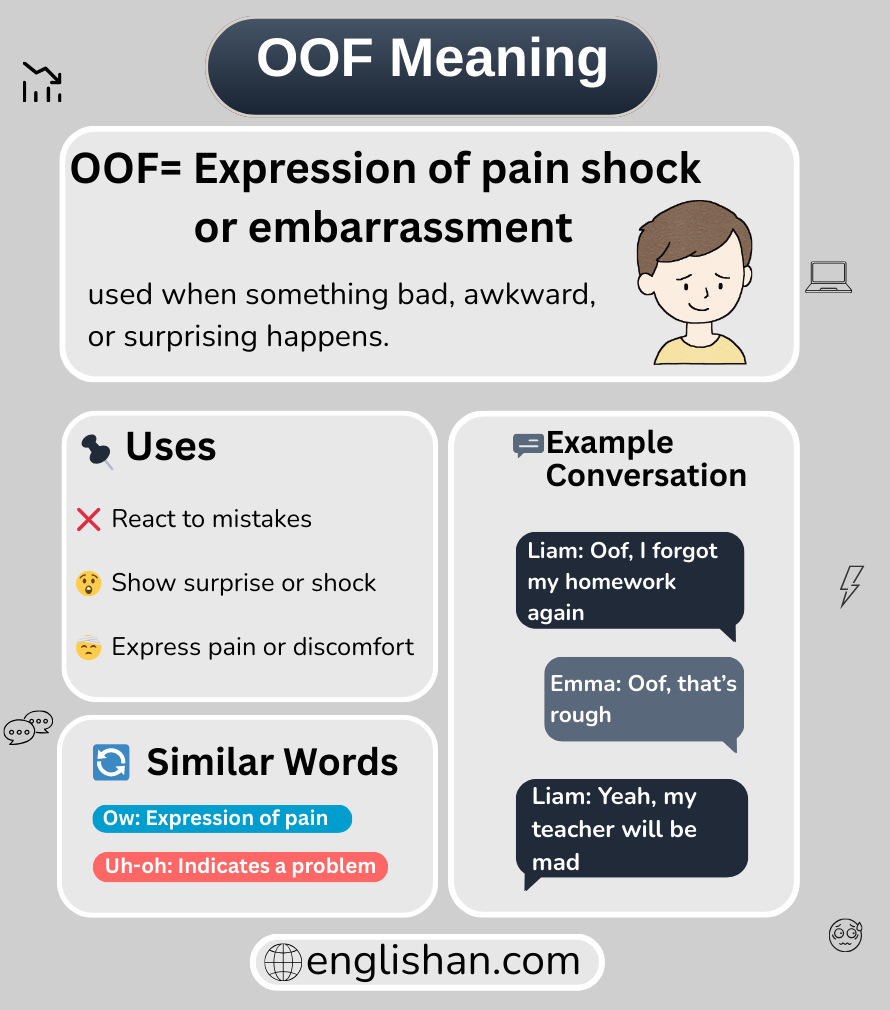
The slang term OOF functions as a verbal sound expressing discomfort, sympathy, or dismay. It mimics the noise someone makes when air is knocked out of them, symbolizing a reaction to a painful or awkward situation. Writers use it to acknowledge bad news or a mistake without needing to offer a complex solution.
Does OOF Stand For Anything
In the context of internet slang, this word is an onomatopoeia rather than an acronym. It represents a sound effect rather than a phrase like “Out Of Office.” However, because the spelling is similar to OOO (Out of Office), some readers might briefly confuse the two in a business setting.
How OOF Is Used In Texting And Chat
People type this short word to react quickly to unfortunate events or cringe-worthy moments. It serves as a low-effort way to say “that hurts” or “that sucks” when a friend shares a minor tragedy. You will often see it used as a standalone reply when someone doesn’t know what else to say to a complaint.
OOF In Memes And Captions
In meme culture, this term usually accompanies images of video game characters falling or failing. It adds a layer of dark humor to physical comedy or embarrassing situations. Users caption photos of their own mistakes with the word to show self-awareness and humility.
OOF In Gaming And Roblox
The term is inextricably linked to the online game Roblox, where it served as the default sound effect when a character died or reset. Players heard this specific grunt so frequently that it became a universal symbol for failure in the gaming community. Even people who do not play the game recognize the sound as a reaction to defeat.
OOF Example Conversations
These dialogues illustrate how friends use the sound to show sympathy or react to gaming fails.
Jason: I just dropped my entire lunch tray in front of the whole cafeteria.
Mike: Oof, that is rough. Did anyone help you clean it up?
Jason: No, I just walked away in shame.
Sarah: I tried to jump over that lava pit but I missed by an inch.
Emily: Oof, now we have to restart the whole level.
Sarah: Sorry, my controller slipped.
David: My boss just called me into his office on a Friday afternoon.
Jessica: Oof, good luck. Let me know if you still have a job later.
David: I am really nervous right now.
How To Reply To OOF
When someone sends this reaction, you can reply by elaborating on the situation or simply agreeing that it is bad. If you are the one who made the mistake, a simple “I know” or a crying emoji works well. If they are being dismissive, you might change the subject to something more positive.
OOF Origin
The specific sound bite originated from the 2000 game Messiah but gained global fame through Roblox in 2006. For over a decade, millions of players heard the distinct “uuhh” sound whenever their avatar took damage. It transcended the game to become a general internet slang term for any type of damage or failure.
Common OOF Confusions
A frequent mix-up occurs with the business acronym OOO (Out Of Office). While they look similar, OOO means an employee is away from their desk, while OOF is a reaction to pain. Additionally, some older readers might confuse it with “oaf,” which is an insult meaning a clumsy person.
Other Related Slang Words
These terms also serve as reactions to failure or bad news.
- F: A gaming term used to pay respects or acknowledge a loss.
- RIP: Rest In Peace. Used sarcastically when something goes wrong.
- L: Loss. Used to point out that someone has failed.
- Yikes: An expression of shock or second-hand embarrassment.
OOF Key Takeaways
We identify this slang term as a versatile onomatopoeia that expresses sympathy or dismay in reaction to failure. Originating from a classic Roblox sound effect, it allows users to acknowledge pain, mistakes, or awkward moments without using many words. While it is standard in gaming and casual chats, using it in serious or professional contexts can appear dismissive or immature. Remember to use OOF primarily for minor mishaps and gaming losses where a lighthearted tone is appropriate.
OOF FAQs
No, it is a harmless sound effect. It is safe for children and schools.
No, it was removed due to copyright issues, but the slang remains popular.
It is too informal for work. Use “I am sorry to hear that” instead.
You say it like the word “roof” without the R. It sounds like a short grunt.
Not usually. It is a reaction to a bad situation, not an attack on a person.
It can be perceived as dismissive or rude if used in response to a serious emotional crisis. If a friend pours their heart out about a breakup and you only reply with “oof,” it seems cold and uncaring. However, for minor inconveniences like stubbing a toe, it is perfectly polite and funny.
You May Also Like