TBC meaning usually points to to be confirmed when a calendar item is not final yet, like a meeting date, time, or venue in an email or group chat. In other messages, it can mean to be continued, especially after an episode recap or a caption that hints more is coming.
In this article, we cover the main meaning first, then how people use TBC in calendars, chats, and social captions, since usage can change by situation. Next, we move into short message examples so you pick the right meaning before you reply.
What Does TBC Mean?
The acronym TBC serves as a placeholder label indicating that specific details are not yet final. It signals that a plan, time, or location is currently being arranged but requires final verification before it is official. Writers use it to keep a project moving forward even when one specific piece of information is missing.
What Does TBC Stand For?
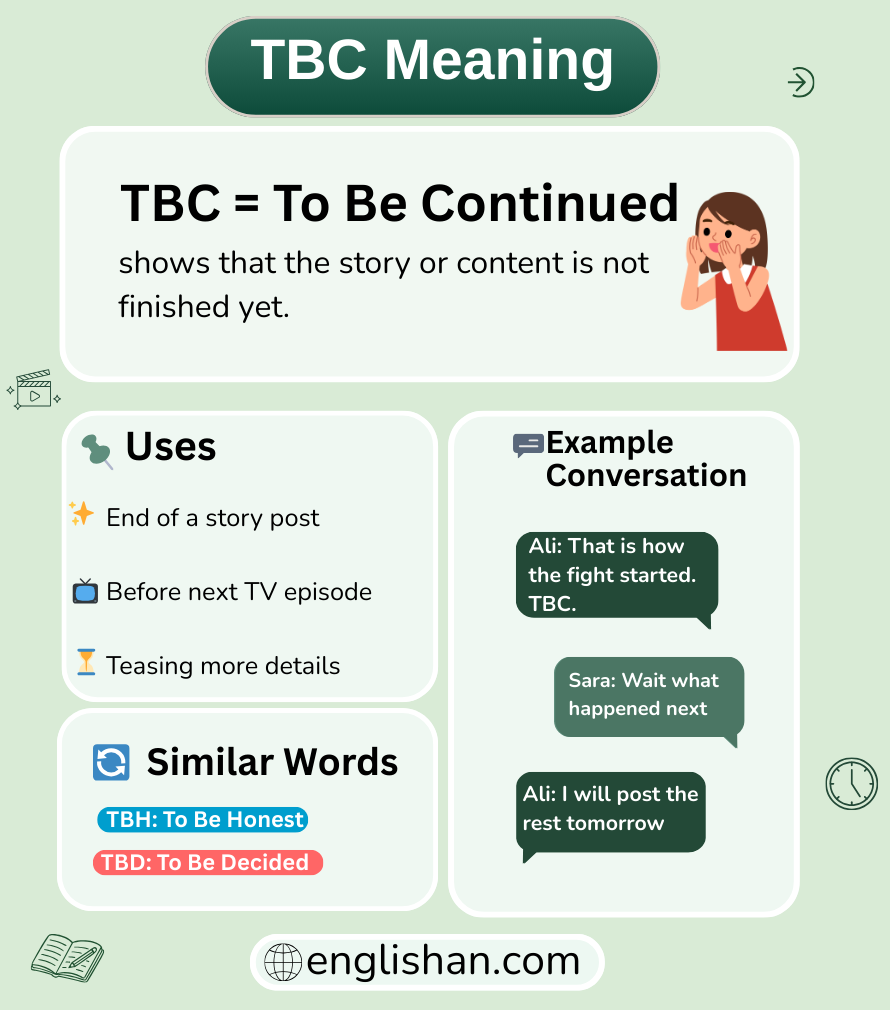
This three-letter abbreviation primarily stands for To Be Confirmed in business and scheduling contexts. However, in the entertainment and storytelling worlds, it frequently stands for To Be Continued. Readers must check if they are looking at a calendar invitation or the end of a television episode to know which phrase applies.
How TBC Is Used
People use this term to fill in gaps within an agenda or itinerary without stopping the entire planning process. It acts as a temporary marker that tells the reader, “We know this needs to happen, but we don’t have the exact details yet.” It is a functional tool for managing uncertainty in future events.
TBC In Event Planning
In the context of weddings, parties, or conferences, TBC often appears next to the venue or time. It suggests that the organizers have a few options in mind but have not signed the final contract. Guests understand this means they should save the date but wait for an update before booking travel.
TBC In Schedules
Project managers use this label on rosters or timelines to mark tasks that are subject to change. It allows teams to see the general flow of a week while acknowledging that some meetings might move. It provides flexibility, letting employees know that a specific slot is reserved but not guaranteed.
TBC In Media
At the end of a cliffhanger episode or a book series, TBC stands strictly for To Be Continued. It promises the audience that the story is incomplete and that a sequel or next episode is coming. It builds anticipation and assures fans that the narrative has not ended abruptly.
TBC Example Conversations
These dialogues illustrate how friends and colleagues use the term to manage unfinished plans.
Jason: Did you book the restaurant for Saturday?
Mike: Not yet, the location is still TBC. I’m waiting for them to call me back.
Jason: Okay, just let me know when you lock it in.
Sarah: What time does the meeting start tomorrow?
Emily: The agenda says 2 PM, but the room number is TBC.
Sarah: I will check the calendar in the morning then.
David: That movie ended right in the middle of the fight scene!
Jessica: Yeah, the screen just said TBC. We have to wait for Part 2.
David: That is so frustrating.
In Texting
In casual SMS, friends use TBC to suggest that a plan is tentative. It signals that they want to hang out but haven’t figured out the logistics, like where to eat or who is driving. It keeps the social engagement alive without forcing immediate decisions.
In Work Messages
Colleagues use it to mark outstanding items in a status report. If a client hasn’t replied to an email, that line item might be marked TBC to show the team that the ball is in the other person’s court. It is a polite way of saying “I am working on it.”
Origin Of TBC
The phrase “to be confirmed” has been standard administrative shorthand since the mid-20th century, used heavily in aviation and corporate travel. The entertainment variation “to be continued” became iconic through serialized radio dramas and comic books. Both meanings solidified into the acronym TBC with the rise of digital calendars and email.
Common Confusions With TBC
A frequent mix-up occurs between TBC and TBD (To Be Determined). While they seem identical, TBC implies that a decision has been made but not finalized, whereas TBD implies that no decision has been made at all. TBC is “we are checking,” while TBD is “we don’t know yet.”
TBC Vs TBD Vs TBA
These three acronyms describe different levels of uncertainty.
- TBA: To Be Announced. The info is known but private.
- TBD: To Be Determined. The info is unknown.
- TBC: To Be Confirmed. The info is tentative.
Other Meanings Of TBC
In gaming communities, specifically World of Warcraft, TBC stands for the expansion The Burning Crusade. In fitness circles, it can refer to Total Body Conditioning classes. Context is critical; a gym schedule listing “6 PM TBC” refers to a workout, not a tentative plan.
Other Related Slang Words
These terms also handle future uncertainty.
- ETA: Estimated Time of Arrival. Used for timing.
- Pending: A formal word for waiting.
- Tentative: Describes plans that might change.
- WIP: Work In Progress. Used for unfinished projects.
Key Takeaway
We define this acronym as a versatile placeholder standing for “To Be Confirmed” or “To Be Continued.” In planning and business, it signals that details like time or venue are tentative and awaiting final verification. In media and storytelling, it promises that an unfinished narrative will resume in the future. Readers should distinguish it from similar terms like TBD (“To Be Determined”), as TBC implies a higher level of certainty where plans exist but are not yet official.
FAQs
Yes, it is standard in business schedules and emails.
No, it means the details are waiting for confirmation.
It usually refers to the Burning Crusade expansion.
Yes, usually for the exact time or reception details.
No, TBA means the public has not been told yet.
You May Also Like