Looking to learn some English words that end in I? You’ve come to the right place! In this article, you’ll find common and useful words that will help you expand your vocabulary and use English more confidently. Let’s check them out!
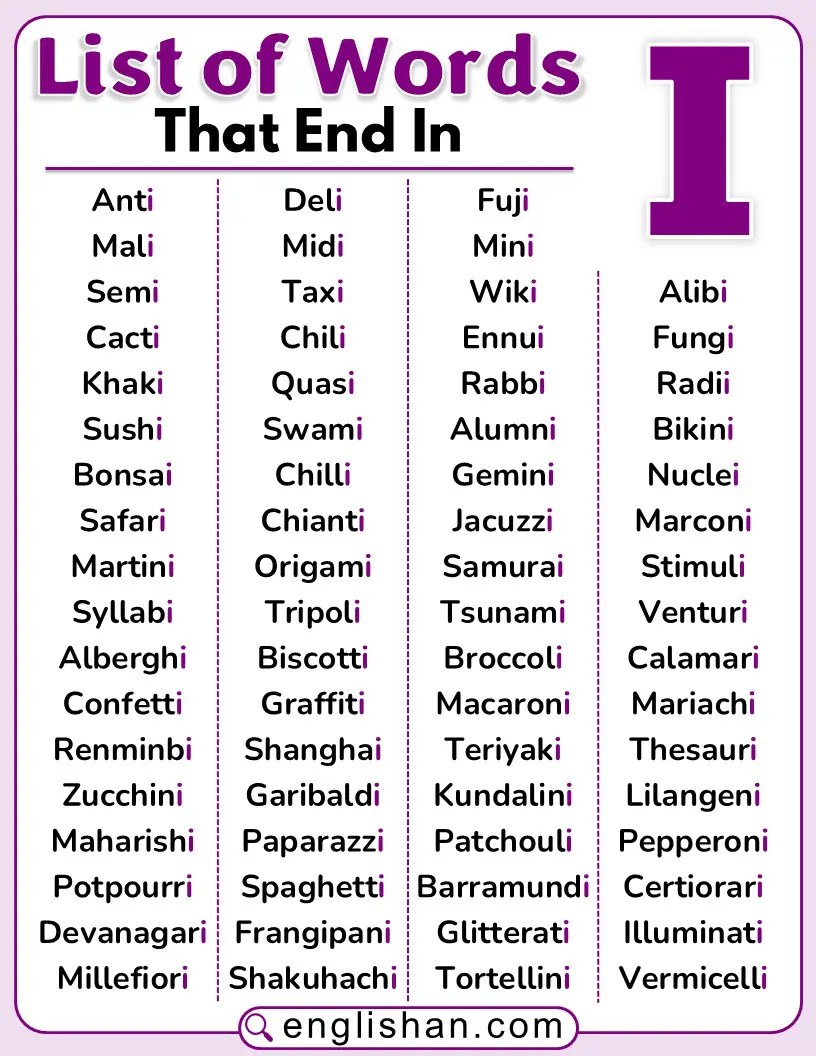
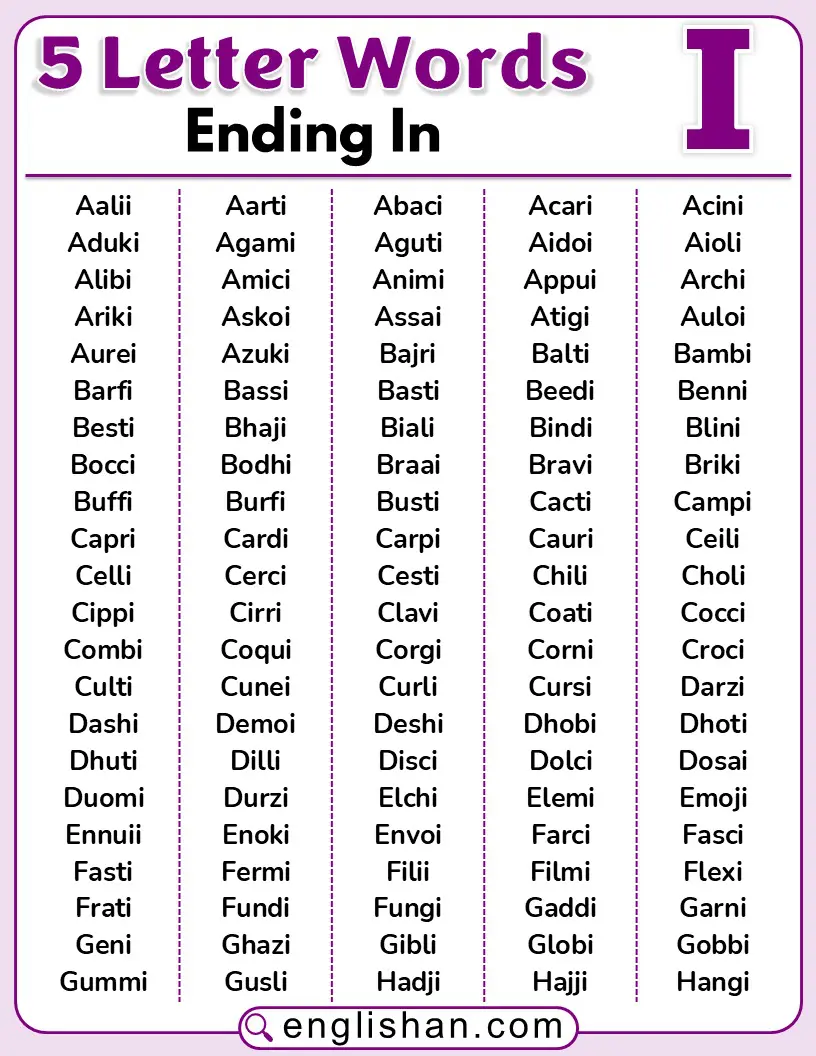
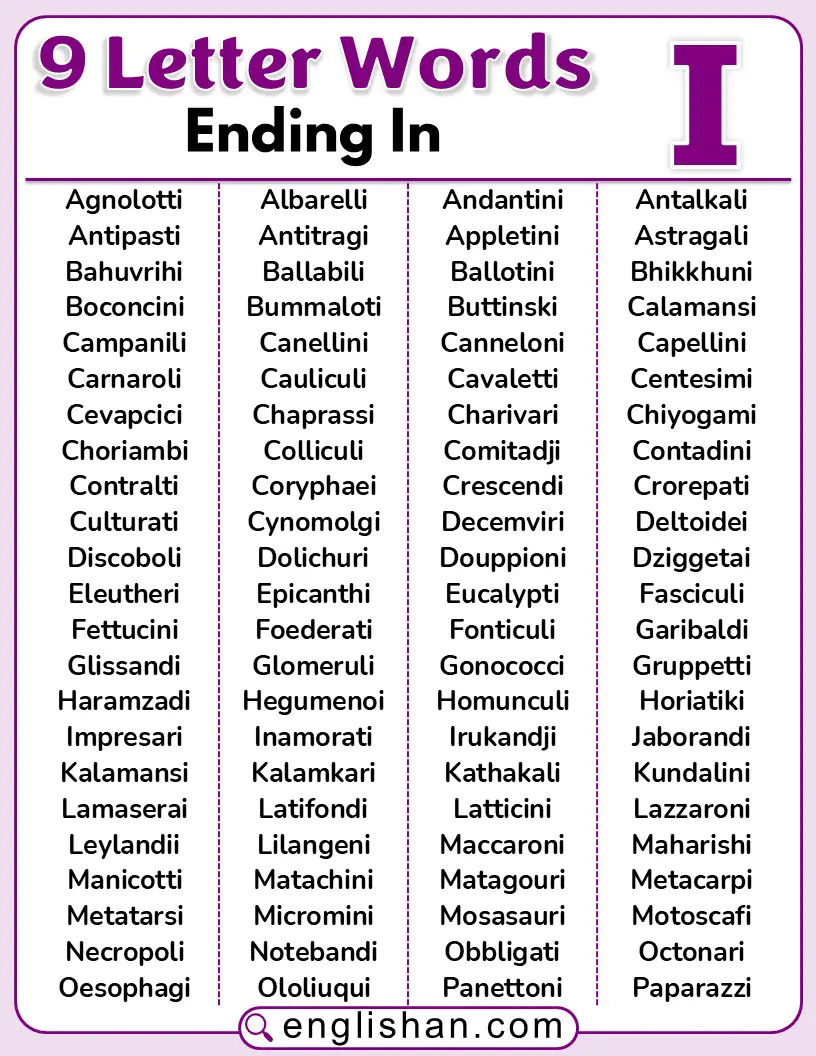
Words that end in I are English words whose final letter is I. Although less common than other endings, they appear in many borrowed or specialized terms, often from Italian, Japanese, or scientific vocabulary. You’ll find them in nouns, names, or certain plural forms. Examples include sushi, radii, acini, and aioli.
Words that end in I are words whose final letter is I. Many of these are loanwords from other languages, such as Italian or Japanese, and are often used as nouns. A few can function as verbs or adjectives in English, though these are less common.
Q2. What are common words that end in I?
Common English words ending in I are usually borrowed terms, especially food, animal names, or scientific terms. Some examples include: • Alibi • Fungi • Tsunami • Panini • Origami
Q3. Can you give examples of words that end in I in sentences?
Certainly! Here are some examples in context: • Alibi – He provided an alibi to prove he wasn’t at the scene of the crime. • Fungi – The forest floor was covered with colorful fungi. • Tsunami – The news warned about a tsunami approaching the coast. • Panini – I ordered a grilled panini for lunch. • Origami – She made a beautiful crane using origami techniques. • Bikini – She wore a bright bikini at the beach. • Borzoi – The borzoi ran gracefully across the field. • Ravioli – We cooked fresh ravioli for dinner. • Zucchini – He sliced the zucchini to add to the salad.
Amelia Wright writes the daily word game challenges at Englishan.com, but she plays far beyond one grid. Most mornings move through a Spelling Bee style word hunt, a quick crossword, a few anagram rounds, and a Scrabble like rack in her head, words turning over while the coffee is still hot. And then there is Wordle, her favorite, the small five square heartbeat that sets the tone for the day. She notices what people can recall on the clock, where near spellings and double letters trigger doubt, and which everyday words still feel fair. Readers come for wins that feel earned: familiar vocabulary, steady difficulty, and none of the gotcha tricks that make a puzzle feel smug.