Have you ever wondered what makes ants such amazing little creatures? Even though they’re tiny, their bodies are perfectly designed for all the tasks they do every day. From finding food to protecting their colony, every part of an ant has a special job. In this article, we’ll take a closer look at the main anatomy of an ant, what each part does, and how they all work together to keep these tiny insects so strong and organized.
List of Ant Parts Names
- Antenna
- Head
- Thorax
- Abdomen
- Petiole
- Postpetiole
- Waist
- Eye
- Mandibles
- Legs
- Gaster
- Sting
- Brain
- Heart
- Food passage
- Crop
- Second stomach
- Rectum
- Poison gland
- Nerve cord
- Spiracles
- Food pouch
- Mouth
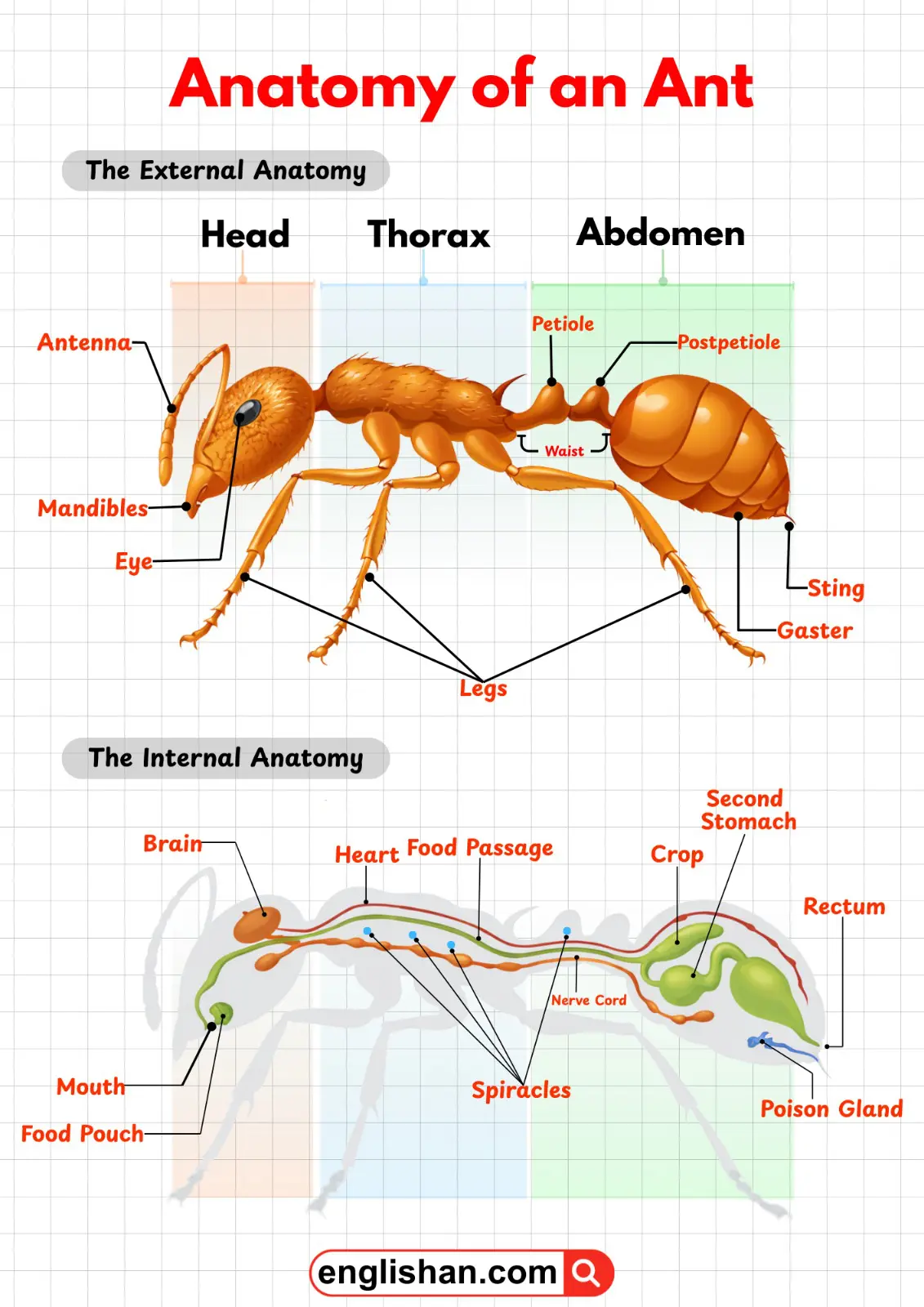
Anatomy of an Ant Diagram With Names
Ants are tiny but incredibly organized insects, and their bodies are made up of several key parts that help them survive and work efficiently. The head contains the eyes, antennae, and mouthparts, which help them see, smell, and eat. The thorax is where the legs and, in some ants, wings attach, giving them movement and strength. The abdomen holds vital organs like the stomach and reproductive system, and it also contains the stinger in certain species. Every part, from the mandibles to the antennae, works together to help ants communicate, navigate, and thrive in their colonies.
External Anatomy of an Ant (Outer Body Parts)
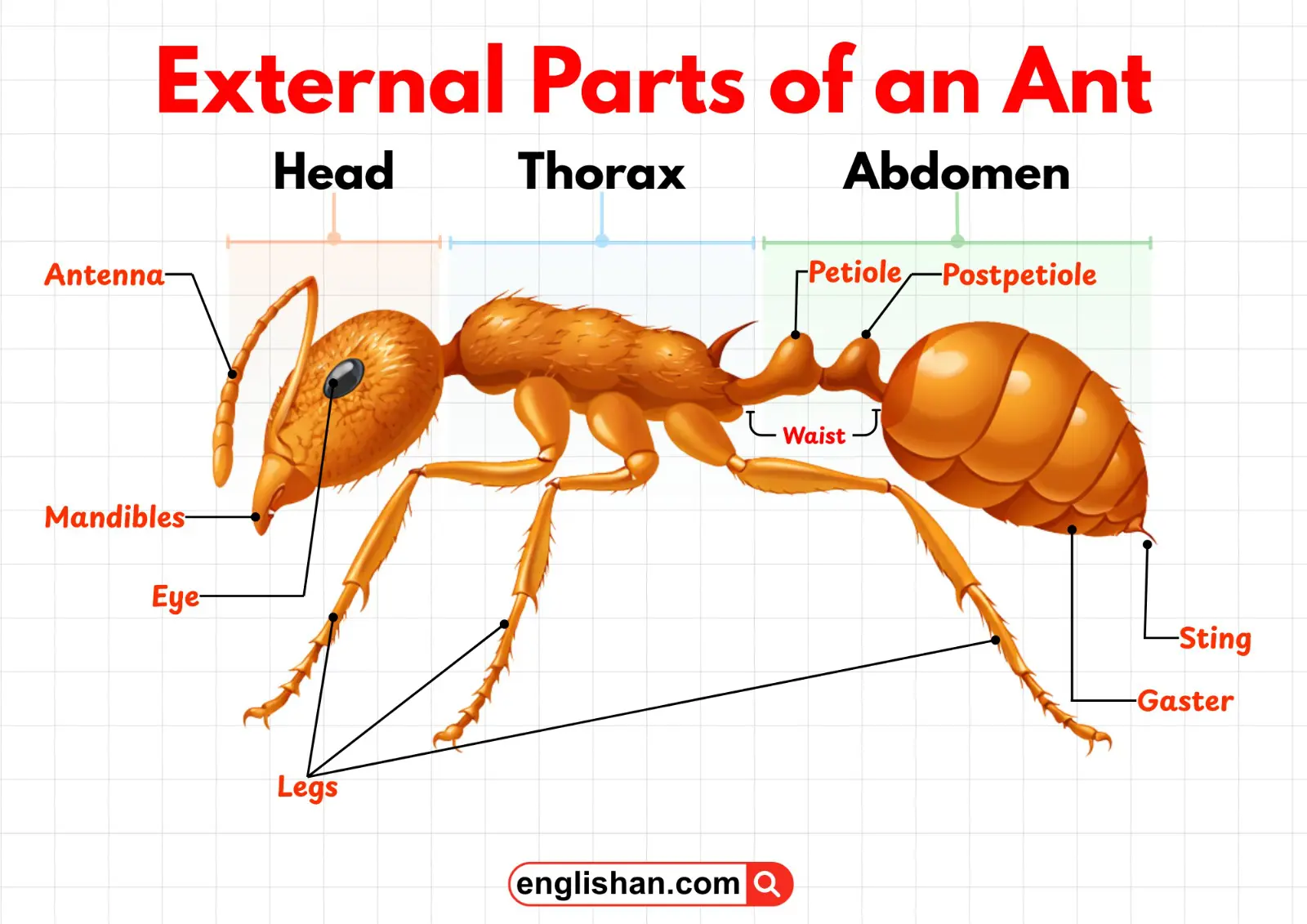
Antenna
The antennae are long, thin sensory organs located on the ant’s head. They help the ant detect smells, tastes, and vibrations, allowing it to communicate with other ants and navigate its environment.
Head
The head houses the brain, eyes, and mouthparts of the ant. It is responsible for controlling sensory input and coordinating movements, feeding, and communication.
Thorax
The thorax is the middle segment of the ant’s body. It connects the head to the abdomen and supports the legs and, in some species, wings. It is the main center for movement.
Abdomen
The abdomen is the rear segment of the ant’s body. It contains many vital internal organs, including parts of the digestive system, reproductive organs, and glands such as the poison gland.
Petiole
The petiole is a small, narrow segment that connects the thorax to the abdomen. It provides flexibility and mobility, allowing the ant to maneuver its body efficiently.
Postpetiole
The postpetiole is an additional segment found in some ant species between the petiole and the gaster (main part of the abdomen). It enhances movement and flexibility.
Waist
The waist is the narrow constricted area between the thorax and abdomen, formed by the petiole (and postpetiole in some species). It allows the ant to bend and twist its abdomen.
Eye
Ants have compound eyes, which allow them to detect movement and light. Although their vision is not very sharp, eyes help them navigate and sense changes in their surroundings.
Mandibles
Mandibles are strong, jaw-like structures used for biting, cutting, carrying objects, digging, and defending against threats. They are one of the most important tools for an ant’s survival.
Legs
Ants have six jointed legs attached to the thorax. These legs allow them to walk, run, climb, and carry objects much larger than themselves.
Gaster
The gaster is the bulbous part of the abdomen. It contains parts of the digestive and reproductive systems, and in many species, the poison gland and sting.
Sting
The sting is located at the end of the gaster. It is used for defense and, in some species, to inject venom to subdue prey or protect the colony.
Internal Anatomy of an Ant (Inside Body Parts)
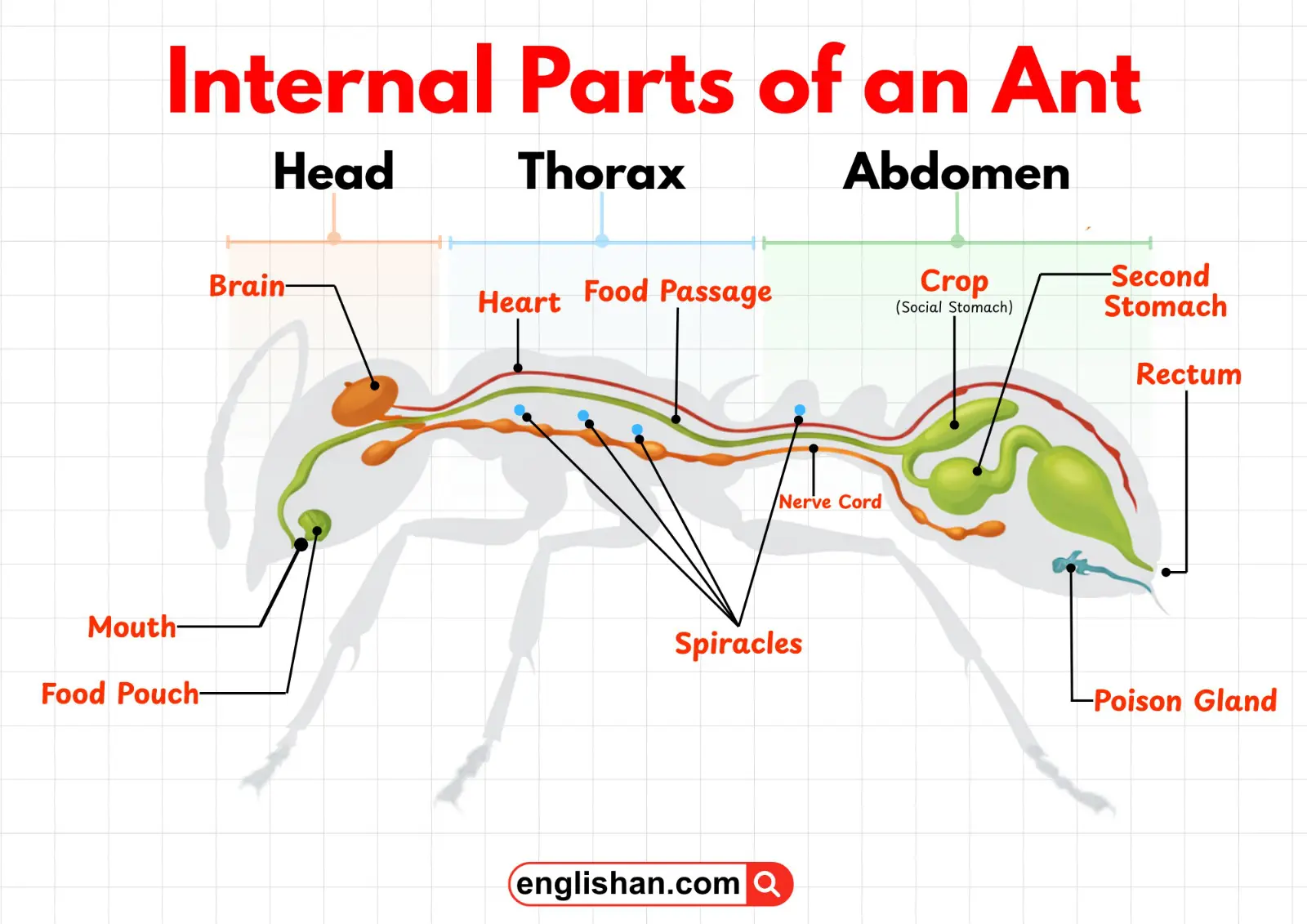
Brain
The brain of an ant is small but highly specialized. It controls sensory input, movement, behavior, and communication with other ants in the colony.
Heart
The ant’s heart is a simple, tubular organ that helps circulate hemolymph (insect blood) throughout its body, providing nutrients and removing waste from cells.
Food Passage
The food passage is the digestive pathway that directs ingested food from the mouth toward the crop and other digestive organs for processing.
Crop
The crop, also called the “social stomach,” temporarily stores food before it is either digested or shared with other ants through regurgitation.
Second Stomach
The second stomach is where food is further digested and nutrients are absorbed before entering the rest of the digestive system.
Rectum
The rectum is the final part of the digestive system, where waste is collected and expelled from the body.
Poison Gland
The poison gland produces venom used in defense and subduing prey. The venom can be injected through the sting or sprayed in some species.
Nerve Cord
The nerve cord runs along the length of the ant’s body, connecting the brain to different segments and controlling movement and reflexes.
Spiracles
Spiracles are small openings along the sides of the thorax and abdomen that allow the ant to breathe by letting air into the tracheal system.
Food Pouch
The food pouch is part of the digestive system where ingested food is temporarily held and mixed with digestive enzymes before further processing.
Mouth
The mouth includes mandibles and other mouthparts used for biting, chewing, carrying food, and manipulating objects. It is the entry point for food into the digestive system.
Key Takeaway
As we learned, an ant’s body is divided into three main parts: head, thorax, and abdomen. The head contains eyes, antennae, and mandibles for sensing and handling food. The thorax powers movement with its six legs and, in winged ants, wings. The abdomen houses digestion, reproduction, and sometimes a stinger. This compact design allows ants to efficiently forage, communicate, and defend their colony.
You May Also Like