
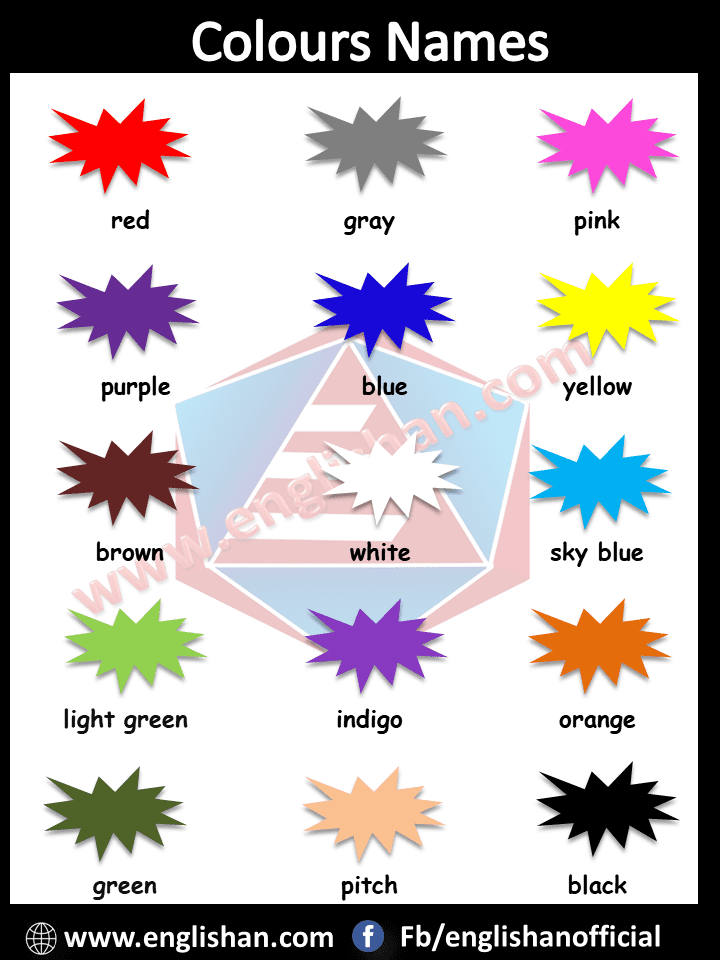
Colors are everywhere in clothes, nature, art, and design and each one has a unique word in English. Learning these terms makes conversations more vivid and accurate. In this blog, you will discover 100 essential colors names with their pictures.
In This Page
What Are Colors?
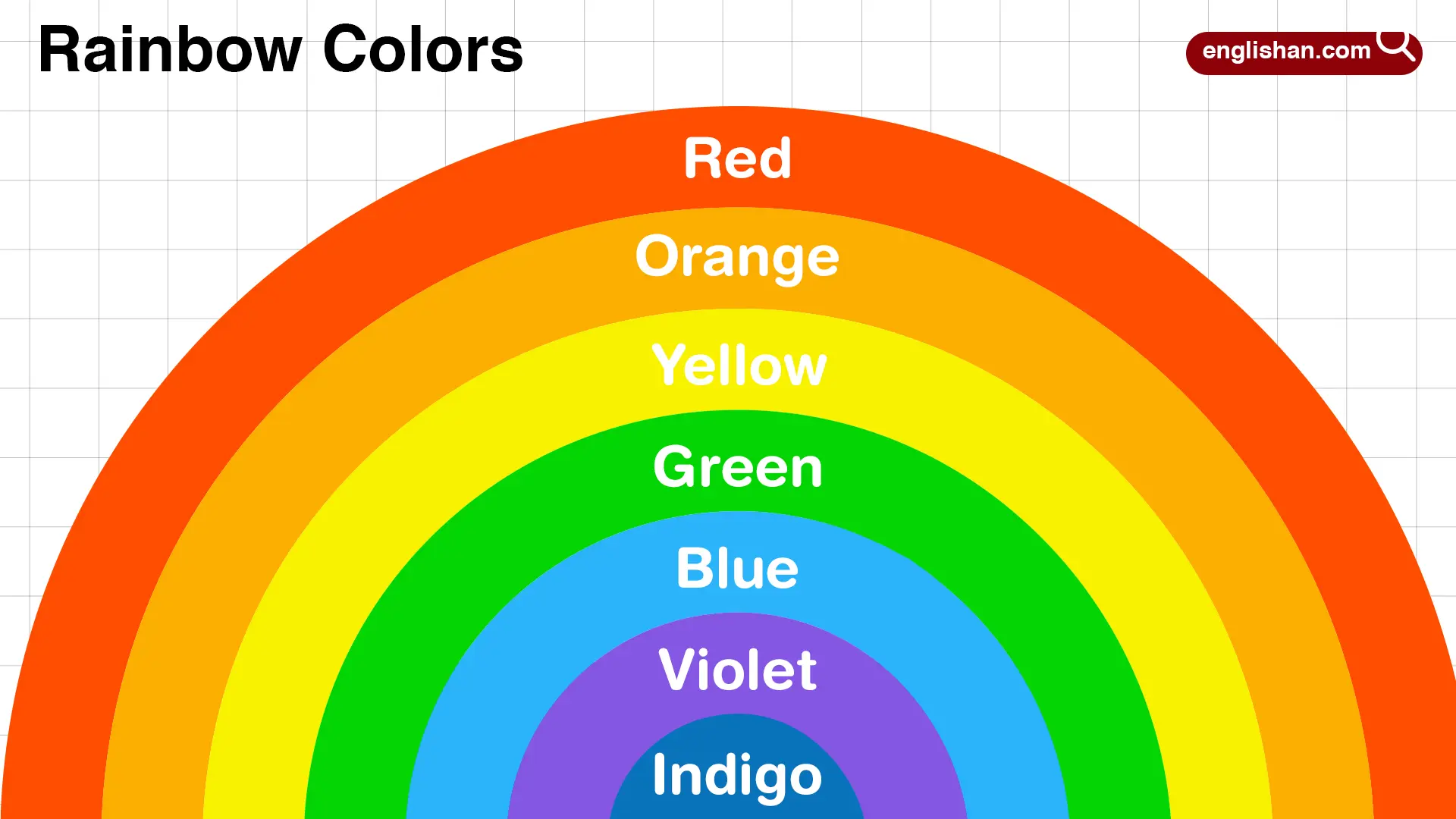
- Red: A primary color that resembles the color of blood or fire.
- Blue: A primary color that resembles the color of a clear sky or the ocean.
- Yellow: A primary color that resembles the color of sunflowers or sunshine.
- Green: A secondary color that’s made by mixing yellow and blue; it resembles the color of grass or emerald.
- Purple: A secondary color that’s made by mixing red and blue; it resembles the color of violets or amethysts.
- Orange: A secondary color that’s made by mixing red and yellow; it resembles the color of oranges or autumn leaves.
- Pink: A lighter shade of red; it resembles the color of cherry blossoms or flamingos.
- Brown: A composite color that can be made by mixing red, yellow, and blue; it resembles the color of wood or chocolate.
- Black: The darkest color, resulting from the absence or complete absorption of visible light.
- White: The lightest color, being a hue that reflects all the rays of the spectrum.
- Gray (or Grey): An intermediate color between black and white; it resembles the color of fog or a cloudy sky.
- Maroon: A dark, brownish-red color.
- Navy: A very dark shade of the color blue.
- Turquoise: A greenish-blue color, named after the semi-precious stone.
- Lime: A bright, light, green color resembling that of the citrus fruit.
- Mint: A light, fresh, green color resembling that of mint leaves.
- Olive: A dark, yellowish-green color, similar to that of unripe or green olives.
- Peach: A light, yellowish-pink color resembling that of the peach fruit.
- Coral: A pinkish-orange color, named after the sea creature.
- Salmon: A light, pinkish-orange color, similar to the color of salmon flesh.
- Lavender: A light, purplish color, named after the lavender flower.
- Chocolate: A dark, rich brown color resembling that of chocolate.
- Chartreuse: A color halfway between yellow and green, named after the French liqueur.
- Fuchsia: A vivid purplish-red color, named after the flower of the fuchsia plant.
List of Colors with Pictures






Advertisement
Importance of Learning Color Names in English
- Helps describe objects more clearly in speaking and writing.
- Improves communication in daily situations like shopping, decorating, or giving directions.
- Builds vocabulary for English learners and enhances descriptive skills.
- Boosts confidence when having everyday conversations.
Types and Categories of Colors
- Primary colors: Red, blue, and yellow – cannot be created by mixing other colors.
- Secondary colors: Orange, green, and purple – made by mixing two primary colors.
- Tertiary colors: Red-orange, blue-green, and similar – created by mixing a primary and a secondary color.
Shades and Tints of Common Colors
- Shade: Created by adding black to a color, making it darker.
- Tint: Created by adding white to a color, making it lighter.
- Examples: “Light blue” for sky tones, “dark green” for forest tones.
- Useful in art, fashion, and everyday color descriptions.
Uses of Colors in Daily Life
- Helps choose clothes, home décor, and accessories.
- Plays a role in safety signals, like red for stop and green for go.
- Influences emotions, such as blue being calming or yellow being energizing.
- Guides decisions and actions in various environments.
Color-Related Vocabulary for Learners
- Words describing brightness: bright, vivid, pale, dull.
- Terms that combine color with quality: deep red, soft pink, dark brown, light grey.
- Improves expressive ability in both speaking and writing.
Tips to Remember Color Names Easily
- Connect colors with familiar objects like “orange” with the fruit or “emerald” with the gemstone.
- Use flashcards with pictures and names for visual learning.
- Practice by describing the colors of clothes, nature, or objects daily.
- Reinforce learning through repeated use in real-life situations.
FAQs About Colors Names
What are the 12 basic color names?
The 12 basic colors are red, blue, green, yellow, orange, purple, pink, brown, black, white, gray, and beige.
What are the 20 colors?
The 20 common colors include red, blue, green, yellow, orange, purple, pink, brown, black, white, gray, gold, silver, beige, navy, teal, maroon, lime, turquoise, and violet.
Are there 255 colors?
Yes. In computer color systems like RGB, 255 refers to the highest value for red, green, or blue in an 8-bit channel, which combines to make over 16 million possible colors.
Free Printable Colors Vocabulary PDF for Learners

You May Also Like
- Colors with Names in English
- Yellow Fruits Names in English
- All Flowers Names with Pictures
- 50 Green Leafy Vegetables
- Rainbow Colours Name
Advertisement