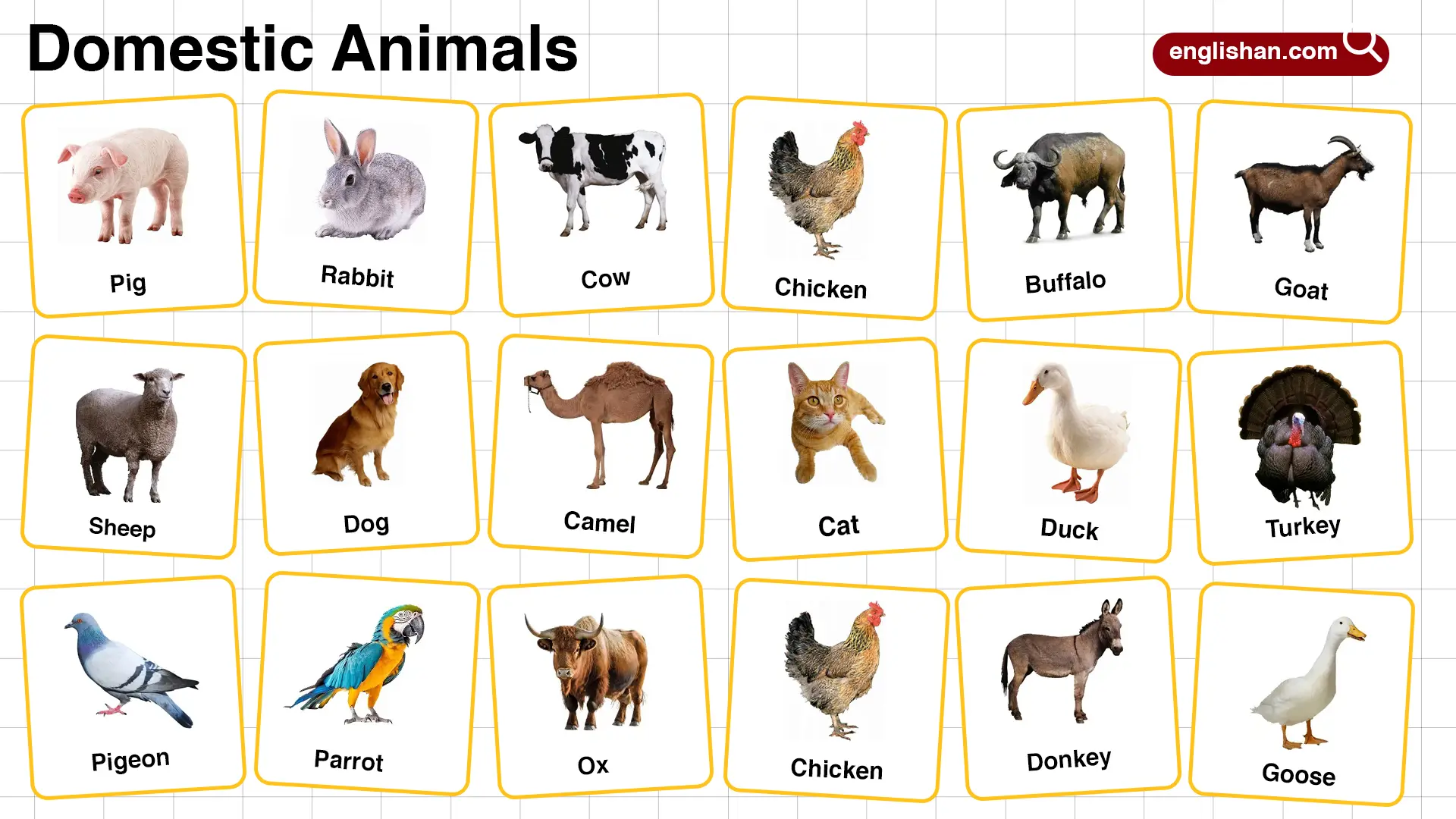
Some animals live close to humans and are kept for work, food, or care. These domestic animals include pets, farm animals, and city-based helpers seen in everyday life. Each plays a role in human surroundings.
This post shows their names with pictures to make learning easier. You’ll find commonly known animals grouped by where they live and how they’re used.
Master all animals names in English and build strong vocabulary with this complete post.
List of Domestic Animals Names
This is a complete list of common domestic animals that are kept for food, farming, work, or companionship.
- Cow
- Buffalo
- Goat
- Sheep
- Pig
- Horse
- Donkey
- Camel
- Ox
- Mule
- Yak
- Dog
- Cat
- Rabbit
- Chicken
- Duck
- Turkey
- Goose
- Pigeon
- Parrot
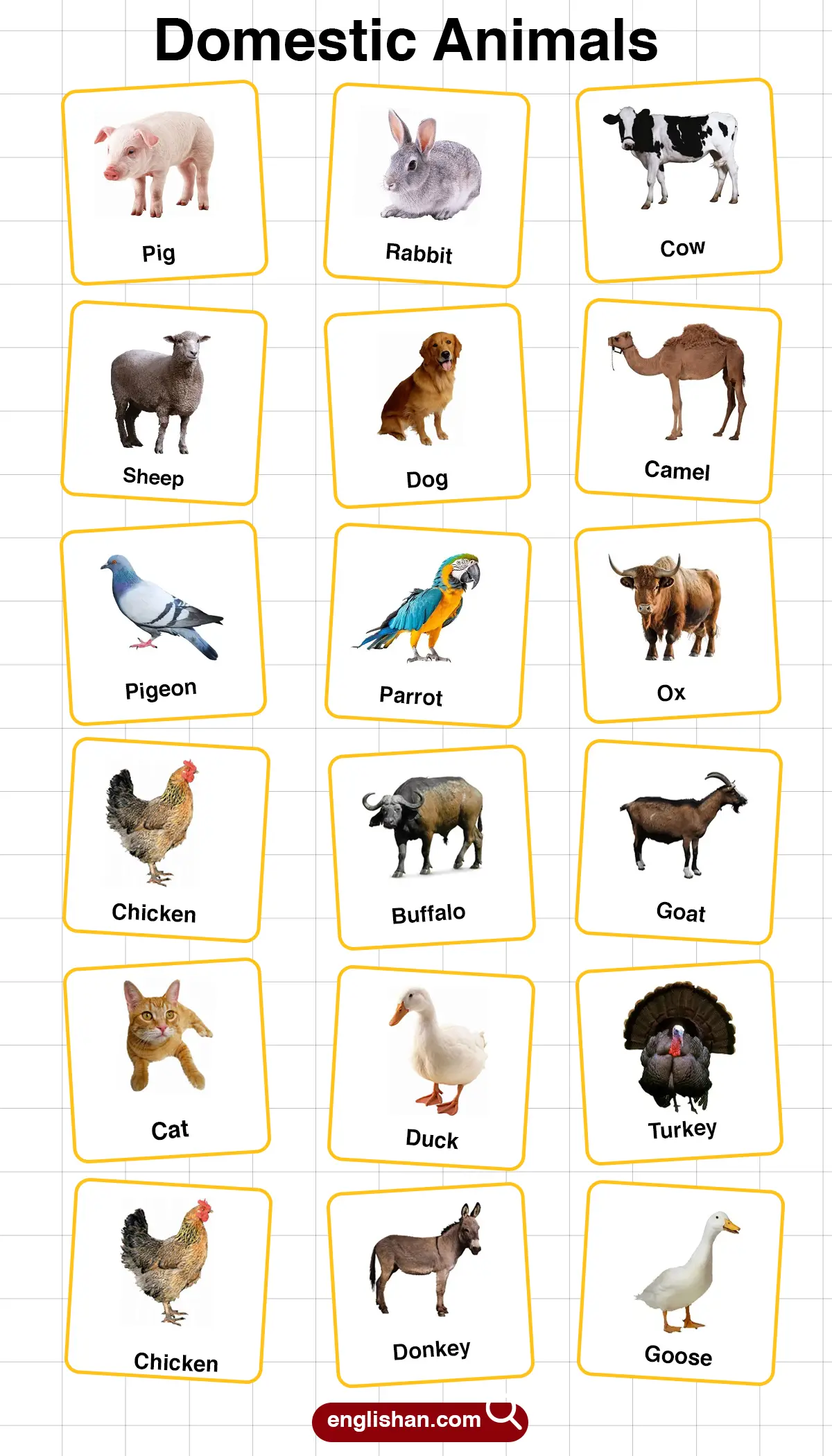
Types of Domestic Animals
Understanding the roles of domestic animals helps categorize them by what they offer humans. It boosts recognition and spelling skills across farm, home, and work categories.
Animals Raised for Work and Labor
These animals help people with daily tasks, especially in fields and transport.
- Horse: It pulls wagons, plows, and is still used in farming areas where machines aren’t common.
- Donkey: A small but strong animal that carries heavy things in rural regions with tough paths.
- Ox: Used to pull carts or plows, oxen are calm and steady work animals on farms.
- Mule: Strong like a horse but with a donkey’s hardiness, it works well on steep or rough paths.
- Camel: Known as the ship of the desert, it carries goods and people in hot, dry areas.
- Yak: Lives in cold mountains and helps by carrying heavy loads over rocky or snowy trails.
Domesticated Pets in Homes
These pets live with families, give emotional comfort, and are part of daily home life.
- Dog: Known for loyalty, it protects homes and plays with children as a loving pet.
- Cat: Quiet and clean, it’s easy to care for and keeps mice away too.
- Rabbit: A gentle pet that children enjoy holding and feeding, often kept in cages inside homes.
- Parrot: A colorful bird that can talk a bit and likes sitting on shoulders or perches.
- Pigeon: Calm birds that stay in small spaces and are friendly toward their owners.
Animals Kept for Milk, Meat, or Eggs
These animals are raised mainly for food that supports many families every day.
- Cow: Gives fresh milk daily and is a big part of many diets worldwide.
- Buffalo: Produces creamy milk and is important in rural dairy farming.
- Goat: Raised for milk, meat, and even skin in some places.
- Sheep: Known for wool and also raised for meat and some milk too.
- Pig: Farmed for meat like bacon, sausages, and other popular products.
- Chicken: Kept for both eggs and meat, they are easy to raise in small farms.
- Duck: Provides eggs and meat and is often seen near ponds or on small farms.
- Turkey: Grown mainly for meat, especially during certain seasons and holidays.
- Goose: A larger bird raised for both meat and rich, fatty eggs.
Domesticated Animals in Urban Settings
These animals live in homes, yards, and parks in cities. Their names help learners connect everyday animals with their surroundings.
Animals Adapted to City Life
These animals fit well into towns and small spaces, especially with human interaction.
- Dog: Commonly seen walking with people on streets and in parks.
- Cat: Lives quietly inside homes, often sleeping on soft furniture.
- Pigeon: Often seen flying in city skies or pecking near benches and buildings.
- Rabbit: Can live indoors or on balconies in cages with proper care.
Indoor Pets
Some animals need less space and are great choices for smaller homes.
- Cat: Quiet and doesn’t need to go outside, which suits apartment life well.
- Rabbit: Stays in cages or small pens and is a soft, quiet friend for children.
- Parrot: Stays in its cage but loves to talk and get attention.
- Pigeon: Surprisingly tame and clean when kept as indoor birds.
Domestic Animals Used in Agriculture
Agricultural animals support work, help raise food, and often form part of village life. Their names support early vocabulary linked to farming.
Some domestic animals also work on farms, and their role often overlaps with Farm Animals Names in English.
Grazing and Herding Animals
These animals graze fields and are kept in groups or herds.
- Cow: Eats grass in open fields and gives milk each day.
- Buffalo: Big and strong, they graze slow and produce milk.
- Sheep: Travel in groups and feed on short grass or bushes.
- Goat: They walk on hills and graze leaves, small but active.
- Yak: Lives in cold places, grazing tough grass and wild plants.
Pack and Transport Helpers
These animals carry items or help move loads in farms and villages.
- Horse: Pulls carts and takes riders to far fields or towns.
- Donkey: Carries baskets or water pots in village paths.
- Ox: Pulls carts filled with grain or wood.
- Mule: Carries tools and other items up and down hilly areas.
- Camel: Often used in deserts to carry large items or ride across sandy places.
Conclusion
Learning domestic animals names is a great way to grow your everyday vocabulary. These names help you talk about pets, farm animals, and working animals you may see around you. When you use these words in reading and writing, your English skills get stronger. Keep practicing with pictures and simple words to remember each animal name easily.
FAQs About Domestic Animals
Yes. Names like goat or buffalo may vary depending on local dialects or languages. Still, the core English names remain widely understood
The earliest animals domesticated were dogs, followed by sheep and goats, around 10,000–20,000 years ago.
Yes. The camel has been domesticated for thousands of years, mainly used for riding and carrying loads in arid regions .
You May Also Like
- Crawl Animals Names in English
- Flying Animals Names in English
- Omnivores Animals Name in English
- Shy Animals Names in English
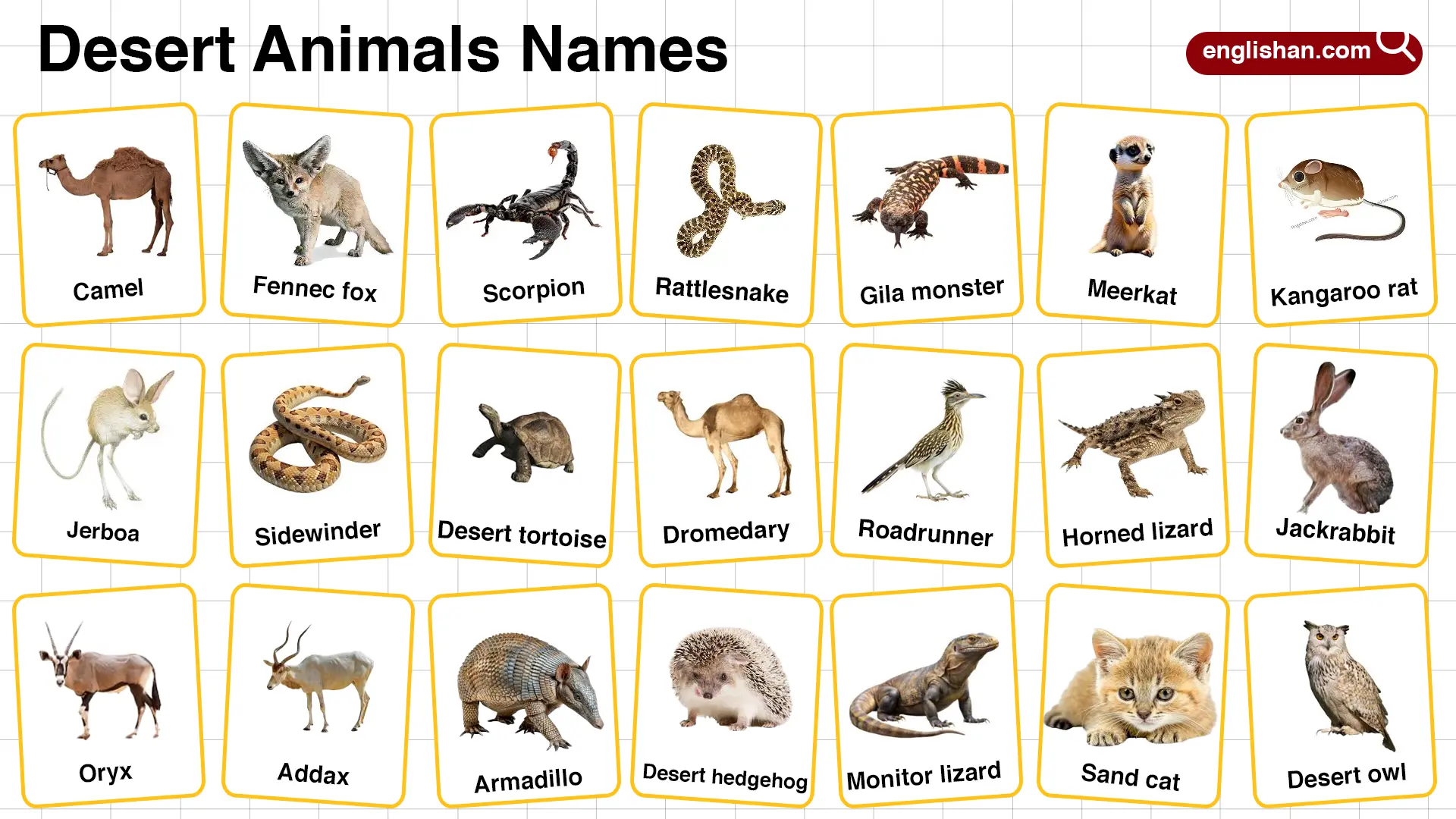
- Desert Animals Names in English
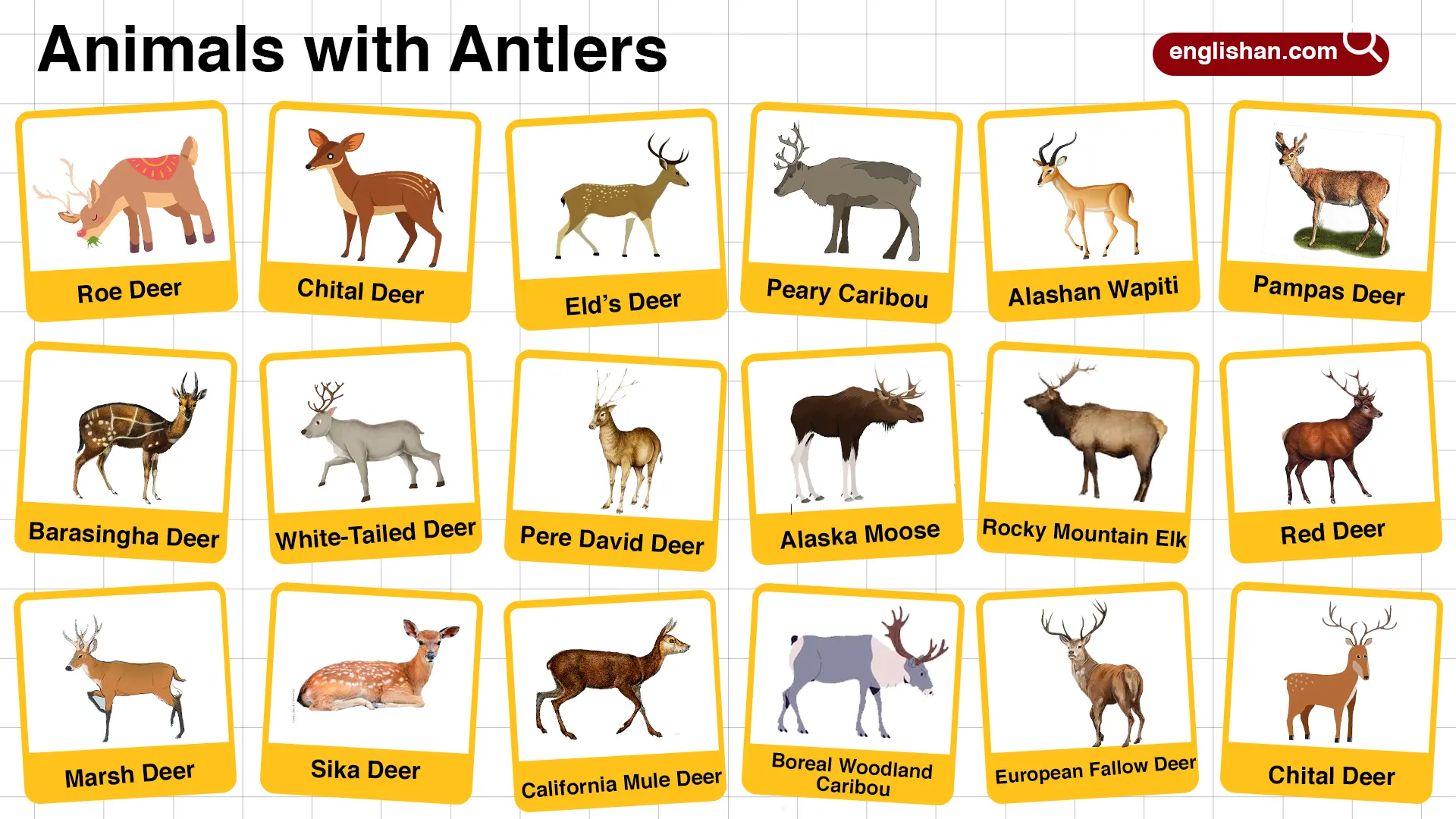
- Animals with Antlers – Names and Pictures