


Cyber crime essays help students learn about cybercrime, including online fraud, hacking, and identity theft. These essays are designed to support different skill levels, offering short 10-line essays, medium 250-word essays, and detailed 500-word essays. Understanding these sample essays saves time and gives a clear way to master writing on this topic. They help readers and search engines quickly grasp the key points without extra effort.
10 Lines Cyber Crime Essay for Class 2 to Class 5
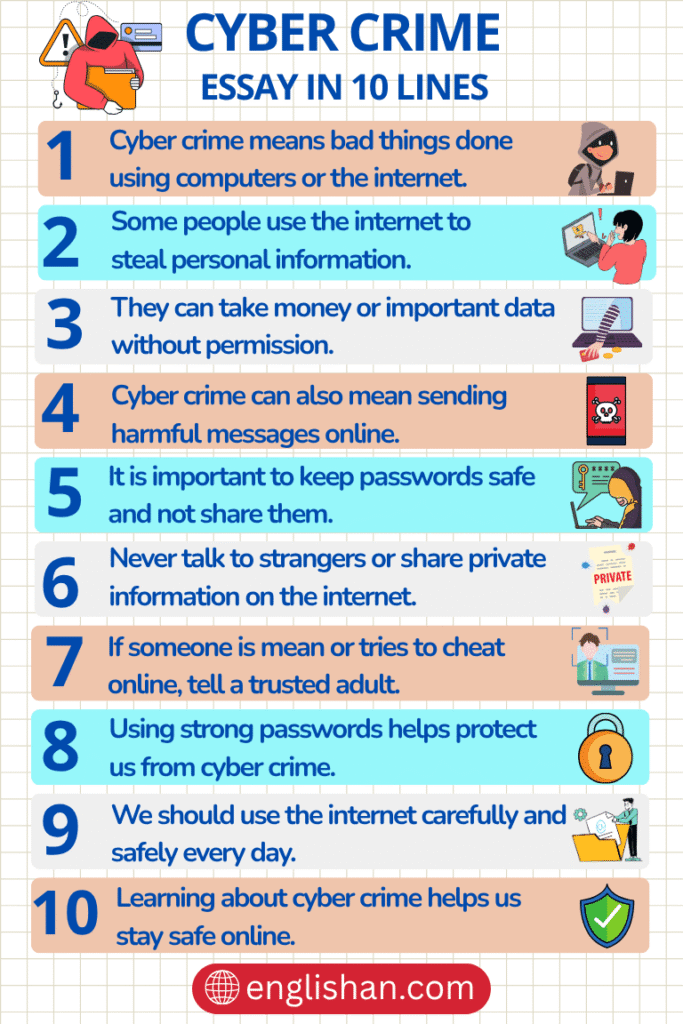
- Cyber crime means bad things done using computers or the internet.
- Some people use the internet to steal personal information.
- They can take money or important data without permission.
- Cyber crime can also mean sending harmful messages online.
- It is important to keep passwords safe and not share them.
- Never talk to strangers or share private information on the internet.
- If someone is mean or tries to cheat online, tell a trusted adult.
- Using strong passwords helps protect us from cyber crime.
- We should use the internet carefully and safely every day.
- Learning about cyber crime helps us stay safe online.
250 Words Essay on Cyber Crime for Middle School
Cyber crime refers to illegal activities done using computers and the internet. It includes hacking, stealing personal information, and online fraud. These crimes can harm individuals, businesses, and even governments. Many people face risks such as identity theft, where someone steals their personal details to commit fraud. Cyber criminals can also spread viruses to damage computers or steal data.
Learning about cyber crime is important for middle school students because technology is part of daily life. Writing essays with 250 words helps students explain these ideas clearly and practice organizing their thoughts. These essays often have an introduction defining cyber crime and why it matters.
The main body describes types of cyber crime like hacking and phishing, explaining how these crimes happen. It also covers effects on victims and society. Students learn to write clearly and inform others about the dangers of cyber crime.
In conclusion, cyber crime is a serious problem that affects many people. Writing essays on this topic helps students understand how to stay safe online. These essays also improve writing skills and raise awareness about protecting personal information. By mastering 250-word essays, students prepare for more detailed writing tasks in the future.
500 Words Cyber Crime Essay for Upper Primary and Lower Secondary
Understanding Cyber Crime
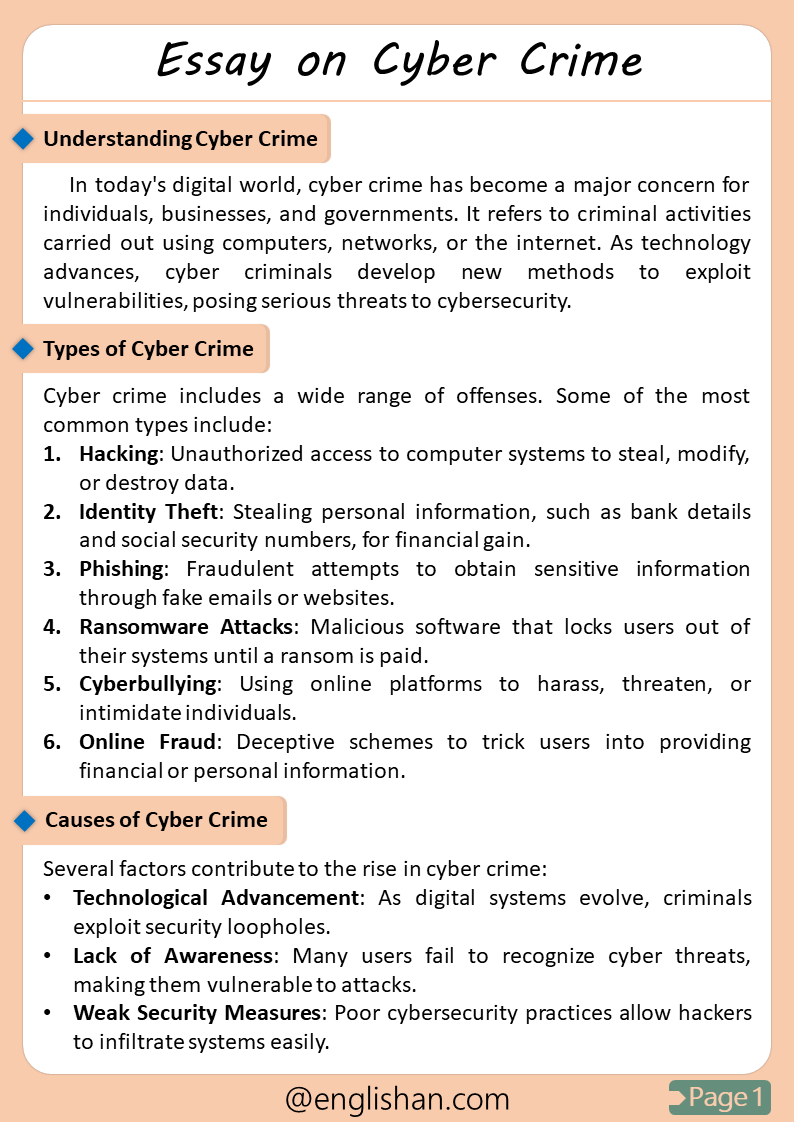
In today’s digital world, cyber crime has become a major concern for individuals, businesses, and governments. It refers to criminal activities carried out using computers, networks, or the internet. As technology advances, cyber criminals develop new methods to exploit vulnerabilities, posing serious threats to cybersecurity.
Types of Cyber Crime
Cyber crime includes a wide range of offenses. Some of the most common types include:
- Hacking: Unauthorized access to computer systems to steal, modify, or destroy data.
- Identity Theft: Stealing personal information, such as bank details and social security numbers, for financial gain.
- Phishing: Fraudulent attempts to obtain sensitive information through fake emails or websites.
- Ransomware Attacks: Malicious software that locks users out of their systems until a ransom is paid.
- Cyberbullying: Using online platforms to harass, threaten, or intimidate individuals.
- Online Fraud: Deceptive schemes to trick users into providing financial or personal information.
Causes of Cyber Crime
Several factors contribute to the rise in cyber crime:
- Technological Advancement: As digital systems evolve, criminals exploit security loopholes.
- Lack of Awareness: Many users fail to recognize cyber threats, making them vulnerable to attacks.
- Weak Security Measures: Poor cybersecurity practices allow hackers to infiltrate systems easily.
- Financial Motivations: Cyber criminals often commit crimes for financial gain through fraud, theft, or ransom.
- Anonymity on the Internet: Perpetrators hide their identities, making detection and prosecution difficult.
Effects of Cyber Crime
Cyber crime has severe consequences for individuals and organizations:
- Financial Loss: Victims may lose money due to fraud, theft, or ransom demands.
- Privacy Violations: Personal and sensitive data can be exposed, leading to identity theft and misuse.
- Reputational Damage: Businesses and individuals may suffer long-term harm due to data breaches.
- National Security Threats: Cyber attacks can target government institutions, posing risks to national security.
- Psychological Impact: Victims of cyberbullying and fraud may experience stress, anxiety, or depression.
Legal Framework Against Cyber Crime
Governments worldwide have introduced strict laws and policies to combat cyber crime. Legislation such as the Computer Fraud and Abuse Act (CFAA) and General Data Protection Regulation (GDPR) aims to prevent cyber threats and protect user privacy. Stronger enforcement of cyber laws and international cooperation is crucial in tackling online crimes effectively.
Preventing Cyber Crime
Preventing cyber crime requires proactive measures from individuals, businesses, and governments. Some essential steps include:
- Using Strong Passwords: Create complex passwords and update them regularly.
- Enabling Two-Factor Authentication: Adds an extra layer of security to accounts.
- Avoiding Suspicious Links and Emails: Phishing attempts can be prevented by verifying email sources.
- Installing Reliable Security Software: Antivirus and anti-malware programs help detect and block cyber threats.
- Keeping Software Updated: Regular updates patch security vulnerabilities in operating systems and applications.
- Raising Awareness: Educating people about cyber threats and safe online practices is crucial.
- Implementing Strong Cyber Laws: Governments must enforce strict regulations to combat cyber crime effectively.
Conclusion
Cyber crime is a growing global issue that affects individuals, businesses, and governments. As technology continues to evolve, so do cyber threats. By adopting strong cybersecurity practices, increasing awareness, and enforcing strict laws, we can mitigate the risks associated with cyber crime. A collaborative effort is necessary to ensure a safer digital world for everyone.
Difficult Words Used in 500 Cyber Crime
| Word | Meaning |
|---|---|
| Vulnerabilities | Weaknesses that can be exploited by attackers |
| Ransomware | Malicious software that demands payment |
| Anonymity | The state of being anonymous or unidentifiable |
| Cybersecurity | Protection of digital systems from cyber threats |
| Phishing | Fraudulent attempts to obtain sensitive data |
Cyber Crime PDF
You May Also Like