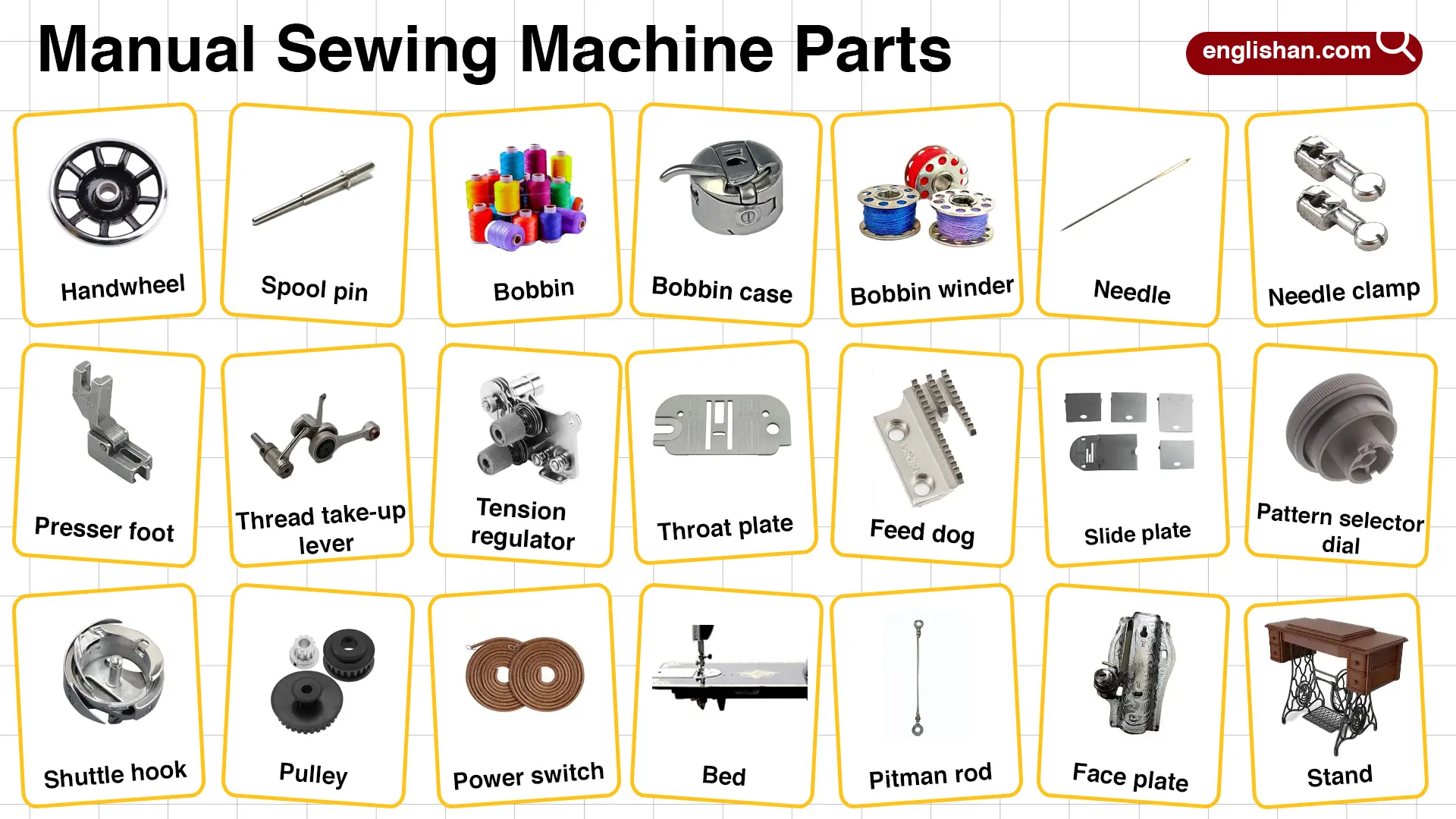
Many parts make up a manual sewing machine, helping it stitch fabric without electricity. These machines use hand or foot power and are still used in tailoring, repairs, and areas without electric supply.
This post lists manual sewing machine parts with names and pictures. You’ll learn the common components that help the machine work and understand their functions for better vocabulary and practical knowledge.
List of Manual Sewing Machine Parts Names
Manual sewing machines have many parts that work together to create stitches. Below is a list of part names you need to know. Each item in this list plays a role in how the machine works without electricity.
- Handwheel
- Spool Pin
- Bobbin
- Bobbin Case
- Bobbin Winder
- Needle
- Needle Clamp
- Presser Foot
- Presser Foot Lifter
- Thread Take-Up Lever
- Tension Disc
- Tension Regulator
- Thread Guide
- Throat Plate
- Feed Dog
- Slide Plate
- Stitch Length Regulator
- Shuttle Hook
- Needle Plate
- Face Plate
- Arm
- Bed
- Belt
- Pulley
- Flywheel
- Treadle Pedal
- Pitman Rod
- Stand
- Drawer
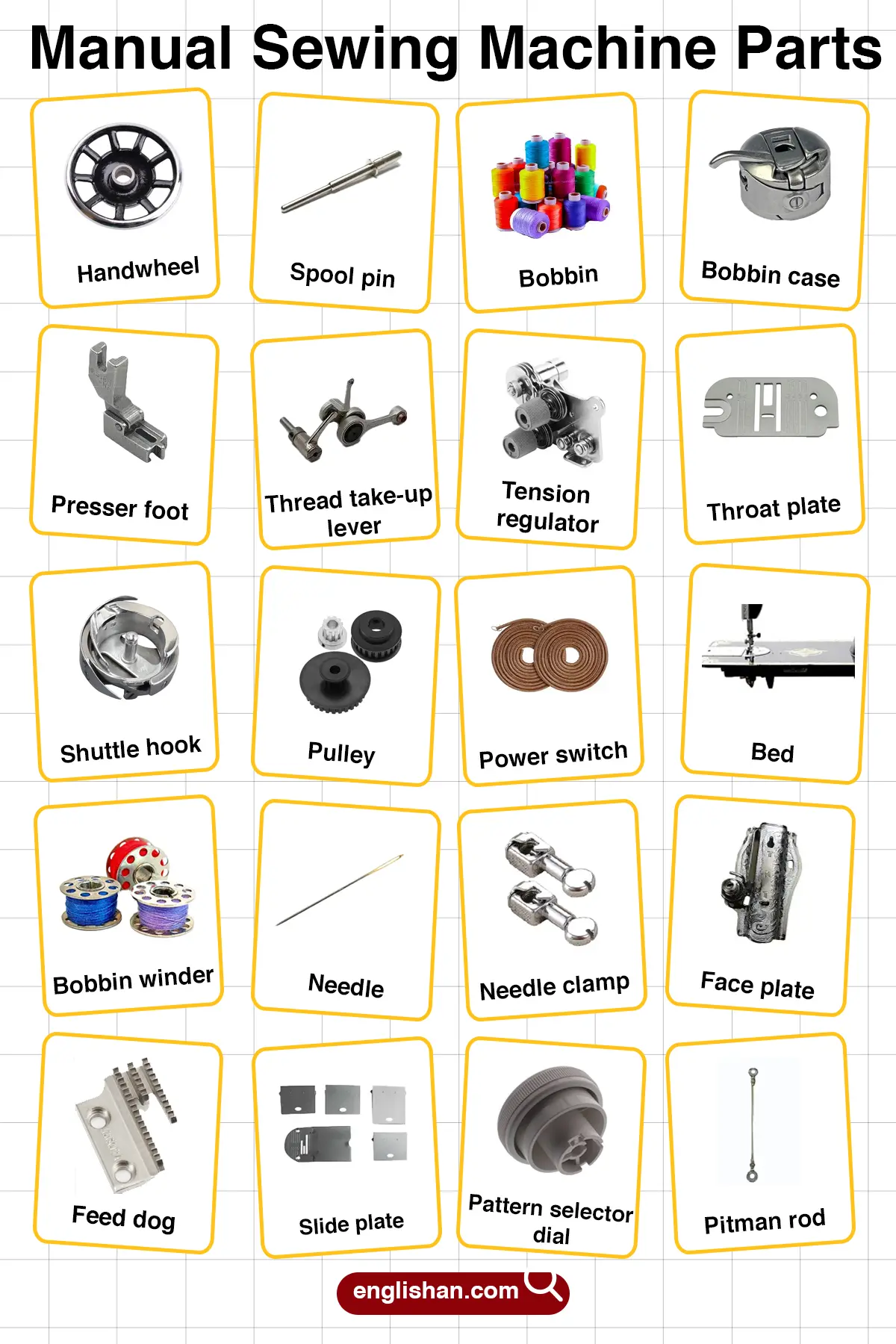
Main Parts of a Manual Sewing Machine Names
Manual sewing machines are built with different parts that work together to make stitches. Below is a list of the most important components, grouped by function.
Hand Wheel
The hand wheel controls the needle’s motion when turned by hand. It’s located on the right side and moves the machine manually.
Parts of Needle Area
This section includes the needle and nearby parts that guide the fabric and stitch.
- Needle: A pointed metal pin with an eye that carries thread through the fabric.
- Needle Clamp: A metal holder that locks the needle in place.
- Needle Plate: A metal plate under the needle with a small hole for stitching.
- Face Plate: A removable cover that protects the needle bar area and lets you oil parts.
List of Thread System
This system controls how the upper thread travels from spool to needle.
- Thread Take-Up Lever: Moves up and down to pull the thread through the machine.
- Thread Guide: Helps the thread move smoothly without tangling.
- Tension Disc: Keeps the thread tight enough to make strong stitches.
- Tension Regulator: Allows you to adjust the thread tension as needed.
- Spool Pin: A short pin that holds the spool of thread on the machine.
Bobbin System
The bobbin system handles the lower thread that locks with the upper thread.
- Bobbin: A small reel that holds thread inside the machine.
- Bobbin Case: Houses the bobbin and helps guide the lower thread.
- Bobbin Winder: Lets you wind thread onto the bobbin before placing it in the case.
- Shuttle Hook: Catches the thread from the needle and loops it with the bobbin thread.
- Slide Plate: A small cover that opens to access the bobbin area.
Fabric Feed
This part helps move the fabric as you sew each stitch.
- Feed Dog: Small metal teeth that rise and pull the fabric forward.
- Throat Plate: Flat surface under the needle where the feed dogs move.
- Presser Foot: Holds the fabric down so it stays in place.
- Presser Foot Lifter: A lever that raises or lowers the presser foot.
Types of Manual Sewing Machines
There are two main kinds of manual machines. Each works without electricity but operates in different ways.
Hand Crank Machine
This type has a crank on the side. You turn it with your hand to move the needle up and down.
Treadle Machine
Treadle machines are run by a foot pedal that powers the machine with a belt system.
- Treadle Pedal: A large metal footpiece that you move back and forth.
- Pitman Rod: A rod that connects the pedal to the crankshaft.
- Stand: The strong base that holds the machine and pedal.
- Drawer: A small built-in box under the stand to store needles, thread, or scissors.
Manual vs Electric Machines Parts
Manual sewing machines use hand or foot power, while electric ones run on a motor. Manual machines are great for beginners, quiet places, or areas without electricity. They are easier to maintain and teach basic sewing skills.
Conclusion
Manual sewing machines have many important parts that work together for sewing. Learning their names helps you understand how they function. With practice, you can identify each part and use the machine confidently, even without electricity or advanced features.
FAQs on Manual Sewing Machine Parts Names
A manual sewing machine includes the hand wheel, needle, bobbin, thread guide, tension disc, presser foot, and feed dog. These are essential for stitching.
A treadle machine uses a foot pedal to move a belt that powers the machine. It runs without electricity by using foot motion to drive the parts.
The bobbin holds the lower thread. It works with the needle’s thread to form a stitch. Without it, the sewing machine cannot sew properly.
Manual machines use hand or foot power. Electric machines run on motors. Manual machines are slower, but great for learning and simple sewing tasks.
You May Also Like