

Headphones are part of our daily lives, whether we’re listening to music, joining calls, or diving into games. But have you ever stopped to think about what’s inside them and how they actually create sound? From the tiny speaker drivers to the wires and cushions, every component plays an important role in delivering clear and immersive audio. In this article, we’ll explore the different parts of headphones, how they work, and what each one does.
List of Headphones Parts With Names
- Headphone Jack (Plug)
- Headband
- Slider
- Adjusting Band
- Drivers
- Ear Cups
- Cushions
- Cable
Parts of Headphones Diagram With Names
Headphones are made up of several key parts that work together to deliver clear sound and comfort. The speaker drivers produce audio, while the ear cushions provide comfort and a good seal. The headband holds the ear cups in place and can be adjusted for different head sizes. Inside, the wires and circuit board manage the audio signals, and wireless models use a Bluetooth module and battery. Every component, from the diaphragm to the control buttons, ensures quality sound, comfort, and smooth everyday use.
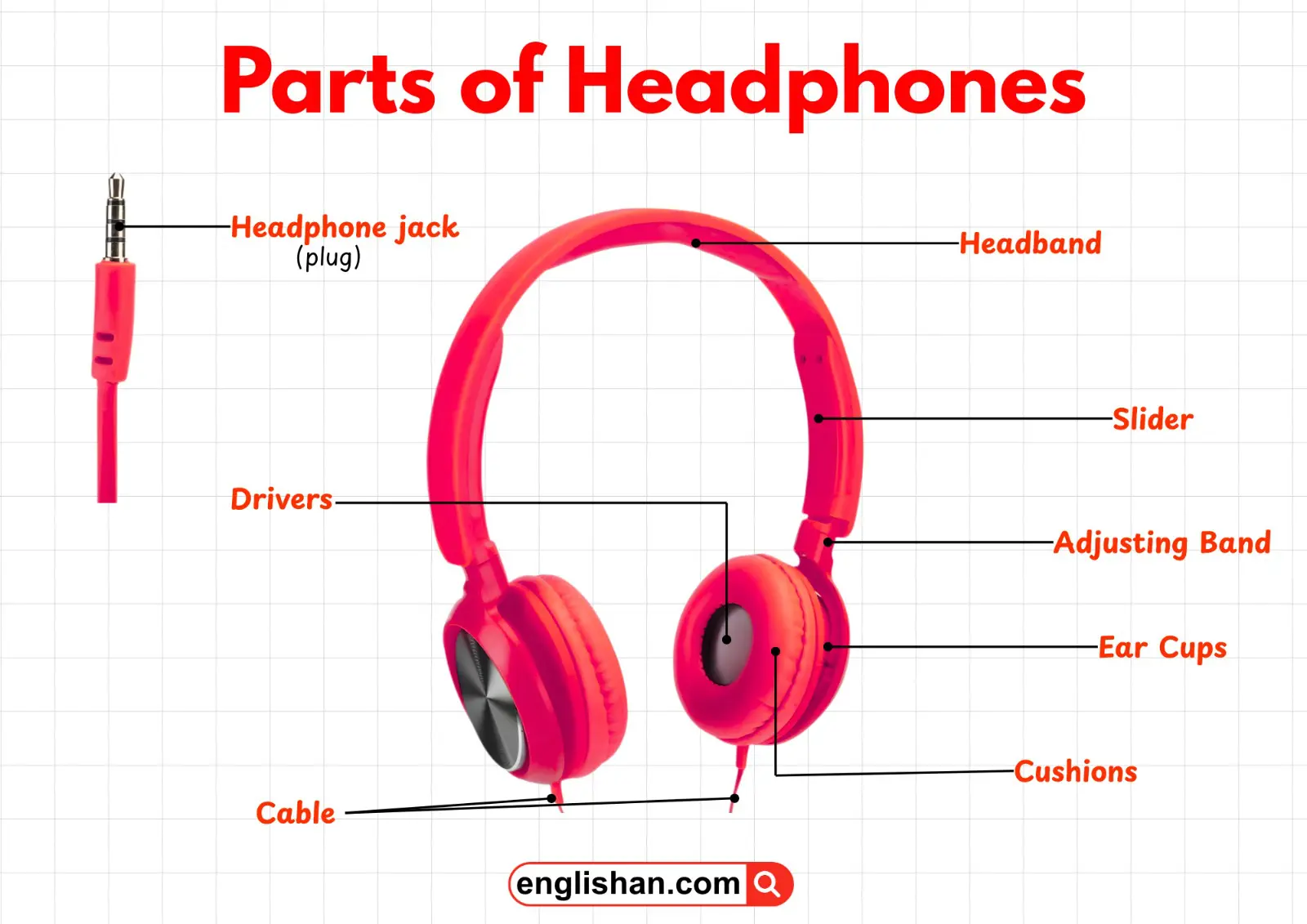
Headband Section
Headband
The headband is the main curved frame that sits on top of the user’s head and connects both ear cups. It provides structural support and keeps the headphones securely in place during use. Most headbands are made from durable materials such as plastic, metal, or reinforced composites and are often padded to increase comfort during long listening sessions.
Slider
The slider is the adjustable mechanism located on both sides of the headband. It allows users to extend or shorten the length of the headphones so they fit different head sizes. By sliding the ear cups up or down, the user can achieve a secure and comfortable fit.
Adjusting Band
The adjusting band is the section that works together with the slider to modify the size of the headband. It helps maintain the selected position after adjustment, ensuring that the headphones stay properly aligned on the head while being used.
Ear Cup Section
Ear Cups
The ear cups are the rounded outer housings that cover the ears. They contain the internal sound-producing components such as the drivers. Ear cups are designed to direct sound toward the ears while also reducing outside noise to improve the listening experience.
Cushions
The cushions, also called ear pads, are the soft padded rings attached to the ear cups. They are usually made of foam, leather, or fabric and are designed to provide comfort and create a gentle seal around the ears. This seal helps improve sound quality by minimizing sound leakage and external noise.
Drivers
The drivers are the most important sound-producing components inside the ear cups. They convert electrical audio signals into sound waves that we can hear. Drivers typically include a diaphragm, magnet, and voice coil, which work together to vibrate and produce clear audio.
Connection Section
Cable
The cable is the wire that carries audio signals from the audio source (such as a phone, laptop, or music player) to the headphones. It connects the device to the headphone drivers, allowing sound to be transmitted. Some cables also include controls for volume adjustment or microphones.
Headphone Jack (Plug)
The headphone jack, also called the plug, is the metal connector at the end of the cable. It is inserted into the audio port of a device to establish the connection. The most common type is the 3.5 mm audio jack, which is widely used in smartphones, computers, and other audio equipment.
Key Takeaway
As we learned, headphones are made up of several essential components that work together to deliver sound, comfort, and control. The headband and ear cushions provide a comfortable fit, the speaker drivers produce audio, and the internal electronics handle signal flow and wireless connectivity. Controls like buttons, microphones, and charging ports make using them simple and convenient.
You May Also Like