Parts of a cabinet might seem simple at first, but each piece plays an important role in keeping your cabinet sturdy and functional. Whether you’re building one, fixing it, or just curious, understanding these parts can make the whole process much easier. In this article, we’ll walk you through all the main components of a cabinet, explain what they do, and show a clear diagram so you can see how everything fits together.
List of Cabinet Parts With Names
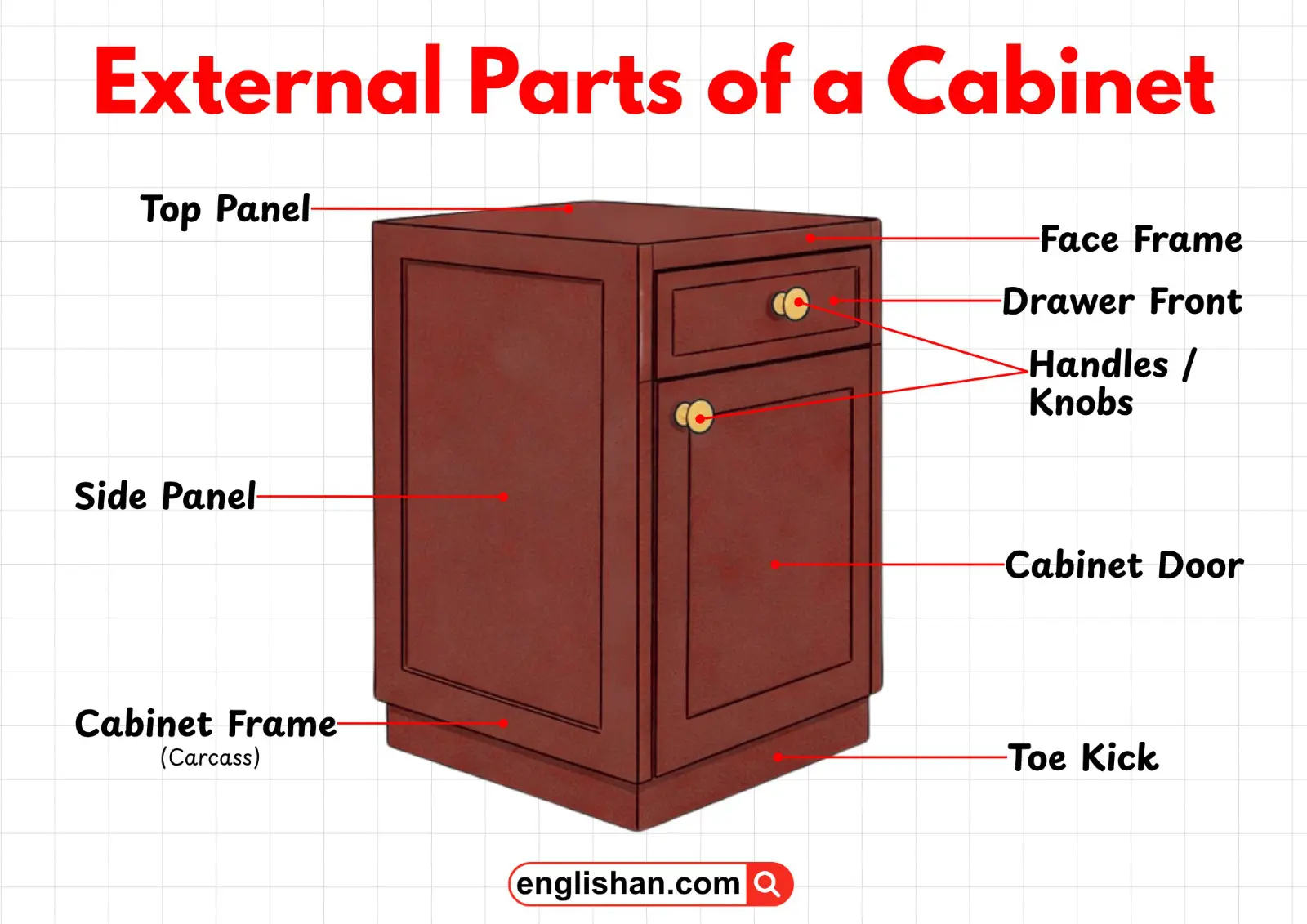
- Top Panel
- Face Frame
- Drawer Front
- Handles / Knobs
- Cabinet Door
- Toe Kick
- Side Panel
- Cabinet Frame (Carcass)
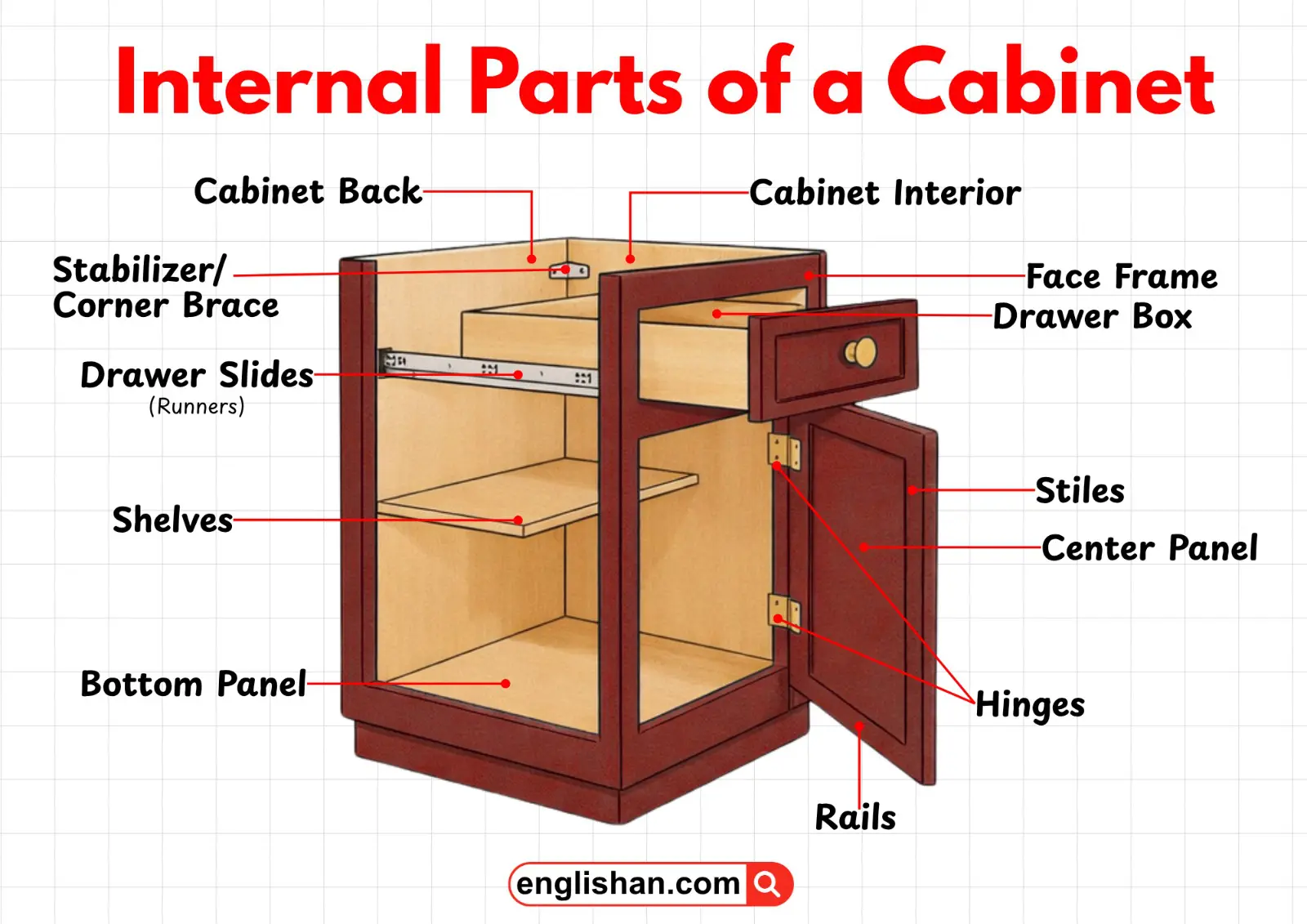
- Cabinet Back
- Cabinet Interior
- Stabilizer / Corner Brace
- Drawer Slides (Runners)
- Shelves
- Bottom Panel
- Drawer Box
- Stiles
- Center Panel
- Hinges
- Rails
Parts of a Cabinet Diagram With Names
Cabinets are made up of several parts that work together to provide storage, support, and easy access. The frame and panels form the main structure that holds everything in place, while the shelves and drawers create organized spaces for your items. The doors and hinges allow smooth opening and closing, and the handles or knobs make it easy to use. Additional parts like the back panel, base, and finishing trims add stability, durability, and a polished look. Each component plays an important role in making a cabinet functional, strong, and user-friendly.
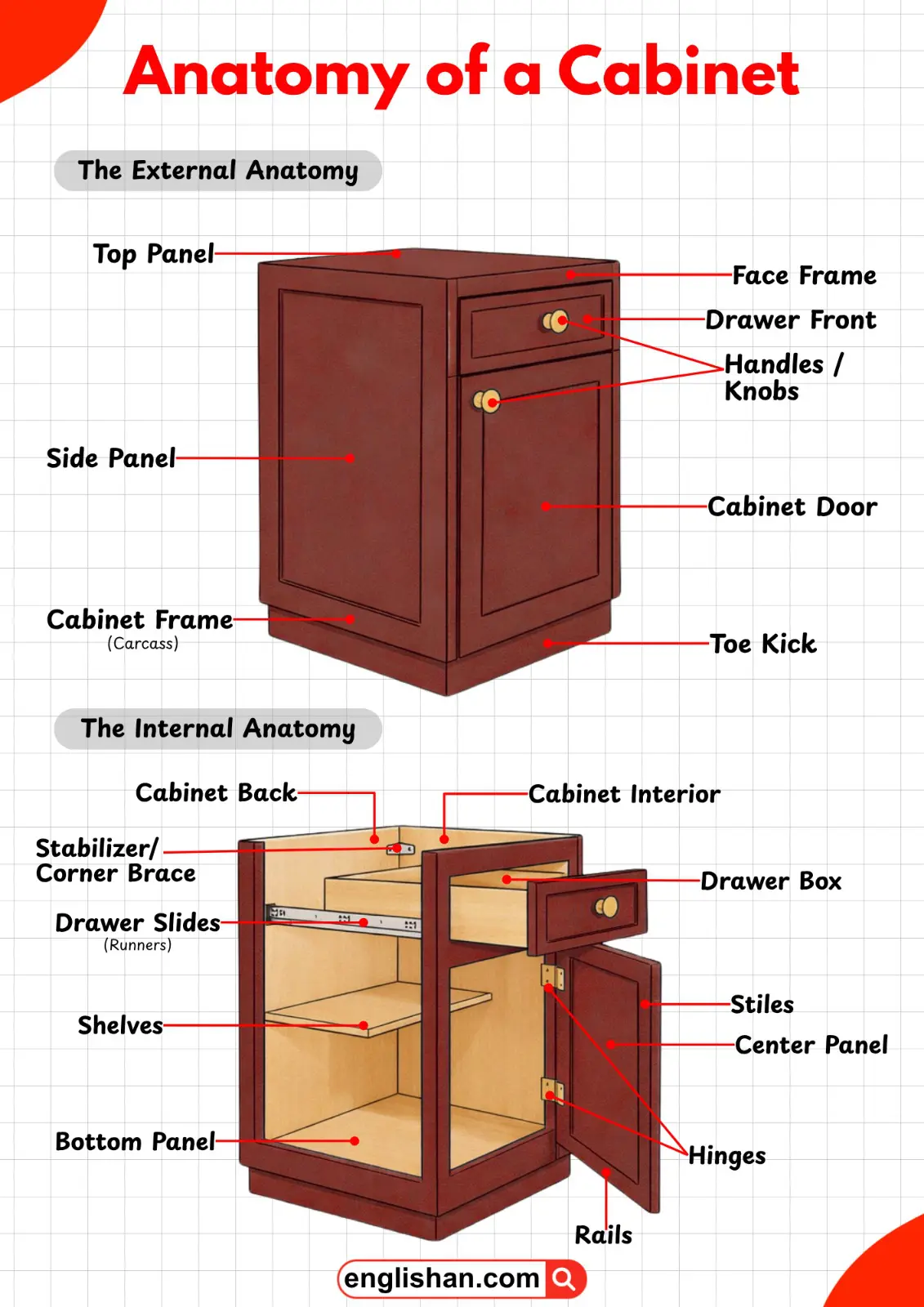
External Parts of a Cabinet
The external anatomy of a cabinet includes all the parts you can see and touch from the outside. These components give the cabinet its appearance, protect the interior, and allow easy everyday use.
Top Panel
The top panel is the flat upper surface of the cabinet. It acts as a protective cover for the entire structure and often serves as an additional functional space where items can be placed temporarily or permanently. In kitchen or storage cabinets, this panel helps keep dust and moisture out while also adding strength by tying the sides together.
Side Panel
Side panels form the left and right walls of its. These large vertical boards provide structural stability and determine the cabinet’s depth and height. They support shelves, drawers, and internal hardware, ensuring everything remains aligned and secure. The finish on the side panels also contributes significantly to the cabinet’s overall visual style.
Face Frame
The face frame is the front structural border attached to the box. It strengthens the opening and provides a solid surface for mounting doors and drawers. Besides improving durability, the face frame creates clean lines and helps align cabinet components neatly, giving the cabinet a polished and professional appearance.
Drawer Front
The drawer front is the visible outer panel attached to the drawer box. While it hides the internal drawer structure, it also plays a major decorative role. Its design, color, and finish usually match its door, helping maintain a consistent look across the cabinet.
Handles / Knobs
Handles or knobs are small but essential hardware pieces used to open and close drawers and doors. They provide grip and convenience while also acting as decorative accents. The choice of handles can greatly influence its style, whether modern, traditional, or minimalist.
Cabinet Door
The cabinet door covers the cabinet opening and protects the items stored inside. It swings open on hinges, providing easy access while keeping its contents hidden from view. Doors also enhance aesthetics and may include panels, glass inserts, or decorative designs, depending on the cabinet style.
Toe Kick
The toe kick is the recessed section at the bottom front. It creates space for your feet when standing close, improving comfort and balance. This small design feature makes working at cabinets easier while protecting the lower portion from accidental kicks or damage.
Cabinet Frame (Carcass)
The cabinet frame, also called the carcass, is the main structural body of the cabinet. It includes the assembled panels that form the cabinet box. This framework supports all internal and external parts, ensuring the cabinet remains sturdy, square, and durable over time.
Internal Parts of a Cabinet
The internal anatomy consists of components hidden inside the cabinet. These parts provide storage functionality, movement, and structural reinforcement.
Cabinet Back
The cabinet back is the rear panel that closes it from behind. It adds rigidity to the structure and prevents the cabinet from shifting or twisting. This panel also protects stored items from wall dust and helps maintain the cabinet’s shape.
Cabinet Interior
The cabinet interior refers to the usable storage space inside it. It is designed to hold shelves, drawers, and stored items efficiently. Smooth interior surfaces make cleaning easier and help items slide or rest safely without damage.
Stabilizer / Corner Brace
The stabilizer or corner brace is a reinforcing piece placed inside cabinet corners. Its main job is to strengthen joints and prevent wobbling or loosening over time. These braces help maintain alignment, especially when the cabinet carries heavy loads.
Drawer Slides (Runners)
Drawer slides are metal or mechanical tracks mounted along the sides of drawers. They allow the drawer to open and close smoothly with controlled movement. High-quality slides reduce friction, support weight evenly, and often include soft-close mechanisms for quiet operation.
Shelves
Shelves are horizontal panels installed inside to divide storage space. They allow items to be organized efficiently at different levels. Adjustable shelves provide flexibility, making it easier to store objects of various sizes.
Bottom Panel
The bottom panel forms the base floor inside it. It supports the weight of stored items and connects the side panels together. A strong bottom panel is essential for durability, especially in cabinets used for heavy storage.
Drawer Box
The drawer box is the internal container behind the drawer front. It holds items securely and slides in and out using drawer runners. Built for strength and repeated use, the drawer box is typically made from sturdy materials to handle daily wear.
Stiles
Stiles are the vertical frame pieces found on its doors or internal framing. They provide structural support and help maintain the door’s shape. Stiles also contributes to the cabinet’s visual design by creating balanced proportions.
Center Panel
The center panel is the middle section of its door, surrounded by stiles and rails. It may be flat or raised, depending on the design style. Besides decoration, it adds rigidity to the door structure.
Hinges
Hinges are mechanical joints that connect the door to the frame. They allow the door to swing open and closed smoothly. Modern hinges often include adjustable settings and soft-close features for improved functionality and longevity.
Rails
Rails are horizontal framing components that connect stiles together. They strengthen doors and frames while helping maintain alignment. Rails also help distribute stress evenly, preventing warping or bending over time.
Key Takeaway
As we learned, a cabinet is more than just a storage box; it is a carefully designed structure made up of both external and internal parts that work together for strength, functionality, and appearance. The external components such as panels, doors, and handles provide protection and style, while the internal parts like shelves, slides, and braces ensure smooth operation and organized storage. Understanding the anatomy of a cabinet helps us appreciate how each part contributes to durability, convenience, and efficient everyday use.
You May Also Like