A dryer might seem like a simple machine, but it’s actually made up of several important parts that work together to get your clothes dry. From the drum that tumbles your laundry to the heating element that warms the air, each component has its own job. Knowing the parts of a dryer can help you understand how it works and even make maintenance easier. In this article, we’ll explore all the key parts of a dryer and see how they function.
Complete List of Dryer Components
- Knob
- Door Hinge
- Thermostat
- Heating Element
- Door
- Drum
- Vent
- Control Panel
- Lint Trap
- Drum Belt
- Blower Fan
- Motor
Parts of a Dryer Diagram With Names
A dryer is a household appliance made up of several important components, and each part has its own specific name and function. From the outer cabinet and control panel to the internal drum, heating system, and airflow components, every section is carefully designed to dry clothes efficiently and safely. Understanding the different parts of a dryer helps you see how heat, motion, and airflow work together to remove moisture and leave your laundry completely dry.
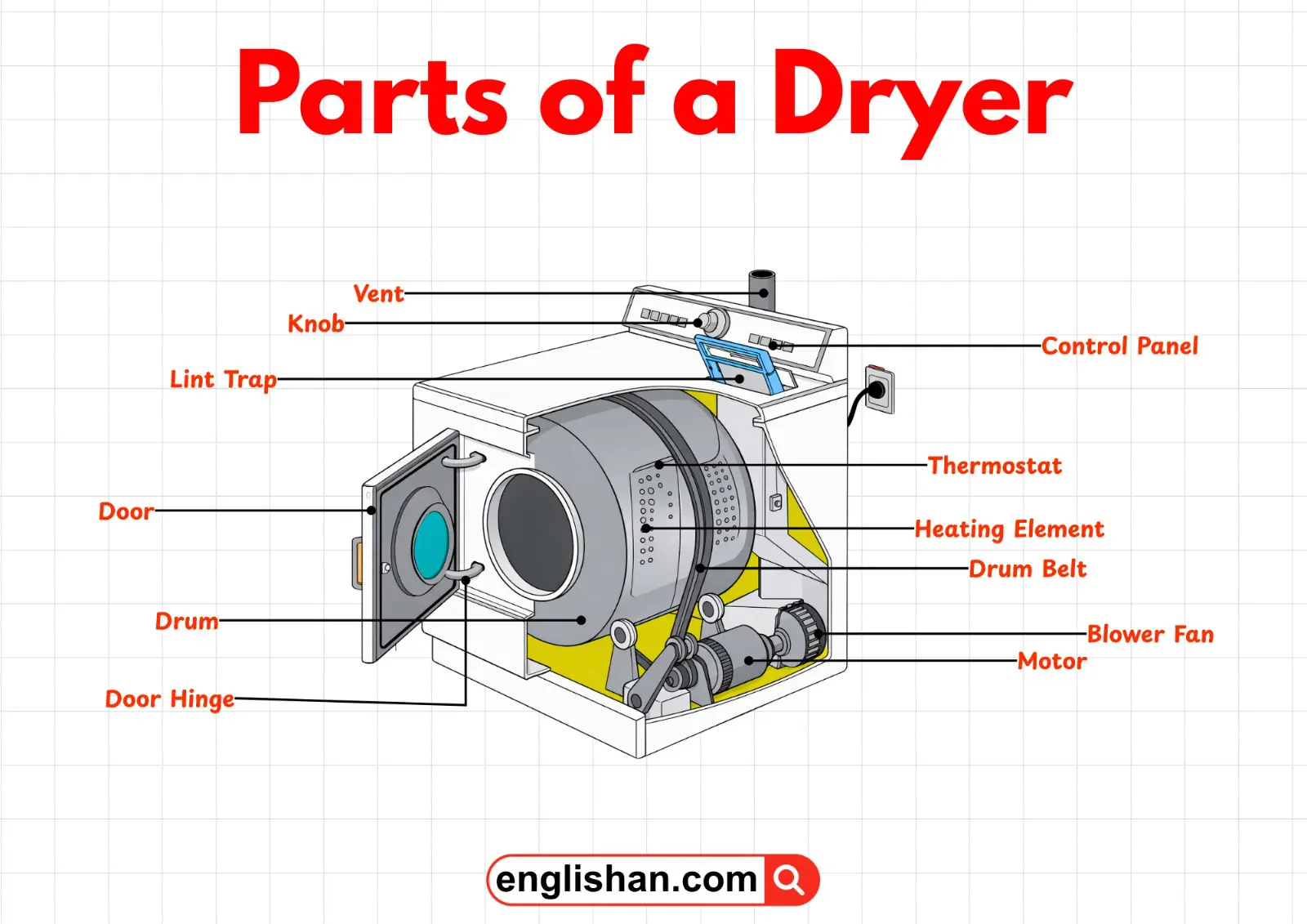
Structural & External Components
These parts make up the outer framework of the dryer and provide the interface for the user to operate the machine safely and conveniently.
Knob
This is the user interface control used to select dryer settings such as temperature, cycle type, or drying time. It connects mechanically or electronically to the control panel.
Door
The door provides access to the drum. It ensures the dryer is safely sealed during operation to maintain heat and prevent accidents. Many doors have safety switches that stop the dryer when opened.
Door Hinge
This supports the door and allows it to swing open and closed. Durable hinges ensure the door remains properly aligned and maintains a tight seal when closed.
Control Panel
The control panel houses the knobs, buttons, or digital display that let the user set the dryer’s functions. It may also contain the electronics that communicate with sensors and timers inside the machine.
Heating & Temperature Components
These components generate and regulate the heat necessary to dry clothes efficiently while preventing overheating.
Thermostat
The thermostat regulates the dryer’s temperature. It monitors the heat inside the drum and signals the heating element to turn on or off to prevent overheating or underheating.
Heating Element
This component produces heat that dries the clothes. It can be electric or gas-powered. The heating element converts electrical energy into thermal energy and distributes it into the drum via airflow.
Drum & Motion Components
These parts are responsible for the tumbling motion that exposes all surfaces of the clothes to heat for even drying.
Drum
The drum is the rotating cylinder where clothes are placed. Its rotation tumbles the clothes, exposing all surfaces to warm air for even drying. It’s usually made of stainless steel or coated metal for durability.
Drum Belt
This belt wraps around the drum and is connected to the motor. When the motor turns, the belt rotates the drum, ensuring the clothes tumble properly during the drying cycle.
Motor
The motor powers both the drum rotation and the blower fan in most dryers. It’s an essential component that keeps the mechanical and airflow systems running smoothly.
Airflow & Ventilation Components
These parts circulate hot air through the drum and remove moisture-laden air to the outside, ensuring effective and safe drying.
Vent
The vent allows hot, moist air to escape from the dryer to the outside of the building. Proper venting prevents moisture buildup, improves drying efficiency, and reduces fire risk.
Blower Fan
This fan circulates air through the drum, over the heating element, and out through the vent. It ensures even heat distribution and efficient moisture removal.
Lint Trap
The lint trap collects fibers that come off clothes during drying. Regular cleaning is crucial to maintain airflow and prevent fire hazards.
Key Takeaway
As we learned, a clothes dryer operates through a coordinated system of structural, heating, motion, and airflow components that work together to dry clothes efficiently and safely. The heating element generates warmth, the thermostat regulates temperature, the motor and drum belt create tumbling motion, and the blower fan and vent remove moist air. Meanwhile, external parts like the control panel, knob, and door allow safe operation and user control. When all these components function properly, the dryer maintains consistent heat, effective airflow, and balanced drum rotation for optimal drying performance.
You May Also Like