A fireplace is more than just a place to light a fire. It’s a system made up of several important parts that work together to produce heat and safely direct smoke outside. If you have ever wondered what each section is called or how it actually functions, you are not alone. Understanding the parts of a fireplace can help you use it more safely, maintain it properly, and even make smarter decisions if you are planning repairs or upgrades. In this guide, we will walk through each part simply and easily so you can clearly understand how a fireplace works from the inside out.
Fireplace Parts with Diagram
A fireplace is a carefully designed heating system made up of two main sections: the interior (firebox and flue system) and the exterior (chimney and surrounding masonry). Each part plays an important role in controlling heat, directing smoke safely outside, and keeping your home protected. When a fire is lit, heat radiates from the firebox while smoke travels up through the smoke chamber and flue liner into the chimney. Understanding the parts of a fireplace by name makes it much easier to see how the system works and how each component contributes to a safe and efficient fire.
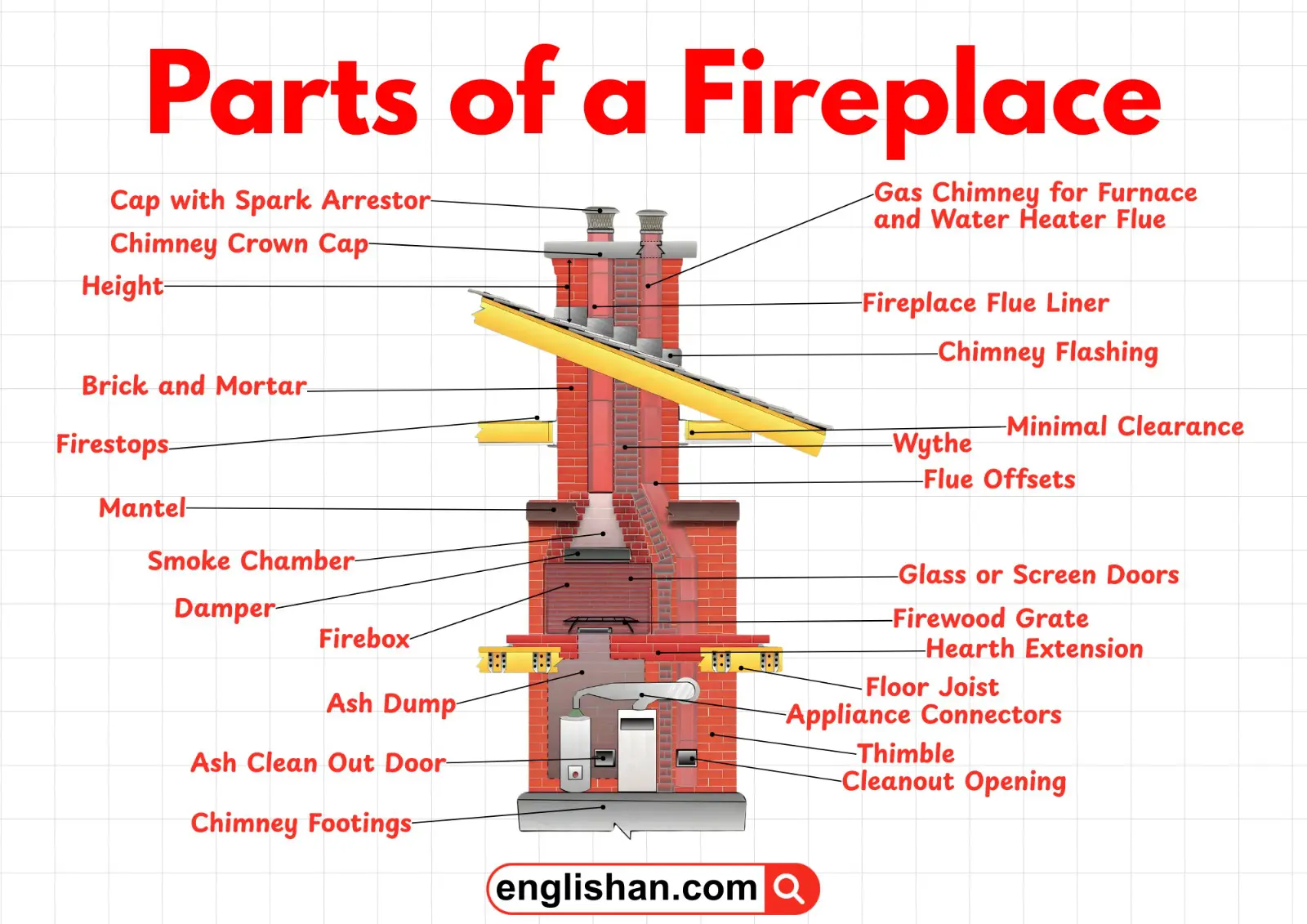
List of Fireplace Parts
- Chimney Cap / Spark Arrestor
- Chimney Crown Cap
- Chimney Height
- Brick and Mortar
- Fireplace Flue Liner
- Gas Chimney (Furnace & Water Heater Flue)
- Flashing
- Firestops
- Minimum Clearance
- Wythe
- Flue Offsets
- Mantel
- Smoke Chamber
- Damper
- Glass or Screen Door
- Firebox
- Firewood Grate
- Hearth Extension
- Ash Dump
- Ash Clean-Out Door
- Floor Joist
- Appliance Connectors
- Chimney Thimble
- Clean-Out Opening
- Footings
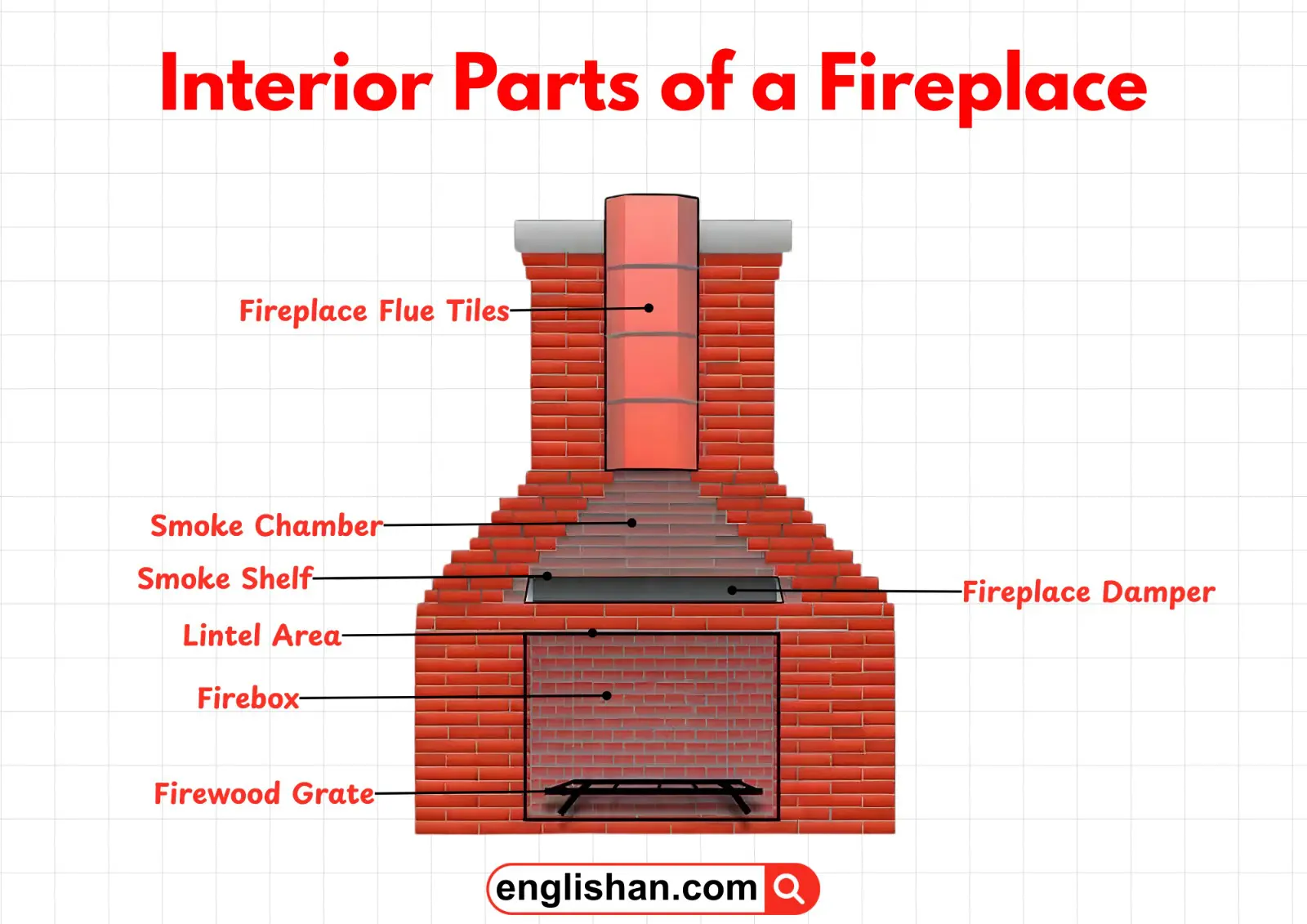
- Smoke Shelf
- Chimney Flue Tile
- Throat
- Chimney Stack
- Fireback
- Grate & Andiron Accessories
- Blower / Fan
Interior Parts (Inside the Fireplace & Flue System)
Let’s take a closer look at the parts inside your fireplace that make the fire burn safely and efficiently.
Firebox
The firebox is the heart of your fireplace where the flames actually burn. It’s made from heat-resistant bricks and refractory mortar to handle intense heat without cracking. Its main job is to contain the fire safely, keeping sparks and heat away from your home’s walls and floor.
Firewood Grate
This sturdy metal frame holds your logs above the floor of the firebox. By lifting the wood, it allows air to circulate underneath, helping the fire burn hotter and more evenly. It also prevents logs from sitting directly on the firebox floor, which reduces wear and tear.
Hearth Extension
The hearth is the flat area in front of the firebox. It acts as a protective barrier for your floor, stopping sparks or embers from reaching carpets, wood, or tiles. A thick, non-combustible hearth is a simple but essential safety feature.
Ash Dump
The ash dump is a small chamber where ashes naturally fall from the fire. It keeps the firebox cleaner and reduces the risk of ash buildup, which can block airflow and affect how well your fire burns.
Ash Clean-Out Door
Located under the fireplace, this little metal door lets you access the ash dump to remove ashes safely. It keeps you from handling hot or smoldering ash directly, protecting both you and your home.
Smoke Chamber
Found just above the firebox, the smoke chamber is a pyramid-shaped space that funnels smoke into the chimney smoothly. Its design prevents downdrafts and keeps smoke from spilling back into your room.
Throat
The throat is the narrow passage between the firebox and the smoke chamber. It controls how smoke flows upward and helps the fireplace draft properly, ensuring a fire that burns efficiently without filling your room with smoke.
Damper
The damper is a metal or ceramic door inside the throat. Open it while the fire is burning to let smoke escape; close it when the fireplace isn’t in use to prevent warm air from leaving your home and cold air from entering.
Smoke Shelf
Just below the damper, the smoke shelf traps and diverts downdrafts. This clever design feature helps keep smoke moving upward and out of your home instead of blowing back into your living space.
Chimney Flue Liner
The flue liner is a protective tube inside the chimney that carries smoke and gases outside. It keeps the masonry from overheating or cracking and prevents dangerous fumes from leaking into your home.
Blower / Fan
Found in modern fireplaces, the blower helps push warm air from the fire into the room, rather than letting it escape up the chimney. This feature improves efficiency and helps heat your space more evenly.
Fireback
A metal or brick wall placed at the back of the firebox. It protects the masonry from intense heat while reflecting warmth back into the room. A fireback extends the life of your fireplace and makes your fire feel hotter.
Glass or Screen Door
These doors or screens act as a barrier between your fire and your living space. They stop sparks, embers, and smoke from escaping, keeping you and your home safe while still letting you enjoy the fire’s glow.
Mantel
The mantel is the decorative shelf above the fireplace opening. While mostly aesthetic, it must be placed at a safe distance from the fire to avoid overheating. It’s often used for décor, photos, or ornaments.
Grate & Andiron Accessories
These extra tools hold logs in place and allow better airflow around the fire. They help the fire burn more efficiently while preventing logs from rolling or touching the firebox floor directly.
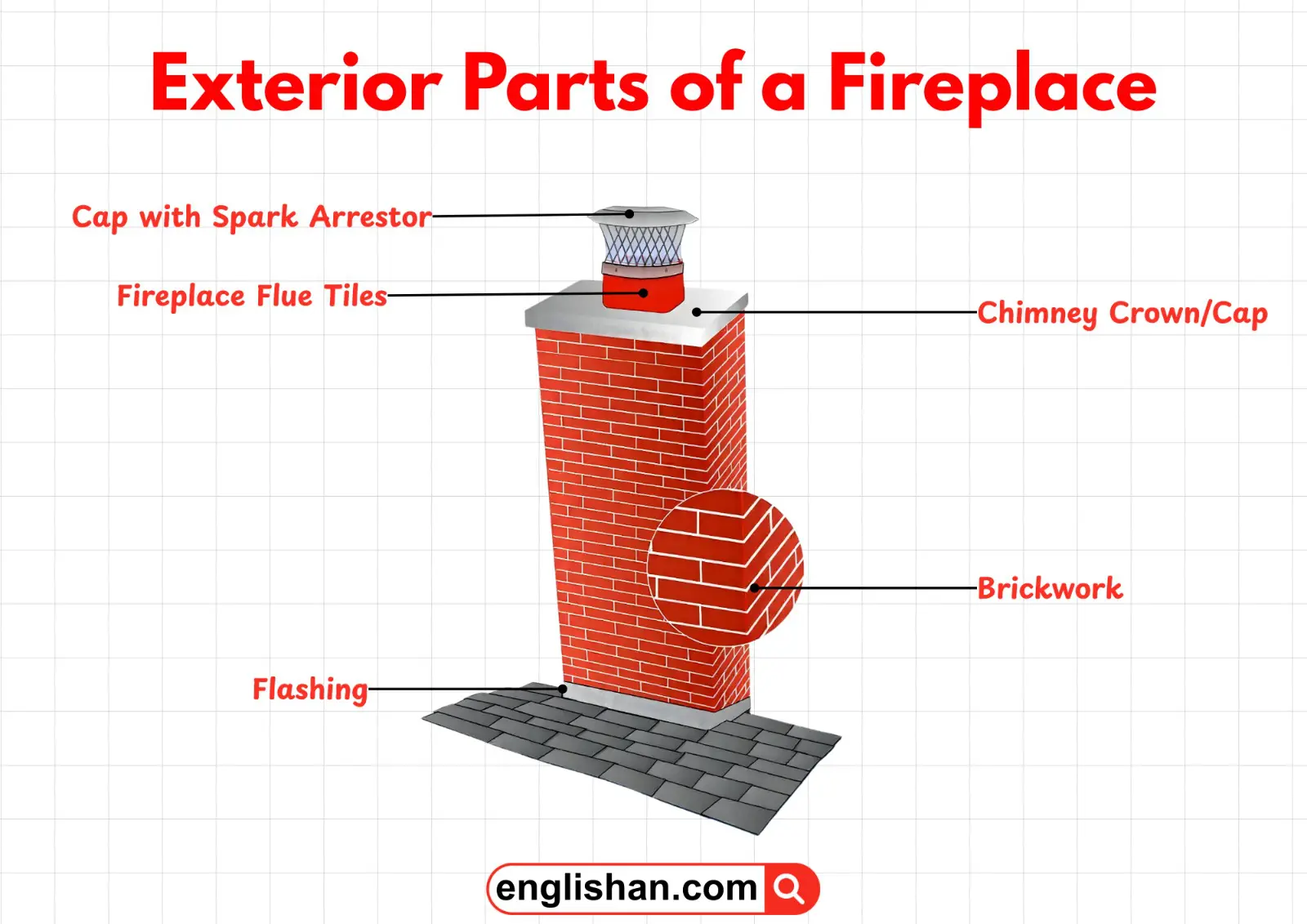
Exterior Parts (Outside Structure & Chimney System)
Now let’s explore the parts of the fireplace you see on the outside, including the chimney and other structures that keep your home safe and your fire working efficiently.
Chimney Cap / Spark Arrestor
This is the cover on top of your chimney. It keeps rain, animals, and debris out while letting smoke escape freely. The spark arrestor feature also stops flying embers from landing on your roof, reducing the risk of accidental fires.
Chimney Crown Cap
Often called the “helmet” of your chimney, the crown cap protects the top masonry from water damage. By shedding rain and snow, it prevents cracks and deterioration in the brickwork, keeping your chimney strong for years.
Chimney Stack
The chimney stack is the part that rises above your roof. It directs smoke safely away from your home, preventing it from drifting into windows or nearby structures. A properly designed stack also improves draft for efficient burning.
Chimney Height
The overall height of the chimney is important for safety and proper airflow. A chimney that’s tall enough ensures sparks don’t land on the roof and smoke rises effectively out of your home.
Brick and Mortar
These are the building materials that make up the chimney walls. Strong bricks and well-mixed mortar provide structure and durability. Over time, bricks may spall or crumble, so regular inspection and maintenance are important.
Gas Chimney (Furnace & Water Heater Flue)
These chimneys vent harmful gases like carbon monoxide from gas appliances safely outside. They prevent dangerous fumes from entering your home, protecting both health and safety.
Flashing
Flashing is thin metal sheets installed where the chimney meets the roof. Its main job is to prevent water from leaking into the house. Properly sealed flashing keeps ceilings, walls, and structural elements safe from water damage.
Firestops
Firestops are hidden barriers inside your home, built around the chimney as it passes through floors and ceilings. They prevent a fire from spreading from one level to another, adding a critical layer of protection.
Minimum Clearance
This is the safe distance required between the chimney’s hot exterior and any nearby combustible materials, usually 1–4 inches. It prevents nearby walls, wood, or other flammable objects from catching fire.
Wythe
A wythe is a vertical masonry wall inside a chimney that separates multiple flues. It keeps the flues structurally sound and prevents heat or smoke from one flue from affecting another.
Flue Offsets
Flue offsets are small bends in the chimney flue when a straight path isn’t possible. They guide smoke safely and prevent blockages while keeping the chimney’s structure stable.
Floor Joist
Floor joists are wooden beams that support your home’s floors. They must not touch or rely on the chimney for support because the chimney gets hot and can cause warping or fire hazards.
Appliance Connectors
These pipes connect your wood stove, furnace, or water heater to the chimney. They safely carry smoke and exhaust gases into the flue, preventing leaks into your home.
Chimney Thimble
The thimble is the opening in the chimney wall where appliance connectors attach. It protects the chimney walls from heat and helps maintain a secure, airtight connection.
Clean-Out Opening
A small access door or opening that allows you to remove soot, ash, or debris that may build up inside the chimney. It keeps the flue clear and prevents chimney fires.
Footings
Footings are the foundation of your chimney. They support the weight of the entire structure and prevent settling or cracking. Proper footings ensure your chimney remains safe and stable for years.
Chimney Flue Tile
Individual ceramic or metal tiles inside the flue liner. They carry smoke and gases safely outside, protect the masonry from heat damage, and improve draft for a cleaner, more efficient fire.
Gas Chimney Structure and Flue Components
A gas chimney is designed to safely carry harmful exhaust gases from gas appliances like furnaces and water heaters out of your home. Unlike a traditional wood-burning chimney, a gas chimney handles highly toxic fumes such as carbon monoxide, so proper construction and maintenance are crucial for safety. Understanding the different parts of a gas chimney and flue system helps you ensure efficient venting, prevent leaks, and keep your home protected.
Key Parts of a Gas Chimney & Flue System
- Chimney Cap – Covers the top of the chimney to prevent rain, debris, or animals from entering while letting gas exhaust escape safely.
- Chimney Stack – The vertical section that directs exhaust gases above the roofline for safe venting.
- Flue Liner – A protective tube inside the chimney that guides hot gases outside and prevents heat or corrosion from damaging the masonry.
- Appliance Connector – A pipe connecting the gas appliance (furnace or water heater) to the chimney or flue.
- Chimney Thimble – The wall opening where the appliance connector attaches to the flue safely and securely.
- Flashing – Metal sheets installed at roof junctions to prevent water from leaking into the home around the chimney.
- Firestop – Barriers built at each floor level to prevent fire or gas from moving through the structure via the chimney.
- Clean-Out Opening – Provides access to remove soot, condensation, or debris from the flue for maintenance.
- Chimney Crown / Cap Support – Ensures the top of the chimney remains protected from weather while maintaining proper venting.
- Flue Offsets – Any intentional bends or directional changes in the flue path that safely guide gases through the chimney.
Key Takeaway
A fireplace is a complete heating system where each part has a specific role in safety, efficiency, and performance. The firebox and grate hold and support the fire, while the hearth and mantel protect surrounding surfaces from heat and sparks. The smoke chamber, throat, and damper guide smoke safely into the chimney, and the flue liner and chimney stack prevent heat or gases from damaging the home. Exterior features like the chimney cap, crown, flashing, and footings protect the structure from weather, water, and fire hazards. Together, all components ensure safe burning, proper ventilation, and effective heat distribution throughout the home.
You May Also Like