A flashlight may look simple, but it’s made up of several important parts that work together to produce light. From the bulb and batteries to the switch and casing, each component has a specific role.
In this article, we’ll quickly go through the parts of a flashlight, their functions, and how they all come together to make the device work.
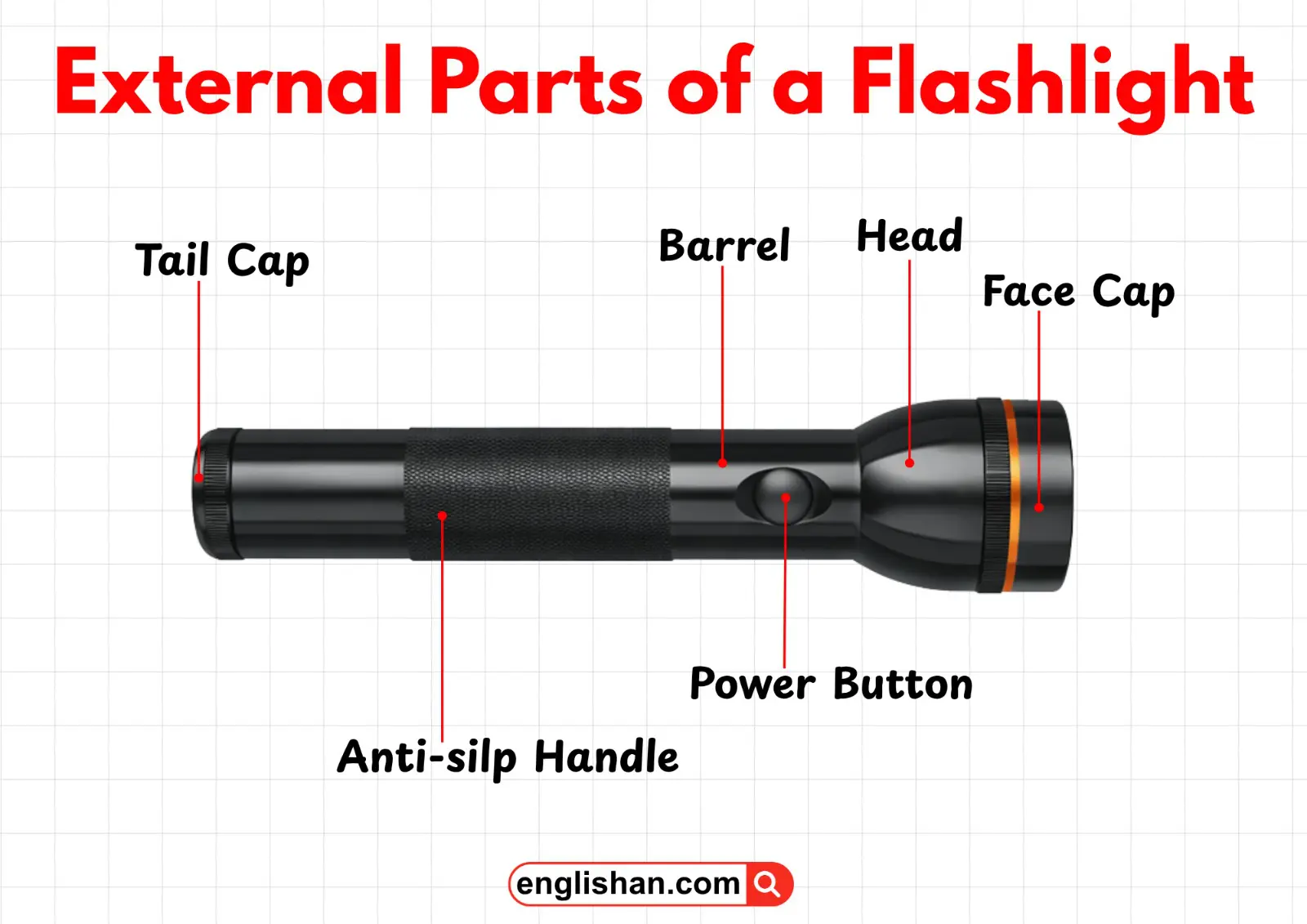
List of Flashlight Parts With Names
- Tail Cap
- Lamp Protector
- Spare Lamp
- Battery Spring
- Batteries
- Power Button
- Anti-slip Handle
- Case
- Adapter
- Retaining Collar
- Lamp
- Head
- Reflector
- Clear Lens
- O-ring
- Face Cap
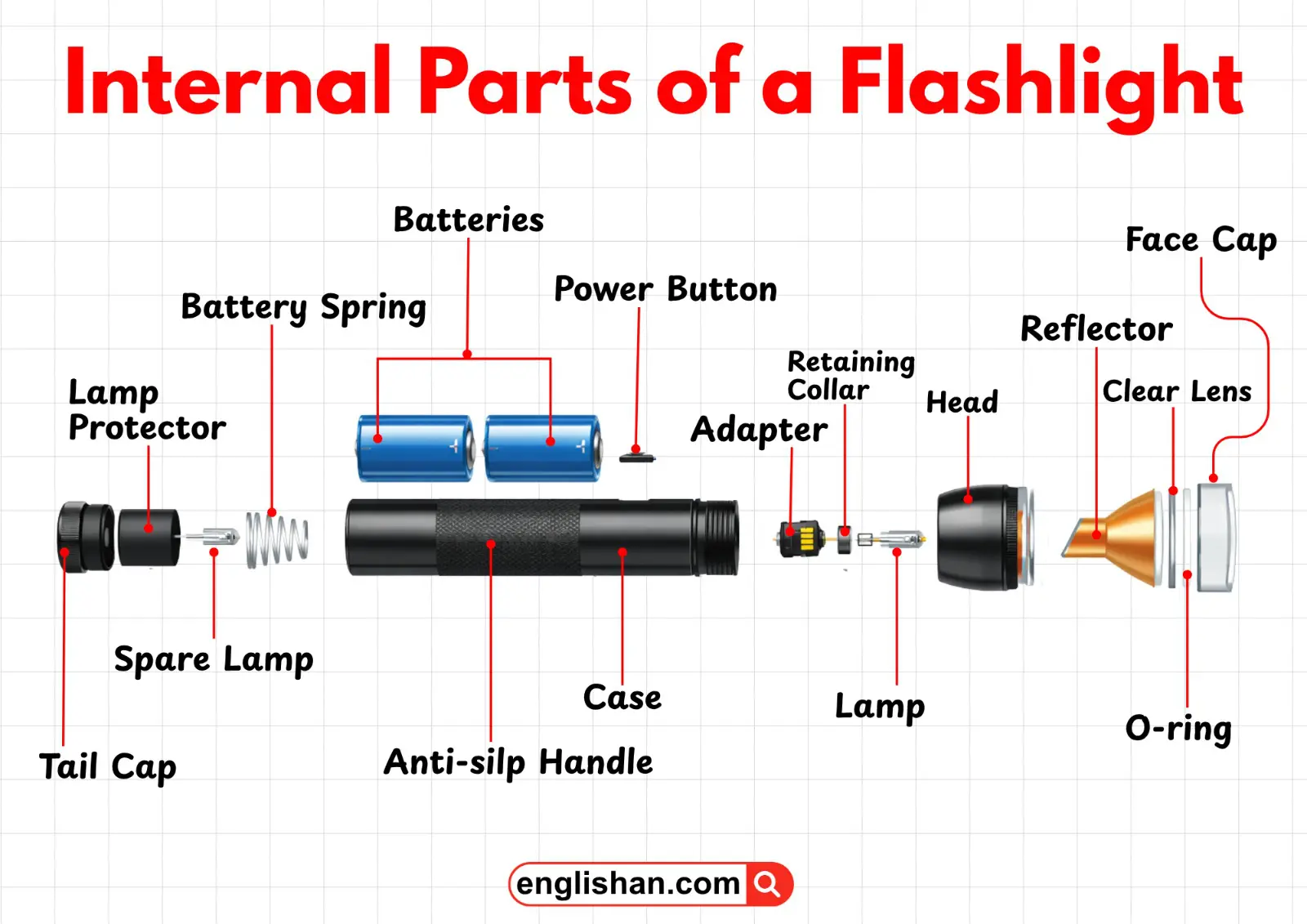
Parts of a Flashlight Diagram With Names
A flashlight is made up of several essential parts that work together to provide focused light and durability. The body and structural components, such as the barrel, case, head, and tail cap, form the main framework and allow for comfortable handling. Power components like the batteries and battery spring supply the energy needed to illuminate the lamp. Control and connection parts, including the power button, adapter, and retaining collar, manage the flow of electricity and enable easy operation. Lighting elements such as the lamp, reflector, and clear lens focus and direct the beam for optimal brightness. Protective and sealing components like the lamp protector and O-ring safeguard the flashlight from impact, dust, and moisture. Each part plays a critical role in making the flashlight both functional and reliable for everyday use.
Body & Structure
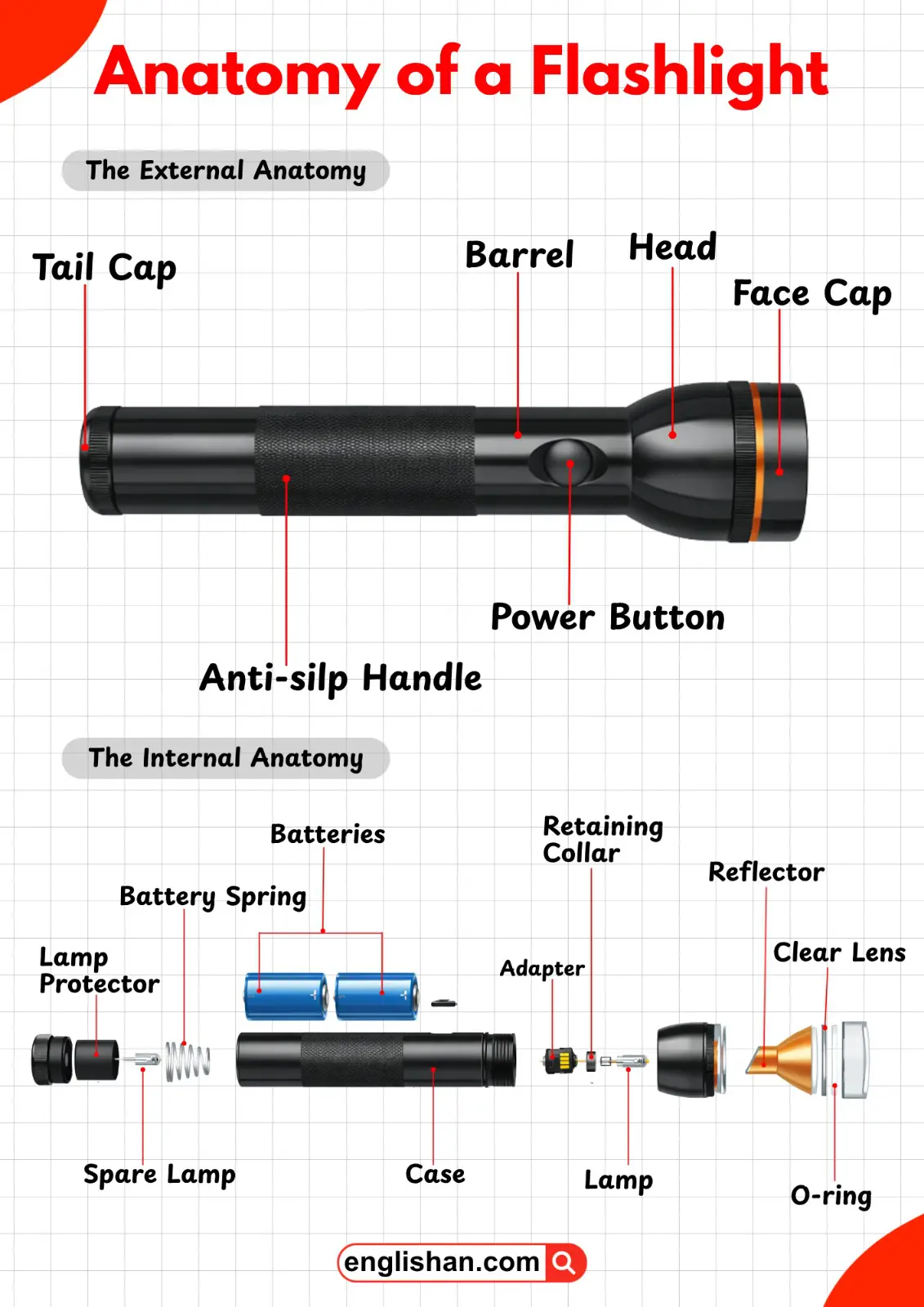
The body and structural components form the main framework of the flashlight, providing support, durability, and a comfortable grip for the user.
Barrel (Case / Main Body)
The barrel is the main cylindrical structure of the flashlight, housing most internal components. It provides rigidity and durability, often made from aluminum, plastic, or high-strength polymer. It also serves as the primary handle and can have grooves or knurling to improve grip.
Case
The case refers to the outer shell of the flashlight that protects internal electronics and the battery compartment. It ensures the components are secure and aligned. Some cases are modular, allowing for easy assembly or part replacement.
Head
The head is the front section of the flashlight that holds the lamp, reflector, and lens. It focuses the beam and often contains the driver circuit that regulates power to the LED.
Face Cap
The face cap sits at the very front of the head, holding the lens in place and providing an extra protective barrier for the lamp. It often threads onto the head for a secure fit.
Tail Cap
The tail cap is the rear end of the flashlight. It often houses the switch mechanism and can provide access to the battery compartment. Some tail caps are designed for momentary or tactical switches and may include holes for lanyards.
Anti-slip Handle
This is a textured or rubberized portion of the barrel or case that ensures a firm grip. It prevents the flashlight from slipping during use, especially in wet or rugged conditions.
Power Components
Power components supply the electrical energy required to illuminate the lamp and keep the flashlight running efficiently.
Batteries
Batteries provide the electrical energy required to power the lamp. Flashlights can use various battery types such as AA, AAA, CR123A, or rechargeable lithium-ion cells. The battery type affects brightness, runtime, and overall size.
Battery Spring
The battery spring ensures proper electrical contact between the batteries and the terminals inside the flashlight. It also absorbs shock to keep batteries secure and maintains consistent voltage delivery to the lamp.
Control & Connection Parts
Control and connection parts manage the flow of electricity and allow the user to operate the flashlight with ease and precision.
Power Button
The power button allows the user to turn the flashlight on or off and sometimes to cycle through modes (high, medium, low, strobe). It can be a mechanical switch, tactile button, or electronic push switch.
Adapter
The adapter, also called a driver adapter in some flashlights, connects different battery types to the lamp or ensures proper alignment. It maintains electrical continuity between the battery and the driver circuit.
Retaining Collar
The retaining collar secures internal components like the lamp, reflector, or driver in place. It prevents parts from shifting due to vibration or movement and ensures proper optical alignment.
Lighting Components
Lighting components are responsible for producing and directing the beam of light, ensuring brightness and focus.
Lamp
The lamp is the core light source, usually an LED in modern flashlights. It emits light that is focused by the reflector to create a directed beam. Lamp efficiency affects brightness, beam distance, and energy consumption.
Spare Lamp
A spare lamp is an additional LED or bulb kept for replacement. This ensures the flashlight can continue to function if the primary lamp fails or burns out.
Reflector
The reflector surrounds the lamp and focuses the light into a beam. Its shape (smooth, faceted, or textured) determines the beam pattern, intensity, and throw distance.
Clear Lens
The clear lens covers and protects the lamp and reflector. It ensures the beam is evenly distributed while shielding the internal components from dust, water, or impact.
Protection & Sealing Parts
Protective and sealing components safeguard the flashlight from impact, dust, and moisture, helping maintain performance and longevity.
Lamp Protector
The lamp protector is usually a transparent or semi-transparent cover that shields the lamp and LED from direct impact. It prevents breakage and helps maintain optimal beam quality.
O-ring
O-rings are circular rubber seals used to make the flashlight water-resistant or waterproof. They are typically placed between the barrel and head, tail cap, or lens to prevent water, dust, and debris from entering.
Key Takeaway
As we learned, a flashlight works because each part has a clear function. The body provides structure and grip. Batteries and springs supply power. Buttons and adapters control the flow of electricity. The lamp, reflector, and lens produce and focus light. Protectors and O-rings keep the flashlight safe from damage and water. Understanding these parts helps with maintenance and choosing the right flashlight.
You May Also Like