

A car door has an outer skin and a frame on the outside, a trim panel and controls on the inside, and the working parts in the space between them. Hinges swing the door, the latch and striker plate close it, the regulator raises the glass, and weatherstripping seals the opening against rain and wind.
Front and rear doors, manual and power doors, and framed and frameless doors differ in a few parts. The parts of a car door named here are the ones that nearly every sedan, hatchback and SUV shares.
Related: Parts of a Door
Parts of a Car Door Labeled Diagram
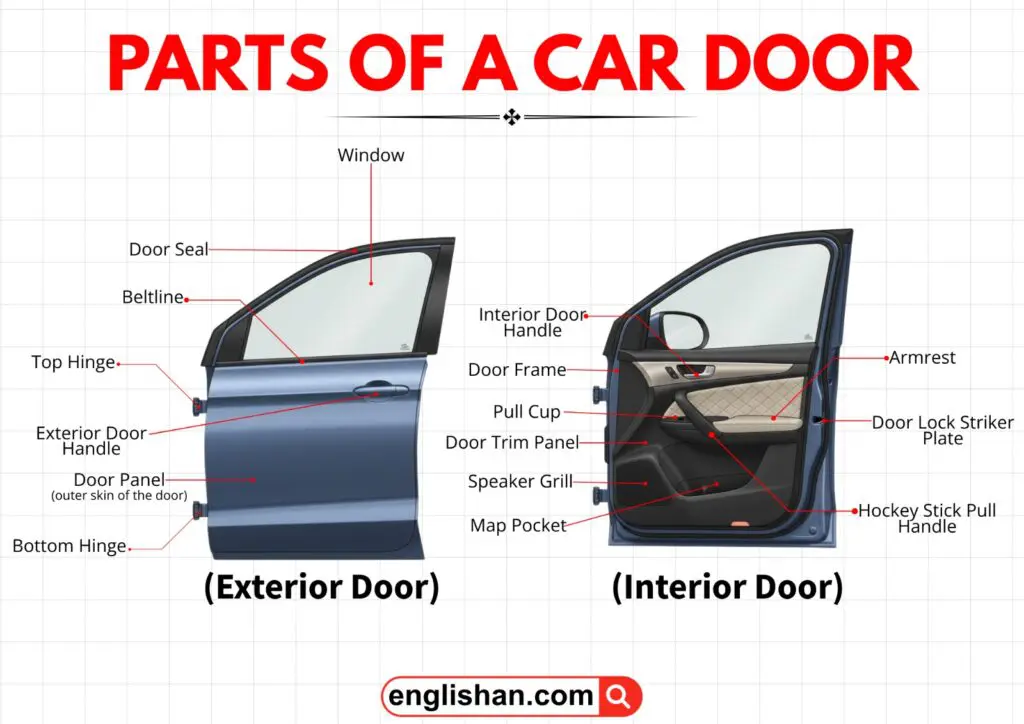
Hinges attach the door to the body, a latch and striker plate close it, a regulator raises the glass, and a trim panel hides the hardware from the cabin. Each of the parts of a car door has a fixed location and a single function.
| No. | Part | Location | Function |
|---|---|---|---|
| 1 | Outer door skin | The outside face of the door | Shields the inner parts from rain and road debris |
| 2 | Door frame | The metal structure inside the door | Mounts the hinges, latch and window tracks |
| 3 | Inner door panel | Behind the trim panel | Mounts the regulator, speaker and lock hardware |
| 4 | Exterior door handle | On the outer skin near the rear edge | Releases the latch when pulled |
| 5 | Door lock cylinder | On the outer skin beside the handle | Takes the key and locks the door |
| 6 | Side mirror | At the front corner of the door | Gives the driver a view along the side of the car |
| 7 | Beltline molding | Along the bottom edge of the window opening | Wipes the glass and trims the slot |
| 8 | Door trim panel | Over the inside of the door | Hides the hardware and forms the inside surface |
| 9 | Interior door handle | On the trim panel | Releases the latch from inside |
| 10 | Armrest | On the trim panel below the window | Supports the arm and mounts the switches |
| 11 | Door speaker | In the lower door behind a grille | Plays the mid and high range of the sound |
| 12 | Hinges | On the front edge of the door | Pivot the door on the body |
| 13 | Door check | At the front edge near the upper hinge | Stops the door at set open positions |
| 14 | Striker plate | On the door jamb at the rear of the opening | Catches the latch when the door closes |
| 15 | Door jamb | On the body around the door opening | Receives the closed door and mounts the striker plate |
| 16 | Door latch | In the rear edge of the door | Grips the striker plate to hold the door shut |
| 17 | Lock actuator | Inside the door near the latch | Locks and unlocks the latch electrically |
| 18 | Window glass | In the window opening | Closes the opening against weather |
| 19 | Window regulator | Inside the door below the glass | Raises and lowers the glass |
| 20 | Window motor | On the regulator behind the trim panel | Drives the regulator on power windows |
| 21 | Window switch | On the armrest or trim panel | Sends the up and down command to the motor |
| 22 | Weatherstripping | Around the door opening or the door edge | Seals out rain, wind and road noise |
| 23 | Vapor barrier | Between the trim panel and the inner panel | Keeps moisture in the door out of the cabin |
| 24 | Drain holes | Along the bottom edge of the door | Let water leave the door cavity |
| 25 | Wiring harness | Through the door jamb into the door | Powers the motors, lock, mirror, speaker and switches |
| 26 | Door ajar switch | In the latch or on the door jamb | Reports an open door to the dome light and dashboard |
| 27 | Side impact beam | Inside the door between the outer skin and inner panel | Absorbs crash force in a side impact |
Door Frame Outer Skin and Inner Panel
The shell of the door is the outer skin, the inner panel and the frame that joins them. The three enclose the cavity that contains the glass, the regulator, the latch and the wiring, so the shell is the largest of the parts of a car door.
Outer door skin
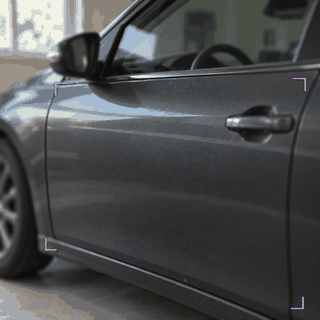
The outer door skin is the painted panel on the outside of the door. Most skins are stamped steel and some are aluminum, and the skin matches the contour of the body so the door lines up flush with the fender and the quarter panel. It shields the inner parts from rain and road debris.
Door frame
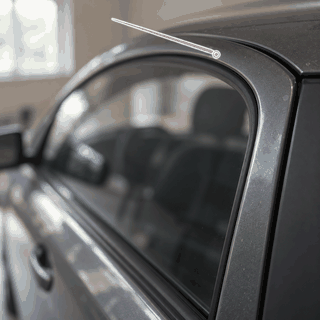
The door frame is the stamped metal structure that makes the door rigid. The hinges bolt to it, and it mounts the latch, the lock and the window tracks. A framed door has a window frame around the glass, and a frameless door ends at the beltline and leaves the glass edge exposed. The remaining parts of a car door attach to this frame or to the inner panel.
Inner door panel
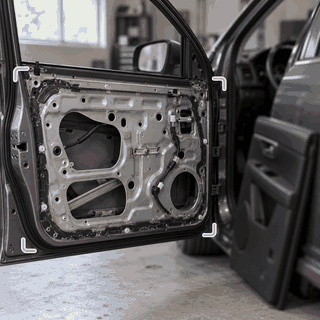
The inner door panel is the metal shell behind the trim panel. It mounts the regulator, the speaker and the lock hardware, and the vapor barrier is glued to it. Large access holes in the panel expose the parts inside the door.
Exterior Parts of a Car Door

Of all the parts of a car door, the exterior ones are visible from outside the car: the handle, the key cylinder, the side mirror and the molding along the glass.
Exterior door handle
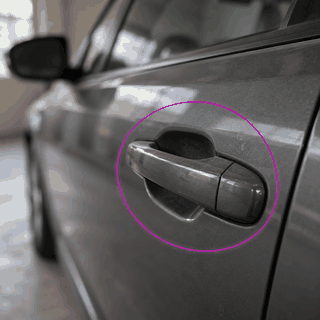
The exterior door handle is the pull or flap on the outer skin near the rear edge. A rod or cable runs from it to the latch, and pulling the handle moves the rod and releases the latch. Handles are plastic or metal, and many are painted to match the body. Cars with keyless entry build a touch sensor into the handle.
Door lock cylinder
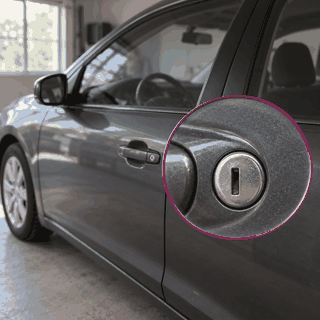
The door lock cylinder is the keyhole on the outer skin beside the handle. Turning the key moves the lock linkage, and a metal alloy cover surrounds the cylinder. Many cars fit a cylinder on the driver’s door only, and some cars drop the cylinder and use a keypad or a keyless sensor. Of the exterior parts of a car door, only the handle and the cylinder connect to the latch.
Side mirror
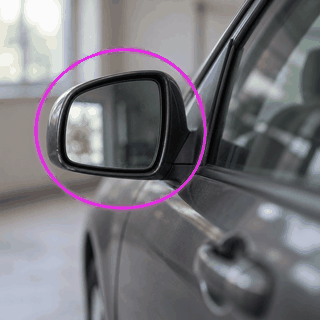
The side mirror mounts at the front corner of the door, near the base of the A-pillar. The driver sees along the side of the car and into the blind spot in it. On a power mirror, a small motor adjusts the glass and its wiring runs through the door.
Beltline molding
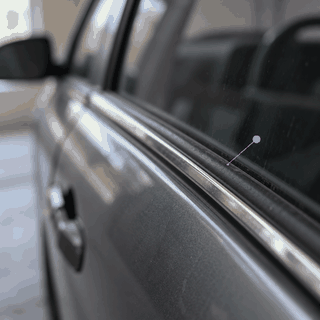
The beltline molding is the strip along the bottom edge of the window opening, where the outer skin meets the glass. It is rubber or plastic, and a lip on the strip wipes the glass as it slides down and blocks water and dirt from entering the slot. Many cars use black molding, and some trim levels use chrome.
Interior Parts of a Car Door
Inside the cabin, the parts of a car door are the trim panel and the controls mounted on it. Clips fasten the panel to the inner door panel, and the handle, armrest, switches, speaker grille and pocket all mount on its face.
Door trim panel
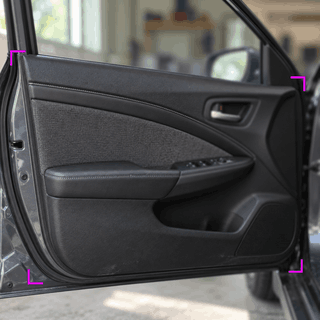
The door trim panel, also called the door card, covers the inside of the door and hides the regulator, the motor and the wiring. Modern panels are molded plastic with vinyl or fabric inserts, and older panels were pressed cardboard. Of the interior parts of a car door, the trim panel is the one that hides all the others.
Interior door handle
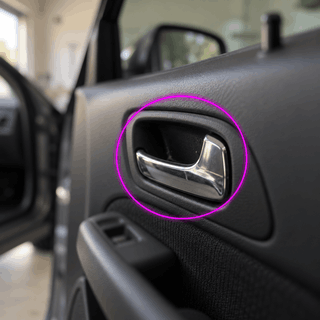
The interior door handle is the pull on the inside of the door that releases the latch. A cable or rod links it to the latch, as on the outside handle. Most interior handles are plastic with a chrome or painted finish.
Pull handle
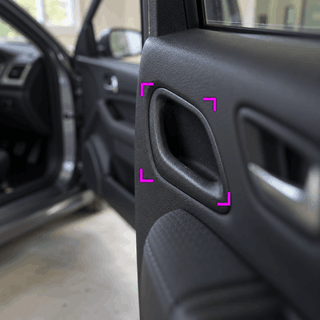
The pull handle is the grip on the trim panel that a passenger uses to close the door. On many cars it is a shaped recess called a pull cup.
Armrest
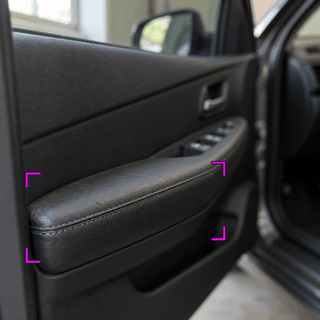
The armrest is the padded ledge on the trim panel that supports the forearm. On most cars the window switches and the lock button are built into it.
Map pocket
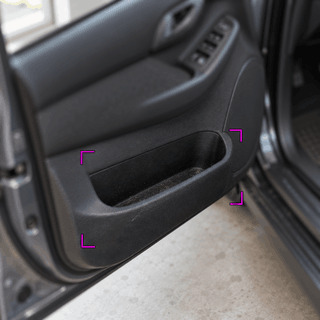
The map pocket is the molded storage pocket at the bottom of the trim panel. It stores a bottle or a folded map.
Door speaker
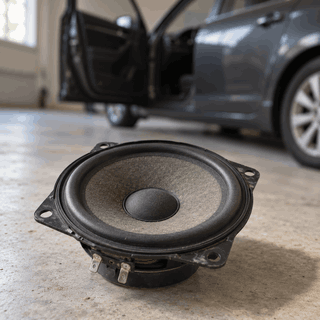
The door speaker is the driver mounted in the lower door behind a grille in the trim panel. It plays the mid and high range of the sound, and a wire from the harness connects it to the stereo.
Speaker grille
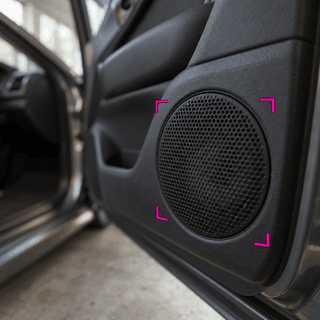
The speaker grille is the perforated cover in the trim panel over the speaker. Holes in the cover pass the sound and keep hands and objects off the cone.

Hinges Door Check and Striker Plate
Hinges pivot the door, the door check stops it at set angles, and the striker plate catches it when it closes. These are the structural parts of a car door that control where the door stops and how it closes. The hinges and the door check are at the front edge of the door, and the striker plate is on the body at the rear edge of the opening.
Hinges
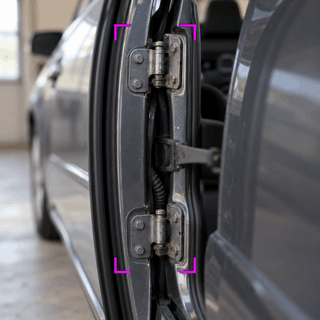
The hinges join the front edge of the door to the body, and they are the parts of a car door that bear its full weight. Most doors have two hinges, an upper one and a lower one, and some large doors have three. Hinges are steel plates bolted or welded to the door and the body.
Hinge pin
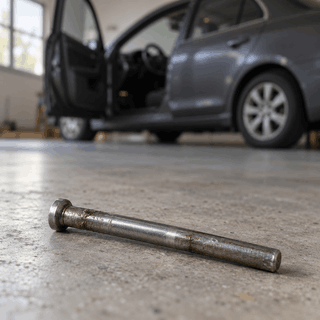
The hinge pin is the steel rod that passes through the two halves of each hinge. The door swings around the pin.
Hinge bushings
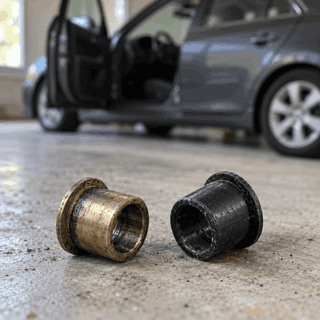
Hinge bushings are the small sleeves in the hinge that the pin turns inside. A worn bushing lets the door sag and drag on the jamb.
Door check
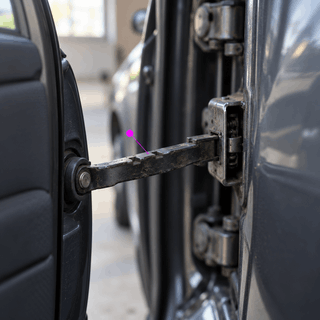
The door check, also called the check strap or door stop, stops the door at set open positions and keeps it from swinging past its limit. A notched steel arm slides through a spring-loaded housing at the hinge pillar, and the notches are the stops. Many newer doors have three stops.
Striker plate
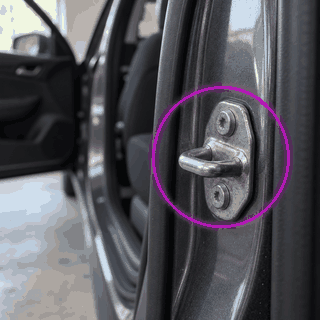
The striker plate, also called the striker or door catch, is the steel loop or post bolted to the door jamb that the latch grips. It is at the rear edge of the opening, in line with the latch.
Door jamb
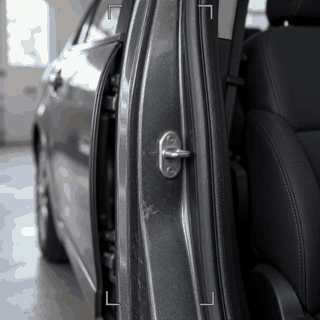
The door jamb is the part of the body that surrounds the door opening and receives the closed door. It mounts the striker plate, and the weatherstripping seals against it. The A-pillar and the B-pillar are the body posts beside the opening.
Parts of a Car Door Lock and Latch
The handle, the key cylinder and the lock switch all connect to the latch in the rear edge of the door. Rods and cables carry the motion, and an actuator adds power locking. The general parts of a lock are named on the Parts of a Lock page.
Door latch
The door latch is the steel assembly in the rear edge of the door that grips the striker plate. A spring-loaded rotor turns around the striker as the door shuts, and a pawl locks the rotor in place until the handle is pulled. The latch and the striker plate are the two parts of a car door lock that touch.
Lock actuator
The lock actuator is a small electric motor, one in each door, that moves the lock linkage when the lock switch or the key fob sends the signal. Cars with manual locks have no actuator.
Latch rods and cables
Latch rods and cables are the thin steel rods and sheathed cables that link the exterior handle, the interior handle and the lock cylinder to the latch. Plastic clips on each rod end fasten it to the handle or the latch.
Door lock knob
The door lock knob is the small post or button on the trim panel that locks the door by hand. Many newer cars drop the knob and lock the doors with a switch on the armrest.
Child safety lock
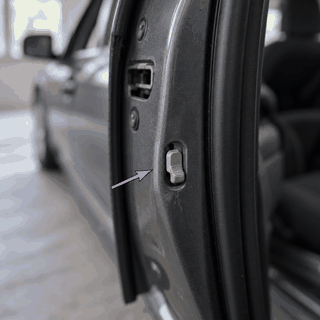
The child safety lock is a small lever or switch on the rear edge of each rear door. Set to on, it disconnects the interior handle from the latch, so the door opens only from outside.
Window Glass Regulator and Motor
A car window slides up and down on a regulator, which a hand crank drives on manual windows and an electric motor drives on power windows. The moving window parts of a car door are the glass, the regulator and the motor, and the switch commands them.
Window glass
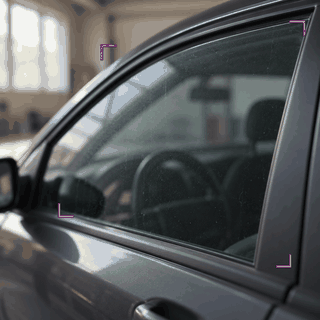
The window glass is tempered safety glass that slides in rubber channels in the door frame. Tempered glass breaks into small pieces on impact, and the laminated glass used in windshields and on some side windows stays in one sheet.
Window channel
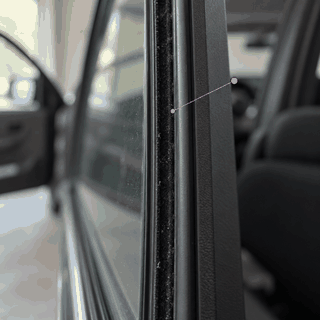
The window channel, also called the run channel or window run, is the rubber-lined track that the glass slides in along each side and across the top. It guides the glass and seals its edges.
Window regulator
The window regulator is the lifting assembly inside the door below the glass. Many regulators use a pair of crossed metal arms in a scissor design, and others use a cable and a track. A plate on the regulator grips the bottom edge of the glass. A hand crank turns the gears on manual windows, and a motor turns them on power windows.
Window motor
The window motor is the small electric motor mounted on the regulator behind the trim panel. It turns a gear or a cable drum that raises and lowers the glass when the switch is pressed. Manual windows have no motor.
Window switch
The window switch is the rocker or toggle on the armrest or trim panel that sends the up and down signal to the motor. The driver’s door has a master panel that controls all the windows, and the other doors have a single switch for their own window.
Door Seals and Weatherstripping
The sealing parts of a car door keep water, wind and noise out. Rubber seals close the gap between the door and the body, a plastic sheet seals the inner panel, and drain holes empty the water that gets past the glass.
Weatherstripping
Weatherstripping is the rubber seal around the door opening or around the edge of the door. A hollow, flexible rubber bulb compresses as the door closes and blocks rain, wind and road noise. Many cars add a second seal on the body, so the door closes against two seals. It is the longest of the sealing parts of a car door.
Vapor barrier
The vapor barrier, also called the water shield, is the plastic or foam sheet glued to the inner door panel behind the trim panel. It keeps moisture in the door cavity out of the cabin.
Drain holes
Drain holes are the small openings along the bottom edge of the door. Water that runs past the window seals collects at the bottom of the door and leaves through them.
Wiring Sensors and Side Impact Beam
The last parts of a car door are out of sight: the wiring that powers the door, a switch that detects an open door, and a steel beam that protects the occupants in a crash.
Wiring harness
The wiring harness is the bundle of wires that runs from the body through a flexible rubber boot in the door jamb and into the door. It powers the window motor, the lock actuator, the mirror, the speaker and the switches, and it flexes each time the door opens and closes.
Door ajar switch
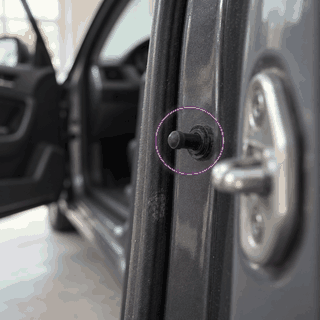
The door ajar switch, also called the door switch, is the sensor that detects an open door. Older cars use a plunger switch in the jamb, and newer cars build the switch into the latch. It turns on the dome light and the dashboard door warning, and on some cars it sends the signal to the body computer.
Side impact beam
The side impact beam is the horizontal steel or aluminum bar inside the door between the outer skin and the inner panel. In a side collision it absorbs and spreads the crash force before it reaches the occupants. Some cars also mount a side airbag in the door.
Car Door Part Names
The parts of a car door have several names in repair manuals, parts catalogs and everyday speech, and the names differ between the US and the UK.
| Part | Other names |
|---|---|
| Door trim panel | Door card, door panel, interior door panel |
| Outer door skin | Exterior door panel, outer panel |
| Door check | Check strap, door stop, door stay |
| Striker plate | Striker, door catch, latch striker |
| Weatherstripping | Door seal, weather seal, door rubber |
| Window regulator | Window lift, window lifter |
| Window channel | Run channel, window run, glass run |
| Beltline molding | Belt molding, window sweep |
| Vapor barrier | Water shield, watershield |
| Lock actuator | Lock motor, power lock actuator |
| Exterior door handle | Outside handle, door pull |
| Side mirror | Door mirror, outside mirror, wing mirror |
FAQs
Q1. What are the parts of a car door called?
The parts of a car door are the outer door skin, door frame, inner door panel, trim panel, hinges, door check, latch, striker plate, window glass, regulator, weatherstripping and wiring harness. The handles, lock cylinder and side mirror are on the outside, and the armrest, switches and speaker are on the inside.
Q2. What is the inside of a car door called?
The inside of a car door is called the door trim panel, or door card. It covers the inner door panel and the hardware behind it, and the interior handle, armrest, window switches and speaker grille mount on it. Molded plastic is the most common material.
Q3. What is the part under a car door called?
The part under a car door is the rocker panel, also called the sill. It is a strip of body metal along the bottom of the door opening and is a body part, not one of the parts of a car door. The drain holes are in the bottom edge of the door itself.
Q4. What part keeps a car door open?
The door check keeps a car door open. It is a notched steel arm that slides through a spring-loaded housing at the hinge and stops the door at set angles. It also stops the door from swinging past its limit.
Q5. What is the rubber part of a car door called?
The rubber part around a car door is the weatherstripping, also called the door seal. It seals the gap between the door and the body against rain, wind and noise. The window run channel is the second of the sealing parts of a car door and seals the edges of the glass.
Q6. What are the parts of a car door lock called?
The parts of a car door lock are the lock cylinder, the lock actuator, the latch, the striker plate and the rods or cables between them. The interior lock knob or switch and the child safety lock work the same latch from inside.
Q7. What are the parts of a car door handle called?
The parts of a car door handle are the handle itself, the bezel around it, the release rod or cable and the return spring. The rod or cable links the handle to the latch. Cars with keyless entry add a touch sensor in the handle.
Q8. What is the top part of a car door called?
The top part of a car door is the window frame, the edge that surrounds the glass. A frameless door has no window frame, so the glass edge forms the top of the door. The beltline is the line where the outer skin meets the bottom of the glass.
Q9. What is the outside part of a car door called?
The outside part of a car door is the outer door skin, also called the exterior door panel. The exterior handle, the key cylinder and the beltline molding attach to it.
Q10. What is the black part of a car door called?
The black strip along the bottom of the car window is the beltline molding, and the black rubber around the door edge is the weatherstripping. Both are rubber or plastic.
You May Also Like
