

The parts of a baseball bat are the knob, the handle, the taper, the barrel, and the end cap. The batter grips the handle, and the barrel strikes the ball. The sweet spot is the part of the barrel where the bat transfers the most energy to the ball.
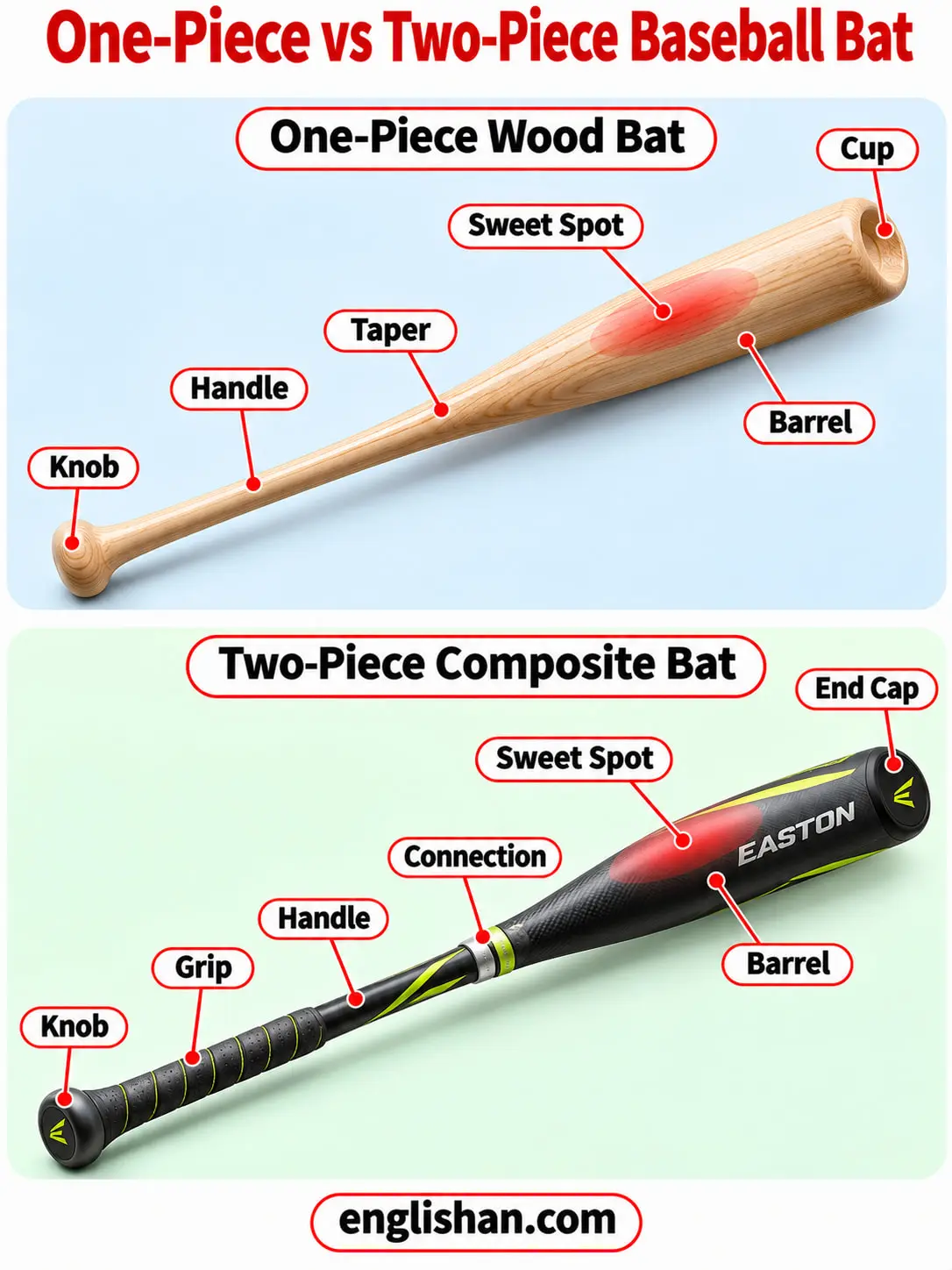
A one-piece bat runs from the knob to the end cap. A two-piece bat joins a separate handle and barrel at a connection, and the rules, the sizes, and the materials differ by league. The parts of a tennis racket follow a different design, with a strung head instead of a solid barrel.
Parts of a Baseball Bat Labeled Diagram
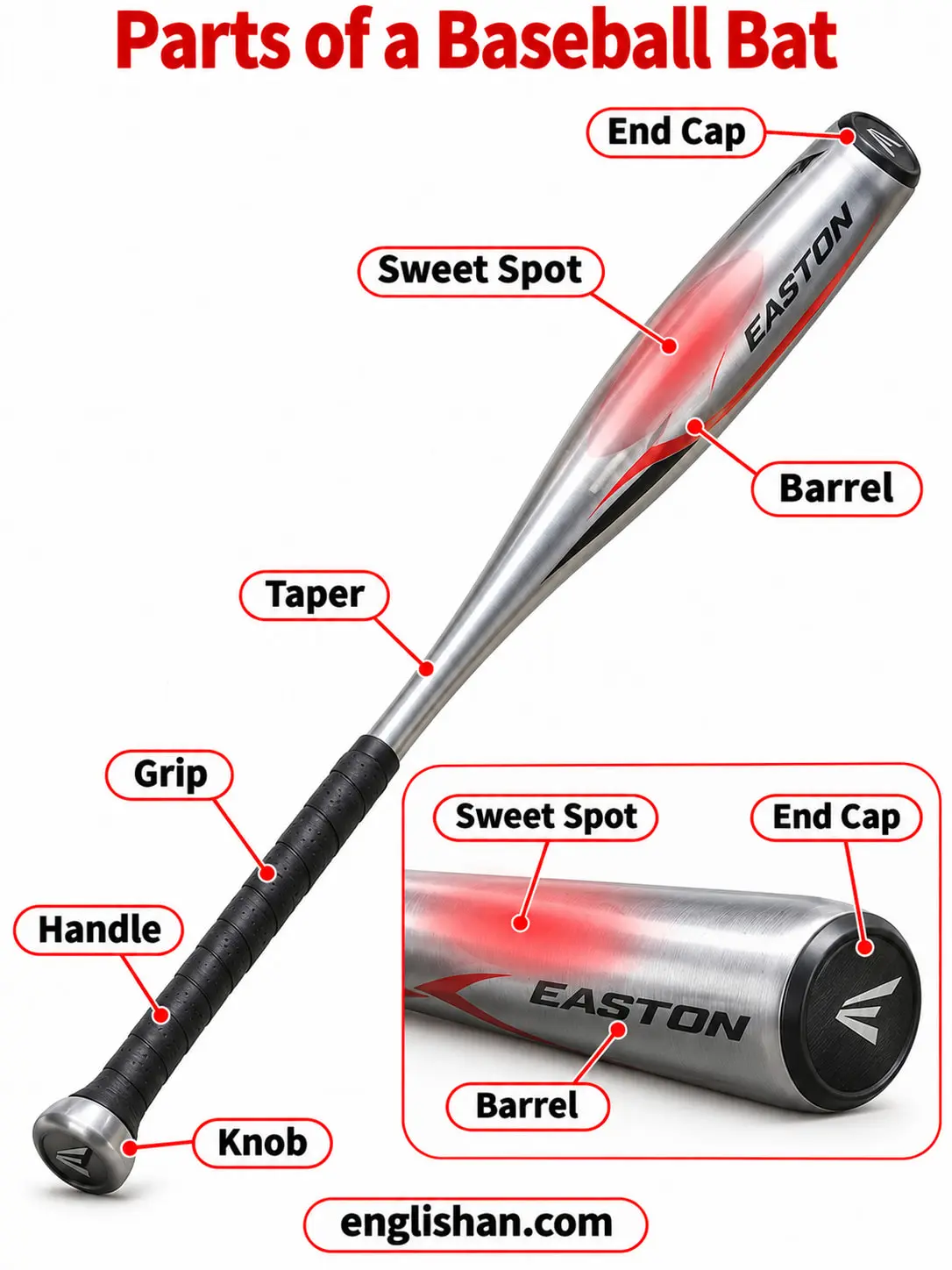
In a labeled diagram of a baseball bat, the knob is at the bottom and the handle extends up from it. The taper widens into the barrel, and the end cap closes the far end of the barrel.
| Part | Where you find it |
|---|---|
| 1. Knob | Wider end at the bottom of the handle that keeps the bat from slipping out of the hands |
| 2. Handle | Thin length between the knob and the barrel where the batter grips the bat |
| 3. Grip | Rubber or tape wrap on the handle |
| 4. Taper | Gradual narrowing between the barrel and the handle |
| 5. Barrel | Thickest length of the bat, where it meets the ball |
| 6. Sweet spot | Part of the barrel with the most efficient energy transfer |
| 7. Cup | Circular recess in the end of the barrel on some wood bats |
| 8. End cap | Tip at the far end of the barrel |
| 9. Connection | Piece between the barrel and the handle of a two-piece bat |
Baseball Bat Knob and Handle Parts
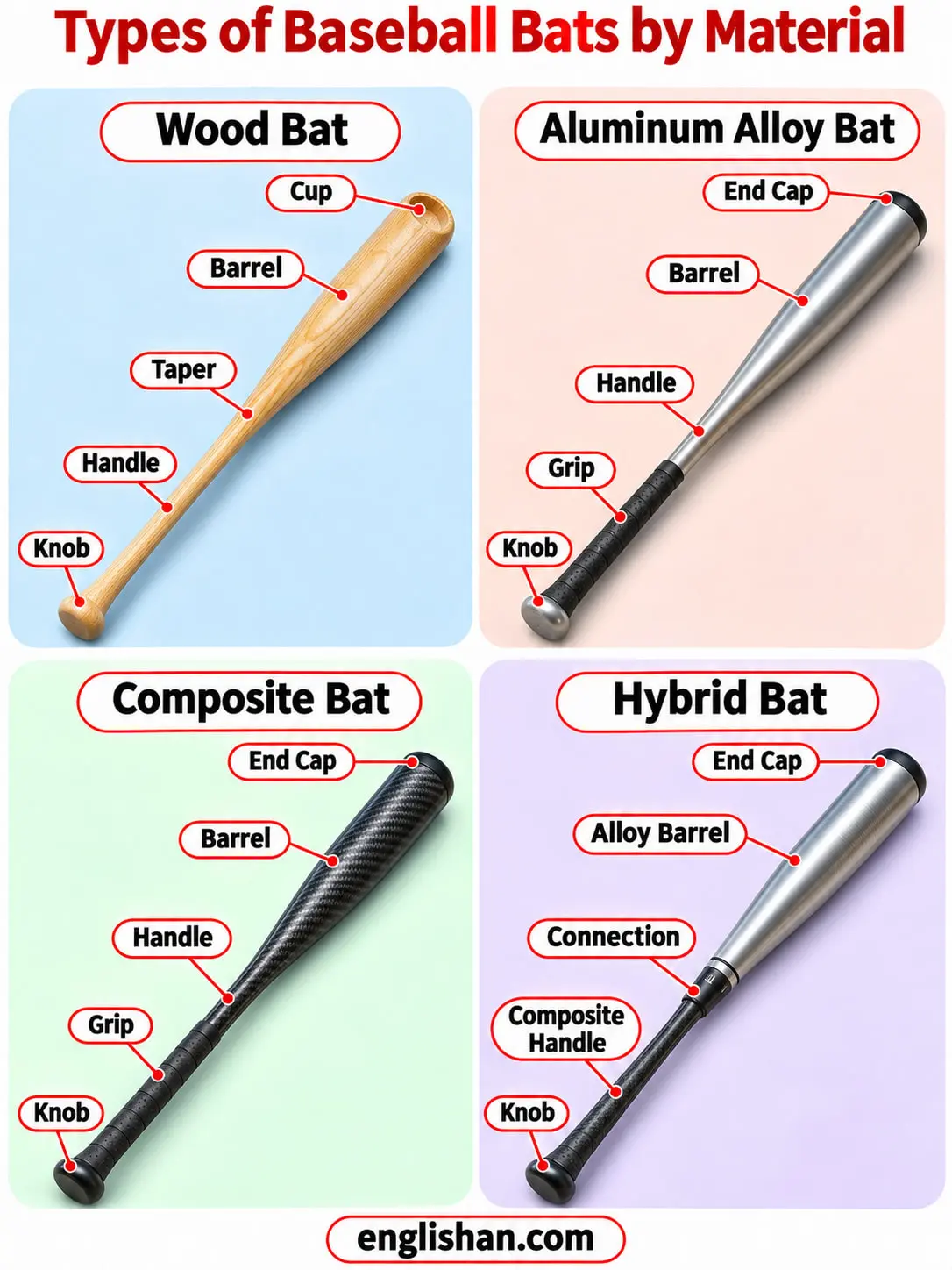
The handle is the thin length of the bat between the knob and the barrel, where the batter grips it. It acts as the lever arm of the swing. Among the parts of a baseball bat, the knob and the grip belong to the handle. The hockey stick is another striking tool built from a handle and a head.
Knob
The knob is the wider piece at the bottom of the handle. It is the part of a baseball bat that keeps it from slipping out of the hands.
Knob styles are traditional, flared, and axe-style. A flared knob is found on some wood bats and adds control.
Grip
The grip is a rubber or tape wrap on the handle. It improves control in sweaty or wet conditions. Metal bats have a grip on the handle, and a cushioned rubber handle absorbs shock.
Players apply pine tar to wood bats for the same purpose. Major League Baseball Rule 1.10(c) limits the pine tar to the lowest 18 inches of the handle. Pine tar is a substance, not a part of the bat.
Handle Taper
The taper is the thickness profile of the handle, and it affects comfort and bat speed. A thin handle favors quicker swings. A thicker handle favors stability. A tapered grip narrows gradually toward the knob.
Baseball Bat Barrel Parts
The barrel is the thickest of the parts of a baseball bat, and it is the striking surface. It extends for about one third of the length of the bat. Its diameter sets the size of the sweet spot.
Sweet Spot
The sweet spot is the part of the barrel with the most efficient energy transfer. Its position depends on the construction of the bat and the swing of the batter.
Cup
The cup is a circular recess in the end of the barrel. It lightens the bat without reducing the striking surface, and it moves the center of gravity toward the handle. About 30 percent of players prefer a cup-balanced bat.
The cup is up to 1 inch deep and between 1 and 2 inches in diameter. José Cardenal introduced it to the major leagues in the early 1970s.
End Cap
The end cap is the tip at the far end of the barrel, also called the top or the end of the bat. On aluminum and composite bats, it helps the barrel stay rigid on impact.
Two-Piece Baseball Bat Parts
The parts of a baseball bat change in a two-piece model, which joins a barrel and a handle through a connection. The connection reduces the vibration that a mishit sends into the hands.
A hybrid bat pairs a composite handle with an alloy barrel. Composite handles are carbon fiber and reduce vibration. Alloy handles are lightweight and give a stiff feel with a thinner profile.
A wood bat is one piece. Major League Baseball Rule 1.10(a) requires a bat of one piece of solid wood.
Parts of a Baseball Bat by Size and Weight
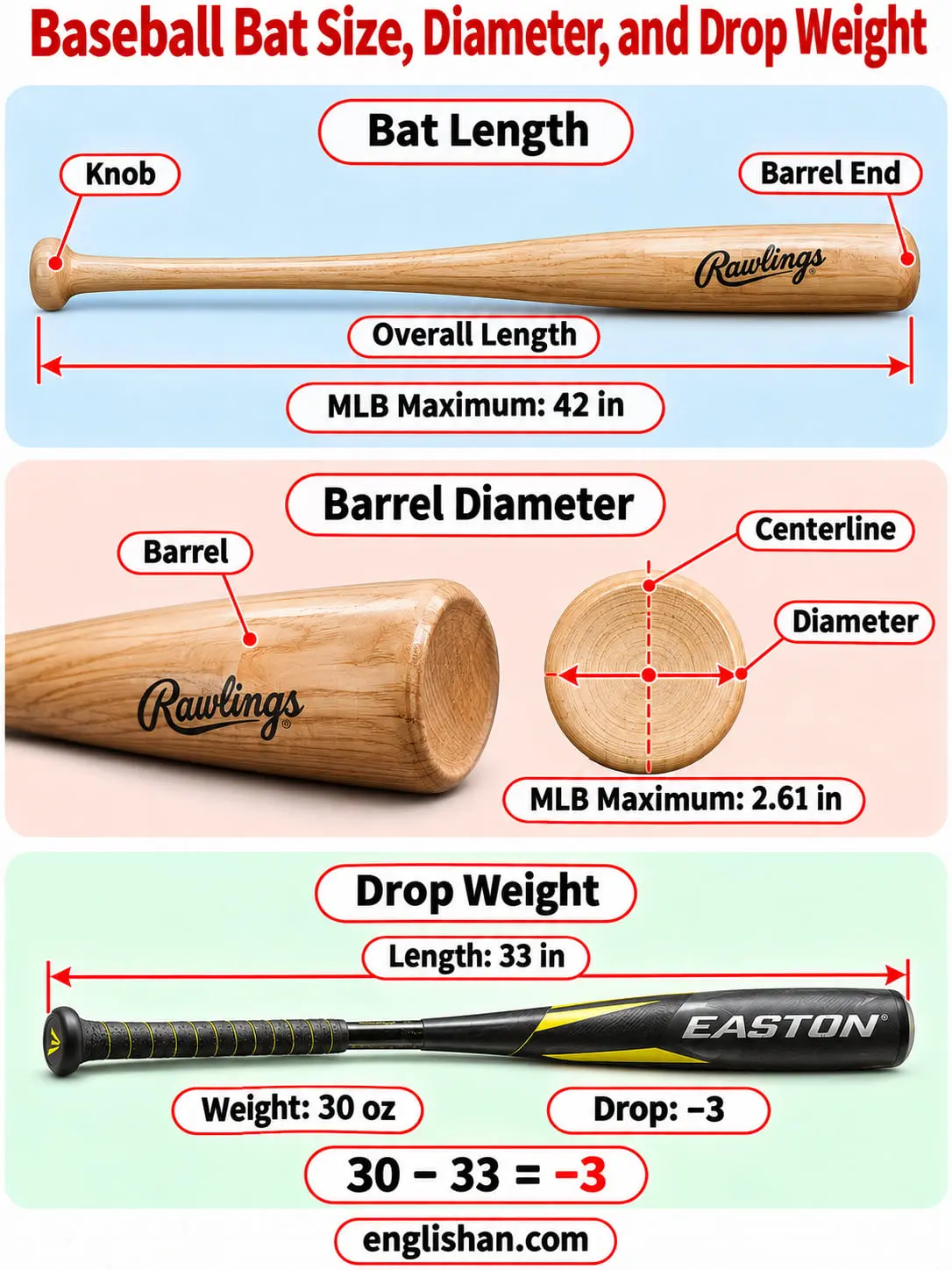
Major League Baseball sets two limits on a bat. The maximum diameter is 2.61 inches at the thickest part, and the maximum length is 42 inches. The rules set no weight limit.
Modern bats measure 33 to 36 inches long. The drop is the weight in ounces subtracted from the length in inches. A 30-ounce bat that is 33 inches long has a drop of -3.
A larger drop favors swing speed, and a smaller drop favors power. An end-loaded bat concentrates its weight in the barrel. A balanced bat spreads the weight more evenly.
How the Parts of a Baseball Bat Work
The knob keeps the bat in the hands, and the handle works as a lever arm. The taper links the handle to the barrel, and the barrel strikes the ball. The golf club applies the same lever principle to a shaft and a head.
The sweet spot sets where the energy transfer is greatest. The cup moves the balance toward the handle. The end cap and the connection keep the barrel rigid and cut vibration.
Baseball Bat Parts and Their Materials
The materials of the parts of a baseball bat fall into wood, metal, and composite.
Ash: The traditional wood for bats.
Maple: A harder, more durable wood that has grown in popularity.
Yellow birch: A wood that combines the hardness of maple with the flexibility of ash.
Hickory and bamboo: Hickory was once favored and has been abandoned. Bamboo is a rising option.
Aluminum alloy: The metal for the barrel and handle of metal bats.
Composite: Layered carbon fiber for barrels, handles, and hybrid bats.
FAQs
FAQs
The parts of a baseball bat are the knob, the handle, the grip, the taper, the barrel, the sweet spot, and the end cap. A two-piece bat adds a connection.
The bottom of a baseball bat is called the knob. It is the wider piece at the end of the handle, and it keeps the bat from slipping out of the hands.
The barrel hits the ball. It is the thickest length of the bat, and the sweet spot on it gives the most efficient energy transfer.
The sweet spot is the part of the barrel with the most efficient energy transfer. Its position depends on the construction of the bat and the swing of the batter.
The end of a baseball bat is called the end cap. On a wood bat, the end of the barrel has a cup on some models. The cup is a circular recess that lightens the bat.
Professional baseball bats are wood, and ash is the traditional choice. Maple and yellow birch are the other woods in use, and the rules require one piece of solid wood.
Major League Baseball bans hollowed and corked bats, bats longer than 42 inches, and bats wider than 2.61 inches. A wood bat that is not one piece of solid wood is also illegal.
Bat drop is the weight in ounces subtracted from the length in inches. A 30-ounce bat that is 33 inches long has a drop of -3.
Related: