
There are many types of flowers, and they differ by how they grow, where they bloom, and how people use them. Some flowers grow from bulbs, such as Tulip, Daffodil, and Hyacinth. Some grow on shrubs and trees, such as Magnolia, Camellia, Azalea, and Cherry Blossom. Others grow in water, climb over walls, spread through meadows, or bloom indoors in pots.
Flower types also change by season and climate. Daffodils and Crocuses often bloom early in spring, Sunflowers and Zinnias thrive in summer, Chrysanthemums brighten autumn gardens, and Camellias can bloom during colder months. Tropical flowers such as Hibiscus, Plumeria, Heliconia, and Bird of Paradise are known for bold colors and larger shapes in warm regions.
This guide covers types of flowers with pictures, meanings, pronunciation, and natural examples. You will learn how common flowers look, where they usually grow, which seasons they belong to, and how their names are used when describing gardens, bouquets, wedding flowers, nature photos, and seasonal blooms.
Types of Flowers in English: Quick Chart
sunflowers, daffodils, and lavender.
Flower names are easier to remember when you learn them by where they grow or how people use them. A Rose is a popular gift flower, a Dandelion is a wild flower, a Lotus grows in water, and a Tulip is one of the best known spring bulb flowers.
| Flower Group | Common Examples | Where You See Them |
|---|---|---|
| Popular Flowers | Rose, Tulip, Lily, Daisy | Bouquets, gardens, gifts |
| Garden Flowers | Petunia, Geranium, Zinnia | Pots, borders, yards |
| Wild Flowers | Dandelion, Clover, Bluebell | Fields, forests, roadsides |
| Tropical Flowers | Hibiscus, Plumeria, Heliconia | Warm climates and resorts |
| Climbing Flowers | Wisteria, Clematis, Honeysuckle | Fences, arches, trellises |
| Water Flowers | Lotus, Water Lily | Ponds, lakes, marshes |
| Bulb Flowers | Tulip, Daffodil, Hyacinth | Spring gardens |
| Tree Flowers | Magnolia, Cherry Blossom | Parks, streets, landscapes |
| Edible Flowers | Chamomile, Borage, Nasturtium | Tea, salads, cooking |
Most Popular Flowers with Pictures and Meanings
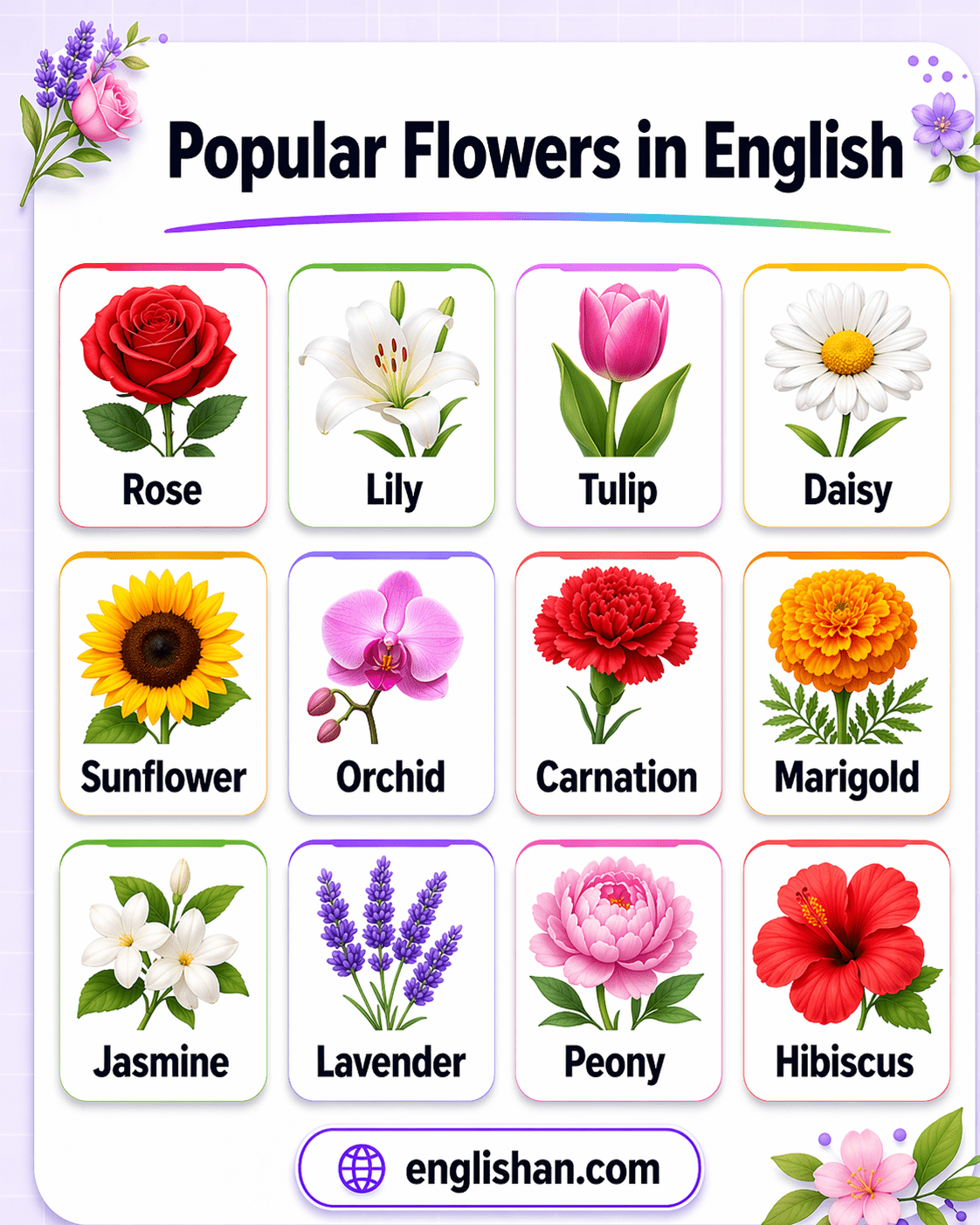
These are the flower names people use most in daily conversation. They come up in flower shops, home gardens, wedding arrangements, perfume names, greeting cards, and nature pictures.
orchid, lavender, and marigold.
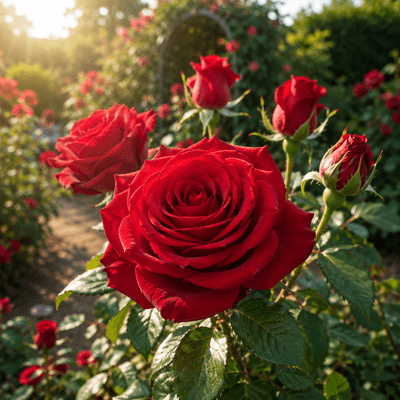
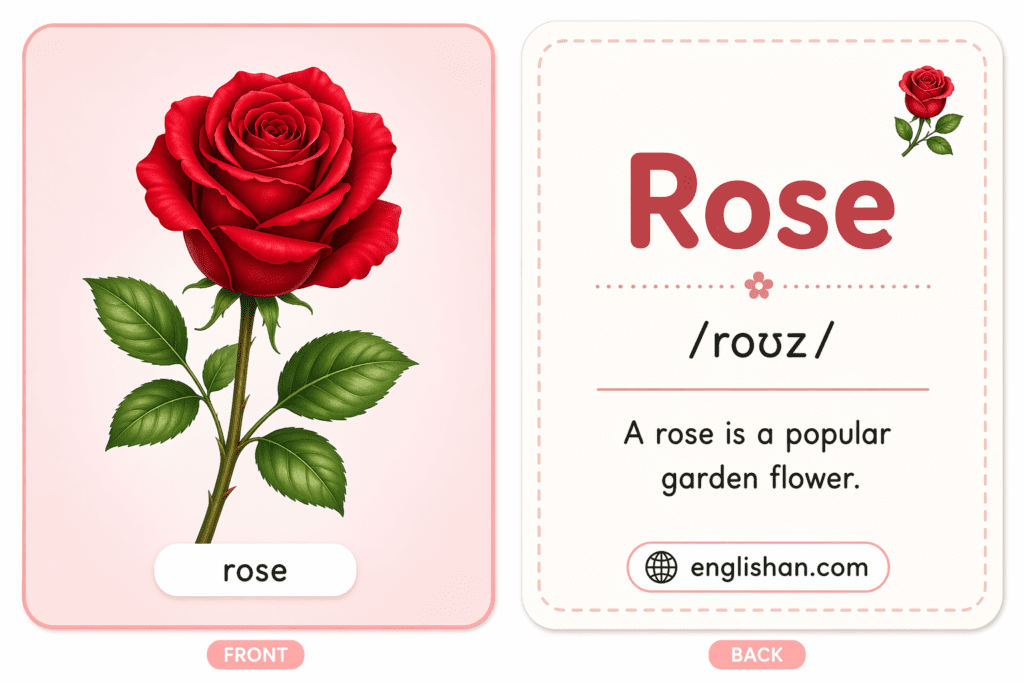
Rose (rohz)
A Rose has layered petals, a sweet scent, and thorny stems. Red Roses are strongly linked with love, while white, yellow, pink, and orange Roses appear in weddings, friendship gifts, and garden displays.
She placed Red Roses in a glass vase near the window.
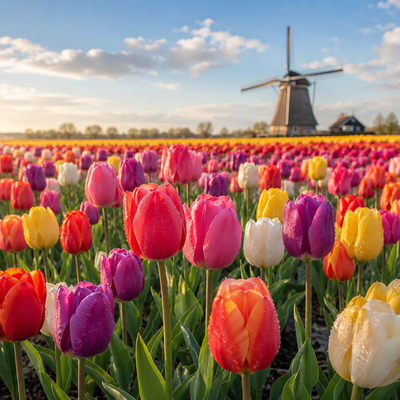
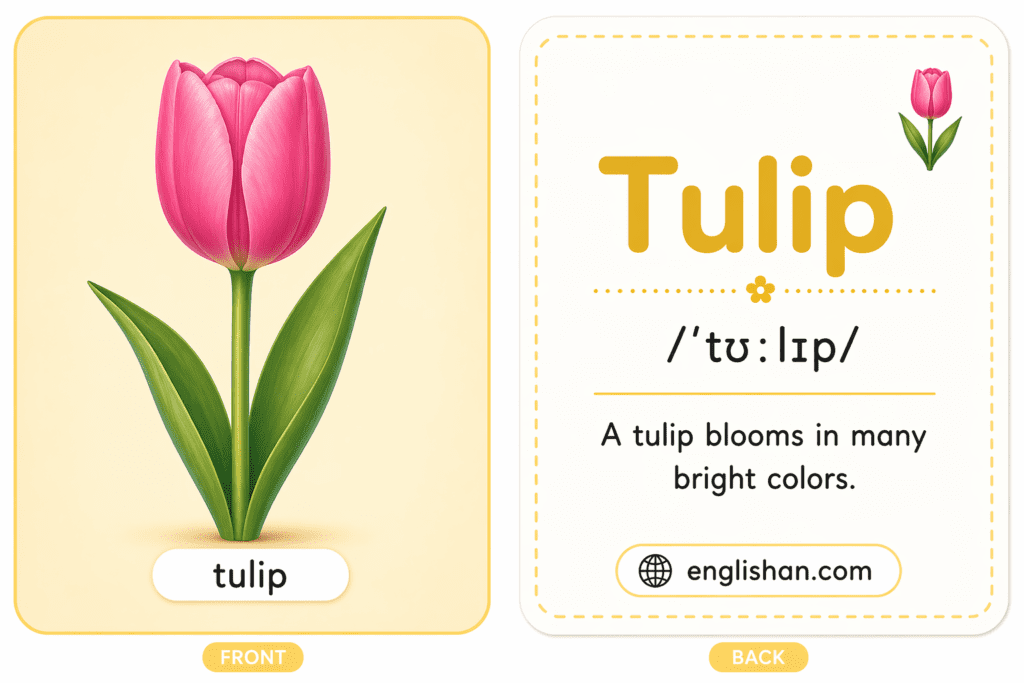
Tulip (TOO lip)
A Tulip is a cup shaped spring flower that grows from a bulb. It is famous for bright fields in the Netherlands, but people also grow Tulips in home gardens, parks, and spring flowerbeds.
The Tulips opened after the first warm week of spring.
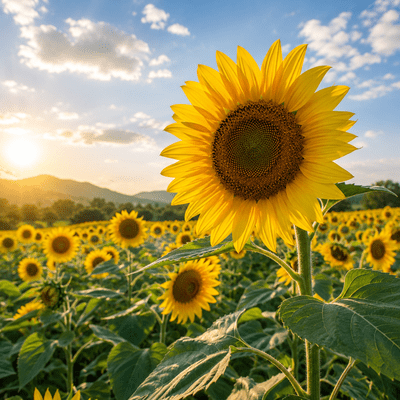
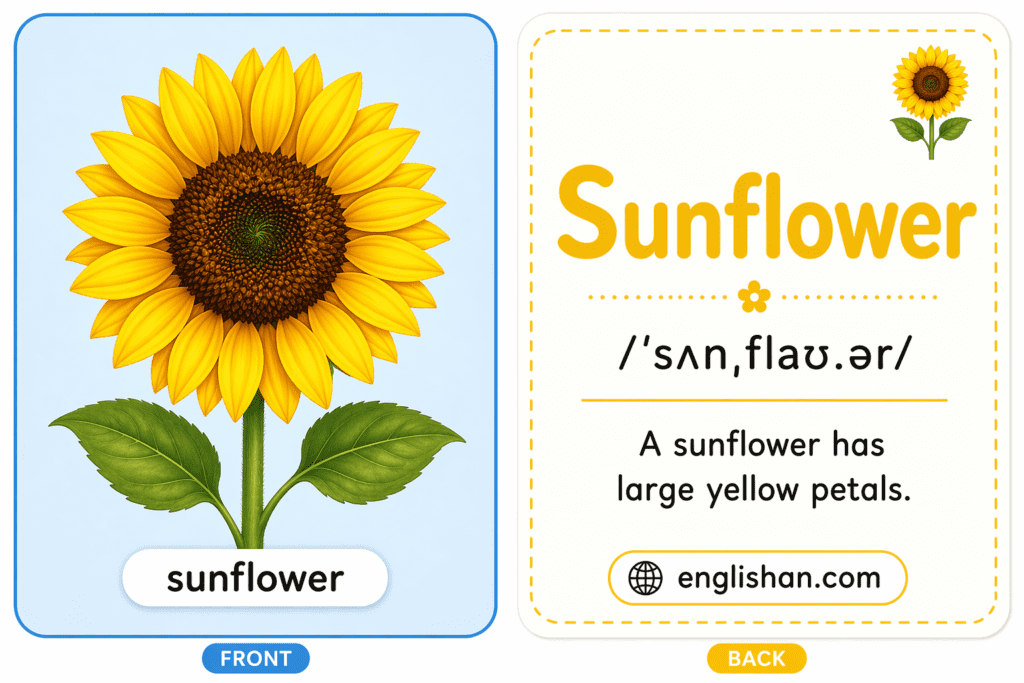
Sunflower (SUN flow er)
A Sunflower is tall, bright, and easy to recognize because of its large yellow petals and dark round center. It often gives pictures a cheerful summer feeling and is also grown for seeds and oil.
- A row of Sunflowers stood beside the wooden fence.
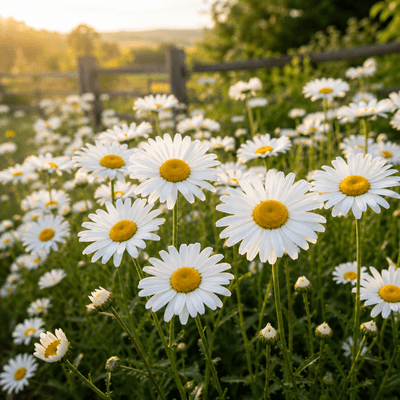
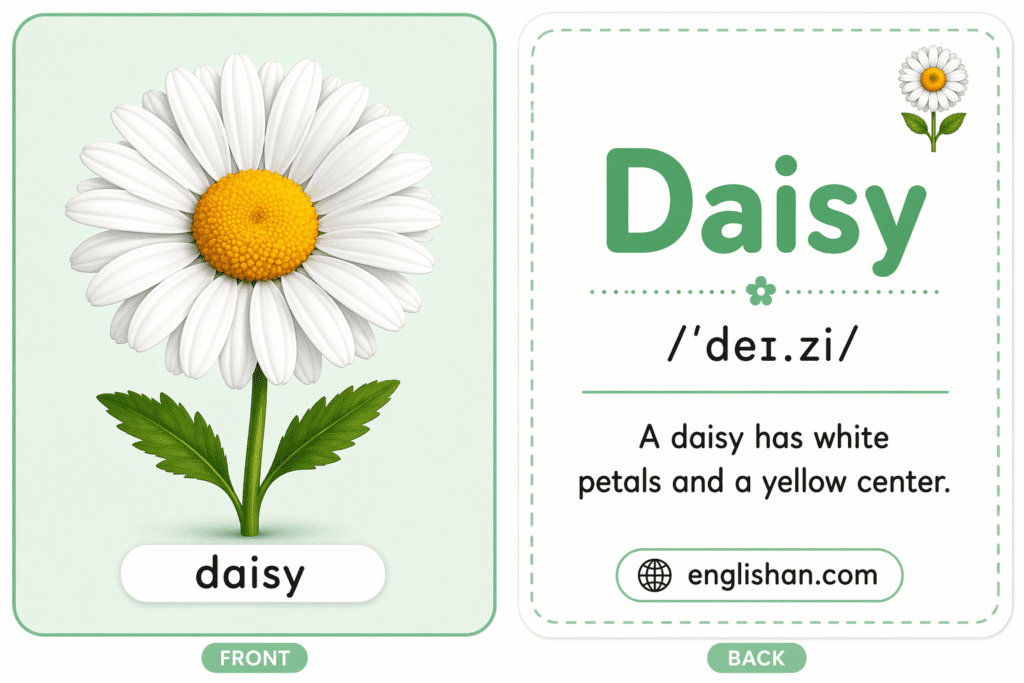
Daisy (DAY zee)
A Daisy is a small flower with white petals around a yellow center. It has a friendly look and often appears in children’s drawings, meadow pictures, flower crowns, and casual garden scenes.
- The children picked Daisies in the field after lunch.
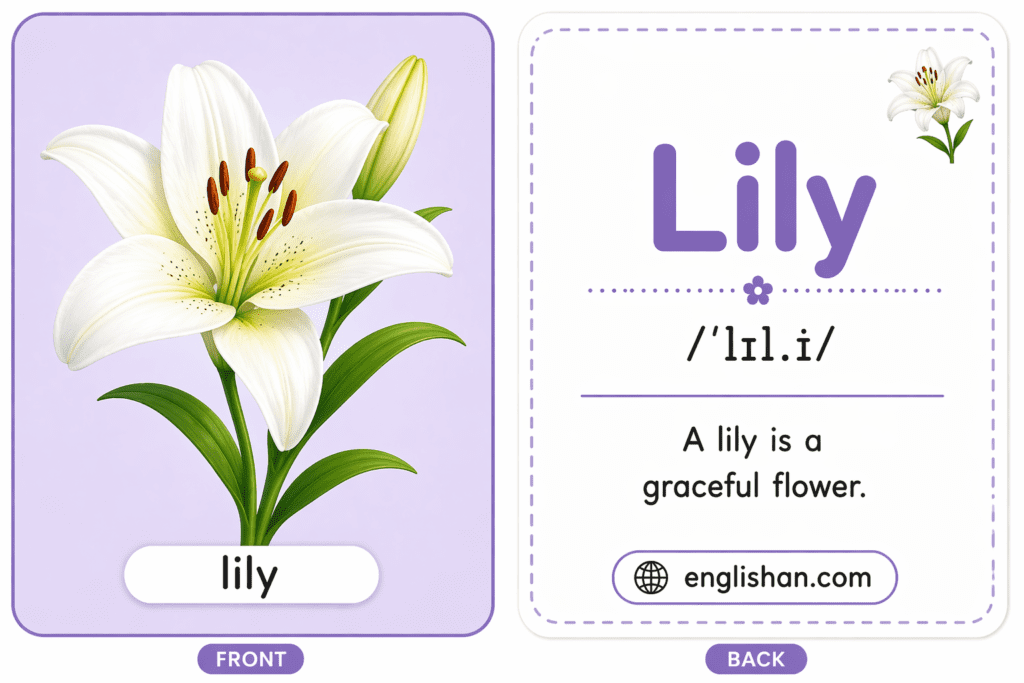
Lily (LIL ee)
A Lily is a graceful flower with large petals and a strong scent. White Lilies often appear in weddings and formal arrangements, while orange and pink Lilies bring stronger color to gardens and bouquets.
- White Lilies filled the wedding hall with scent.
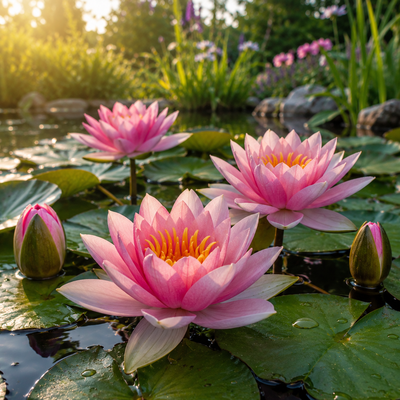
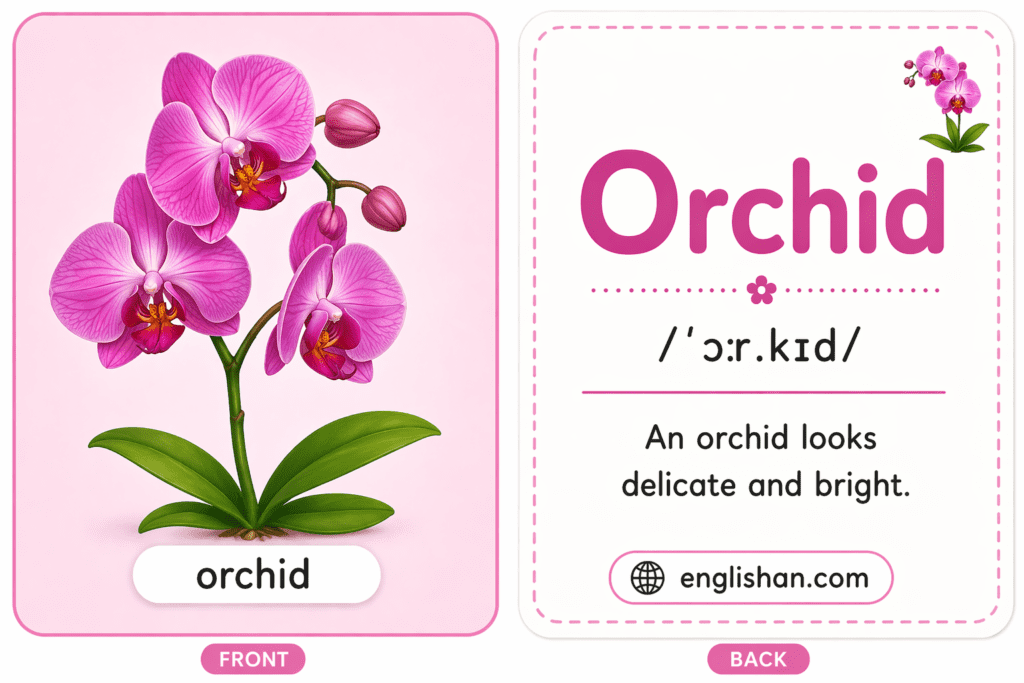
Orchid (OR kid)
An Orchid has delicate petals and an elegant shape that often looks almost sculpted. Many Orchids are kept indoors because their flowers last for weeks and add a refined look to rooms, offices, and gift baskets.
- She keeps a Purple Orchid near the kitchen window.
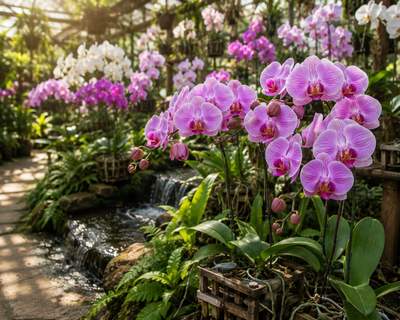
Carnation (kar NAY shun)
A Carnation has ruffled petals and a long vase life, which makes it common in bouquets, school events, graduations, and Mother’s Day gifts. It comes in many colors, including pink, red, white, yellow, and striped varieties.
- Each student received a Pink Carnation at the ceremony.
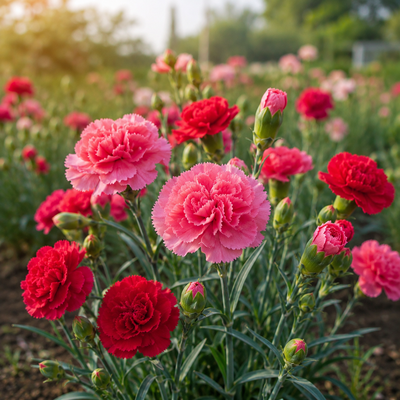
Daffodil (DAF uh dil)
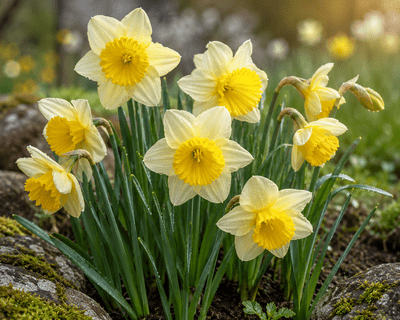
A Daffodil is a yellow spring flower with a trumpet shaped center. It often blooms early in the year, so people connect it with the return of spring, warmer days, and gardens waking up after winter.
- Daffodils brightened the path in March.
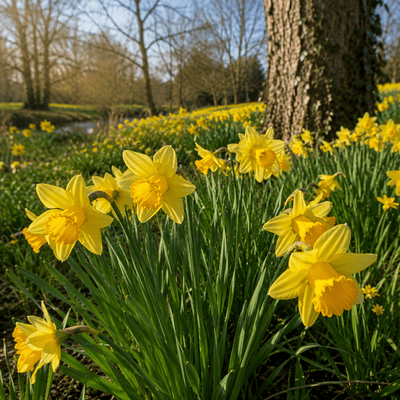
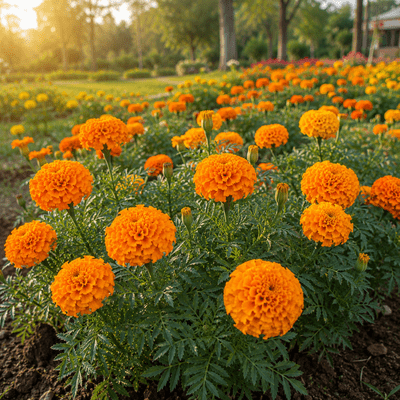
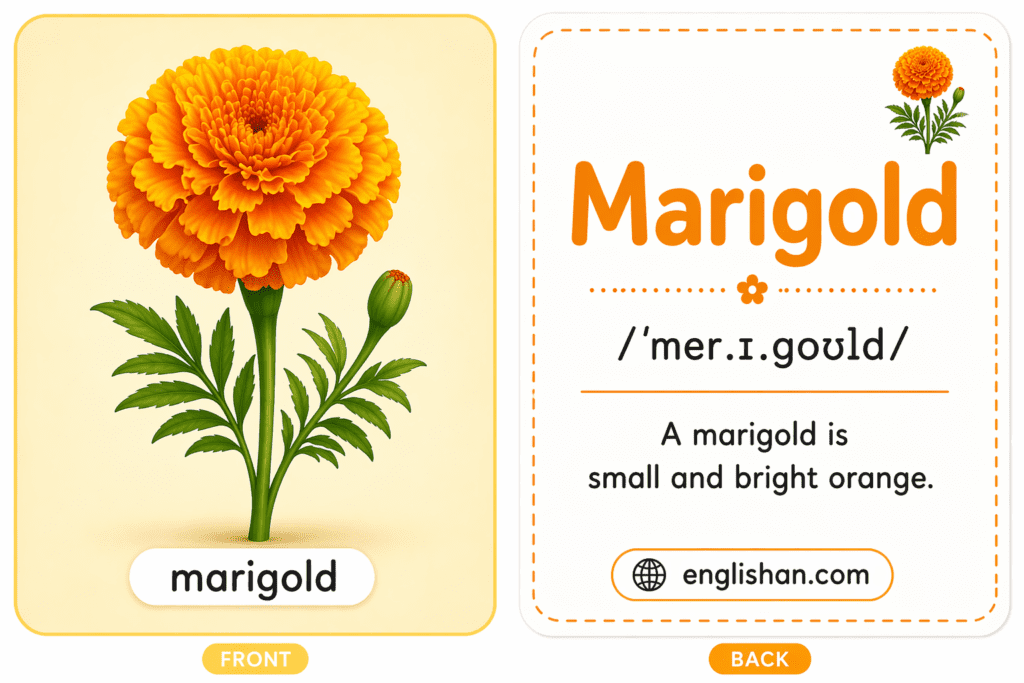
Marigold (MAIR ih gold)
A Marigold is a yellow or orange flower with a strong garden scent. It is popular in borders, pots, festivals, and vegetable gardens because its bold color stands out from a distance.
- Marigolds grew around the tomato plants in the backyard.
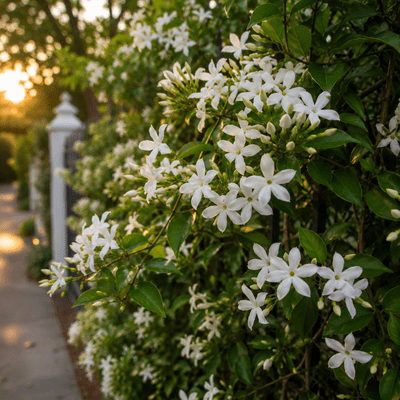
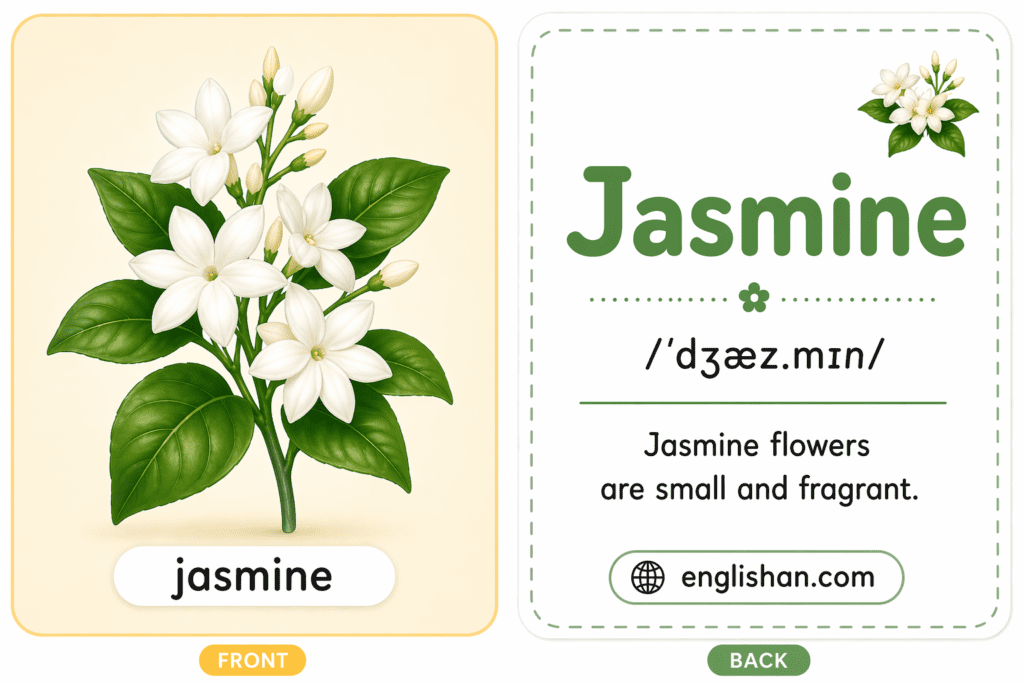
Jasmine (JAZ min)
Jasmine is a small white or yellow flower known for its sweet scent, especially in the evening. It appears in perfumes, teas, wedding decorations, and warm climate gardens.
- The air smelled of Jasmine after sunset.
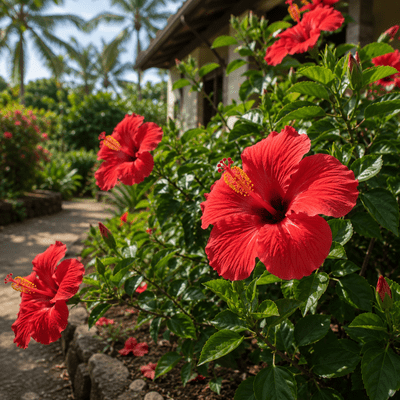
Hibiscus (hi BIS kus)
A Hibiscus has large open petals and a tropical look. Red, pink, yellow, and orange Hibiscus flowers often appear in island gardens, summer prints, hotel landscapes, and warm outdoor spaces.
- A Red Hibiscus bloomed near the gate.
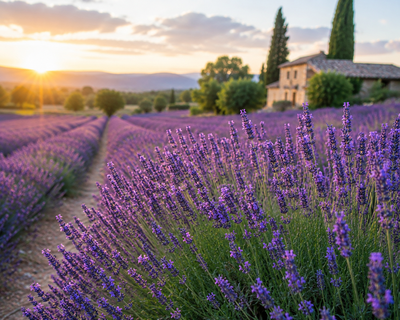
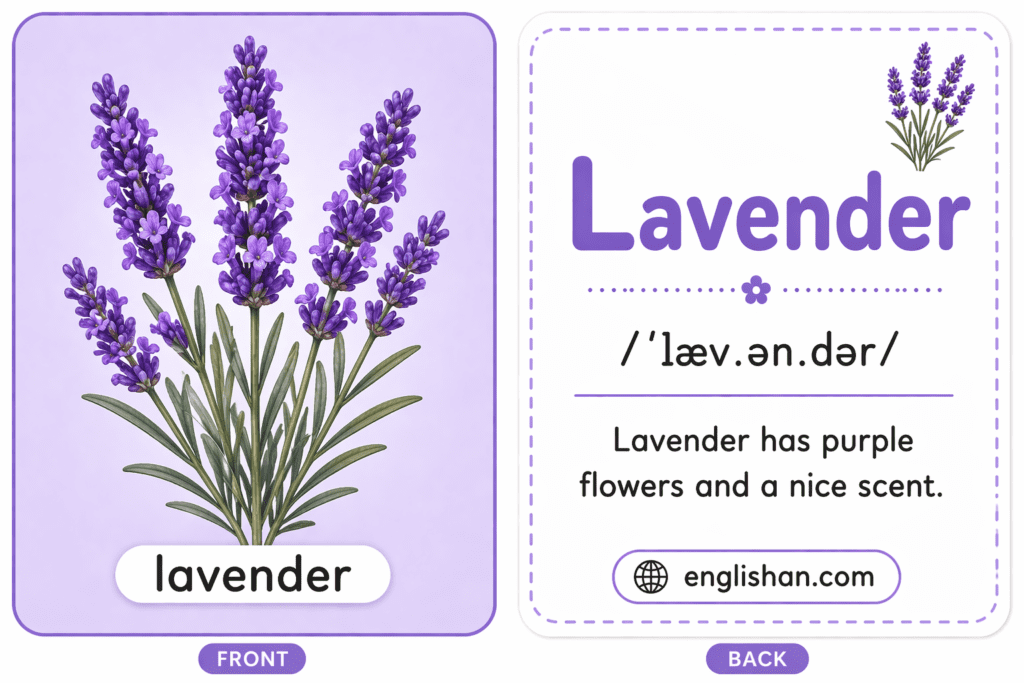
Lavender (LAV en der)
Lavender grows in narrow purple spikes and carries a herbal scent. People connect it with calm rooms, scented oils, garden borders, dried flower bundles, and purple fields in countryside photos.
- She tied Lavender stems with a ribbon and placed them in a drawer.
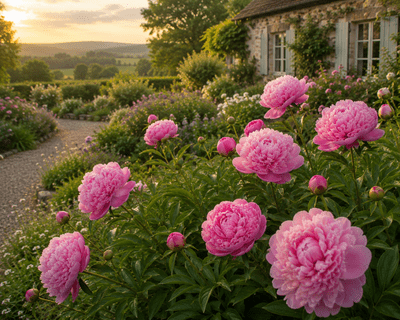
Peony (PEE uh nee)
A Peony has large soft petals that open into a full rounded bloom. It is loved in spring weddings and romantic bouquets because one flower already looks rich and full.
- Pink Peonies covered the table at the reception.
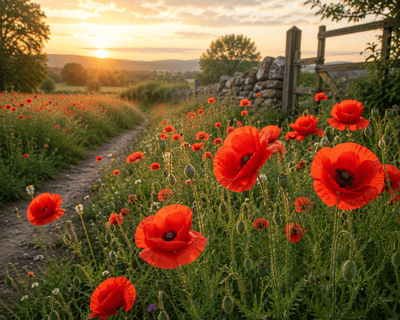
Poppy (POP ee)
A Poppy has thin papery petals and a delicate shape. Red Poppies are often linked with remembrance, while orange, pink, and white Poppies bring soft color to wild flower gardens.
- Red Poppies moved gently beside the field.
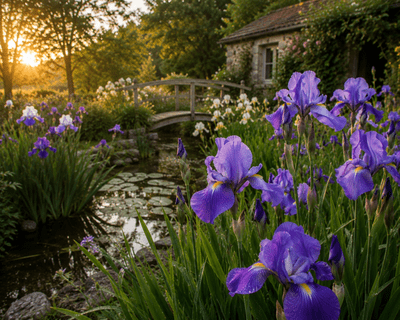
Iris (EYE ris)
An Iris has long upright leaves and folded petals that spread in a fan like shape. Purple Iris flowers are especially common, but the flower also appears in blue, yellow, white, and mixed colors.
- The Purple Iris opened after the rain.
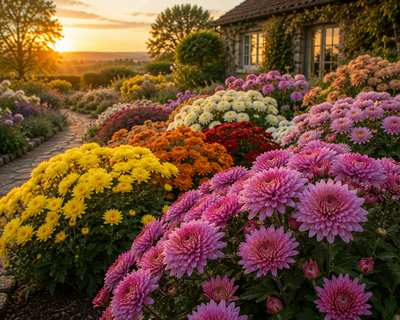
Chrysanthemum (krih SAN thuh mum)
A Chrysanthemum has many narrow petals packed into a full bloom. It is one of the best known autumn flowers and often appears in porch pots, fall gardens, and seasonal flower displays.
Orange Chrysanthemums filled the front steps in October.
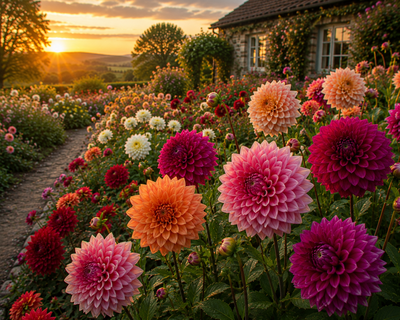
Dahlia (DAL yuh)
A Dahlia has layered petals arranged in a bold rounded shape. It blooms in many colors and often becomes the main flower in late summer bouquets because of its size and strong presence.
A Red Dahlia stood in the center of the bouquet.
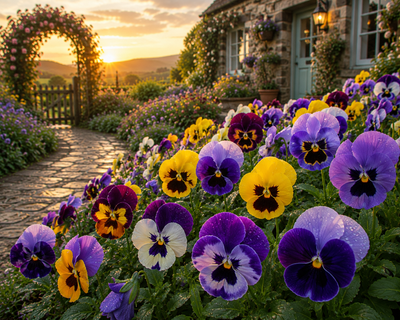
Pansy (PAN zee)
A Pansy is a small garden flower with broad petals that often show two or three colors. Its petals sometimes look like a tiny face, which makes it familiar in pots, borders, and cool season gardens.
- Purple Pansies lined the walkway near the school.
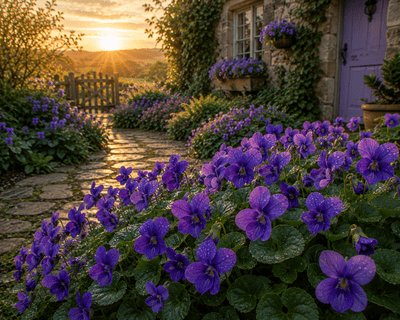
Violet (VIE uh let)
A Violet is a small purple flower with a gentle look. It often grows close to the ground and appears in lawns, woodland edges, spring gardens, and older English descriptions of modest beauty.
- Violets grew under the tree after the rain.
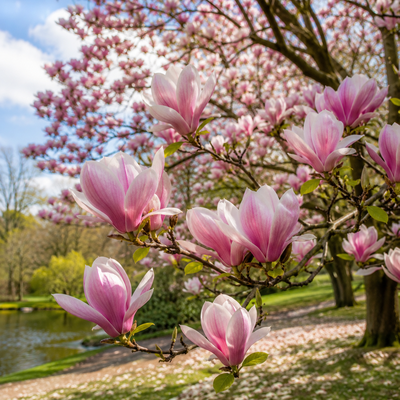
Magnolia (mag NOHL yuh)
A Magnolia is a large tree flower with thick petals and a soft cup shape. It often blooms before the tree has many leaves, so the flowers stand out strongly against bare branches.
- Magnolia petals covered the sidewalk like pale pink paper.
Common Flower Names for Beginners
Beginners should start with flower names that are short, familiar, and easy to connect with pictures. These names appear often in school lessons, garden labels, greeting cards, and everyday descriptions.
Rose is the first flower name many learners remember because it is common in gifts and love messages. Lily is another familiar name, especially in weddings and formal flower arrangements. Daisy is easy to picture because of its white petals and yellow center.
Tulip, Lotus, Iris, and Poppy are short names that connect strongly with shape. A Tulip looks like a cup, a Lotus grows in water, an Iris has folded petals, and a Poppy has thin soft petals.
Jasmine, Sunflower, Orchid, Marigold, Lavender, Daffodil, Hibiscus, and Carnation are also common enough for learners to meet again in books, photos, gardens, and conversations.
Garden Flowers
Garden flowers are types of flowers people grow in pots, borders, balconies, parks, and home gardens. These names are useful when you describe yards, nurseries, flowerbeds, front doors, and outdoor spaces in English.
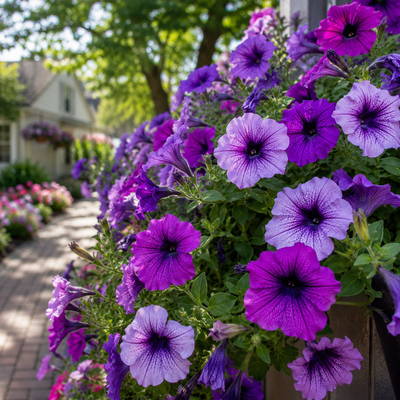
Petunia (peh TOO nyuh)
Petunias are soft trumpet shaped flowers that grow well in hanging baskets, window boxes, and sunny pots. They often spill over the edges of containers, which makes balconies and patios look fuller.
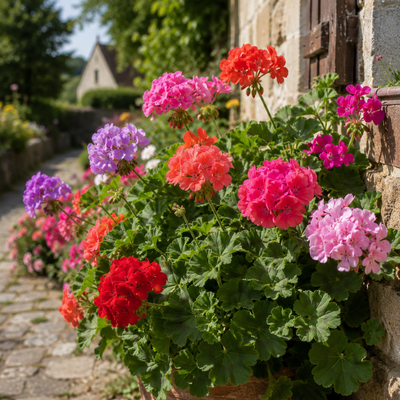
Geranium (juh RAY nee um)
Geraniums grow in rounded clusters and often have thick green leaves with a strong scent. Red and pink Geraniums are common near doors, steps, and balconies because they handle pots well.
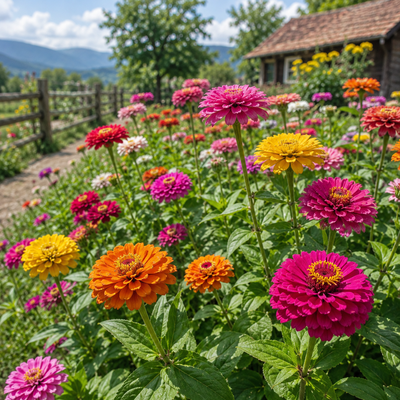
Zinnia (ZIN ee uh)
Zinnias have bright rounded blooms and strong summer colors. They are often planted in rows or mixed borders because they keep blooming when the weather is hot.
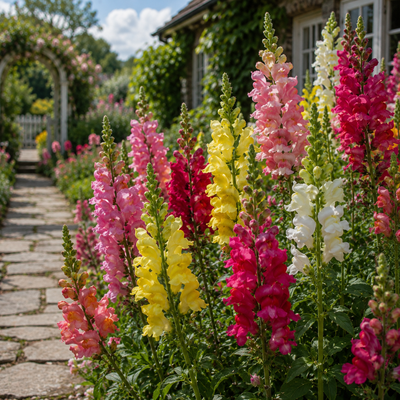
Snapdragon (SNAP drag un)
Snapdragons grow on upright stems with flowers that look like tiny mouths. Children often enjoy pressing the petals gently because the flower seems to open and close.
Begonia (beh GOH nyuh)
Begonias have soft petals and fleshy leaves, and many types grow well in shade. They work well in pots, porch corners, and places where stronger sun loving flowers struggle.
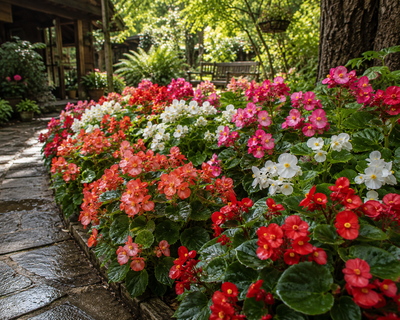
Impatiens (im PAY shunz)
Impatiens are low flowers that bloom heavily in shade. They are common in garden beds under trees, near walls, and beside paths where sunlight is limited.
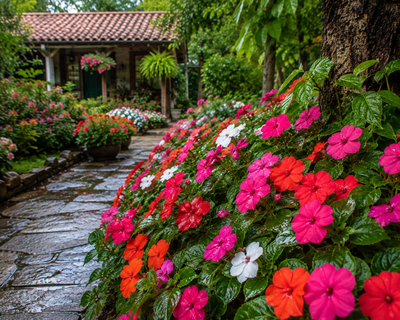
Aster (AS ter)
Asters have star like petals and bloom late in the growing season. Purple, pink, and white Asters add color when many summer flowers are fading.
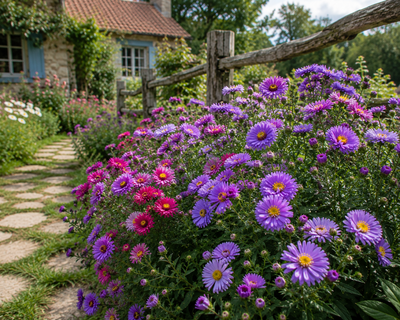
Cosmos (KOZ mus)
Cosmos flowers grow on tall airy stems with delicate petals. Their light shape works well in informal gardens, meadow style beds, and breezy summer borders.
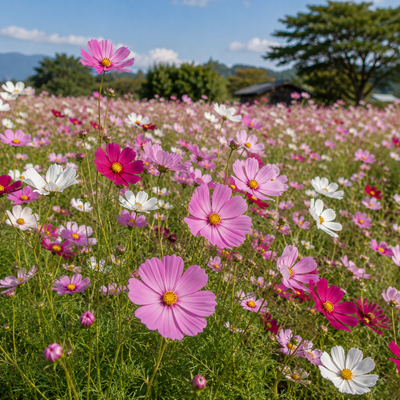
Coneflower (KOHN flow er)
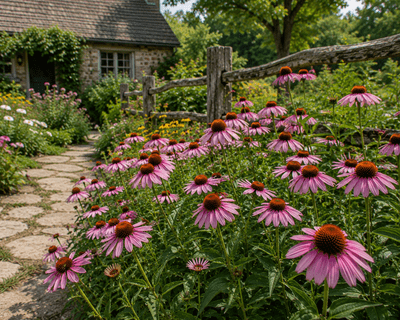
Coneflowers have a raised center and petals that often droop slightly downward. Bees and butterflies visit them often, so they are common in pollinator gardens.
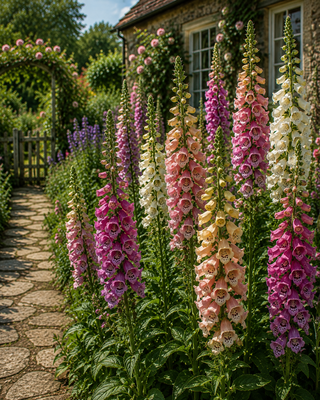
Foxglove (FOKS glove)
Foxgloves grow tall stems lined with bell shaped flowers. They look beautiful near cottage walls and shaded borders, but the plant is poisonous and should be handled with care.
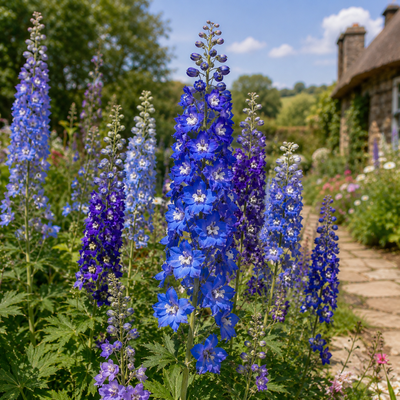
Delphinium (del FIN ee um)
Delphiniums grow in tall spikes, often in blue, purple, pink, or white. Their height makes them stand out at the back of garden beds and against walls.
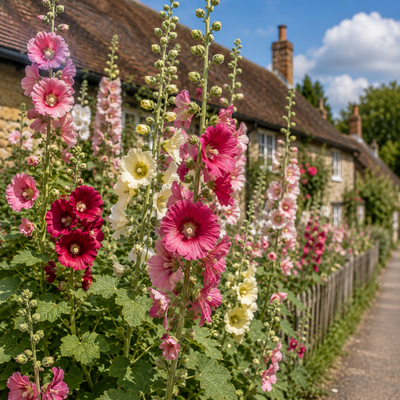
Hollyhock (HOL ee hok)
Hollyhocks are very tall flowers that often grow along fences, walls, and cottage gardens. Their open blooms climb up the stem and give a garden a traditional countryside look.
Hydrangea (hi DRAIN juh)
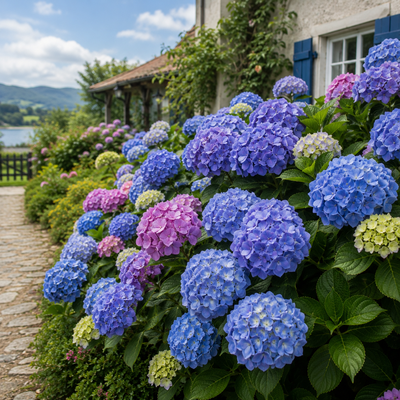
Hydrangeas have large rounded flower heads made of many small blooms. Blue, pink, white, and purple Hydrangeas are common in yards, parks, and shaded garden corners.
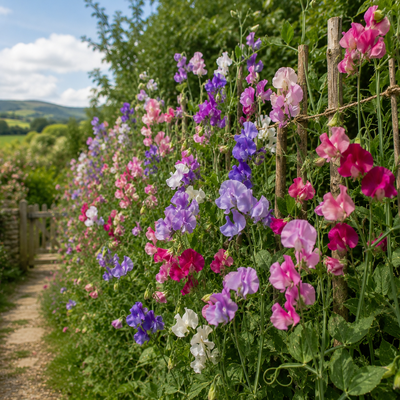
Sweet Pea (sweet pee)
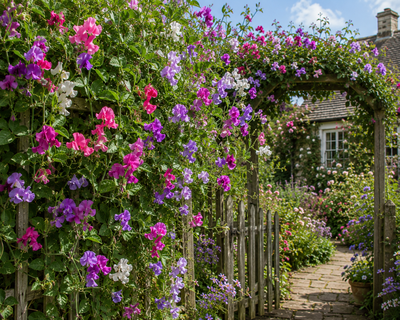
Sweet Peas are climbing flowers with soft frilled petals and a sweet scent. They often grow on supports in spring and early summer, especially near kitchen gardens and cottage paths.
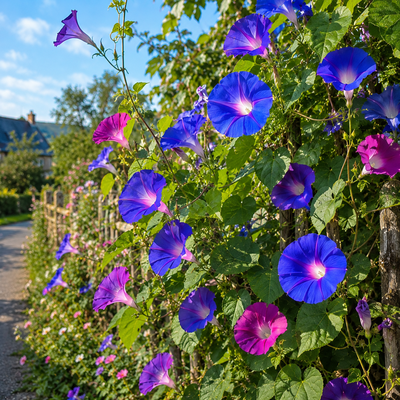
Morning Glory (MOR ning GLOR ee)
Morning Glory is a vine with flowers that open early in the day. Blue, purple, pink, or white blooms can cover fences, railings, and trellises quickly.
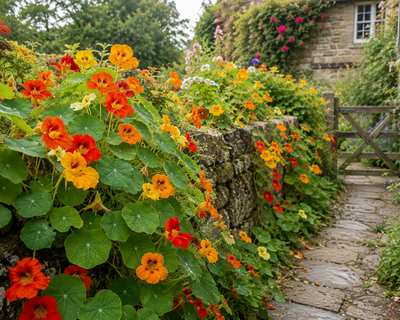
Nasturtium (nuh STUR shum)
Nasturtiums have round leaves and bright orange, yellow, or red flowers. They trail from pots and garden edges, and the petals are often used as edible decoration.
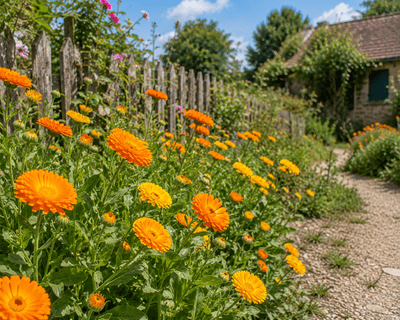
Calendula (kuh LEN juh luh)
Calendula has orange or yellow daisy like flowers. It appears in herb gardens, skincare products, teas, and cheerful garden borders.
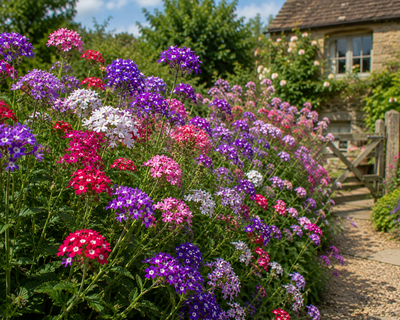
Verbena (ver BEE nuh)
Verbena grows in clusters of small flowers on slender stems. Purple, pink, red, and white Verbena often appears along paths or in pots where butterflies visit.
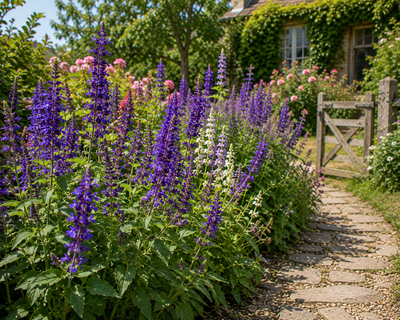
Salvia (SAL vee uh)
Salvia grows in upright flower spikes, often in purple, blue, red, or pink. It brings height to borders and attracts bees in warm weather.
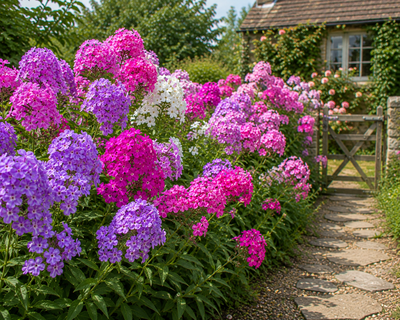
Phlox (floks)
Phlox grows in clusters and often carries a soft scent. Tall garden Phlox fills summer borders, while shorter types spread near edges and paths.
Lobelia (loh BEE lee uh)
Lobelia has tiny flowers, often in deep blue or purple. It trails from baskets and containers, adding color around the edges without taking much space.
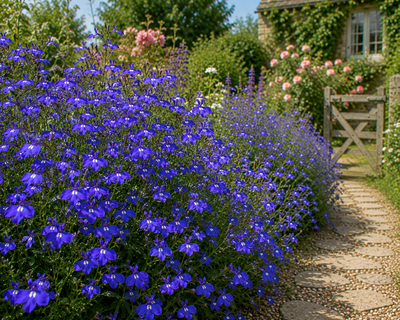
Dianthus (die AN thus)
Dianthus has small frilled petals and a light clove like scent. It works well near steps, borders, and low garden edges.
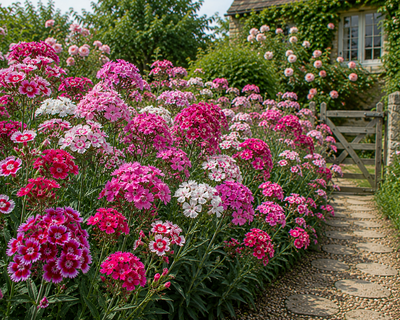
Stock (stok)
Stock is a fragrant flower with tall stems and dense blooms. Florists use it in bouquets, and gardeners plant it when they want strong scent near windows or seating areas.
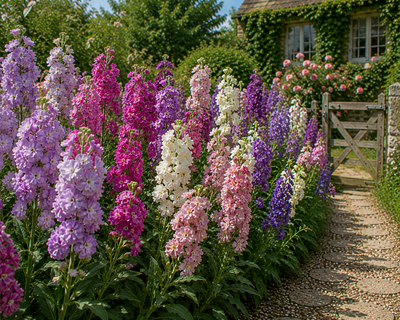
Sweet William (sweet WIL yum)
Sweet William forms flat clusters of small flowers, often in red, pink, white, or mixed colors. It has an old fashioned garden feel and grows well in cottage style beds.
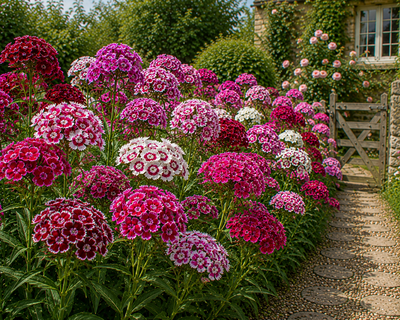
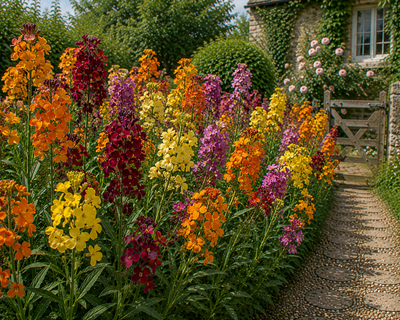
Wallflower (WAHL flow er)
Wallflowers grow in bright clusters and often handle dry places better than delicate flowers. Yellow, orange, and purple Wallflowers can brighten walls, paths, and borders.
Wild Flowers
Wild flowers grow naturally in fields, forests, hills, roadsides, meadows, and open land. These flower names belong in nature vocabulary, countryside descriptions, walking trails, and outdoor picture lessons.
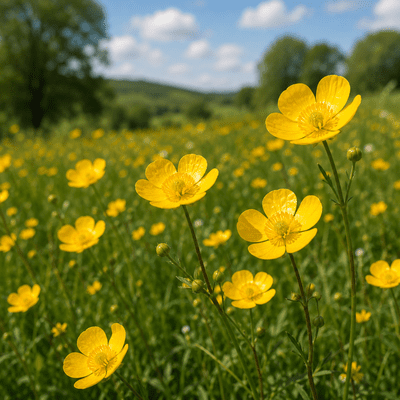
Buttercup (BUT er kup)
Buttercups are small yellow wild flowers with shiny petals. They grow in damp fields and grassy places, often close to Clover and other low plants.
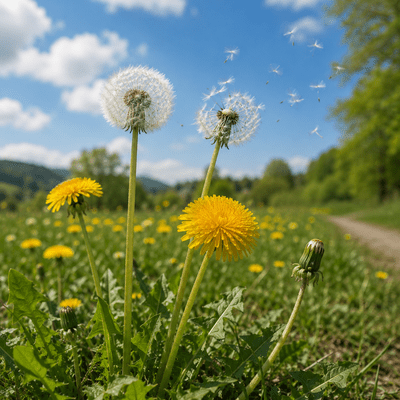
Dandelion (DAN duh lie un)
A Dandelion starts as a bright yellow flower and later turns into a round white seed head. Children often blow the seeds into the air, which makes the flower familiar in childhood scenes.
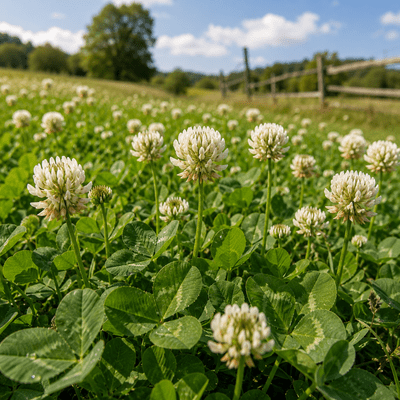
Clover (KLOH ver)
Clover has tiny pink, white, or purple flowers and leaves that usually grow in groups of three. It covers lawns and fields, and bees visit it often.
Bluebell (BLOO bel)
Bluebells are small blue flowers that hang like bells. In spring, they can cover woodland floors and turn whole forest paths blue.
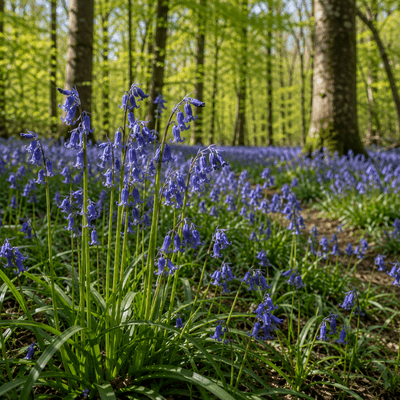
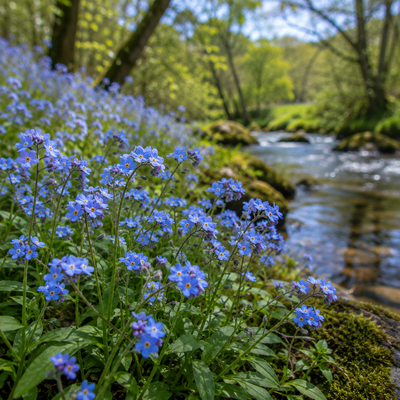
Forget-me-not (fer GET mee not)
Forget-me-nots are tiny blue flowers with yellow centers. Their name carries a strong emotional feeling, so they often appear in memory, love, and farewell contexts.
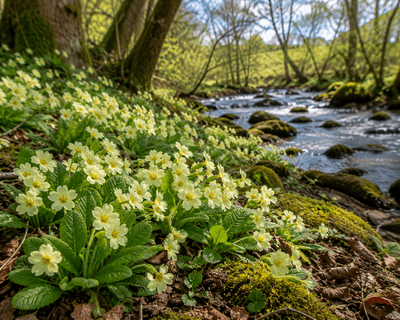
Primrose (PRIM rohz)
Primroses bloom early in spring and often have pale yellow petals. They grow near paths, hedges, and woodland edges when the weather begins to soften.
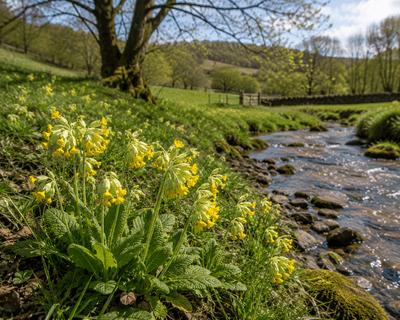
Cowslip (KOW slip)
Cowslips have nodding yellow flowers on slim stems. They are often linked with old meadows, English countryside, and spring grasslands.
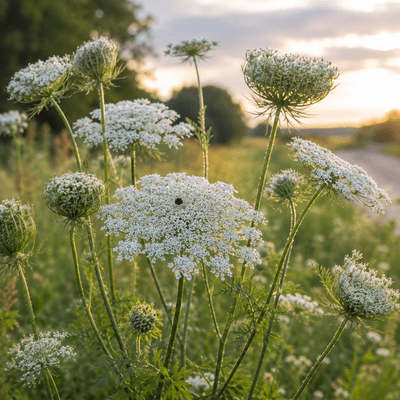
Queen Anne’s Lace (kween anz lays)
Queen Anne’s Lace has a wide white flower head that looks fine and delicate. It often grows along country roads, dry fields, and summer paths.
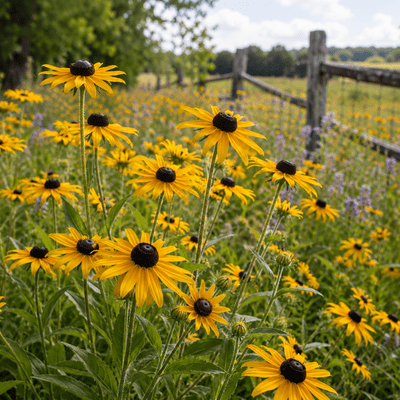
Black-eyed Susan (blak eyed SOO zun)
Black-eyed Susan has yellow petals around a dark center. It looks similar to a small Sunflower and brings strong yellow color to meadows and garden borders.
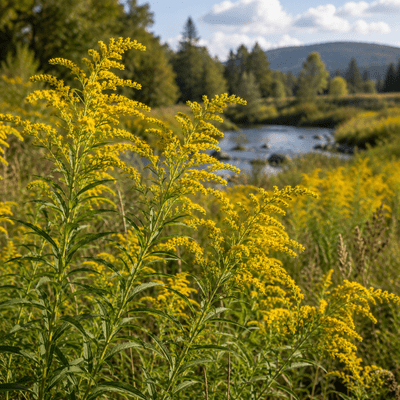
Goldenrod (GOHL dun rod)
Goldenrod grows in tall stems with clusters of tiny yellow flowers. It blooms in late summer and gives fields a golden look.
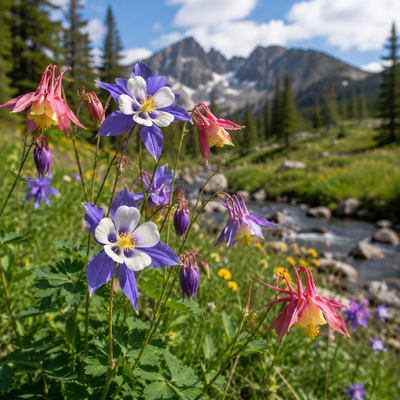
Columbine (KOL um bine)
Columbine has unusual petals with small spurs that curve backward. It grows in gardens and wild places, often in purple, pink, red, yellow, or blue.
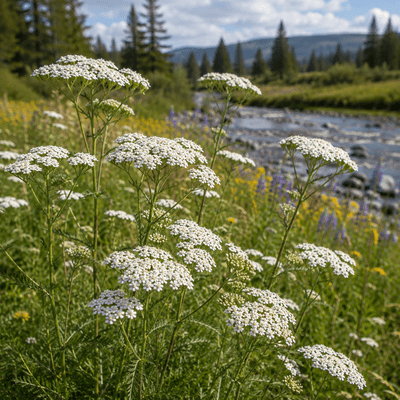
Yarrow (YAR oh)
Yarrow has flat clusters of tiny flowers and feathery leaves. White Yarrow is common in fields, dry grass, and roadside areas.
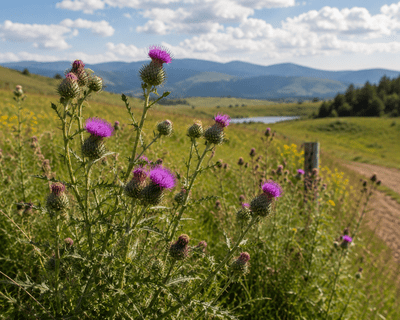
Thistle (THIS ul)
Thistles have spiky leaves and purple flower heads. They are tough wild flowers and are strongly linked with Scotland.
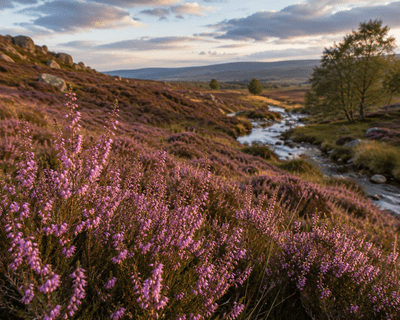
Heather (HETH er)
Heather grows low to the ground and produces tiny purple, pink, or white flowers. Large stretches of Heather can color hillsides in late summer.
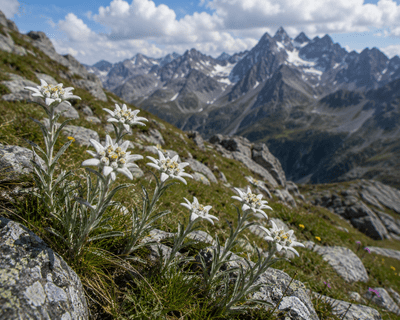
Edelweiss (AY dul vise)
Edelweiss is a small white alpine flower that grows in mountain regions. It is famous because of its rare look and strong link with the Alps.
Tropical and Exotic Flowers
Tropical flowers often have bright colors, large petals, unusual shapes, or strong scent. These flower names are common in travel writing, warm climate gardens, island scenes, hotel gardens, and holiday photos.
Hibiscus (hi BIS kus)
Hibiscus flowers open wide and look bold in red, pink, yellow, orange, and white. They grow well in warm places and often appear in tropical garden pictures.
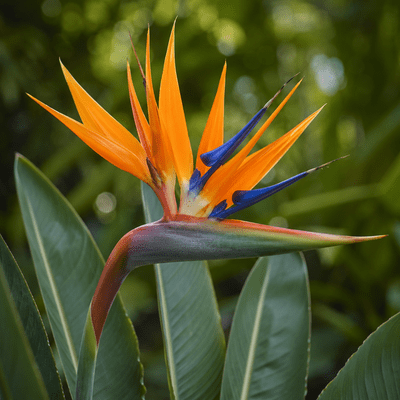
Bird of Paradise (burd uv PAIR uh dice)
Bird of Paradise has orange and blue petals shaped like a bird in flight. Its unusual form makes it one of the easiest tropical flowers to recognize in pictures.
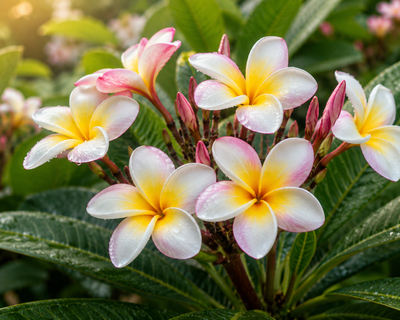
Plumeria (ploo MAIR ee uh)
Plumeria has smooth petals and a sweet scent. It is often used in Hawaiian leis and warm climate decorations.
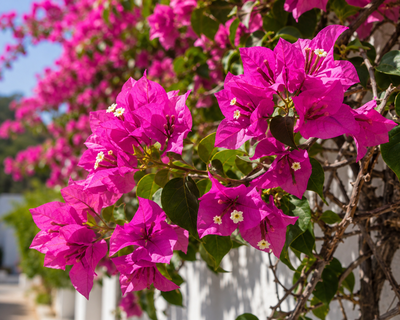
Bougainvillea (boo gun VIL ee uh)
Bougainvillea is a climbing plant covered in bright papery bracts that look like flowers. Pink and purple Bougainvillea often spills over walls in hot countries.
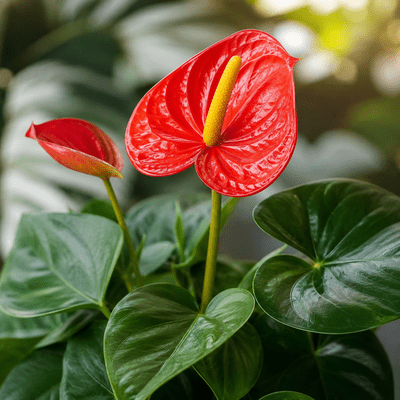
Anthurium (an THOO ree um)
Anthurium has a shiny heart shaped bloom, often red, pink, or white. It looks almost polished, which makes it popular in hotel lobbies and indoor tropical displays.
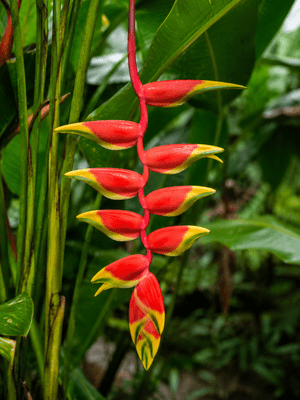
Heliconia (hel ih KOH nyuh)
Heliconia has bright curved bracts that resemble a lobster claw. It grows in tropical regions and gives gardens a bold, rainforest feeling.
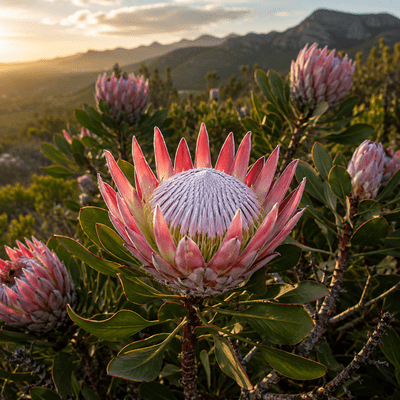
Protea (PROH tee uh)
Protea has a large spiky bloom with a strong sculptural shape. It is native to South Africa and often becomes the main flower in dramatic bouquets.
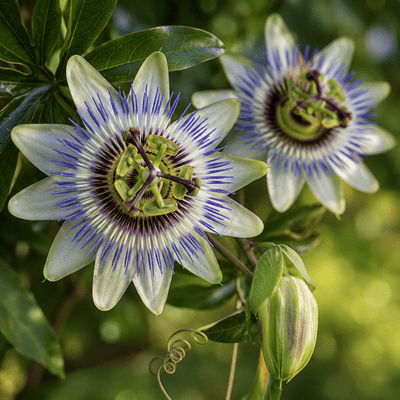
Passion Flower (PASH un flow er)
Passion Flower has a detailed center with purple, white, and thread like parts. It looks complex in close up pictures and often grows as a climbing vine.
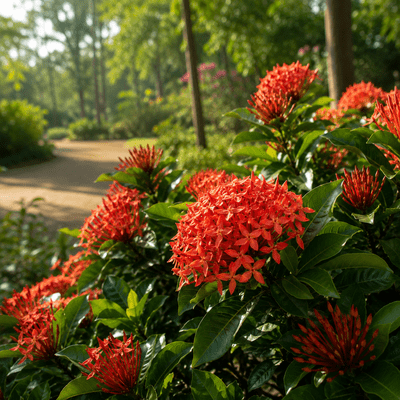
Ixora (ik SOR uh)
Ixora grows in dense clusters of tiny flowers, often orange, red, pink, or yellow. It is common as a hedge in warm climates.
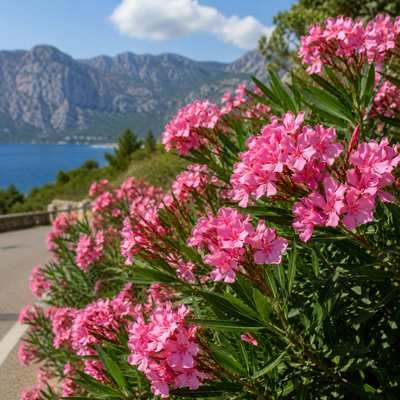
Oleander (OH lee an der)
Oleander is a flowering shrub with pink, white, or red blooms. It grows in warm places and along roadsides, but the plant is poisonous.
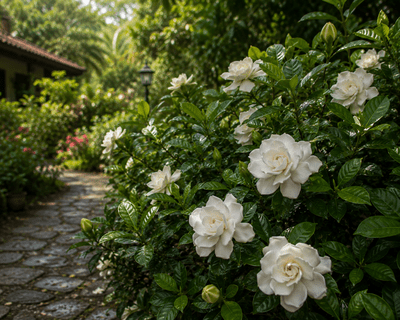
Gardenia (gar DEE nyuh)
Gardenia has creamy white petals and a rich perfume scent. A single Gardenia flower can scent a small room or garden corner.
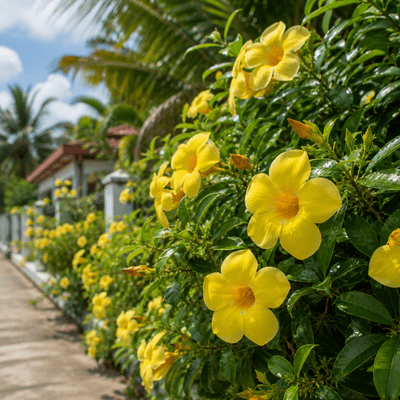
Allamanda (al uh MAN duh)
Allamanda has yellow trumpet shaped flowers and grows as a tropical vine or shrub. It adds bright color to fences, walls, and sunny gardens.
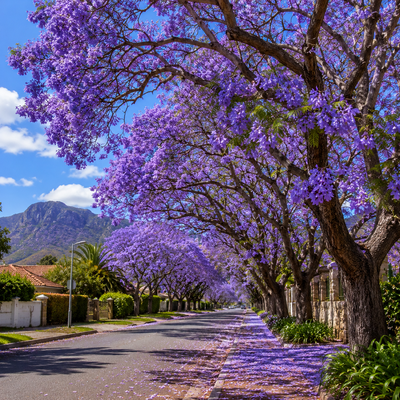
Jacaranda (jak uh RAN duh)
Jacaranda trees produce purple flowers that can cover streets and sidewalks. When they bloom, the ground often turns purple with fallen petals.
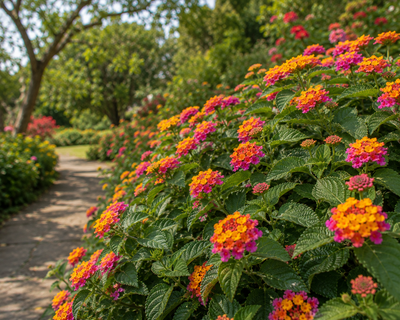
Lantana (lan TAN uh)
Lantana has small flowers packed into rounded clusters. Many varieties change color as they age, so one plant may show several shades at once.
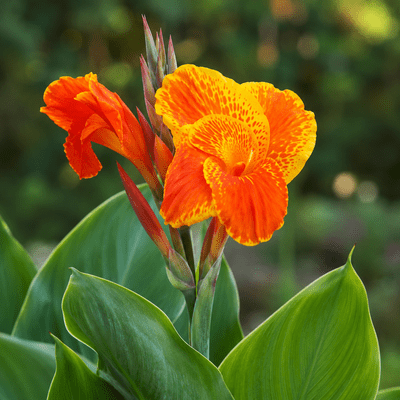
Canna Lily (KAN uh LIL ee)
Canna Lily has wide leaves and large bright flowers. It gives ponds, patios, and warm gardens a tropical look.
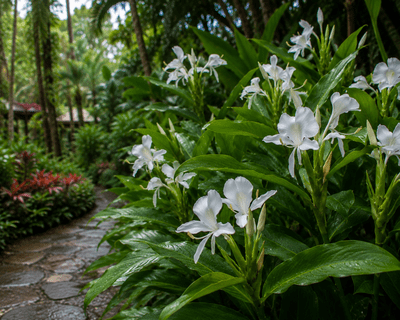
Ginger Lily (JIN jer LIL ee)
Ginger Lily has fragrant white or yellow flowers related to the ginger plant family. The scent is rich and often strongest in the evening.
Climbing and Vine Flowers
Climbing flowers grow upward along fences, arches, walls, gates, and trellises. They are helpful flower names for gardens, cottage entrances, balconies, and landscape descriptions.
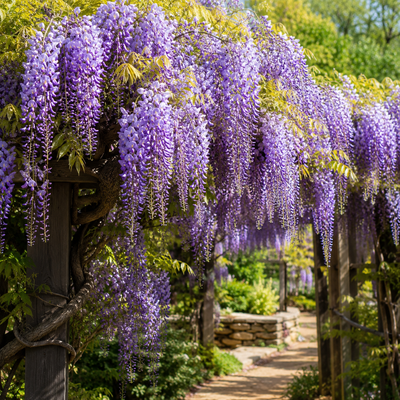
Wisteria (wis TEER ee uh) grows in hanging clusters, usually purple, blue, pink, or white. It can cover arches and old walls with long curtains of flowers.
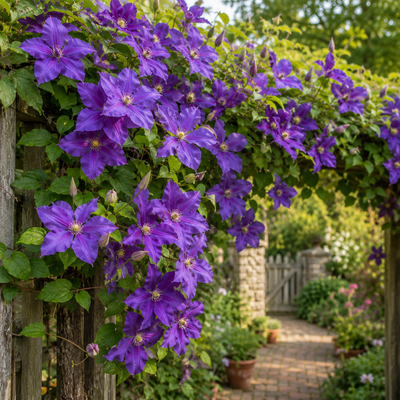
Clematis (KLEM uh tis) has large star shaped flowers on a climbing plant. Purple Clematis is common, but many types bloom in pink, white, red, and blue.
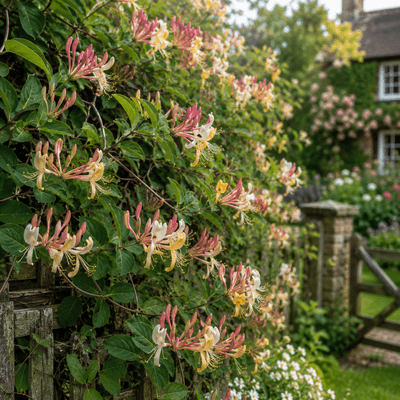
Honeysuckle (HUN ee suk ul) has small tubular flowers with a sweet evening scent. It often grows along fences, hedges, and garden entrances.
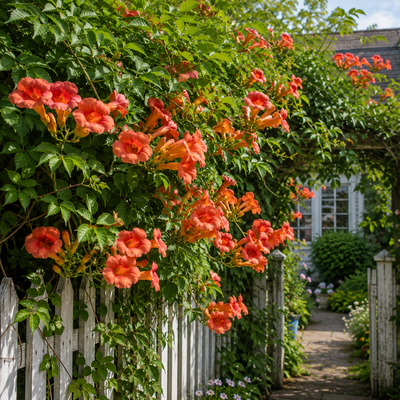
Trumpet Vine (TRUM pet vine) produces orange or red trumpet shaped flowers. Hummingbirds often visit it in places where they live.
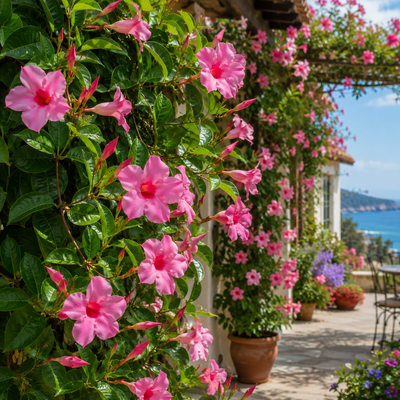
Mandevilla (man duh VIL uh) is a tropical climbing flower with glossy leaves and pink, red, or white blooms. It is often grown in large pots near patios and pools.
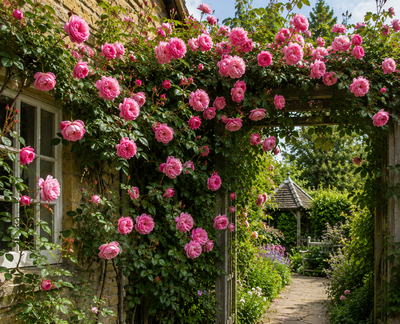
Climbing Rose (KLY ming rohz) is a Rose trained to grow upward on a wall, arch, or trellis. It brings the familiar Rose shape into vertical garden spaces.
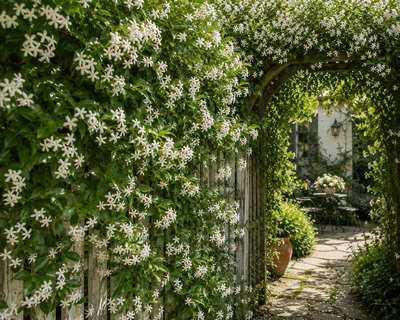
Star Jasmine (star JAZ min) has small white star shaped flowers with a strong scent. It climbs along fences and walls in warm gardens.
Sweet Pea Vine (sweet pee vine) has soft scented flowers and curling tendrils. It climbs up garden supports and often appears in spring and early summer.
Water Flowers
Water flowers grow in ponds, lakes, marshes, riversides, and wet soil. Their pictures are easy to recognize because many have floating leaves, tall stems, or blooms near the water surface.
Water Lily (WAH ter LIL ee)
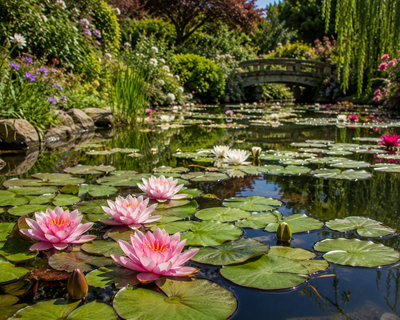
A Water Lily has round floating leaves and a flower that opens near the water surface. White, pink, yellow, and purple Water Lilies often appear in pond pictures.
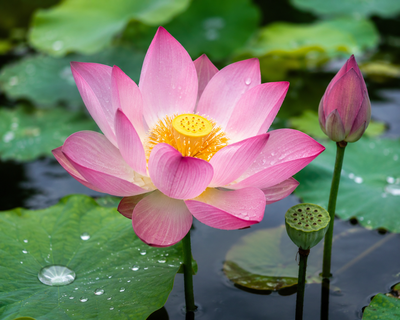
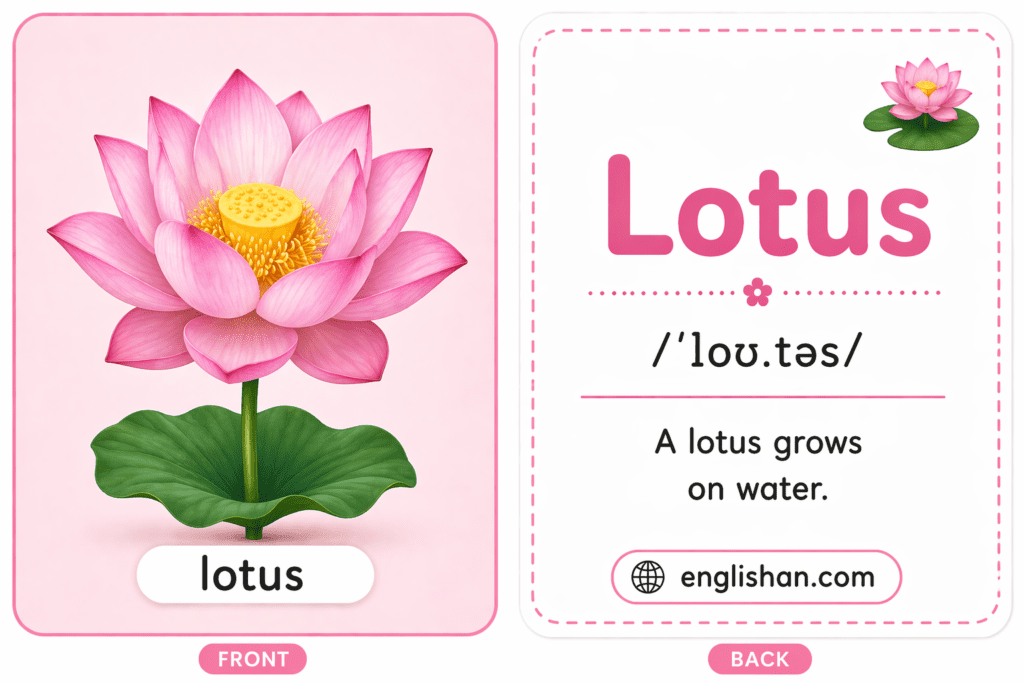
Lotus (LOH tus)
A Lotus rises above muddy water on tall stems. It is an important flower in many Asian cultures and often stands for purity, calmness, and strength after difficulty.
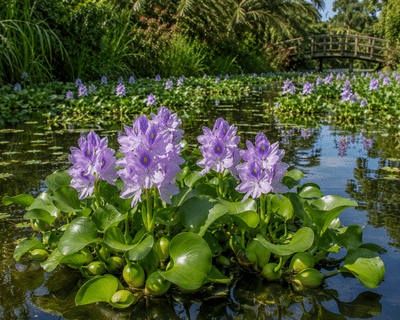
Water Hyacinth (WAH ter HI uh sinth)
Water Hyacinth floats on the water and produces pale purple flower spikes. It looks pretty, but it can spread quickly across ponds and lakes.
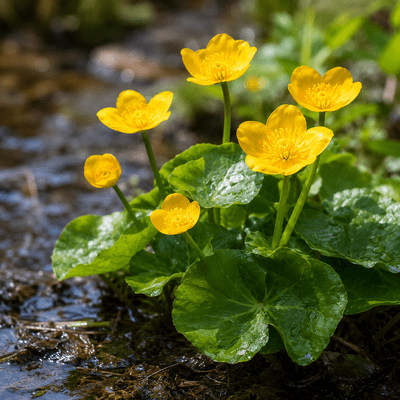
Marsh Marigold (marsh MAIR ih gold)
Marsh Marigold grows in wet ground and produces bright yellow blooms. It often appears near streams, marshes, and damp meadows in spring.
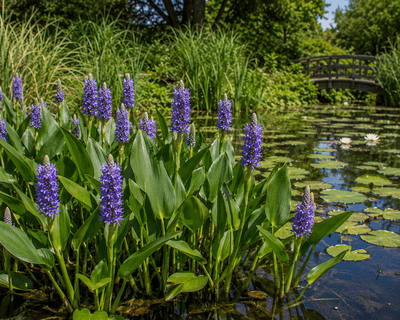
Pickerelweed (PIK rul weed)
Pickerelweed grows at the edge of ponds and lakes, with blue or purple flower spikes. Dragonflies and bees often visit it.
Bulb Flowers
Bulb flowers grow from underground bulbs, and many bloom in spring. These types of flowers are common in garden centers, parks, school vocabulary, and seasonal flower pictures.
Tulip grows from a bulb and opens into a neat cup shaped flower. It is one of the most familiar spring flowers in parks and garden beds.
Daffodil also grows from a bulb and has a trumpet shaped center. Yellow Daffodils often mark the beginning of spring.
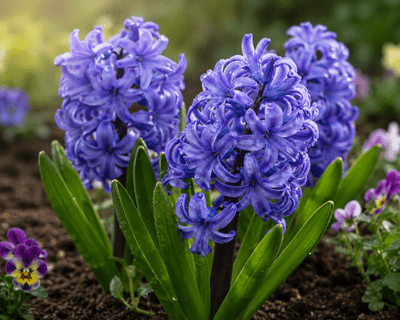
Hyacinth has a thick spike of small fragrant flowers. Purple, pink, white, and blue Hyacinths are popular in spring pots.
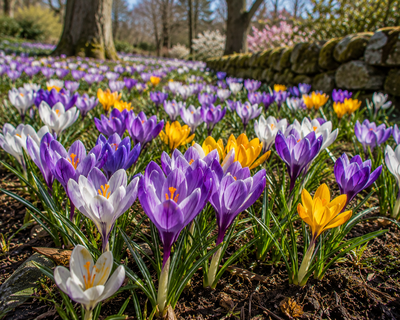
Crocus is a small early flower that may bloom while the weather is still cold. Purple, yellow, and white Crocuses often appear before many other spring flowers.
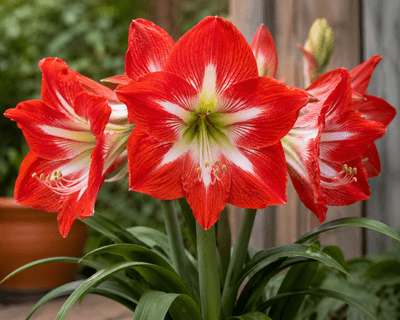
Amaryllis has large trumpet shaped blooms on a strong stem. People often grow it indoors during winter holidays.
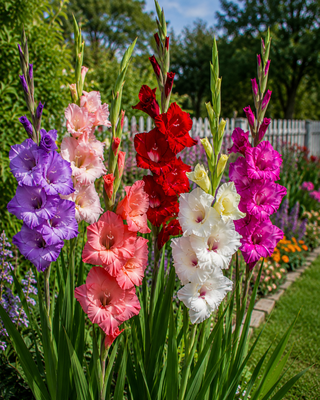
Gladiolus grows in tall spikes with several large flowers along the stem. It is often used in vases because of its height.
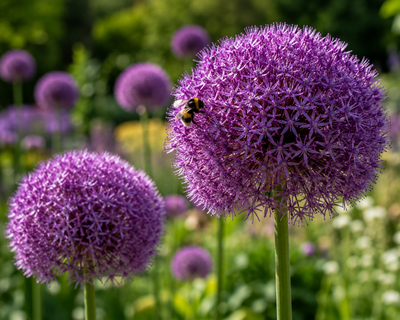
Allium has a round purple flower head on a tall stem. It is related to onions and gives gardens a bold round shape.
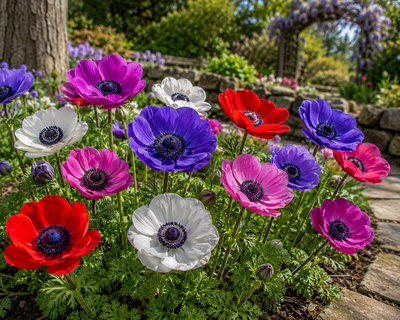
Anemone has soft petals and a dark center. White, red, purple, and pink Anemones often appear in bouquets and spring gardens.
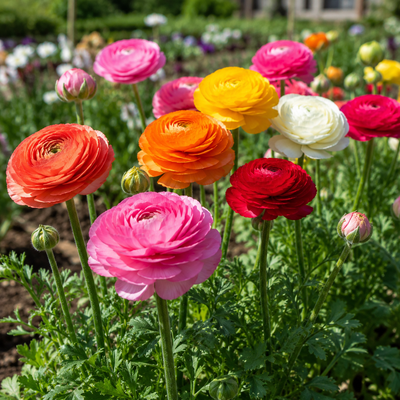
Ranunculus has many thin layers of petals that look folded together. It is common in wedding bouquets and soft spring arrangements.
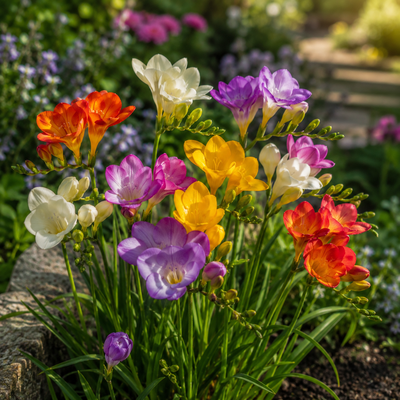
Freesia has curved stems and fragrant funnel shaped flowers. Yellow, white, pink, and purple Freesias are popular in scented bouquets.
Narcissus is a wider flower name that includes Daffodils and Paperwhites. The word often appears in gardening books and plant labels.
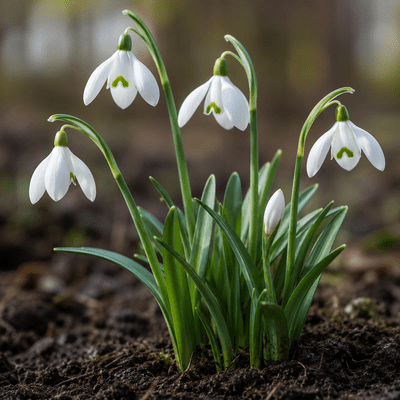
Snowdrop is a small white flower that blooms in late winter or early spring. Its drooping shape makes it easy to recognize.
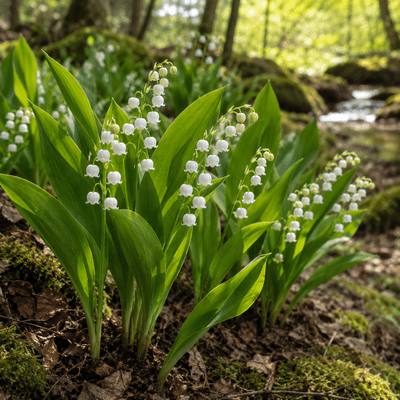
Lily of the Valley has tiny white bell shaped flowers and a strong scent. It grows low to the ground and often appears in shaded gardens.
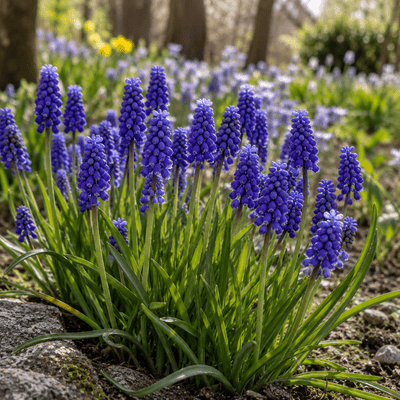
Grape Hyacinth has small blue flowers packed into a spike that looks like tiny grapes. It often spreads across lawns and spring borders.
Shrub and Tree Flowers
Some types of flowers grow on shrubs and trees instead of small garden plants. These blooms often cover branches with color during spring, early summer, or mild winter weather.
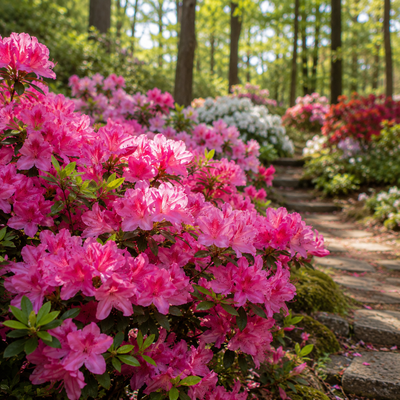
Azalea (uh ZAIL yuh) is a flowering shrub with pink, red, purple, orange, or white flowers. It often blooms heavily in spring and can turn a whole garden corner bright.
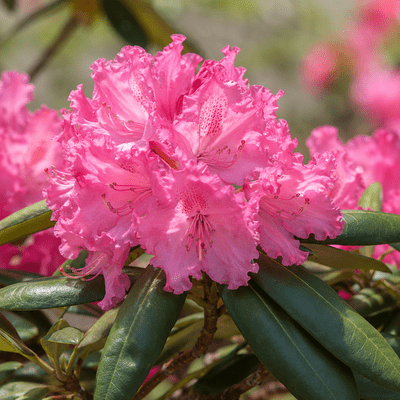
Rhododendron (roh duh DEN drun) is a larger shrub with clusters of showy flowers. It is common in parks, woodland gardens, and cool climate landscapes.
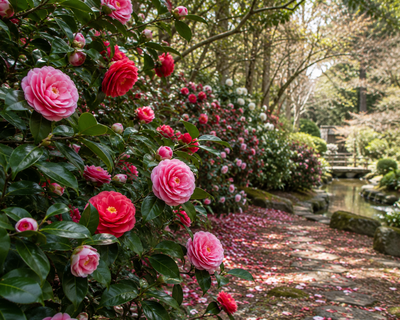
Camellia (kuh MEEL yuh) has glossy leaves and rose like flowers. It often blooms in cooler months when many other plants are quiet.
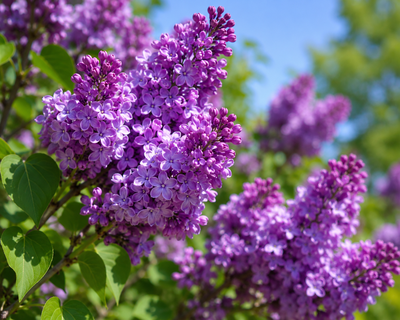
Lilac (LIE lak) grows in fragrant clusters, usually purple or white. Its scent is strongly linked with spring gardens.
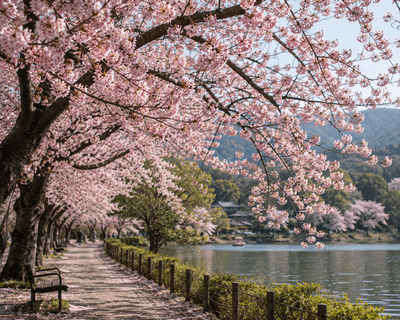
Cherry Blossom (CHAIR ee BLOS um) refers to the soft pink or white flowers on cherry trees. These blossoms are famous in Japan and many spring festivals.
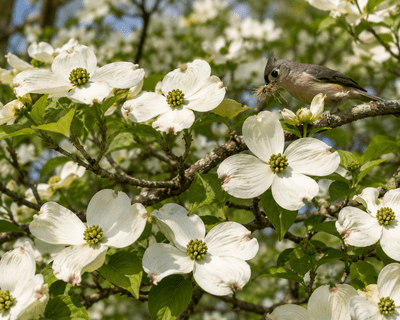
Dogwood (DOG wood) is a small tree with white or pink flower bracts. In bloom, it looks bright and graceful against green lawns.
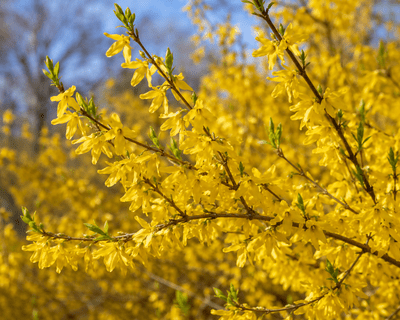
Forsythia (for SITH ee uh) covers its branches with yellow flowers before the leaves appear. It is one of the first shrubs to bring color after winter.
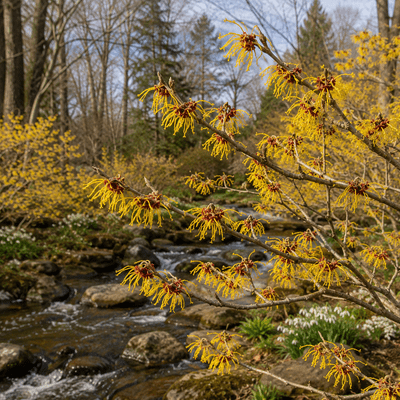
Witch Hazel (wich HAY zul) has thin yellow flowers that look like ribbons. It can bloom when branches are still bare.
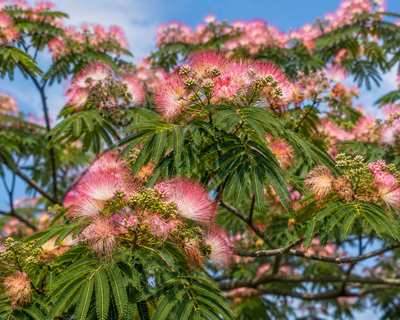
Mimosa Tree (mih MOH suh tree) has soft pink feathery flowers. Its delicate look makes it noticeable along streets and garden edges.
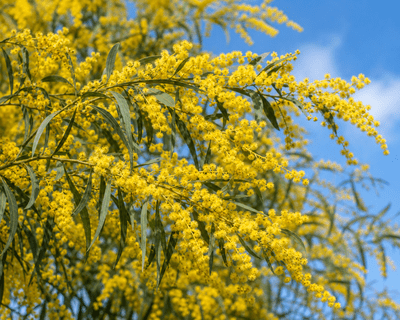
Acacia (uh KAY shuh) has clusters of tiny yellow puffball flowers. Some types also release a sweet scent and heavy pollen.
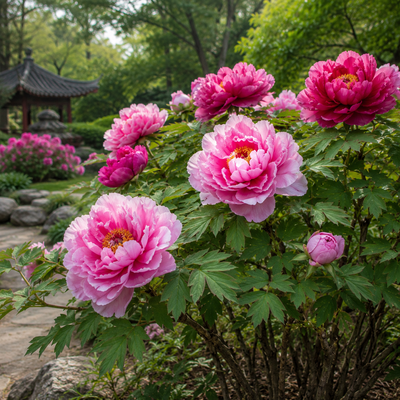
Tree Peony (tree PEE uh nee) is a woody Peony with very large flowers. Its blooms can look wider than a person’s hand.
Magnolia grows on trees and shrubs, with large thick petals in white, pink, purple, or yellow. Many Magnolias bloom before the leaves open.
Oleander is a flowering shrub common in warm climates. It has attractive flowers but poisonous leaves and stems, so it needs care around children and pets.
If you want plant names beyond flowers, the shrubs names in English list adds more picture vocabulary for outdoor plants.
Herb and Edible Flowers
Herb and edible flowers are grown for tea, cooking, decoration, scent, or traditional use. This group stays short here because the main focus is flower names, pictures, and meanings, not recipes.
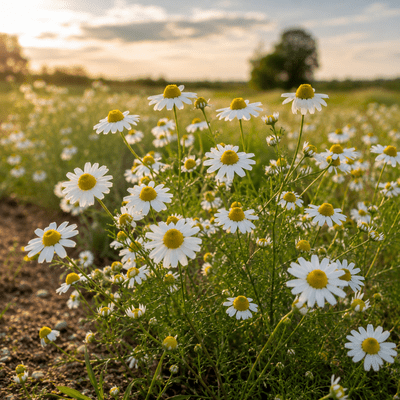
Chamomile has tiny daisy like flowers and is widely known for bedtime tea. Its soft scent makes it a familiar herb flower in kitchens and gardens.
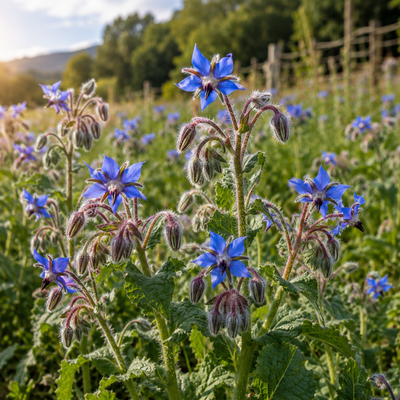
Borage has blue star shaped flowers. The petals are sometimes used in drinks and salads because of their bright color.
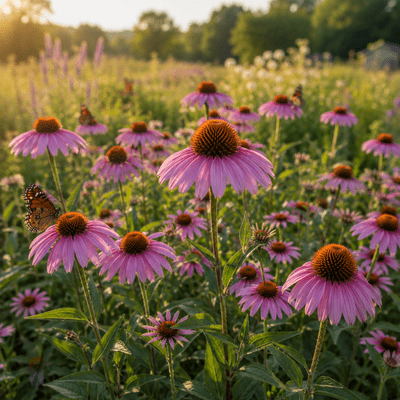
Echinacea is a pink Coneflower often connected with herbal products. In gardens, it attracts butterflies and adds height to borders.
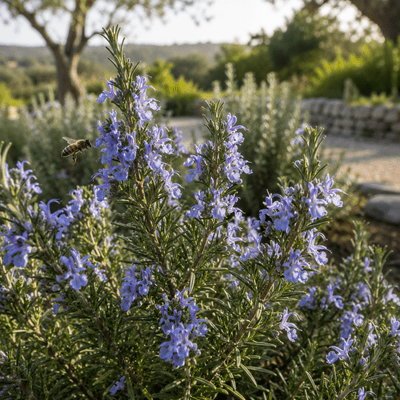
Rosemary Flower appears as tiny pale blue or purple flowers on Rosemary plants. Bees often visit them when the herb blooms.
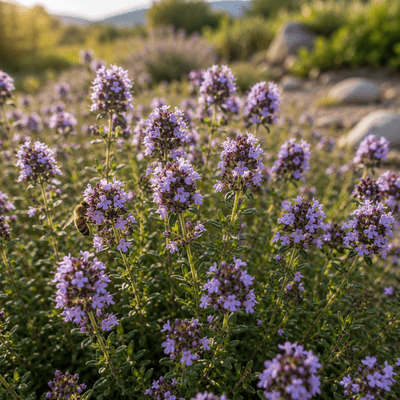
Thyme Flower grows as tiny pink, white, or purple flowers above Thyme leaves. These little blooms are common in herb gardens.
Sage Flower grows in purple or blue spikes. It looks striking above the gray green leaves of kitchen Sage.
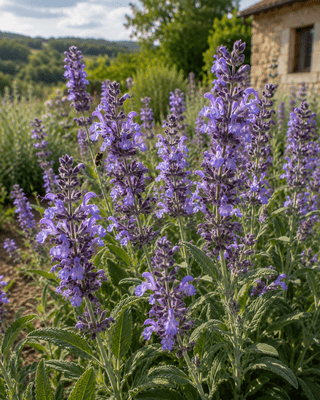
Nasturtium has bright edible petals with a peppery taste. The flowers look good in salads, but they are also grown simply for color.
Pansy is often used to decorate cakes and desserts. Its flat colorful face makes it easy to arrange on food.
Elderflower grows in flat clusters of tiny cream flowers. It is used in syrups, cordials, and summer drinks.
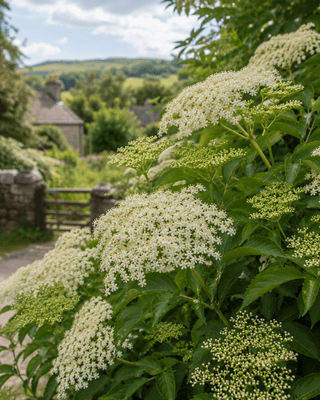
Hollyhock has tall stems and large soft flowers. The petals are sometimes used for decoration in traditional desserts.
Calendula has orange or yellow petals used in teas and skin products. It is also a bright garden flower with a warm sunny look.
Flowering Houseplants
Some flowers are grown indoors because they handle pots, filtered light, and room temperatures better than many outdoor plants. These flower names appear in home décor, plant shops, and indoor garden pictures.
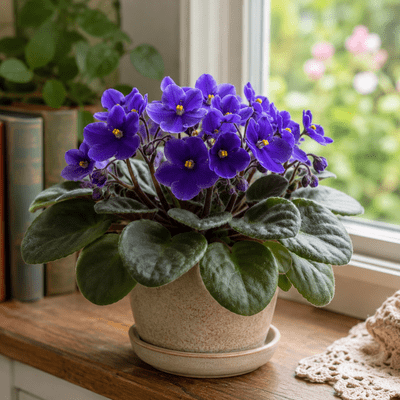
African Violet is a small indoor plant with purple, pink, or white flowers. It fits well on windowsills and small shelves.
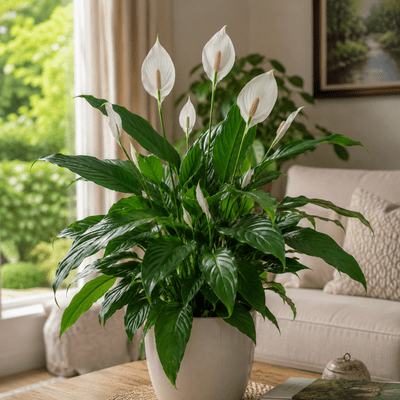
Peace Lily has white sail shaped flowers above glossy green leaves. It is common in offices, living rooms, and shaded indoor corners.
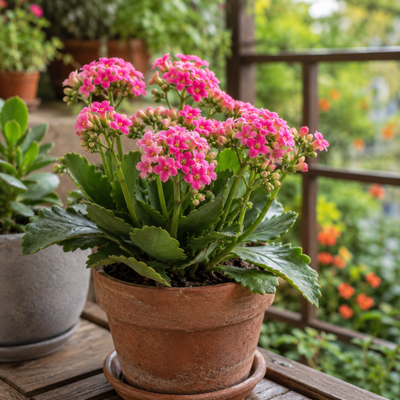
Kalanchoe has clusters of small bright flowers that last a long time. Red, orange, pink, and yellow Kalanchoe plants are often sold as gifts.
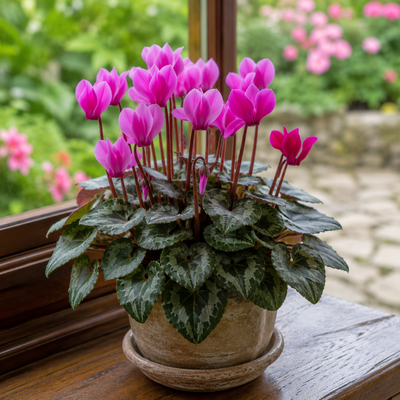
Cyclamen has swept back petals and patterned leaves. It grows well as a potted flower in cooler rooms.
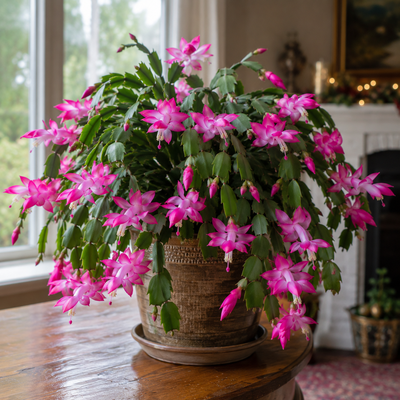
Christmas Cactus blooms in winter with bright flowers along flat green stems. Many people keep it indoors for years.
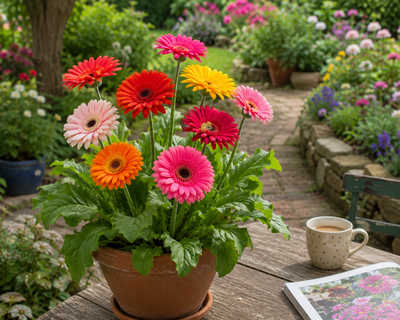
Gerbera Daisy has a large bright bloom and a cheerful shape. It is sold as both a cut flower and a potted plant.
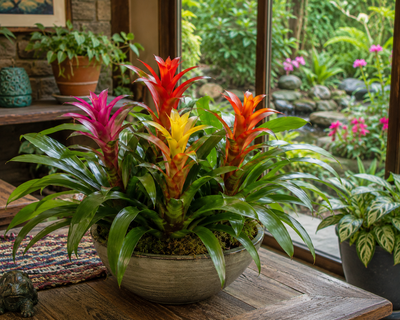
Bromeliad has a bold central flower or colorful bracts. Its tropical shape stands out on shelves and tabletops.
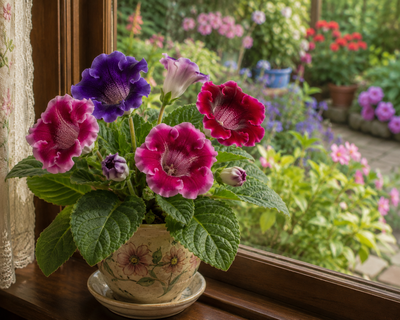
Gloxinia has velvety bell shaped flowers in purple, red, pink, or white. It adds rich color to indoor plant displays.
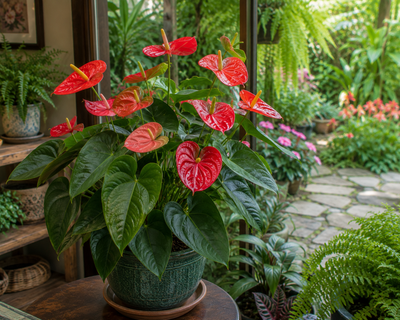
Flamingo Flower is another name for Anthurium. It has shiny heart shaped blooms and a tropical indoor look.
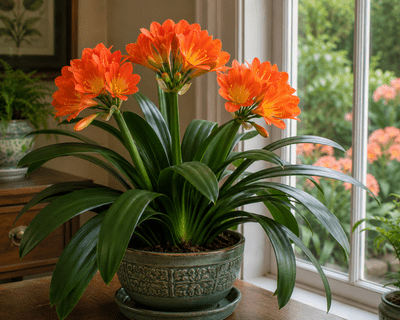
Clivia has orange or yellow trumpet shaped flowers above long green leaves. It often blooms indoors in spring.
Streptocarpus has soft flowers in purple, pink, blue, or white. It grows well near bright windows without harsh sun.
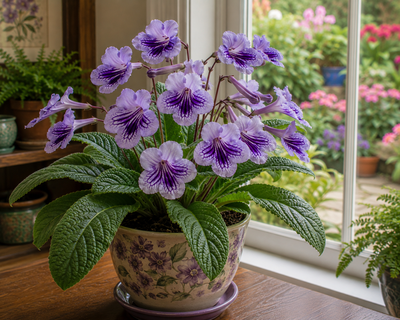
Begonia can grow indoors or outdoors, depending on the type. Flowering Begonias bring soft color to rooms and shaded patios.
Meadow and Cottage Flowers
Meadow and cottage flowers give English learners natural vocabulary for countryside pictures, old gardens, informal beds, and storybook scenes. Many of these flower names also appear in poems, garden writing, and nature descriptions.
Cornflower is a blue wild flower often seen in fields and meadow style gardens. Its strong blue color makes it stand out among grasses.
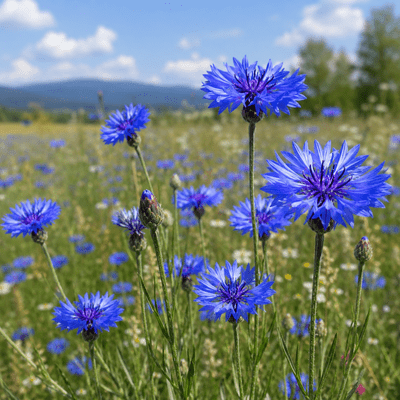
Coreopsis has yellow daisy like flowers and blooms for a long time in summer. It gives borders a sunny, open look.
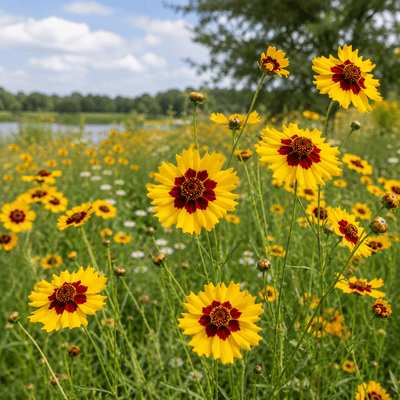
Gaillardia has red and yellow petals and is also called Blanket Flower. It handles heat well and brings warm color to garden beds.
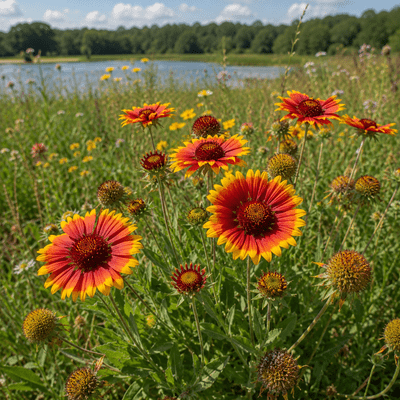
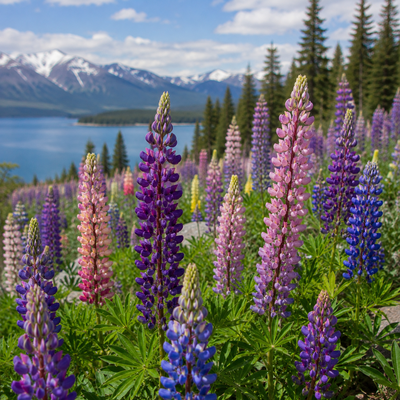
Lupine grows in tall spikes packed with pea like flowers. Blue, purple, pink, and white Lupines are common in countryside pictures.
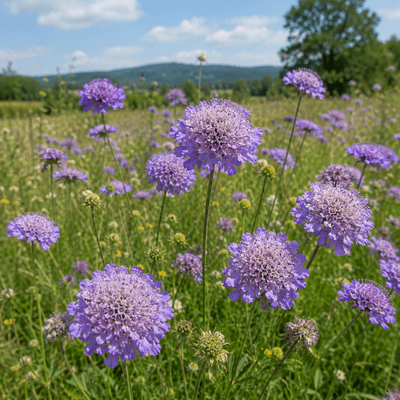
Scabiosa has a soft rounded center that looks like a pincushion. Its delicate flowers often appear in cottage gardens and bouquets.
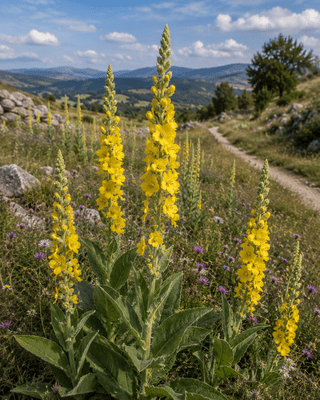
Verbascum has tall flower spikes, often yellow, above large leaves. It works well at the back of informal borders.
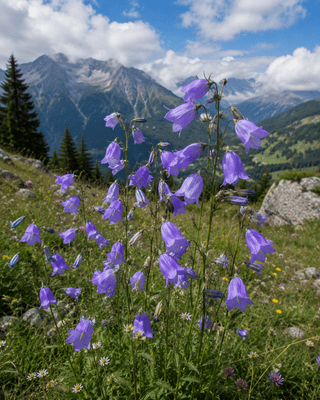
Campanula has bell shaped flowers, usually blue, purple, or white. It can grow along walls, steps, and cottage garden edges.
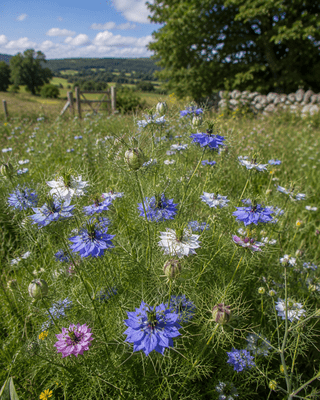
Nigella is also called Love in a Mist. Its delicate petals and fine leaves give it an airy, old garden look.
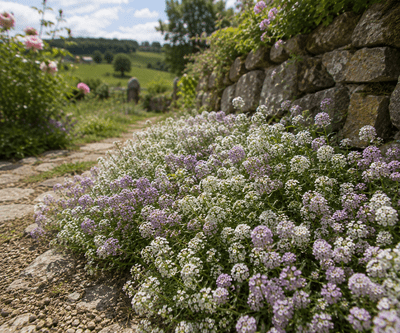
Sweet Alyssum grows low with small scented clusters. It often spills over edges of pots, borders, and paths.
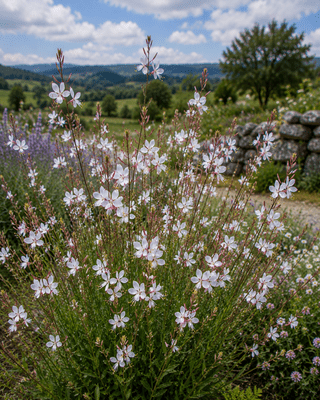
Gaura has light flowers that look like small butterflies. The stems move easily in the wind, giving gardens a soft airy feel.
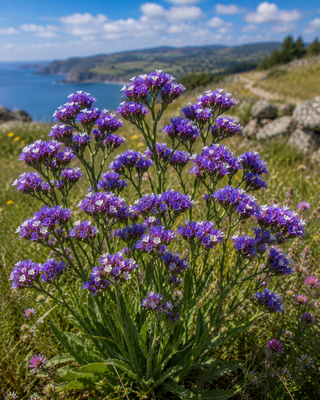
Statice has papery flowers that keep their color after drying. It appears often in dried flower arrangements.
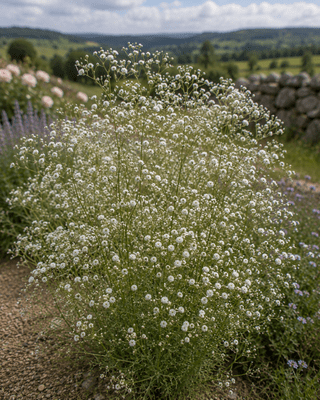
Baby’s Breath has many tiny white flowers on thin stems. Florists use it between larger blooms in bouquets.
Cut Flowers for Bouquets
Cut flowers are types of flowers people choose for vases, wedding arrangements, gift baskets, and table displays. Some are loved for scent, some for color, and some because they last well after cutting.
Rose brings shape, scent, and strong meaning to bouquets. Red Roses suggest love, while pink, white, and yellow Roses create different moods.
Lily gives bouquets height and scent. Its large petals make even a small arrangement look fuller.
Carnation lasts well in vases and comes in many colors. Its ruffled petals work in both formal and casual arrangements.
Chrysanthemum adds a full rounded shape to autumn bouquets. Yellow, white, purple, and orange varieties are especially common.
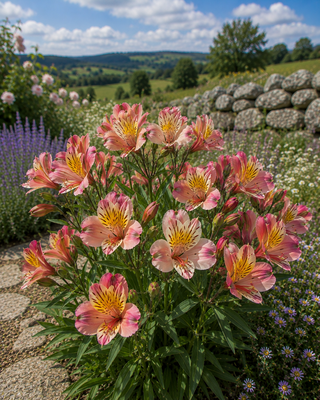
Alstroemeria has long lasting flowers with small markings on the petals. It is often used as a supporting flower in bouquets.
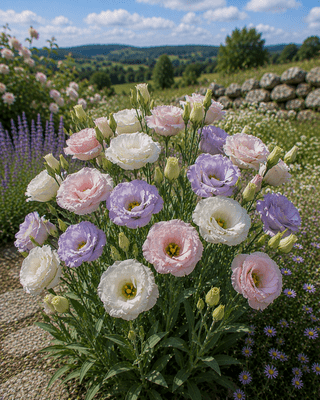
Lisianthus has soft rose like flowers and a delicate look. It works well in wedding bouquets and pastel arrangements.
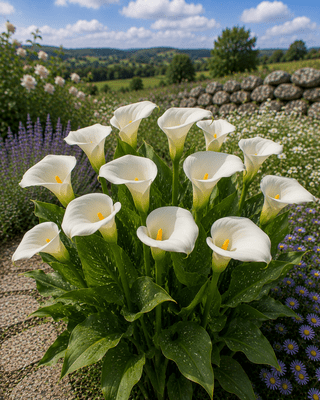
Calla Lily has a smooth trumpet shape and a formal look. White Calla Lilies often appear in elegant wedding flowers.
Gerbera Daisy gives bouquets bold color and a round cheerful shape. It is common in birthday and thank you arrangements.
Freesia adds fragrance and curved stems to bouquets. The scent is one reason it remains popular in small arrangements.
Stock is valued for its scent and tall flower spikes. A few stems can change how a bouquet smells.
Ranunculus has layered petals and a soft rounded shape. It is popular in romantic spring bouquets.
Baby’s Breath fills gaps between larger flowers. Its tiny white blooms make bouquets look lighter and fuller.
Types of Flowers by Color
Types of Flowers by color are helpful when you describe bouquets, wedding flowers, garden designs, home décor, and flower pictures in English. Color based flower vocabulary also works well for image search because readers often look for red, pink, yellow, white, purple, blue, orange, or green flowers.
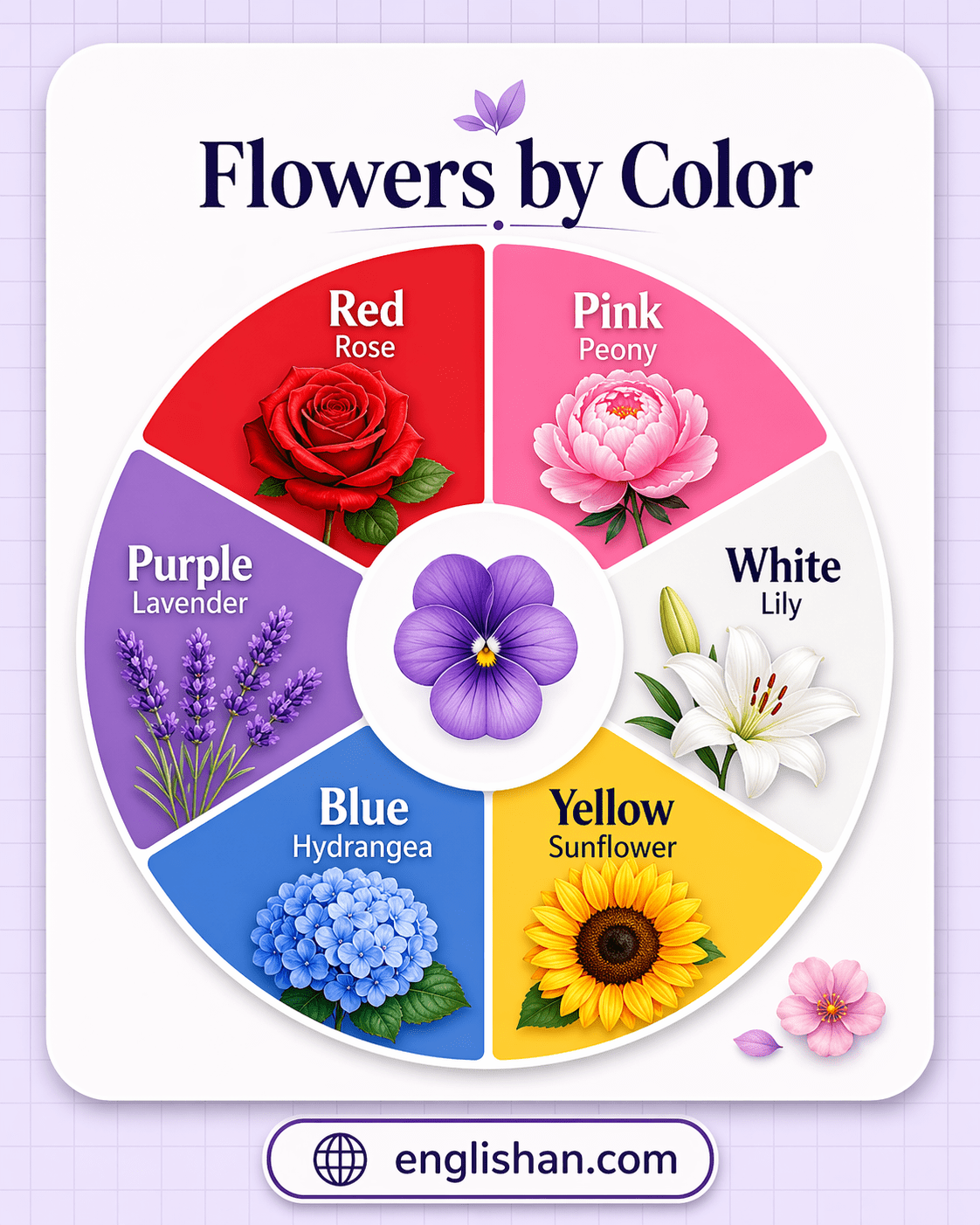
For deeper color lists, you can also learn red flowers in English, pink flowers in English, yellow flowers in English, blue flowers in English, and green flower names with pictures.
Red Flowers
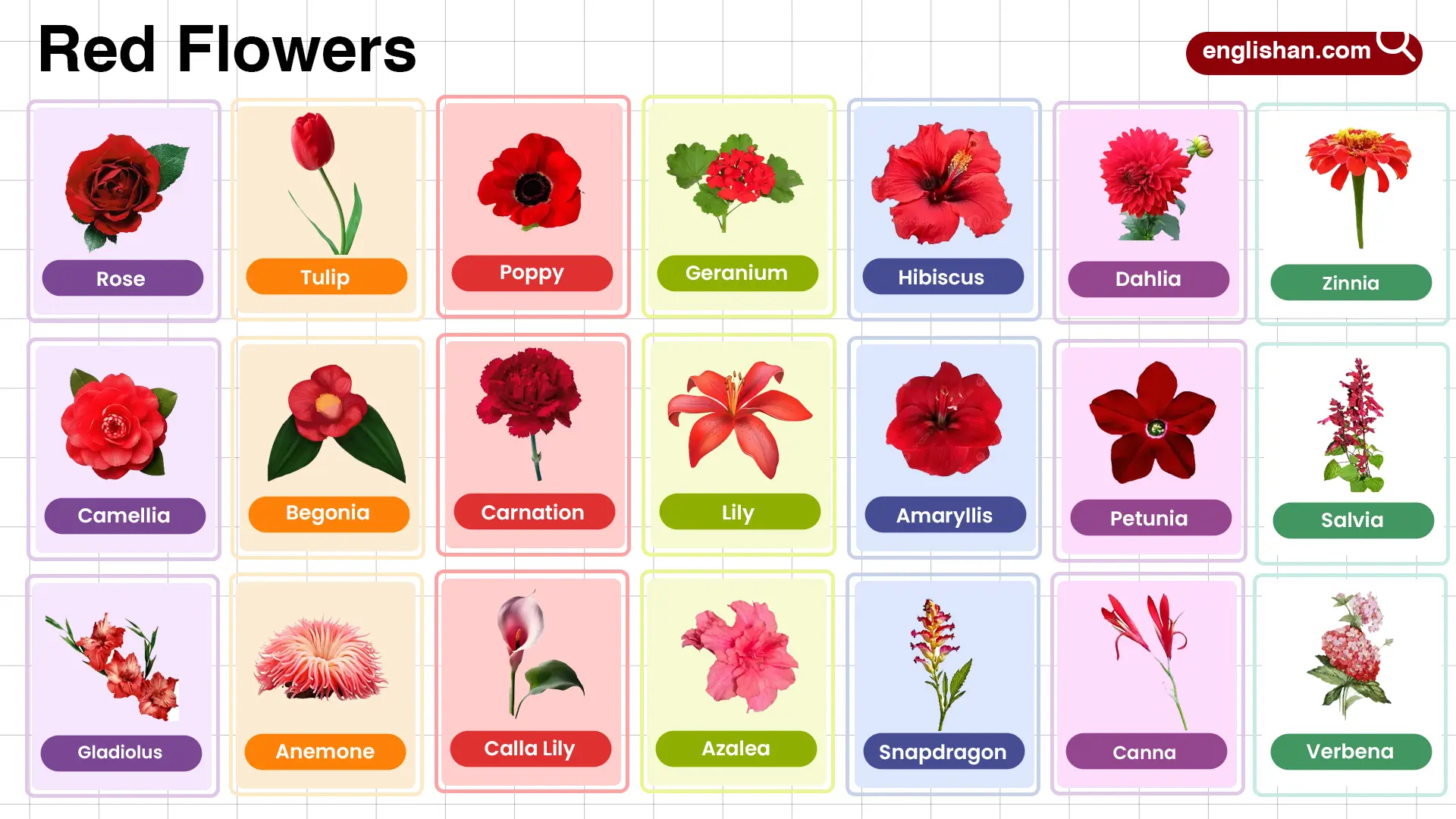
Red flowers often feel bold and romantic. Common red flower names include Rose, Tulip, Poppy, Carnation, Dahlia, Hibiscus, Anthurium, Amaryllis, Geranium, Freesia, Calla Lily, Red Lily, Zinnia, and Camellia.
Pink Flowers
Pink flowers are common in gardens, spring trees, bouquets, and wedding décor. Common pink flower names include Peony, Cherry Blossom, Magnolia, Hydrangea, Azalea, Cosmos, Carnation, Lily, Dahlia, Bougainvillea, Camellia, Begonia, Rose, and Cyclamen.
Yellow Flowers
Yellow flowers bring warm color to gardens and outdoor pictures. Common yellow flower names include Sunflower, Daffodil, Marigold, Buttercup, Yellow Rose, Yellow Tulip, Goldenrod, Forsythia, Daylily, Black-eyed Susan, Coreopsis, Calendula, Allamanda, and Acacia.
White Flowers
White flowers appear often in formal bouquets, peaceful gardens, and wedding arrangements. Common white flower names include Lily, Rose, Daisy, Jasmine, Gardenia, Orchid, Water Lily, Queen Anne’s Lace, Snowdrop, Lily of the Valley, Magnolia, Baby’s Breath, Camellia, and Plumeria.
Purple Flowers
Purple flowers are common in cottage gardens, herb gardens, and spring flower beds. Common purple flower names include Lavender, Violet, Pansy, Wisteria, Lilac, Allium, Iris, Thistle, Heather, Grape Hyacinth, Aster, Verbena, Salvia, and Clematis.
Blue Flowers
Blue flowers are less common than red, yellow, white, or pink flowers, so their names are valuable for picture vocabulary. Common blue flower names include Forget-me-not, Bluebell, Blue Hydrangea, Cornflower, Delphinium, Morning Glory, Blue Iris, Grape Hyacinth, Borage, Lobelia, Chicory, Campanula, and Streptocarpus.
Orange Flowers
Orange flowers bring warm color to gardens, pots, and tropical scenes. Common orange flower names include Marigold, Orange Tulip, Orange Rose, Bird of Paradise, Orange Lily, California Poppy, Orange Dahlia, Canna Lily, Nasturtium, Tiger Lily, Zinnia, Clivia, Calendula, and Hibiscus.
Green Flowers
Green flowers are less common in daily conversation, but they are worth learning for unusual bouquets and plant vocabulary. Common green flower names include Green Rose, Bells of Ireland, Green Orchid, Green Chrysanthemum, Green Hydrangea, Green Zinnia, Green Carnation, Green Hellebore, and Green Cymbidium.
Types of Flowers by Season
Types of Flowers by season show when different flowers bloom. This vocabulary is useful for garden pictures, weather descriptions, wedding planning, and nature lessons. For broader weather vocabulary, you can also learn seasons names in English with pictures.
Spring Flowers
Spring flowers often bloom as the weather warms after winter. Common spring flower names include Daffodil, Tulip, Hyacinth, Crocus, Cherry Blossom, Magnolia, Lilac, Lily of the Valley, Snowdrop, Peony, Forsythia, Iris, Primrose, Bluebell, and Anemone.
Summer Flowers
Summer flowers usually handle stronger sunlight and warmer days. Common summer flower names include Sunflower, Marigold, Zinnia, Dahlia, Petunia, Rose, Lily, Hibiscus, Geranium, Cosmos, Lavender, Hydrangea, Salvia, Coneflower, and Lantana. You can also learn more summer flowers in English with pictures.
Fall Flowers
Fall flowers bloom when the air cools and garden colors shift toward yellow, orange, red, and purple. Common fall flower names include Chrysanthemum, Aster, Goldenrod, Japanese Anemone, Sedum, Dahlia, Sunflower, Autumn Crocus, Marigold, Black-eyed Susan, and Helenium.
Winter Flowers
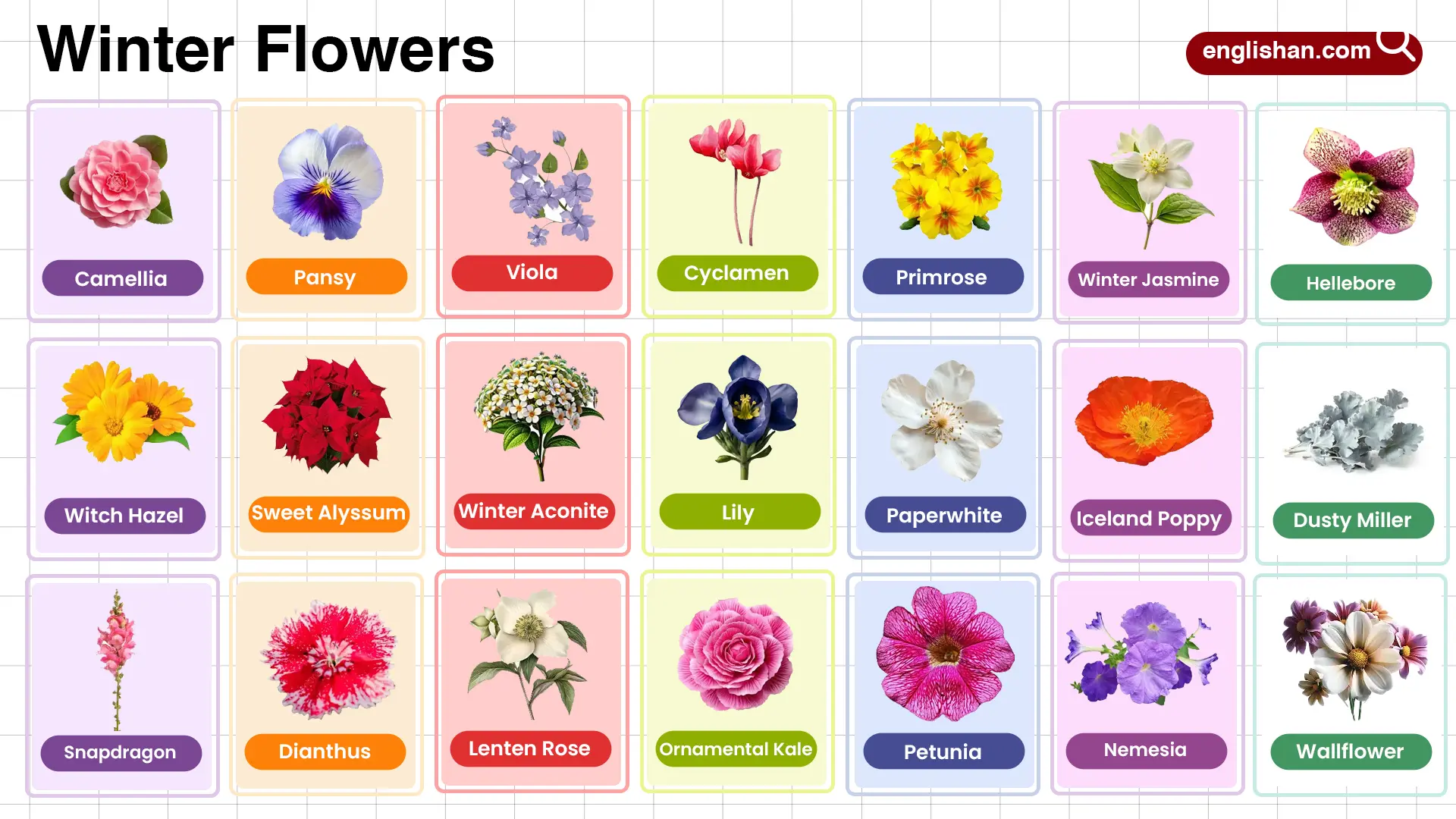
Winter flowers bloom during cold months or mild winter weather. Common winter flower names include Camellia, Pansy, Viola, Cyclamen, Primrose, Snowdrop, Winter Jasmine, Hellebore, Calendula, Witch Hazel, Paperwhite Narcissus, and Heather. You can also learn more winter flowers in English with pictures.
Types of Flowers by Life Cycle
Life cycle names explain how long a flowering plant lives. These terms often appear on seed packets, plant labels, and garden pages.
Annual Flowers grow, bloom, make seeds, and finish their life in one year. Common annual flowers include Petunia, Marigold, Zinnia, Impatiens, Cosmos, Sunflower, Pansy, Begonia, Calendula, and Nasturtium.
Perennial Flowers return for more than one growing season. Common perennial flowers include Peony, Iris, Hydrangea, Rose, Lavender, Daylily, Hosta, Coneflower, Phlox, and Salvia.
Biennial Flowers usually grow leaves in the first year and bloom in the second year. Common biennial flowers include Foxglove, Hollyhock, Sweet William, Forget-me-not, Canterbury Bells, and Wallflower.
Confusing Flower Names in English
Some flower names sound similar, refer to related plants, or look alike in pictures. These short comparisons make the names easier to use correctly.
Lotus vs Water Lily
Lotus flowers usually rise above the water on tall stems, while Water Lilies often rest closer to the water surface with floating leaves. Both are water flowers, but their shape and growth habit look different.
Jasmine vs Star Jasmine
Jasmine is a common fragrant flower name, while Star Jasmine is a climbing plant with small white star shaped flowers. Both are known for scent, but Star Jasmine is often used on fences, arches, and walls.
Daffodil vs Narcissus
Narcissus is the wider flower name, while Daffodil is the common everyday name for many yellow spring types. English learners should start with Daffodil because it appears more often in daily speech.
Lavender vs Lilac
Lavender has narrow purple flower spikes and a herbal scent. Lilac grows on a shrub and has cone shaped clusters of fragrant flowers, so the two names should not be treated as the same flower.
Daisy vs Gerbera Daisy
A Daisy is usually small and white with a yellow center. A Gerbera Daisy is larger, brighter, and often sold as a cut flower in red, pink, orange, yellow, or white.
Cherry Blossom vs Magnolia
Cherry Blossom flowers are small, soft, and usually pink or white. Magnolia flowers are much larger with thick petals and often bloom on bare branches before the leaves open.
Lily vs Lily of the Valley
Lily is a large flower with open petals and a strong scent. Lily of the Valley has tiny white bell shaped flowers on short stems, so the two names should not be used for the same plant.
How to Use Flower Names in Sentences
Flower names sound natural when you connect them with gardens, bouquets, colors, seasons, scent, or place.
- I bought a bouquet of Roses and Lilies.
- The garden has Tulips, Daffodils, and Hyacinths in spring.
- We saw Lotus flowers near the pond.
- The balcony is full of Petunias and Geraniums.
- Lavender and Jasmine are known for their scent.
- Cherry Blossoms covered the street in pink petals.
- The vase had Carnations, Freesias, and Baby’s Breath.
- Yellow Marigolds grew around the front door.
- A Purple Orchid stood on the kitchen windowsill.
- Sunflowers turned toward the afternoon light.
For formal plant names, see this list of flower scientific names with English names.
Printable Types of Flowers Flashcards (Free Download)
FAQs
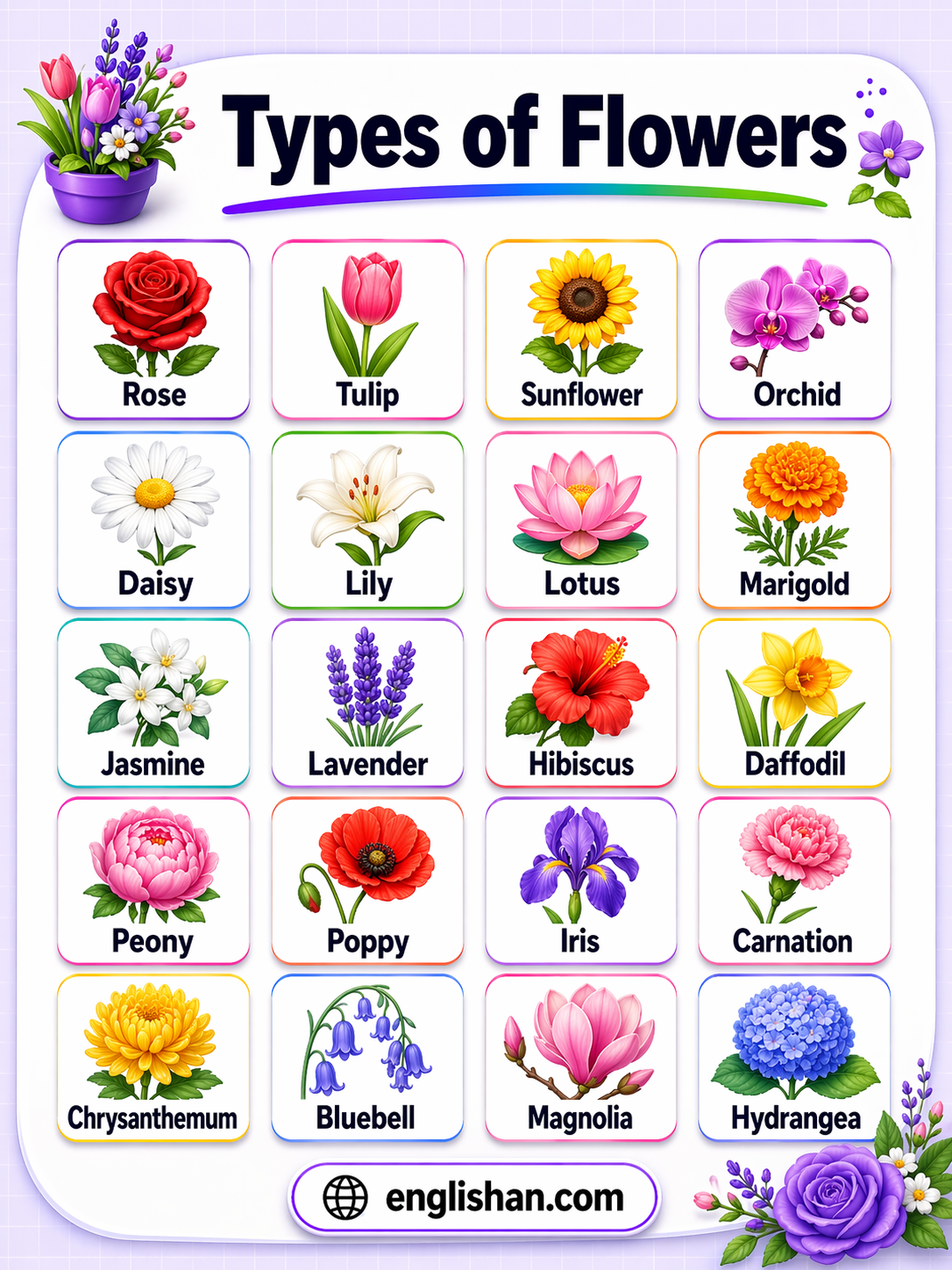
The most common types of flowers include Rose, Tulip, Sunflower, Daisy, Lily, Orchid, Carnation, Daffodil, Marigold, Jasmine, Hibiscus, Lavender, Peony, Poppy, Iris, and Magnolia. These flower names are common in gardens, bouquets, flower shops, school lessons, and picture vocabulary.
The easiest flower names to learn are Rose, Lily, Daisy, Tulip, Lotus, Iris, Poppy, Jasmine, Orchid, Violet, and Sunflower. These names are short, common, and easy to connect with pictures.
The main types of flowers by place include garden flowers, wild flowers, tropical flowers, climbing flowers, water flowers, bulb flowers, shrub flowers, tree flowers, and indoor flowers. These groups explain where flowers grow or where people usually see them.
The main flower color groups are red flowers, pink flowers, yellow flowers, white flowers, purple flowers, blue flowers, orange flowers, and green flowers. Examples include Red Rose, Pink Peony, Yellow Sunflower, White Jasmine, Purple Lavender, Bluebell, Orange Marigold, and Green Orchid.
The main seasonal flower groups are spring flowers, summer flowers, fall flowers, and winter flowers. Tulips and Daffodils are spring flowers, Sunflowers and Zinnias are summer flowers, Chrysanthemums and Asters are fall flowers, and Camellias and Snowdrops are winter flowers.
A flower is the general word for the bloom of a plant. A blossom usually means the flowers on a fruit tree or flowering tree, such as Cherry Blossom, Apple Blossom, or Peach Blossom.
Roses, Lilies, Carnations, Chrysanthemums, Alstroemeria, Lisianthus, Calla Lilies, Gerbera Daisies, Freesias, Ranunculus, and Baby’s Breath are common bouquet flowers. They are used because of their color, shape, scent, or vase life.
Chamomile, Elderflower, Borage, Nasturtium, Calendula, Pansy, Rosemary Flower, Thyme Flower, and Sage Flower are known for tea, cooking, decoration, or traditional use. Always check safety before eating any flower, because not every flower is edible.
The best known water flowers are Lotus, Water Lily, Water Hyacinth, Marsh Marigold, and Pickerelweed. Lotus and Water Lily are the most common names for English learners because they often appear in pictures, ponds, and cultural descriptions.
Commonly confused flower names include Lotus and Water Lily, Jasmine and Star Jasmine, Daffodil and Narcissus, Lavender and Lilac, Daisy and Gerbera Daisy, Cherry Blossom and Magnolia, and Lily and Lily of the Valley.
You May Also Like