Most people can name fennel or fava beans, but vegetables that start with F go well beyond the obvious. This letter holds some genuinely interesting vegetables that don’t always get the attention they deserve.
A few only show up in season, others are kitchen staples you’ve probably cooked without thinking about the letter they start with. They range from crisp and light to rich and slow-cooked.
Whether you’re working through a food list or just curious what belongs under F, every vegetable worth knowing is right here.
List Of Vegetables That Start With F
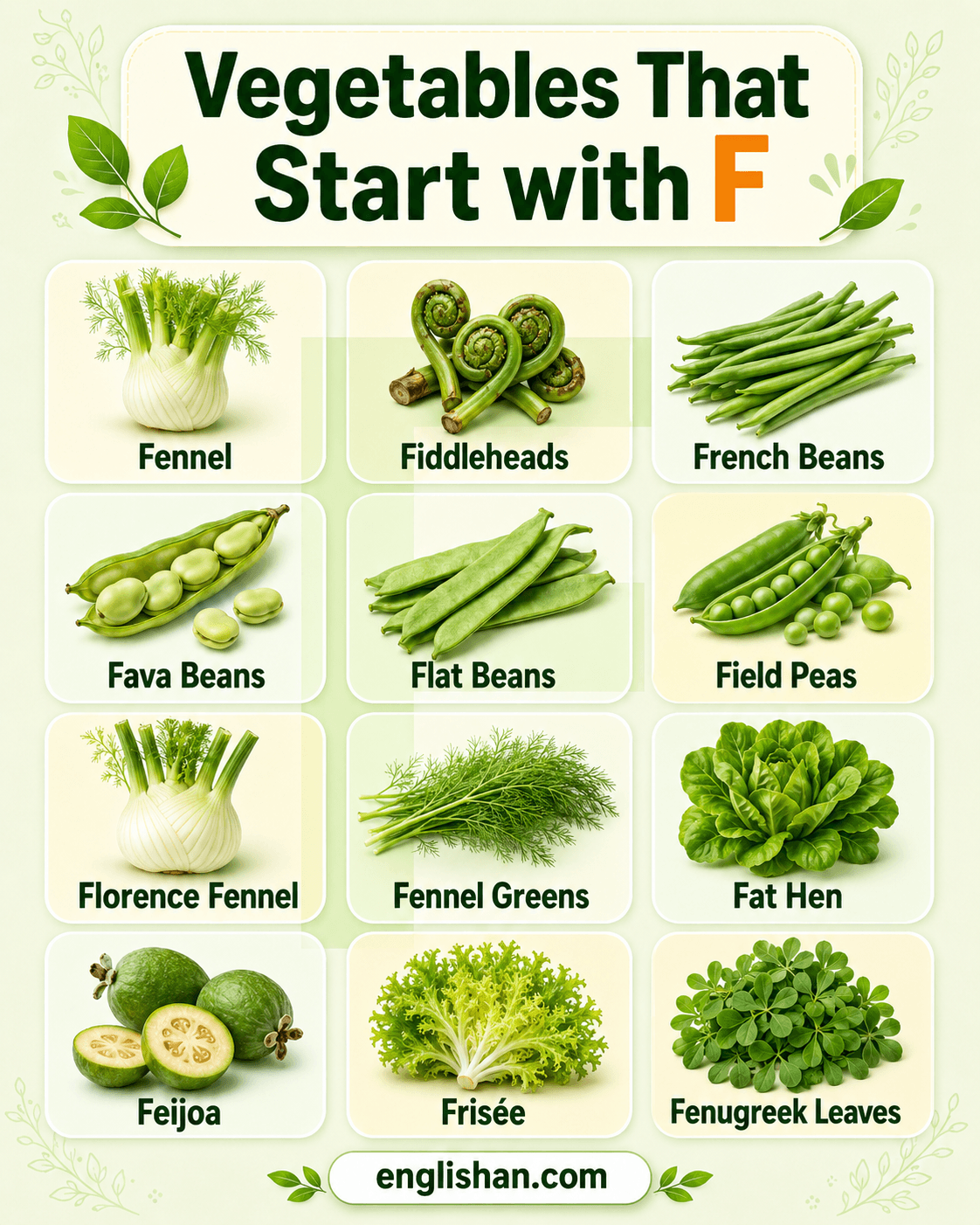
Here are 25 vegetables that start with F, from familiar beans and greens to rarer shoots, roots, squash, and regional vegetables.
- Fairytale Eggplant
- Fat Hen
- Fava Beans
- Fayot Beans
- Fennel
- Fenugreek
- Fiddlehead Ferns
- Field Cucumber
- Fingerling Potato
- Fingerroot
- Fioretto Cauliflower
- Flat Beans
- Flat Cabbage
- Flat Italian Onion
- Flint Corn
- Fluted Pumpkin
- French Beans
- French Breakfast Radish
- French Sorrel
- Friggitello Pepper
- Frisée
- Frilled Mustard Greens
- Fuki
- Futsu Squash
- Fava Greens
The most familiar names are fennel, fava beans, French beans, frisée, fingerling potatoes, fiddlehead ferns, flat beans, and fenugreek leaves. The rarer finds, such as fuki, fluted pumpkin, fat hen, fingerroot, and futsu squash, add the kind of regional character that makes a vegetable list feel genuinely useful.
Vegetables That Start With F With Pictures
The words below focus on what each vegetable looks like, tastes like, and does in the kitchen. Some are everyday produce; others reward a closer look at farmers markets, international grocery stores, and seasonal food traditions.
Fairytale Eggplant
Fairytale eggplant looks almost too pretty for the skillet, with small purple-and-white striped fruits and tender skin. Unlike larger eggplants, it cooks quickly and rarely turns spongy or heavy.
Slice it lengthwise for grilling, roast it whole until soft, or sauté it with olive oil, garlic, tomatoes, herbs, and peppers. Its mild flesh makes it friendly for readers who find regular eggplant too bitter.
Fat Hen
Fat hen, also called lamb’s quarters, is a wild leafy green with soft green leaves and a flavor that lands near spinach with a more mineral, earthy edge. It often appears in fields and gardens as a weed, though cooks have treated it as food for centuries.
Young leaves cook beautifully in sautés, soups, omelets, fritters, and mixed greens. Pick tender growth, wash it well, and treat it like a rustic spinach cousin rather than a delicate salad leaf.
Fava Beans
Fava beans are the broad spring beans that make cooks do a little work before the reward arrives. The large pods hide pale green beans, and mature beans often taste best after the outer skins are removed too.
That extra shelling gives you a buttery, nutty bean with real spring character. Mash them with olive oil and lemon, fold them into risotto, toss them through salads, or simmer them into Mediterranean and Middle Eastern dishes.
Fayot Beans
Fayot beans are small pale beans often associated with French cooking, especially soups, stews, and bean dishes that prize a creamy texture. They are not flashy, but that is part of their charm.
Cooked slowly, they turn soft without losing all shape, which makes them good for cassoulet-style dishes, bean salads, rustic broths, and vegetable stews. They absorb garlic, herbs, stock, and olive oil especially well.
Fennel
Fennel is one of the easiest F vegetables to recognize: a white bulb, pale green stalks, and feathery fronds with a sweet anise scent. Raw fennel tastes crisp and aromatic, while cooked fennel turns mellow, soft, and lightly sweet.
Shave it into citrus salads, roast it until the edges caramelize, or braise it beside fish, chicken, beans, or tomatoes. The fronds can finish dishes like a fresh herb, and the seeds carry an even stronger licorice flavor.
Fenugreek
Fenugreek deserves a place here for its leaves, not only its seeds. Fresh fenugreek leaves, known as methi in Indian cooking, bring a slightly bitter, savory flavor that deepens dals, curries, parathas, and vegetable dishes.
Dried fenugreek leaves, called kasuri methi, smell even more intense and can perfume a whole pot with just a small pinch. It is one of those greens that tastes modest alone but becomes memorable inside a spiced dish.
Fiddlehead Ferns
Fiddlehead ferns look like tiny green scrolls, curled tightly before the fern frond opens. Their short spring season gives them a special reputation, especially among cooks who wait for seasonal produce.
The flavor sits between asparagus, green beans, and artichoke, with a grassy bite and firm texture. Cook them properly before eating, then sauté with butter and garlic, add to pasta, or serve beside eggs and fish.
Field Cucumber
Field cucumber is the sturdy, everyday cucumber many shoppers recognize from summer markets. It usually has thicker skin and more noticeable seeds than the long English cucumber, but the flesh stays crisp and refreshing.
Peel it partly for salads, slice it into sandwiches, cut it into spears, or turn it into pickles. A sprinkle of salt draws out extra water and sharpens its clean, cooling flavor.
Fingerling Potato
Fingerling potatoes are small, narrow potatoes shaped like fingers, with thin skins and a waxy bite. They may be yellow, red, purple, or golden, and many varieties taste naturally buttery.
Roast them whole so the skins wrinkle and the edges crisp, then finish with salt, herbs, garlic, or vinegar. They also hold their shape beautifully in potato salads and warm vegetable plates.
Fingerroot
Fingerroot looks exactly like its name suggests, with long finger-like rhizomes branching from a central piece. It is aromatic rather than starchy, with a warm, slightly peppery flavor used across Southeast Asian cooking.
Thai and Indonesian dishes value fingerroot in curry pastes, soups, fish dishes, and stir-fries. Think of it as a fragrant rhizome in the same broad kitchen family as ginger and galangal, though its flavor has its own sharper lift.
Fioretto Cauliflower
Fioretto cauliflower, also called flowering cauliflower or cauliflower sticks, looks like cauliflower that stretched itself into long pale stems with tiny florets at the tips. It feels lighter and more elegant than a dense cauliflower head.
Roast it until the tips brown, stir-fry it quickly, steam it for a tender-crisp side, or serve it raw with dips. The stems are part of the pleasure, not a throwaway piece.
Flat Beans
Flat beans are broad green beans with wide pods and a meatier texture than thin French beans. Many cooks know them as Romano beans, especially in Italian-style cooking.
They can handle longer cooking without turning dull, which makes them excellent in tomato sauces, braises, stews, and garlicky vegetable dishes. Cook them until tender, not barely squeaky, and their sweetness comes forward.
Flat Cabbage
Flat cabbage has a flattened head and broad leaves that feel softer and more flexible than many round cabbages. The flavor is mild, lightly sweet, and friendly to quick cooking.
Use it for slaws, stir-fries, cabbage rolls, soups, and quick sautés. The wide leaves are especially good for wrapping fillings because they fold more readily than thick, tight cabbage leaves.
Flat Italian Onion
Flat Italian onion has a squat, broad shape that makes it easy to slice into wide rounds. Many varieties are sweet or mild enough to work raw, though heat brings out even more softness.
Roast whole halves until caramelized, tuck slices into sandwiches, scatter them over focaccia, or cook them slowly with olive oil for a sweet onion base. Their shape makes them especially good for grilling.
Flint Corn
Flint corn is not the juicy sweet corn you bite straight from the cob. Its kernels are hard, glossy, and often colorful, built more for drying than for fresh eating.
Once dried, flint corn can be ground into cornmeal, popped, or used in traditional dishes that value firm, starchy corn. It earns its place in a vegetable list through culinary use, even though it behaves more like a grain in many kitchens.
Fluted Pumpkin
Fluted pumpkin is a major West African vegetable, especially valued for its leaves. The plant also produces large ribbed fruits and edible seeds, but the dark green leaves are the part most often cooked into soups and stews.
In Nigerian cooking, the leaves are often known as ugu. They bring body, color, and a deep green flavor to rich dishes, especially when paired with palm oil, melon seeds, fish, meat, or peppers.
French Beans
French beans are the slender green beans that cook fast and look elegant on the plate. They are thinner than many standard green beans, with a tender pod and clean grassy flavor.
Blanch them for salads, steam them for a polished side, or sauté them with butter, garlic, almonds, lemon, or herbs. Their best texture is tender but still lively, not limp.
French Breakfast Radish
French breakfast radish is a small red-and-white radish with a slender shape and crisp peppery bite. It looks delicate, but the flavor still has that classic radish snap.
Eat it raw with butter and salt, slice it into salads, layer it over tartines, or quick-pickle it for sandwiches and grain bowls. The leaves are edible too when fresh and tender.
French Sorrel
French sorrel is a leafy green with a bright lemony tang, the kind of sourness that wakes up rich food without shouting. The leaves are tender, smooth, and more refined than many wild sorrels.
Use it in soups, sauces, omelets, salads, and fish dishes. Heat softens the leaves quickly, so add them with care when the goal is fresh acidity rather than a fully cooked green.
Friggitello Pepper
Friggitello pepper is a mild Italian frying pepper, usually slender, green, and sweet rather than hot. It has enough character to stand alone but stays gentle enough for people who avoid fiery chilies.
Fry or roast it until blistered, tuck it into sandwiches, serve it as antipasti, or stuff it with cheese, grains, or herbs. The name comes from Italian cooking, where these peppers often meet hot oil and salt.
Frisée
Frisée is the curly, frilly member of the endive family, with pale leaves and a pleasant bitter edge. It looks delicate, but the flavor has enough backbone to handle strong dressings.
A classic pairing is frisée with warm vinaigrette, bacon or lardons, and a poached egg. The bitterness cuts through richness, which is why this green feels so at home in French bistro salads.
Frilled Mustard Greens
Frilled mustard greens bring drama before they even hit the pan, with curly leaves and a peppery bite. Raw leaves can taste sharp, especially when mature.
Cooking softens the heat and turns the greens richer and more rounded. Add them to stir-fries, soups, braises, noodle bowls, or bean dishes when the plate needs a bold leafy vegetable.
Fuki
Fuki, or Japanese butterbur, is known for its long green stalks and pleasantly bitter flavor. It is a traditional spring vegetable in Japanese cooking, often simmered in seasoned broth.
This is not a vegetable to treat casually straight from the plant. Fuki is usually prepared before cooking to reduce harshness, then used in simmered dishes, pickles, and mountain vegetable preparations.
Futsu Squash
Futsu squash is a Japanese heirloom squash with ribbed skin that changes color as it matures, moving from dark green toward warm brown or orange tones. It looks rustic, but the flavor is refined and nutty.
Roast it in wedges, simmer it in broth, blend it into soup, or cook it with miso, soy sauce, ginger, and sesame. When cooked well, the skin can become tender enough to eat.
Fava Greens
Fava greens are the tender leaves and shoots of the fava bean plant, and they taste like a softer, greener echo of the beans. They are less common than fava beans, which makes them a nice farmers market find.
Use young shoots in salads, or wilt them quickly with olive oil, garlic, lemon, and salt. They cook fast, so treat them more like delicate greens than sturdy kale.
Common Types Of F-Named Vegetables
After the full list, the variety becomes easier to appreciate. F vegetables are not one narrow family; they move from spring beans to bitter greens, aromatic bulbs, starchy roots, tender pods, squash, and edible shoots.
- Beans and legumes: Fava beans, fayot beans, French beans, flat beans, and fava greens bring protein, texture, and garden flavor.
- Leaves and greens: Fat hen, fenugreek leaves, French sorrel, frisée, frilled mustard greens, fuki, and fava greens bring earthy, bitter, sour, peppery, and spring-like notes.
- Roots, rhizomes, and tubers: Fingerling potatoes and fingerroot add starch, shape, and fragrance in very different ways.
- Bulbs and onions: Fennel and flat Italian onion bring crispness, sweetness, aroma, and strong roasting potential.
- Fruits used as vegetables: Fairytale eggplant, field cucumber, friggitello pepper, fluted pumpkin, and futsu squash belong here through savory cooking.
- Flowering vegetables: Fioretto cauliflower gives the list tender stems, small florets, and a fresh cauliflower flavor.
- Corn and grains: Flint corn sits closer to dried cornmeal and popping corn than sweet corn, but it remains an important edible plant in the F list.
Frequently Asked Questions About Vegetables That Start With F
Q1. What Are The Most Common Vegetables That Start With F?
The most common vegetables that start with F are fennel, fava beans, French beans, flat beans, frisée, fingerling potatoes, fiddlehead ferns, and fenugreek leaves. Availability changes by region, but these names appear most often in produce markets, recipes, and vegetable lists.
Q2. Is Fennel A Vegetable?
Yes. Fennel is a vegetable when the white bulb is eaten raw, roasted, braised, or sliced into salads. The fronds behave more like an herb, while fennel seeds are used as a spice.
Q3. What Green Vegetables Start With F?
Green vegetables that start with F are fava beans, French beans, flat beans, fat hen, fenugreek leaves, fiddlehead ferns, French sorrel, frisée, frilled mustard greens, fava greens, and fuki.
Q4. What Leafy Vegetables Start With F?
Leafy vegetables that start with F are fat hen, fenugreek leaves, French sorrel, frisée, frilled mustard greens, fava greens, and fuki. Their flavors range from earthy and bitter to sour, peppery, and delicately green.
Q5. What Beans Start With F?
Beans that start with F are fava beans, fayot beans, French beans, and flat beans. Fava greens also come from the fava bean plant, though they are eaten as leafy shoots rather than mature beans.
Q6. What Rare Vegetables Start With F?
Rare vegetables that start with F include fuki, fluted pumpkin, fat hen, fingerroot, futsu squash, fioretto cauliflower, and fava greens. Some are common in specific regional cuisines but uncommon in mainstream grocery stores.
Q7. Are Fiddlehead Ferns Safe To Eat?
Fiddlehead ferns are eaten as a spring vegetable, but they should be cleaned and cooked properly before serving. Raw or undercooked fiddleheads are not treated like ordinary salad greens.
Q8. Are Frisée And Lettuce The Same?
Frisée is not regular lettuce. It is a curly form of endive with frilly pale leaves and a more bitter flavor, which is why it pairs so well with warm vinaigrettes, eggs, bacon, and rich dressings.
Q9. What Indian Vegetables Start With F?
Fenugreek leaves are the strongest Indian vegetable starting with F. They are known as methi and appear in dals, parathas, curries, and vegetable dishes. Dried fenugreek leaves, called kasuri methi, bring a concentrated aroma to rich dishes.
Q10. What Vegetable Starting With F Has A Licorice Flavor?
Fennel has the clearest licorice-like flavor among vegetables that start with F. The bulb tastes crisp and lightly sweet when raw, then becomes softer and milder when roasted or braised.
You May Also Like
Vegetables That Start With F Quiz
Vegetables That Start With F
Which of these vegetables begins with the letter F?
A swollen leaf base with a clear aniseed flavour that softens on cooking.
Read the first letter before anything else.
Fennel begins with F.
Name a vegetable beginning with this letter.
A vegetable whose name begins with F is ___.
Accepted here: Fennel, Fiddlehead.
More than one answer is right; any vegetable starting with the letter counts.
Fennel begins with F.
Which vegetable does this describe? The coiled tip of a young fern, which must be cooked before eating.
The coiled tip of a young fern, which must be cooked before eating.
Match the description to the fruit rather than to the letter.
The coiled tip of a young fern, which must be cooked before eating.
Which of these is a bulb?
Fennel is a bulb. A swollen leaf base with a clear aniseed flavour that softens on cooking.
Group by what the thing actually is, not by where it turns up.
Fennel is a bulb.
Two of these vegetables begin with F. Which one does not?
Courgette begins with C, so it is the one that does not belong.
Check each first letter before reading further.
Courgette is the odd one out.
Turn on JavaScript for the interactive quiz. The full practice set is shown above.