Most people reach for garlic and green beans without a second thought, but vegetables that start with G go well past the everyday basics. This letter has a quiet deep bench that most home cooks never get around to exploring.
Ginger brings sharp heat to soups and stir-fries, gourds swing from mild to sweet depending on the variety, and gem lettuce stays crisp enough to work as a wrap. A few of these barely show up outside farmers’ markets.
Whether you’re sorting out a food list, looking for something new to cook, or just curious what fits under G, every vegetable worth knowing is right here.
Quick List Of Vegetables That Start With G
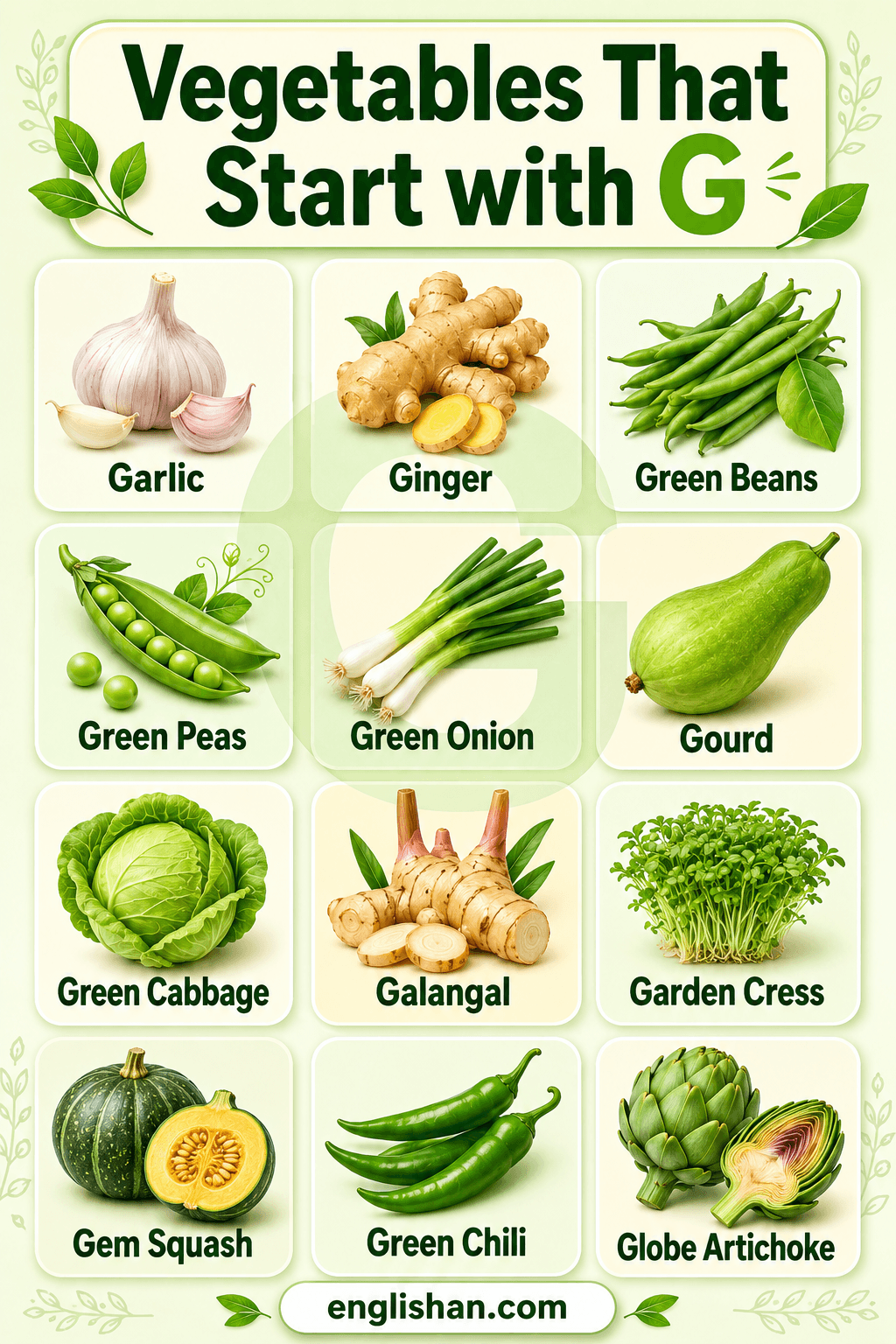
Here are 33 vegetables that start with G, ranging from common alliums and leafy greens to roots, squashes, legumes, sea vegetables, and regional specialties.
- Gai lan
- Galangal
- Garbanzo beans
- Garden cress
- Garden peas
- Garden rocket
- Garlic
- Garlic chives
- Garlic scapes
- Gem squash
- German Butterball potato
- Gherkin
- Gigante beans
- Ginger
- Glasswort
- Globe artichoke
- Gobo
- Gold Rush squash
- Golden samphire
- Gongura
- Good King Henry
- Grape leaves
- Great Northern beans
- Green amaranth
- Green beans
- Green cabbage
- Green chili
- Green onion
- Green pepper
- Green soybeans
- Green tomato
- Green zucchini
- Guar
The most familiar G vegetables are garlic, ginger, green beans, green cabbage, green onion, green pepper, garden peas, and globe artichoke. The more unusual picks, such as glasswort, gongura, gobo, guar, and Good King Henry, add regional flavor and make the list more than a repeat of supermarket basics.
Vegetables That Start With G With Pictures
The entries below give you the name, appearance, flavor, and normal kitchen role of each G-named vegetable, with enough detail to recognize the ingredient and understand why cooks use it.
Gai Lan
Gai lan, often called Chinese broccoli, has thick green stems, dark leaves, and small flower buds. The flavor sits close to broccoli raab, with a mild bitterness that tastes excellent against garlic, oyster sauce, ginger, or soy.
Cooks usually blanch, steam, or stir-fry it, keeping the stems tender but still firm. A good bunch should look deep green, with crisp stems and leaves that have not gone limp.
Galangal
Galangal looks a little like ginger, but the two do not taste the same. Galangal is firmer, woodier, sharper, and more citrusy, with a peppery lift that gives Thai and Indonesian dishes their unmistakable fragrance.
Slice it thin for soups, pound it into curry pastes, or simmer it with coconut milk, lemongrass, and chili. It is usually removed before eating when the pieces are large, because the texture stays tough.
Garbanzo Beans
Garbanzo beans, better known as chickpeas, are round beige legumes with a nutty flavor and a firm, creamy bite. They belong in hummus, chana masala, soups, salads, stews, roasted snacks, and grain bowls.
Their strength is versatility. Mash them smooth, roast them crisp, simmer them into curries, or toss them through a lemony salad with herbs and olive oil.
Garden Cress
Garden cress is tiny, but the flavor is not shy. The delicate leaves taste peppery, sharp, and fresh, almost like a miniature version of watercress.
Sprinkle it over egg sandwiches, soups, salads, potatoes, and cream cheese toast. Garden cress grows quickly, which is one reason it often appears in home growing kits and kitchen windowsills.
Garden Peas
Garden peas are sweet green seeds tucked inside soft pods, and fresh ones taste brighter than most frozen versions. Their sweetness works beautifully with mint, butter, lemon, rice, pasta, potatoes, and spring herbs.
They cook fast, so long boiling ruins their color and snap. A short simmer or quick steam keeps them green, tender, and naturally sweet.
Garden Rocket
Garden rocket is another name for arugula, the peppery salad leaf that brings bite to mild dishes. The leaves are slim, green, and often deeply lobed, with a flavor that turns sharper as the plant matures.
Use it raw with lemon and olive oil, scatter it over pizza, or fold it through pasta right at the end. Young rocket tastes gentler, while older leaves carry more heat and bitterness.
Garlic
Garlic is the bulb that gives countless dishes their backbone. Raw cloves taste hot and sharp, sautéed garlic turns mellow and savory, and roasted garlic becomes sweet, soft, and almost spreadable.
Crush it for intensity, slice it for a cleaner bite, or roast the whole head until the cloves squeeze out like butter. Few vegetables shift character so dramatically with heat.
Garlic Chives
Garlic chives look flatter than regular chives and carry a gentle garlic flavor without the punch of raw cloves. They are especially good when a dish needs allium flavor but not the heaviness of chopped garlic.
Use them in dumplings, pancakes, eggs, stir-fries, noodle bowls, and herb sauces. The flowers are edible too, with a soft onion-garlic taste.
Garlic Scapes
Garlic scapes are the curling green shoots that grow from hardneck garlic plants. They taste like young garlic with a grassy edge, milder than cloves but still aromatic enough to shape a dish.
Farmers’ markets often carry them for a short stretch in late spring or early summer. Chop them into stir-fries, blend them into pesto, grill them whole, or fold them into scrambled eggs.
Gem Squash
Gem squash is a small round squash with dark green skin and tender yellow flesh. It is especially familiar in South African cooking, where it is often steamed or baked until soft.
Cut it in half, scoop the seeds, and add butter, salt, pepper, or a little cheese. The flavor is mild and slightly sweet, which makes it an easy side dish for roast meats, beans, or stews.
German Butterball Potato
German Butterball potato earns its name honestly. The yellow flesh has a naturally buttery texture, making it excellent for roasting, mashing, baking, and gratins.
It is a potato variety rather than a separate vegetable family, but it belongs here as a G-named cultivar. For cooks, the important part is simple: it gives rich texture without needing much dressing up.
Gherkin
Gherkins are small cucumbers picked young, usually before they grow into full-sized slicing cucumbers. Their size makes them ideal for pickling, because they stay crisp and absorb brine quickly.
You know them from burgers, sandwiches, relish, charcuterie boards, and sharp vinegar pickles. Fresh gherkins taste mild and cucumber-like, while pickled ones bring salt, tang, crunch, and dill fragrance.
Gigante Beans
Gigante beans are large white beans with a creamy center and a satisfying bite. Greek cooking often bakes them with tomato, olive oil, garlic, herbs, and a slow oven until the sauce thickens around them.
They feel more substantial than smaller beans, which makes them strong enough for a main dish. Serve them warm with bread, or cool them into a hearty salad.
Ginger
Ginger is a rhizome with heat, citrus, warmth, and a little bite. Fresh ginger tastes bright and juicy, while dried ginger turns warmer, deeper, and more concentrated.
Grate it into stir-fries, soups, curries, marinades, tea, pickles, and sauces. Want a cleaner flavor? Peel only the tough skin and grate across the fibers for a finer texture.
Glasswort
Glasswort is a crisp coastal vegetable with salty green stems and a sea-sprayed flavor. In many markets, similar edible stems are sold as samphire, though naming varies by region and plant type.
Treat it like a natural seasoning as much as a vegetable. A quick blanch or sauté with butter, lemon, or olive oil is enough, because the stems already carry their own salt.
Globe Artichoke
Globe artichoke is the unopened bud of a thistle, which explains its tough leaves and hidden tender heart. It looks guarded for a reason, but the reward sits at the center.
Steam, boil, grill, or braise it with lemon, garlic, butter, olive oil, or herbs. Choose heavy artichokes with tight leaves, because loose, dry leaves usually mean the bud is past its best.
Gobo
Gobo is the Japanese name for burdock root, a long brown root with an earthy flavor and a firm bite. It looks rough and humble, but it turns deeply savory when sliced thin and cooked properly.
The classic dish is kinpira gobo, where the root is cut into fine strips and cooked with soy sauce, sugar, sesame oil, and chili. The texture stays pleasantly chewy rather than soft.
Gold Rush Squash
Gold Rush squash is a golden-yellow summer squash, often known as a yellow zucchini type. It has tender skin, pale flesh, and a mild flavor that takes well to fast cooking.
Slice it for sautés, grill it in long strips, grate it into fritters, or add it to pasta and vegetable bakes. Pick smaller squash for the best texture, because oversized ones can turn watery and seedy.
Golden Samphire
Golden samphire is a coastal plant with fleshy leaves and a naturally salty, herbal taste. It is not the same plant as marsh samphire, but both belong to the world of seaside vegetables.
Use it sparingly with fish, potatoes, eggs, or salads, where its salty brightness feels intentional rather than overwhelming. The texture is tenderer than glasswort, with a more herbal edge.
Gongura
Gongura is a sour leafy green famous in Andhra cooking, and its tang is the reason people love it. The leaves bring a sharp, almost sorrel-like bite that wakes up rice, dal, chutney, and meat dishes.
Gongura pachadi, a bold chutney made from the leaves, is one of its best-known uses. Rich foods handle gongura well because the sourness cuts through oil, spice, and heaviness.
Good King Henry
Good King Henry sounds like a character from folklore, but it is an old European leafy vegetable. The young shoots were once eaten like asparagus, while the leaves were cooked like spinach.
It is uncommon in modern supermarkets, though gardeners and heritage-vegetable fans still value it. The flavor is earthy and green, with a slightly wild character compared with ordinary spinach.
Grape Leaves
Grape leaves are edible vine leaves, best known for wrapping rice, herbs, spices, and sometimes meat. Stuffed grape leaves, often called dolma or dolmades, appear across Mediterranean and Middle Eastern cooking.
The leaves taste tangy, green, and slightly earthy after brining or cooking. Young tender leaves are best, because older leaves can become tough and fibrous.
Great Northern Beans
Great Northern beans are medium-sized white beans with a mild flavor and creamy texture. They absorb broth, herbs, garlic, tomato, and smoked flavors without falling apart too quickly.
Use them in soups, casseroles, stews, bean salads, and slow-cooked dishes. They are especially good when a recipe needs a white bean that stays gentle and dependable.
Green Amaranth
Green amaranth is a leafy vegetable with tender leaves and an earthy flavor close to spinach. It cooks quickly, which makes it valuable for weeknight dals, stir-fries, soups, and simple greens.
The leaves shrink as they cook, so a large bunch becomes a modest serving in the pan. Garlic, chili, coconut, lentils, and sesame all suit it well.
Green Beans
Green beans are crisp edible pods picked before the seeds inside mature. Their snap is part of their charm, so overcooking them into dull softness misses the point.
Blanch them for salads, steam them for quick sides, stir-fry them with garlic, or bake them into casseroles. A good green bean should feel firm, bright, and easy to snap.
Green Cabbage
Green cabbage is the sturdy vegetable that keeps earning its place because it can do so much. The tight pale-green head shreds into slaw, softens in soups, browns in stir-fries, and ferments into sauerkraut.
Raw cabbage tastes crisp and peppery, while slow cooking turns it sweet and mellow. It is humble, affordable, and far more flexible than it first appears.
Green Chili
Green chili brings fresh heat before it brings sweetness. These unripe chilies vary widely, from mild and grassy to sharp enough to make a dish roar.
Use them in curries, salsas, chutneys, pickles, sauces, stir-fries, and marinades. The seeds and inner ribs often carry much of the heat, so trim them for a gentler flavor.
Green Onion
Green onion, also called scallion or spring onion, gives you two flavors in one. The white base tastes sharper, while the green tops taste fresher and milder.
Slice them over noodles, eggs, soups, dumplings, fried rice, tacos, baked potatoes, and salads. They add allium flavor without the weight of a full onion.
Green Pepper
Green pepper is an unripe bell pepper with crisp flesh and a grassy, slightly bitter flavor. It tastes sharper than red, yellow, or orange peppers because it is harvested earlier.
Use it in fajitas, stir-fries, stuffed peppers, salads, pizza, omelets, and relishes. Its firm texture holds well under heat, which makes it practical for fast cooking.
Green Soybeans
Green soybeans are young soybeans harvested before they dry. Many people know them as edamame, especially when the pods are steamed and sprinkled with salt.
Pop the beans from the pod and eat them warm, or add shelled beans to rice bowls, salads, noodles, soups, and stir-fries. They bring a mild nutty flavor and a satisfying bite.
Green Tomato
Green tomato is an unripe tomato with firm flesh and a bright tart flavor. It behaves differently from a ripe red tomato, because it holds shape better and tastes sharper.
Fried green tomatoes are the famous use, but green tomatoes also work in chutneys, pickles, relishes, salsas, and savory bakes. Their acidity is the main attraction.
Green Zucchini
Green zucchini is the summer squash that disappears into almost any dish. The skin is tender, the flesh is mild, and the flavor stays quiet enough to take on garlic, herbs, cheese, tomato, lemon, or chili.
Sauté it, grill it, roast it, spiralize it, bake it into bread, or grate it into fritters. Smaller zucchini usually taste better than oversized ones, which can become watery and seedy.
Guar
Guar, also called cluster beans, has slender green pods with a slightly bitter flavor and a firm bite. Indian kitchens often cook it as gawar or guar sabzi with spices, onions, tomatoes, and sometimes potatoes.
The plant is also known for guar gum, a thickening ingredient made from its seeds. On the plate, though, the young pods are the vegetable worth knowing.
Common Types Of G-Named Vegetables
After you scan the full list, one pattern becomes obvious: vegetables that start with G are not all the same kind of produce. They come from different plant parts, which explains why their textures, flavors, and cooking uses vary so much.
- Bulbs and alliums: Garlic, garlic chives, garlic scapes, and green onion bring sharp, savory, aromatic flavor to cooked and raw dishes.
- Roots and rhizomes: Galangal, ginger, and gobo give dishes heat, perfume, earthiness, and firm texture.
- Leaves and greens: Gai lan, garden cress, garden rocket, gongura, green amaranth, Good King Henry, and grape leaves bring bitterness, tang, pepperiness, or tender green body.
- Pods and legumes: Garbanzo beans, garden peas, gigante beans, Great Northern beans, green beans, green soybeans, and guar add snap, starch, protein, or creamy texture.
- Squashes and immature fruits: Gem squash, gherkin, Gold Rush squash, green pepper, green tomato, and green zucchini are treated as vegetables because of their savory kitchen role.
- Coastal vegetables: Glasswort and golden samphire carry natural salt and pair well with fish, potatoes, eggs, and simple dressings.
- Flower buds: Globe artichoke is the standout flower bud, with tough outer leaves and a prized tender heart.
Frequently Asked Questions About Vegetables That Start With G
Q1. What Are Common Vegetables That Start With G?
Common vegetables that start with G are garlic, ginger, green beans, green cabbage, green onion, green pepper, garden peas, green zucchini, and globe artichoke. These are the G vegetables most readers are likely to know from regular cooking.
Q2. What Green Vegetables Start With G?
Green vegetables that start with G are green beans, green cabbage, green onion, green pepper, green tomato, green zucchini, green amaranth, green soybeans, garden peas, gai lan, garden cress, garden rocket, and gongura.
Q3. What Root Vegetables Start With G?
The main root or rhizome vegetables that start with G are galangal, ginger, and gobo. Galangal and ginger are rhizomes with strong aromatic flavor, while gobo is burdock root with an earthy taste and firm bite.
Q4. What Leafy Vegetables Start With G?
Leafy vegetables that start with G are gai lan, garden cress, garden rocket, gongura, green amaranth, Good King Henry, and grape leaves. Some are eaten raw, while others taste better cooked, stuffed, sautéed, or simmered.
Q5. Is Garlic A Vegetable?
Garlic is a bulb vegetable from the allium family, although most cooks use it as a seasoning rather than a main vegetable. Its flavor changes dramatically with preparation, from raw and sharp to roasted and sweet.
Q6. Is Ginger A Vegetable?
Fresh ginger is a rhizome, and in cooking it sits between vegetable and spice. It is usually used for its aroma and heat, but it comes from an edible underground plant stem rather than a fruit or seed.
Q7. Are Garbanzo Beans Vegetables?
Garbanzo beans, also called chickpeas, are legumes. They still belong in culinary vegetable lists because they are edible plant seeds used in savory dishes such as hummus, curries, soups, stews, and salads.
Q8. What Is The Rarest Vegetable That Starts With G?
Good King Henry, glasswort, golden samphire, gongura, gobo, guar, and garlic scapes may be rare depending on where you shop. Some are common in their home cuisines but unusual in mainstream supermarkets.
Q9. What Indian Vegetables Start With G?
Indian vegetables that start with G include ginger, garlic, green chili, gongura, guar, green beans, green peas, green amaranth, and green cabbage. Guar is widely cooked as cluster beans, while gongura is famous for its sour leaves.
Q10. What Asian Vegetables Start With G?
Asian vegetables that start with G include gai lan, galangal, ginger, garlic chives, green onion, gobo, green soybeans, gongura, and green amaranth. They appear in stir-fries, soups, curries, pickles, chutneys, rice bowls, and noodle dishes.
You May Also Like
Vegetables That Start With G Quiz
Vegetables That Start With G
Name a vegetable beginning with this letter.
A vegetable whose name begins with G is ___.
Accepted here: Garlic, Gourd, Green bean.
More than one answer is right; any vegetable starting with the letter counts.
Garlic begins with G.
Which vegetable does this describe? A broad family covering everything from bottle gourd to bitter melon.
A broad family covering everything from bottle gourd to bitter melon.
Match the description to the fruit rather than to the letter.
A broad family covering everything from bottle gourd to bitter melon.
Which of these is a bulb?
Garlic is a bulb. A bulb of separate cloves, and its pungency only develops once the cells are cut.
Group by what the thing actually is, not by where it turns up.
Garlic is a bulb.
Two of these vegetables begin with G. Which one does not?
Asparagus begins with A, so it is the one that does not belong.
Check each first letter before reading further.
Asparagus is the odd one out.
Which of these vegetables begins with the letter G?
A bulb of separate cloves, and its pungency only develops once the cells are cut.
Read the first letter before anything else.
Garlic begins with G.
Turn on JavaScript for the interactive quiz. The full practice set is shown above.