A verb is a word that names an action, event, or state in a sentence. It answers what someone does (“She runs”), what happens (“The bell rings”), or how something is (“He is calm”). Verbs are central to grammar because they link subjects to their actions or conditions.
This post includes 100+ verb sentences with examples to improve your writing and grammar use.
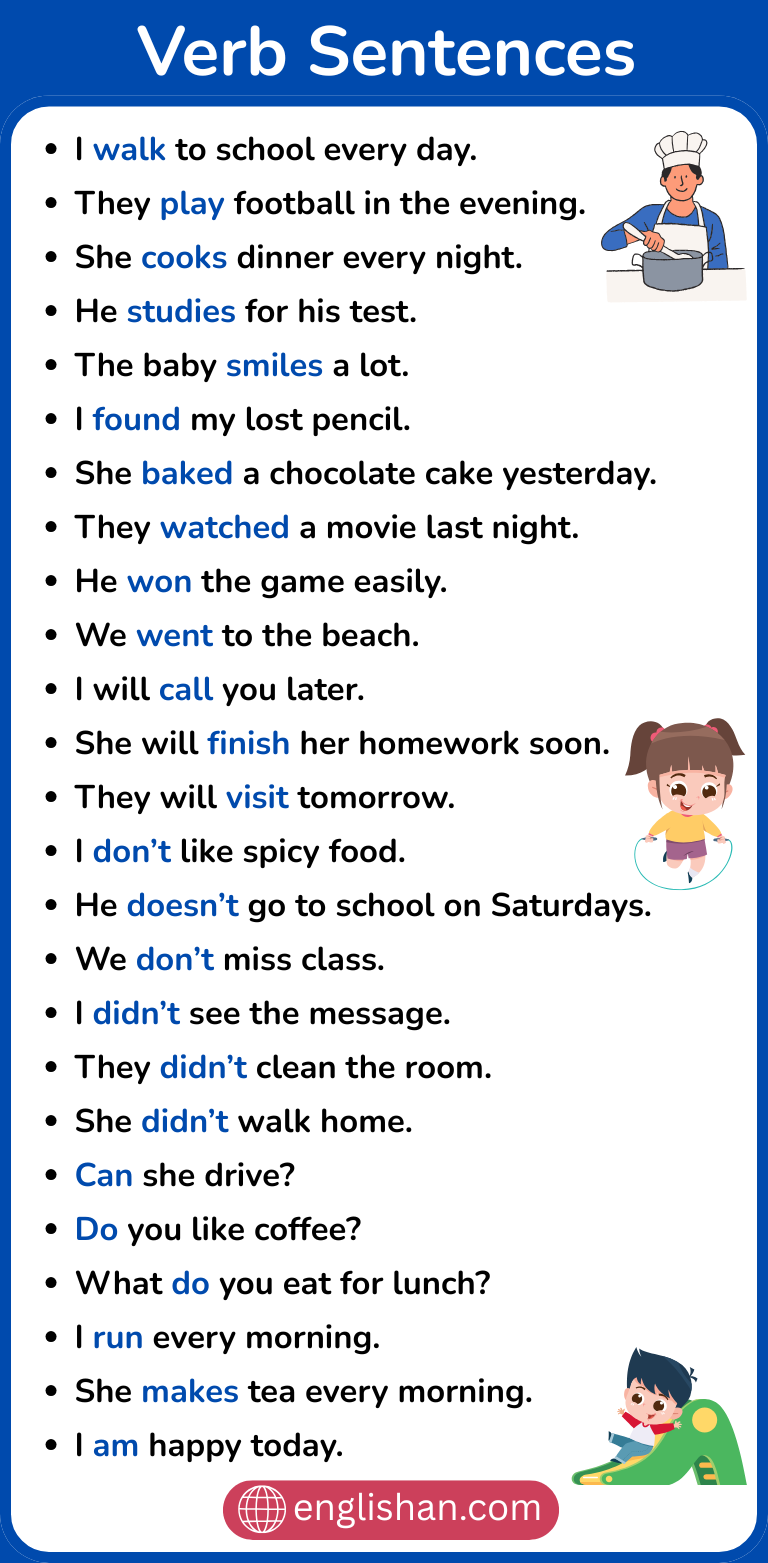
Verbs Example Sentences
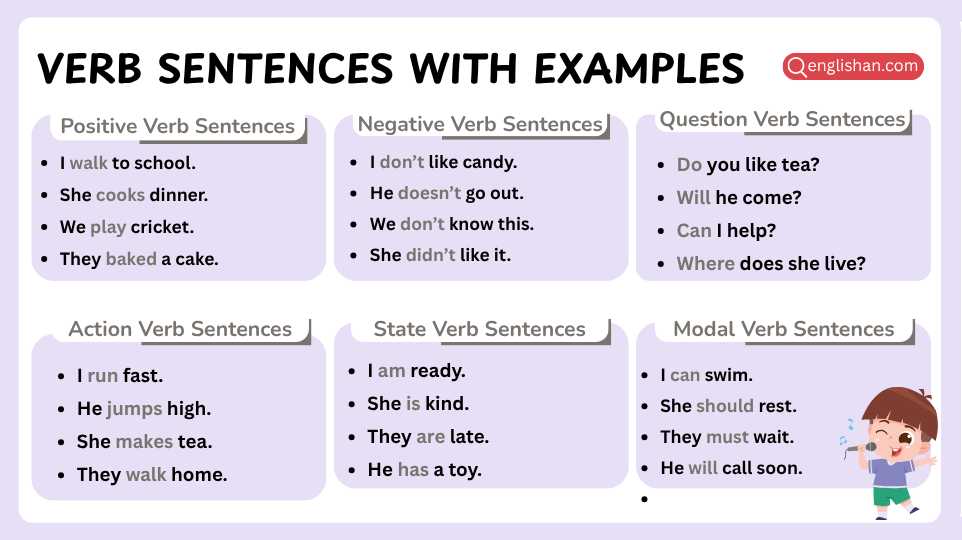
Positive Sentences Using Verbs
Below is a list of positive verb examples showing subjects doing actions in the present, past, and future. These help you understand clear sentence formation across different tenses.
Present Tense Positive Sentences
- I walk to school every day.
- They play football in the evening.
- Sara drinks juice every morning.
- We read stories after dinner.
- He likes watching cartoons.
- You look great today.
- The cat sleeps on the bed.
- I call my grandma every Sunday.
- My friends enjoy pizza.
- It rains often in March.
- She cooks dinner every night.
- I write in my diary.
- The baby smiles a lot.
- He studies for his test.
- We sing loudly in the car.
Past Tense Positive Sentences
- She baked a chocolate cake yesterday.
- They watched a movie last night.
- I found my lost pencil.
- We visited the museum last week.
- He played chess with his uncle.
- The dog ran across the field.
- I opened the window for fresh air.
- She washed the car on Sunday.
- We went to the beach.
- He won the game easily.
- They built a treehouse.
- I felt happy after the win.
- You read that book last month.
- He fixed his broken bike.
- She slept early last night.
Future Positive Verb Sentences
- I will call you later.
- They will visit tomorrow.
- She will finish her homework soon.
- We will play cricket after lunch.
- He will buy new shoes.
- I will clean my room today.
- You will enjoy the trip.
- They will bake cookies.
- She will read the new chapter.
- He will start a new job.
- I will bring my book next time.
- The kids will dance on stage.
- We will help you move.
- I will take a break soon.
- They will draw a big picture.
Negative Verb Sentences For Practice
Below is a list of negative verb forms using don’t, didn’t, and modals. These examples show how to change the tone and form of a sentence using negation.
Present Negative Verb Sentences
- I don’t like spicy food.
- He doesn’t go to school on Saturdays.
- They don’t play inside.
- She doesn’t cook meat.
- We don’t know the answer.
- It doesn’t rain much here.
- You don’t speak loudly.
- The dog doesn’t bark at night.
- I don’t eat candy.
- He doesn’t drive fast.
- They don’t drink soda.
- Sara doesn’t cry easily.
- We don’t miss class.
- I don’t use that app.
- She doesn’t wear hats.
Past Negative Verb Sentences
- I didn’t see the message.
- They didn’t go to the party.
- She didn’t like the cake.
- We didn’t watch that movie.
- He didn’t answer the call.
- You didn’t tell me.
- They didn’t clean the room.
- I didn’t finish my work.
- He didn’t feel well.
- We didn’t stay long.
- She didn’t walk home.
- I didn’t open the box.
- You didn’t ask anything.
- They didn’t win the match.
- He didn’t hear the sound.
Sentences With Negative Modals
- I can’t swim well.
- She won’t agree with that.
- He mustn’t shout in class.
- They couldn’t find the key.
- We shouldn’t skip breakfast.
- You may not leave now.
- He might not come today.
- I won’t forget this.
- They can’t solve the puzzle.
- She mustn’t lie to her parents.
Verb Sentences Used In Questions
Below is a list of verb sentence questions that show how to form inquiries using verbs, helping verbs, and modals. You’ll see how sentence form changes in question patterns.
Yes Or No Questions With Verbs
- Do you like coffee?
- Does she play the guitar?
- Did they go out?
- Will he join us later?
- Is she busy?
- Are they coming now?
- Can I help you?
- Was he at school?
- Did you call her?
- Does it work?
WH Questions Using Verbs
- What do you eat for lunch?
- Where does he live?
- Why did she cry?
- When will you leave?
- Who called me?
- How does it work?
- What did they say?
- Where is she going?
- When do we meet?
- Why are they late?
Questions With Modal Verbs
- Can she drive?
- Will you come?
- Should we go now?
- Must I answer this?
- Could he lift that?
- May I ask something?
- Would you like tea?
- Might they cancel it?
- Can he stay here?
- Should she explain it?
Sentences With Action Verbs
Below is a list of sentences using action verbs that show clear activities. These help you learn how subjects connect with physical actions in sentences.
Physical Action Verb Sentences
- I run every morning.
- He jumps over the box.
- They clap loudly.
- We kick the ball hard.
- She throws the paper.
- You carry the bag.
- I climb stairs fast.
- The boy hits the drum.
- The girl paints the wall.
- They dig a hole.
Everyday Action Verb Sentences
- I brush my teeth twice daily.
- She makes tea every morning.
- They walk to school together.
- We open the door slowly.
- He turns off the lights.
- I write notes in class.
- You cook great food.
- The baby throws her toy.
- My mom cleans the kitchen.
- She feeds the cat.
Helping Verb Sentences In Context
Below is a group of example sentences using helping verbs like is, have, was, and had that assist the main verb and complete the sentence idea.
Sentences With Is, Am, Are
- I am happy today.
- She is tired.
- They are late.
- We are ready.
- He is a doctor.
- I am in the car.
- The kids are outside.
- She is with her friend.
- You are great at drawing.
- He is at the store.
Sentences With Has, Have, Had
- I have a red pen.
- She has a nice voice.
- They have three cats.
- He had a big lunch.
- We have fun together.
- You have a question.
- I had a cold last week.
- She has two brothers.
- They had a great time.
- He has a new phone.
Sentences With Was, Were
- I was sleepy yesterday.
- She was at the park.
- They were loud in class.
- We were there first.
- He was not ready.
- I was in the kitchen.
- They were my classmates.
- She was kind to me.
- We were tired after the trip.
- He was happy to help.
Sentences Using Verbs In Present Tense
Below is a group of present tense verb sentences. These cover habits and general truths for understanding simple grammar structure.
Habitual Action Sentences
- I wake up early every day.
- She goes jogging daily.
- We have lunch at 1 p.m.
- They study every night.
- He takes a nap at noon.
General Truths With Verbs
- The sun rises in the east.
- Water boils at 100°C.
- Birds fly in the sky.
- Ice melts in heat.
- Plants need sunlight.
Verb Sentences Using Future Time Words
Below is a list of future verb sentences using will and going to to show future actions and expectations.
Sentences With Will + Verb
- I will help you.
- She will visit soon.
- They will cook dinner.
- He will come tomorrow.
- We will clean later.
Sentences With Going To + Verb
- I am going to call her.
- He is going to fix the chair.
- They are going to swim.
- She is going to paint her room.
- We are going to leave soon.
Verb Sentences With Modals (Can, Will, Must)
Below is a list of verb sentences using modals such as can, could, should, must, and more. These examples help you see how modals support the main verb.
Sentences Using Can And Could
- I can speak three languages.
- She can play the violin.
- They could win the match.
- He can solve the puzzle.
- We could go together.
Sentences Using Will And Would
- I will meet you there.
- She would help if needed.
- They will call later.
- He would love that.
- We will finish soon.
Sentences Using Must And Should
- You must finish it now.
- She should rest today.
- We must be careful.
- He should try again.
- They must listen closely.
You May Also Like