Someone reacts to a moment with extra force, adding emphasis when words alone feel too mild. The feeling is familiar, whether excitement, frustration, or surprise, and the message comes out stronger than usual.
Online, ASF intensifies what someone is saying. It comes from as f*, boosting emotion or degree. People attach it to feelings, situations, or reactions to stress how strong something feels. The tone can be playful, dramatic, or blunt, depending on context and company.
This guide explains asf meaning across messages, comments, and posts. By the end, you will know how ASF adds emphasis, how to read the tone behind it, and when it fits naturally without sounding forced.
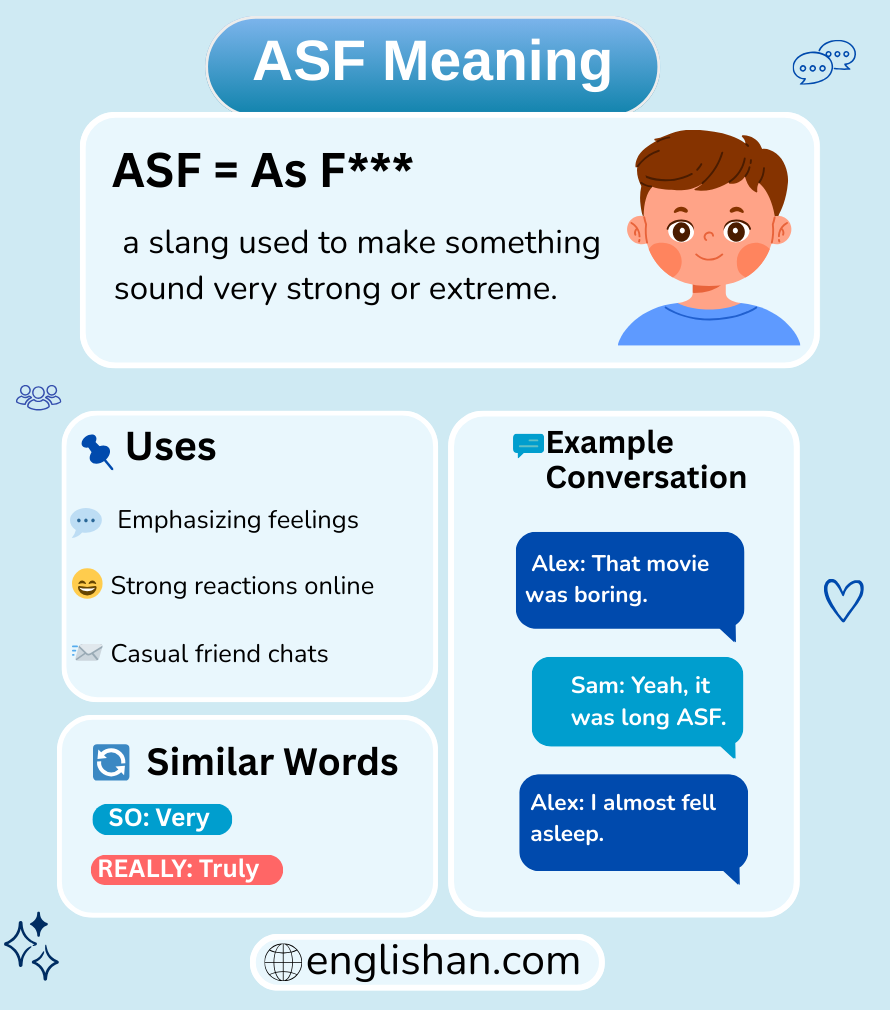
What Does ASF Mean?
The acronym ASF primarily functions as an emphatic intensifier to describe something that is extreme or significant. It is placed after an adjective to exaggerate a feeling or quality, meaning “extremely” or “very much.” While it has other meanings in specific contexts, this is the dominant definition in modern digital slang.
What Does ASF Stand For
This abbreviation most commonly stands for As F* (with the F representing a common swear word). However, depending on the setting, it can also stand for “Age, Sex, From” in dating chats or “And So Forth” in academic writing. Readers must look at the sentence structure to determine which phrase fits best.
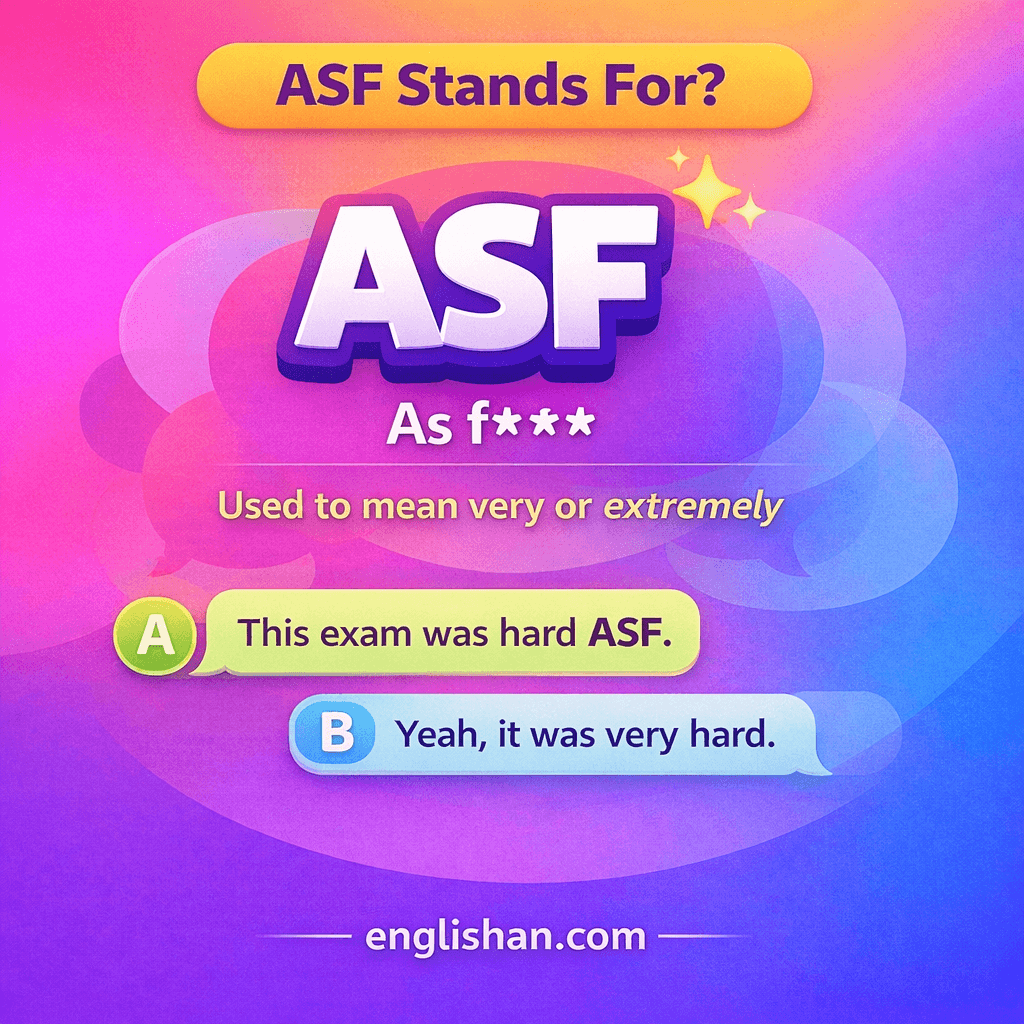
ASF As As F***
In its most popular form, the term acts as a slang adverb to boost the power of a description. If someone says they are “tired asf,” they mean they are exhausted beyond normal limits. It serves the same grammatical purpose as the word “very,” but with a much stronger, grittier tone.
ASF As Age, Sex, From
In chatrooms and dating apps, this version serves as a request for demographics. It asks the other person to state their age, gender, and location immediately. This usage is a variation of the older acronym ASL (Age, Sex, Location) and is less common today than it was in the past.
ASF As And So Forth
In formal documentation or older texts, these letters abbreviate the phrase and so forth. This usage is synonymous with “etc.” and indicates that a list continues in a similar manner. You will rarely see this definition in social media comments or casual text messages.
How And When ASF Is Used
People type this term in casual texts and social media captions to add emphasis to their feelings. It follows an adjective to show that a situation is intense, such as “funny asf” or “bored asf.” It is strictly strictly for informal conversations with friends where mild profanity is acceptable.
When Not To Use ASF
You should strictly avoid using this acronym in professional environments or polite company. Because the “F” implies a swear word, using it in a work email or school essay is considered inappropriate and unprofessional. It is best reserved for private chats or relaxed social platforms.
ASF Examples And Conversations
These dialogues illustrate how friends use the intensifier to exaggerate their current state or opinion.
Jason: Did you finish the math exam yet?
Mike: Yes, but it was hard ASF. I think I failed.
Jason: At least it is over now.
Sarah: Look at this picture of the puppy I just adopted.
Emily: That is cute ASF! I need to come over and see him.
Sarah: Come over anytime, he is sleeping right now.
David: We have been walking for three hours.
Jessica: I know, I am hungry ASF. Let’s stop for food.
David: There is a burger place right around the corner.
ASF Origin
The slang intensifier ASF emerged in the late 2000s alongside the rise of text messaging and social media. It developed as a variation of AF meaning “as f***,” with the added S reflecting a spelling preference and a slightly different rhythm in writing. Over time, ASF gained wide use on platforms like Twitter and Instagram, where it became a quick, punchy way to emphasize reactions, opinions, and hype-driven posts.
Common ASF Confusions And Look Alikes
A frequent point of confusion is the difference between ASF and AF. Both mean exactly the same thing (As F***) and are used interchangeably in sentences. Some users prefer ASF because it looks more like a standard acronym, while others prefer the shorter AF for speed.
Other Related Slang Words
These terms also function as intensifiers or acronyms in digital chat.
- AF: As F***. The shorter, equally common version of ASF.
- ASL: Age, Sex, Location. The classic chatroom request.
- Hella: A slang term meaning “very” or “a lot of.”
- Mad: Used as an adverb to mean “very” (e.g., mad funny).
Key Takeaways
ASF is used to turn the intensity way up when someone wants to stress how strong a feeling or situation is. It stands for as f** and is usually added to adjectives to exaggerate emotions like excitement, anger, or exhaustion. Because of the implied profanity, it carries a rough edge and fits casual chats better than anything formal. While ASF can mean other things in rare cases, context almost always points to emphasis, making it a shorthand for saying something feels extreme.
FAQs
Yes, it implies a swear word. You should treat it like cursing in text form.
People usually say “As F*” or just “AF” when speaking. Pronouncing the letters A-S-F is rare.
Almost never. In texting, it usually means the intensifier. “Etc” is used for lists.
No, ASL asks for location. ASF asks for where you are from (in the demographic context).
It adds emotion and grit. Saying “hungry asf” sounds more desperate than “very hungry.”
The term is considered vulgar slang because it serves as a placeholder for strong profanity. While it is acceptable among close friends, using it with strangers or authority figures is disrespectful. It carries a raw, unfiltered tone that does not fit in polite conversation.
You May Also Like