Reassurance sometimes arrives in a very small form. In everyday messaging, dw is used to mean don’t worry, a brief way to ease concern after a delay, mix up, or apology. It appears in a text message, DM, group chat, WhatsApp, Instagram, or Snapchat, and it usually aims to keep the exchange light.
In this article, we explain DW meaning first, then how people use it across casual chats and polite conversations. We also show how the same letters can feel warm or distant, followed by short examples that help you choose words that fit the moment.
What Does DW Mean In Texting
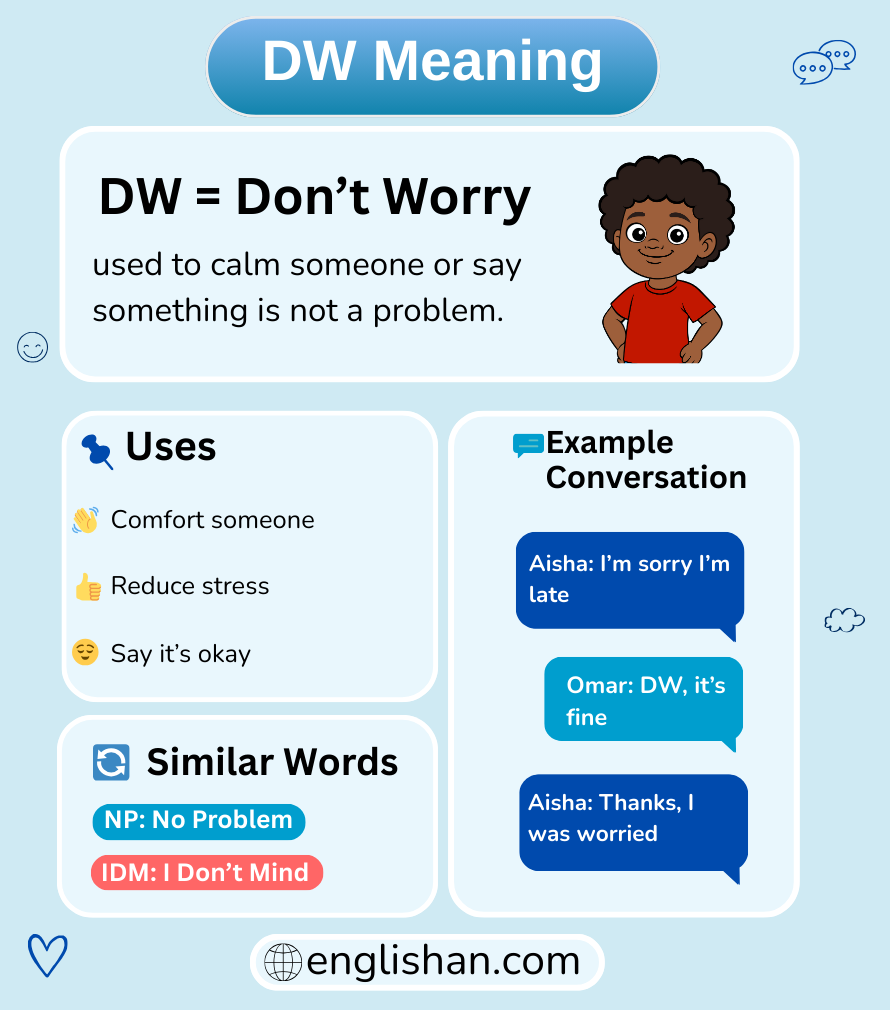
The acronym DW functions as a reassuring command telling someone to stop stressing about a specific situation. It serves as a quick way to alleviate anxiety or accept an apology without making a big deal out of it. Users typically send it when a friend feels guilty, nervous, or apologetic to let them know everything is fine.
What Does DW Stand For
This two-letter abbreviation stands directly for the phrase Don’t Worry. It represents a standard English imperative used to offer comfort or dismissal of a problem. While it effectively replaces the spoken phrase, it is strictly used in written communication like text messages and casual chats.
How DW Is Used In Messages And Chats
People type this slang to console friends who are panicking or to brush off minor inconveniences. It often appears as a response to “sorry” or when someone is running late to a meeting. You will frequently see it paired with “about it” or used as a standalone sentence to close a stressful topic.
DW Tone And Intent
The tone of this acronym is calm and supportive, signaling that the sender is not angry or upset. It implies a laid-back attitude, suggesting that the issue at hand is too small to cause concern. Using it creates a relaxed vibe, helping to lower the tension in a conversation instantly.
DW Example Conversations
These dialogues demonstrate how friends use the term to accept apologies and offer reassurance.
Jason: I am so sorry, I forgot to bring the book you asked for.
Mike: DW, I don’t need it until next week anyway.
Jason: I will definitely bring it tomorrow.
Sarah: I think I failed that history test, I am freaking out.
Emily: DW, you studied all night. I am sure you did fine.
Sarah: I hope you are right.
David: I might be five minutes late to the movie theater.
Jessica: DW about it, the previews haven’t even started yet.
David: Okay, I am parking now.
Where DW Came From
This abbreviation originated during the early days of SMS texting and instant messaging in the 1990s and 2000s. Users adopted it to shorten the common phrase “don’t worry” to fit within character limits and speed up typing. It became a permanent part of digital vocabulary alongside terms like “np” and “lol.”
Common DW Confusions
A frequent mix-up occurs with the popular television show Doctor Who, which fans also abbreviate as DW. In parenting forums, it can stand for Dear Wife, used when husbands write about their spouses. You must look at the context to see if the topic is sci-fi, marriage, or simple reassurance.
Other Related Slang Words
These acronyms also express reassurance or dismissal of problems.
- NP: No Problem. A common response to apologies or thanks.
- NBD: No Big Deal. Used to say a problem is unimportant.
- NW: No Worries. A direct synonym for DW.
- All Good: A phrase meaning everything is fine.
Key Takeaway
We define this acronym as a supportive text slang that stands for “Don’t Worry,” used to comfort others or accept apologies. It serves as an efficient tool for de-escalating stress and confirming that a situation is under control. While it creates a relaxed and forgiving tone, readers should check context to ensure it does not refer to the show Doctor Who. Remember to use DW to quickly reassure friends that everything is fine.
FAQs
No, it is usually friendly and comforting. It shows you are not upset.
It is okay for casual team chats. Avoid it in formal emails to clients.
You can write it as DW or dw. Lowercase is softer and more casual.
It refers to a meme character from the cartoon Arthur.
Rarely. In 99% of texts, it means Don’t Worry.
You May Also Like