You see MFW under a meme, screenshot, or reaction image, and the joke lands before the whole caption is even finished. That is part of why mfw meaning matters. The format works fast because it points to a reaction first and the situation second.
In online slang, MFW means my face when. People use it to frame a reaction to something awkward, funny, annoying, embarrassing, stressful, or painfully relatable. It often appears with an image or GIF, but it can also work in text when the reaction is easy to imagine.
The phrase is bigger than a plain abbreviation. To understand it properly, you need to know how the format works, what kind of humor it usually carries, and why it still shows up even as newer meme styles keep taking over.
What Does MFW Mean?
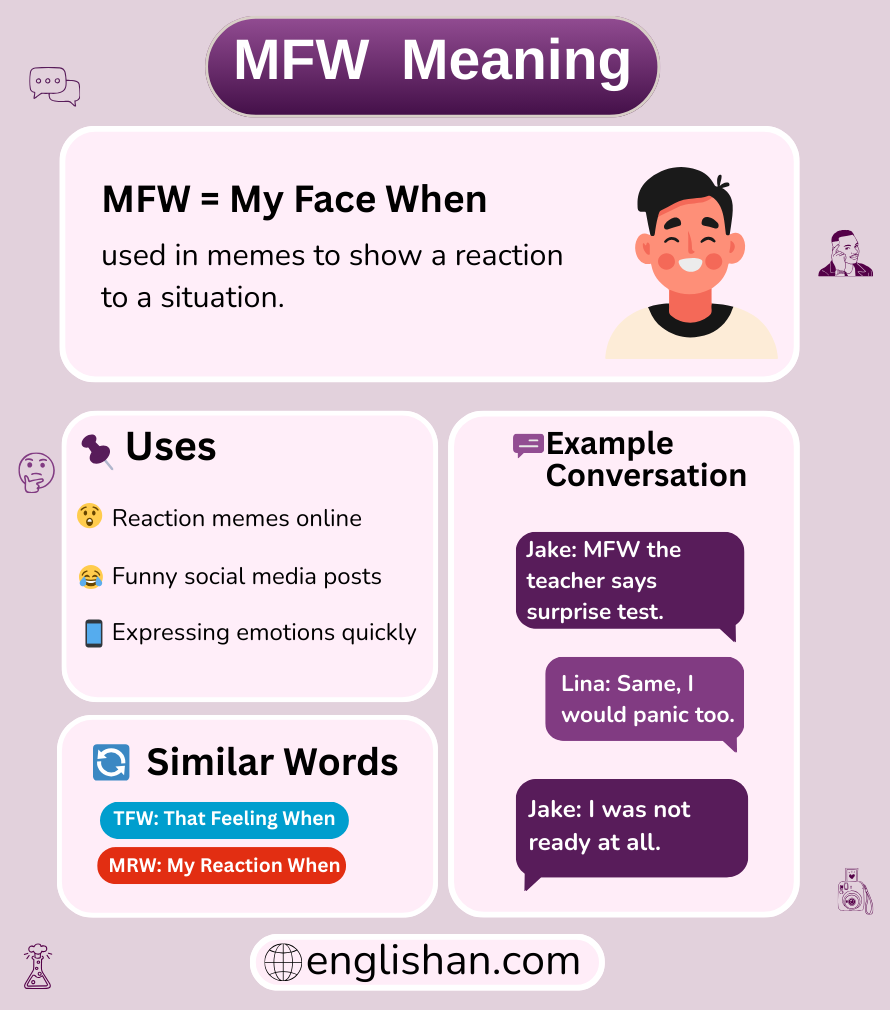
MFW stands for my face when. It introduces a reaction to a situation, usually in meme format.
A typical MFW post follows a familiar pattern. First comes the moment or trigger. Then comes the face, image, GIF, or reaction that captures how the person feels about it. That is why mfw meaning is tied so closely to meme culture rather than ordinary texting shorthand. It is not just a definition. It is a format.
A line like MFW I realize I sent that message to the wrong group chat works because readers can instantly picture the expression. The phrase does not need much explanation. The situation and the reaction do the work together.
MFW Meaning at a Glance
MFW means my face when.
It is most often used in:
- memes
- reaction posts
- captions
- comments
- chats with screenshots or GIFs
It usually points to:
- embarrassment
- panic
- disbelief
- awkwardness
- deadpan frustration
- self-aware humor
In short, MFW is a reaction format that turns a moment into a face.
What Does MFW Stand For?
MFW stands for my face when. The wording is short, but the effect is bigger than a normal acronym.
It sets up a situation and then points to the expression that matches it. Sometimes the reaction appears as a meme image. Sometimes it comes through a GIF or screenshot. Sometimes the phrase sits in plain text and lets the reader imagine the face without needing anything attached.
That is why MFW feels more like a caption frame than a standard abbreviation.
How This Format Works Online
MFW usually introduces a reaction to a specific moment. It does not just name an emotion. It gives the reader a setup and then delivers the response through a face, look, or reaction image.
Most posts built around this format include:
- a relatable situation
- a reaction that fits the mood
- a punchline powered by recognition
For example, MFW the teacher says “pick a partner” and I already know I’m finished works because the reaction is easy to understand even before the image appears. The humor comes from the fact that the situation feels familiar.
In online slang, MFW also works as a caption format in post titles, comment replies, screenshots, and meme threads. It feels especially native to older reaction-based internet culture, which is why it can still carry a slightly older meme flavor compared with newer styles.
Does It Need an Image?
Not always. An image is common, but it is not required every time.
A lot of MFW posts do use a reaction image, a GIF, a screenshot from a show, or a meme face that makes the response hit harder. That is still the most recognizable version of the format. But text-only use also works when the reaction is obvious enough for the reader to picture on their own.
For mfw meaning in actual online use, that distinction matters. The format began close to reaction-image culture, but it is flexible enough to survive even when the image is missing.
For example, MFW I hear my own voice in a recording still works without an attached image because the reaction is already built into the situation. Even so, the post usually lands better when the image, face, or GIF adds timing and personality.
Where It Appears Most Online
MFW shows up most often in meme-heavy and reaction-heavy spaces. You will usually see it where people respond quickly, build jokes around screenshots, or post short relatable moments without much explanation.
It appears often on:
- X
- TikTok comment threads
- meme pages
- Discord chats
- group chats
- screenshot and reaction-post threads
In those spaces, the format fits because it is fast. People do not need long setup. They just need the moment and the reaction.
What Kind of Humor It Usually Carries
MFW usually carries reaction humor rather than straight description. The format works best when the emotional response feels slightly exaggerated, awkward, or painfully familiar.
It often leans toward:
- embarrassment
- secondhand embarrassment
- panic
- disbelief
- deadpan frustration
- smugness
- self-own humor
- exhausted humor
A lot of MFW jokes succeed because they make the poster look exposed, foolish, dramatic, or too honest. That is part of the appeal. The format lets people laugh at reactions that feel bigger than the moment itself.
For example, MFW I wave back at someone who wasn’t waving at me lands because the situation is instantly recognizable and the expression almost writes itself.
How to Read the Tone
MFW can sound light, awkward, dramatic, sarcastic, or deadpan depending on the pairing between the situation and the reaction. The caption gives you the setup, but the tone often comes from the face that follows it.
If the image looks panicked, the post usually reads like stress or dread. If it looks expressionless, it often reads like dry humor. If it looks irritated, smug, or disgusted, the caption may be pushing mockery or sarcasm.
That is why mfw meaning is not only about the phrase itself. It is also about how the caption and reaction work together. When you read an MFW post, the best question is not just “what happened?” It is also “what kind of reaction is the post trying to make funny?”
MFW Examples in Memes and Chats
Here are a few common ways the format works in everyday online use.
MFW I check the fridge again like something new is going to appear
This uses ordinary behavior and low-level self-mockery.
MFW the Wi-Fi stops working right before I submit the assignment
This leans into panic and frustration.
MFW someone says “we need to talk”
The phrase already creates tension, so the reaction becomes the joke.
MFW I realize I was confidently wrong in front of everyone
This is classic embarrassment humor.
MFW my phone slips out of my hand and lands on my face
This pushes physical comedy and instant pain.
In chat, the format can also appear without a posted image:
A: He just replied after three weeks.
B: MFW I pretend I do not care.
That kind of use is more text-driven, but the structure still works the same way.
How to Write an MFW Caption
A strong MFW caption works because the situation is specific and relatable. It does not need too much setup. In fact, the format usually gets weaker when the caption becomes too long or too explanatory.
The basic shape is:
MFW + moment + reaction
For example:
MFW I open the front camera by accident
That works because the moment is immediate, recognizable, and easy to match with a face or screenshot.
Captions usually work best when they are:
- specific
- relatable
- short enough to read fast
- slightly exaggerated without becoming messy
They usually work worse when they are too vague, too long, or too dependent on outside explanation.
MFW vs TFW
MFW and TFW are close, but they are not the same.
MFW means my face when and leans more toward the visible reaction, often through a face, image, or screenshot.
TFW means that feel when and leans more toward the emotion or mood of the moment.
For example:
MFW I hear my alarm on a Saturday
focuses on the reaction
TFW you realize it is only Wednesday
focuses more on the feeling
In practice, people blur them sometimes, but MFW is usually more reaction-driven.
MFW vs MRW
MRW means my reaction when. It overlaps with MFW, but it is broader.
MFW usually points more tightly to a face or expression. MRW can include a whole-body reaction, a gesture, or a more dramatic physical response. That is why MRW often feels wider, while MFW feels more face-centered or caption-shaped.
Even so, meme culture is not rigid. People mix formats all the time.
MFW vs YFW
YFW means your face when. Instead of describing the poster’s own reaction, it turns the reaction outward toward someone else.
For example:
YFW you realize the exam was today
That shift changes the tone. MFW usually feels self-directed. YFW can feel more teasing, more pointed, or more targeted.
MFW vs POV
POV and MFW do different jobs.
POV puts the viewer inside the situation.
MFW shows the reaction to the situation.
For example:
POV: you walk into class and the test starts immediately
puts the reader inside the moment
MFW I walk into class and the test starts immediately
focuses on the reaction afterward
That difference matters because a lot of modern meme culture mixes these formats, but they are not interchangeable.
Other Meanings of MFW
MFW can also mean Milan Fashion Week. That use appears in fashion news, event calendars, runway coverage, and brand posts.
For example:
Celebrities arrived at MFW in major looks this year.
In that setting, the meaning has nothing to do with memes. The surrounding topic usually makes the difference obvious.
Where It Came From
MFW grew out of internet meme culture and reaction-image posting. It became popular in spaces where people paired short captions with expressive images to turn a moment into a joke quickly.
It is closely tied to older reaction-face culture, imageboard humor, and post formats that relied on instant recognition rather than long explanation. That background is part of why the phrase can feel a little older-school compared with some newer meme templates.
Even now, the format still works because reaction humor is fast to read, easy to share, and easy to recognize.
When This Format Does Not Fit
MFW works best when there is a strong reaction and a recognizable situation. It does not fit every kind of post.
It tends to work poorly when:
- the caption is too long
- the situation needs too much backstory
- there is no obvious reaction
- the post is formal or serious
- the image and caption do not match
A mismatch weakens the joke fast. If the moment says one thing and the reaction says another, the post loses force.
Why MFW Still Works
MFW still works because people do not need a long explanation to understand panic, cringe, awkwardness, or disbelief on a face. The format turns those reactions into quick, shareable humor.
That is why mfw meaning still matters even when newer meme styles come and go. The structure is flexible, familiar, and easy to adapt. When the caption is good and the reaction fits, the joke still lands.
Key Takeaway
Mfw meaning comes down to my face when, a reaction format used in memes, captions, chats, and comment threads to connect a situation with a face, image, GIF, or imagined reaction.
Most of the time, it points to embarrassment, panic, awkwardness, disbelief, or deadpan humor. It often works best with a reaction image, but it can also work in text when the reaction is easy to picture. The easiest way to read it is to look at both parts together: the moment in the caption and the reaction that follows it.
FAQs
No. A picture, GIF, or screenshot is common, but not required every time. Some MFW posts work well in text when the reaction is already easy to imagine.
Not exactly. MFW leans more toward the reaction or face, while TFW leans more toward the emotional state of the moment.
Yes. It can work in chats, especially if you send a meme, GIF, screenshot, or short caption with it.
Not exactly, but it can feel older-school compared with some newer meme formats. It still works well in reaction-based humor.
In fashion contexts, MFW can mean Milan Fashion Week.
Not by itself. It is usually funny, awkward, self-aware, sarcastic, or expressive depending on the caption and reaction.
You May Also Like