In a project meeting or business email, SME often comes up when teams discuss hiring, funding, or growth. If you are not familiar with it, the conversation can feel unclear. SME stands for small and medium-sized enterprise, a label used for companies based on staff size and annual turnover.
In this article, we explain SME meaning first, then how it appears in EU policies, bank loans, startup funding, tax rules, and World Bank reports. We cover the definition before showing how it is used in business talk. Examples follow so the meaning fits naturally in workplace discussions.
What Does SME Mean
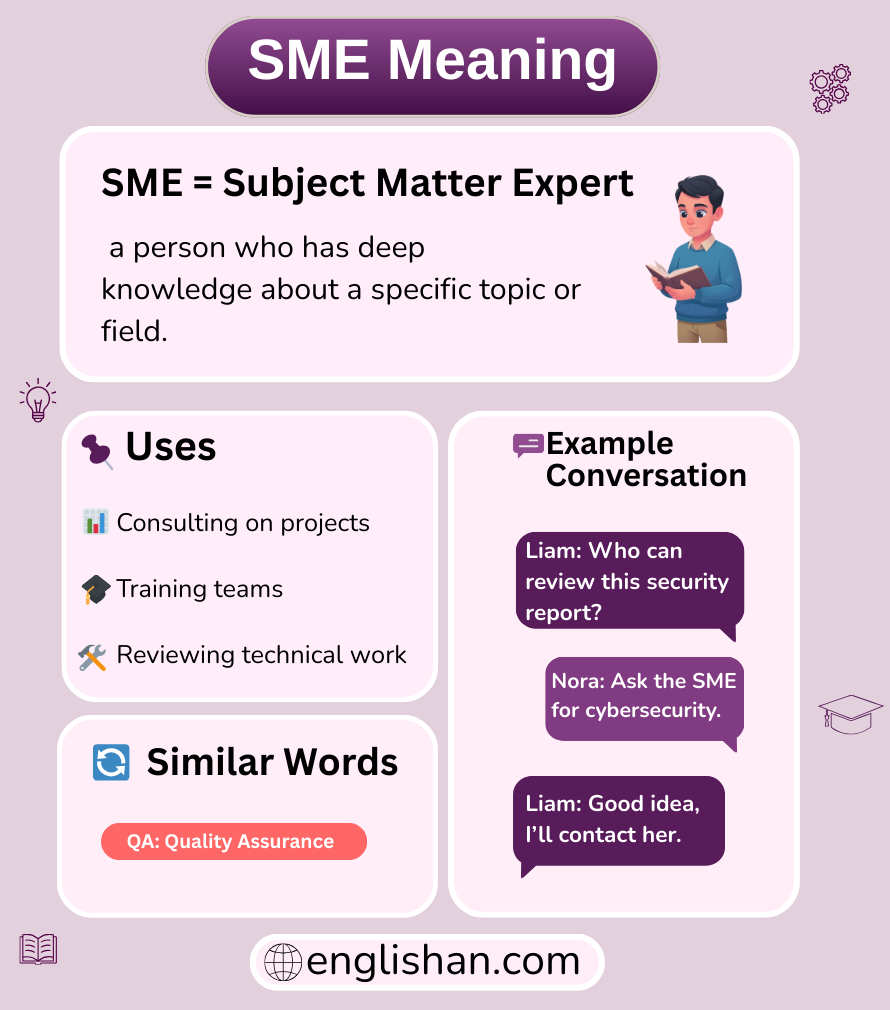
SME is a technical abbreviation that refers to a subject matter expert, which defines an individual with deep authority in a specific area. This person possesses the highest level of knowledge or skill regarding a particular process, function, or technology. Within a group setting, they serve as the ultimate resource for factual accuracy and technical guidance.
What Does SME Mean
SME is a technical abbreviation that refers to a subject matter expert, which defines an individual with deep authority in a specific area. This person possesses the highest level of knowledge or skill regarding a particular process, function, or technology. Within a group setting, they serve as the ultimate resource for factual accuracy and technical guidance.
What Does SME Stand For
In most professional and technical environments, the letters stand for Subject Matter Expert. Depending on the industry, the term can also represent Small to Medium Enterprise, though the expert definition is more common in daily dialogue. When people use the acronym to describe a person, they are strictly focusing on the specialized expertise that individual provides.
How Is SME Used At Work
Colleagues use this designation to delegate tasks that require highly specialized knowledge or a final quality check. Project managers often assign this role to a veteran team member to ensure that all technical documentation remains accurate and functional. The title is utilized during meetings to identify who has the final say on specific data points or procedural steps.
SME Example Conversations
The following dialogues illustrate how people identify and consult specialists during a typical workday.
Robert: We need to finalize the safety manual by tomorrow afternoon.
Linda: You should check with the SME on the floor to ensure the steps are correct.
Kevin: I am not sure what this specific error code means in the system.
Sarah: Let me find the SME for that software so we can get a clear answer.
Mark: Who is responsible for giving the final approval on this design?
Alice: Since Gary is the SME for this product line, he needs to sign off first.
Origin Of SME
The acronym gained widespread popularity within government and military training circles during the late twentieth century. It was developed as a way to categorize personnel based on their unique skill sets rather than just their rank. Over time, corporate industries adopted the phrasing to better organize large teams and clarify who holds the most reliable technical information.
Common Confusions With SME
A frequent misunderstanding involves confusing the person with a small to medium enterprise, which uses the same letters. In business news, the acronym usually describes a company size based on employee count or yearly revenue. To avoid errors, listeners must determine if the speaker is discussing a business entity or an individual person with specific skills.
SME Vs SMB
These two terms overlap in the business world but carry slightly different regional or technical meanings. Both refer to smaller companies, but many global organizations prefer using the expert acronym for people and the other for businesses. In contrast, the second term specifically identifies a small to medium business and never refers to a person’s individual knowledge or skills.
Other Related Words
Various terms connect to the idea of being a specialist or an authority in a specific area.
- Guru: An informal name for someone with vast knowledge and a knack for explaining it to others.
- Pro: A shortened form of professional, used for someone who performs a task with high skill.
- Whiz: A person who is remarkably clever or quick at a particular activity, especially math or coding.
- Authority: A recognized expert whose opinions or instructions are followed by others.
Key Takeaways
This acronym primarily identifies a subject matter expert, representing the most knowledgeable individual in a specific area of study or work. We use this term to streamline communication and ensure that technical decisions are made by those with the most experience. Whether used in a corporate office or a technical field, the term connects a person’s identity to their unique skills. Using the primary keyword SME correctly in professional writing requires acknowledging both the individual specialist and the business context.
FAQs
No, an SME is defined by their knowledge rather than their authority over people. While some managers are experts, many specialists focus only on technical data.
You achieve this status through years of experience and consistent study in one specific area. Most people earn the title by solving problems that others cannot.
Yes, a complex project often requires an SME for different parts, such as one for hardware and another for software. Each person handles their own niche.
An SME can refer to an expert or a small to medium enterprise. However, SMB specifically stands for small to medium business and never refers to a person.
Yes, the abbreviation SME is a standard global term used in international business and technology sectors. It helps define roles clearly across different languages.
You May Also Like