

Someone decides to do something bold without overthinking it, a last minute trip or saying yes to an unexpected plan. The moment feels impulsive but exciting, driven by a sense that not everything needs careful planning.
Online, people use you only live once to justify those choices. It frames risk as part of living, not something to avoid. The tone can feel carefree, playful, or slightly reckless, depending on how serious the situation is and who is saying it.
This guide explains yolo meaning across conversations, captions, and comments. By the end, you will understand what it signals, how to read the tone behind it, and when it sounds fun versus when it feels excessive.
YOLO Meaning
The acronym YOLO functions as a modern philosophy and justification for reckless or bold behavior. It serves as a declaration that because life is short, one should take risks and enjoy the present moment without worrying about long-term consequences. Writers use it to explain impulsive decisions, ranging from eating an extra slice of cake to skydiving.
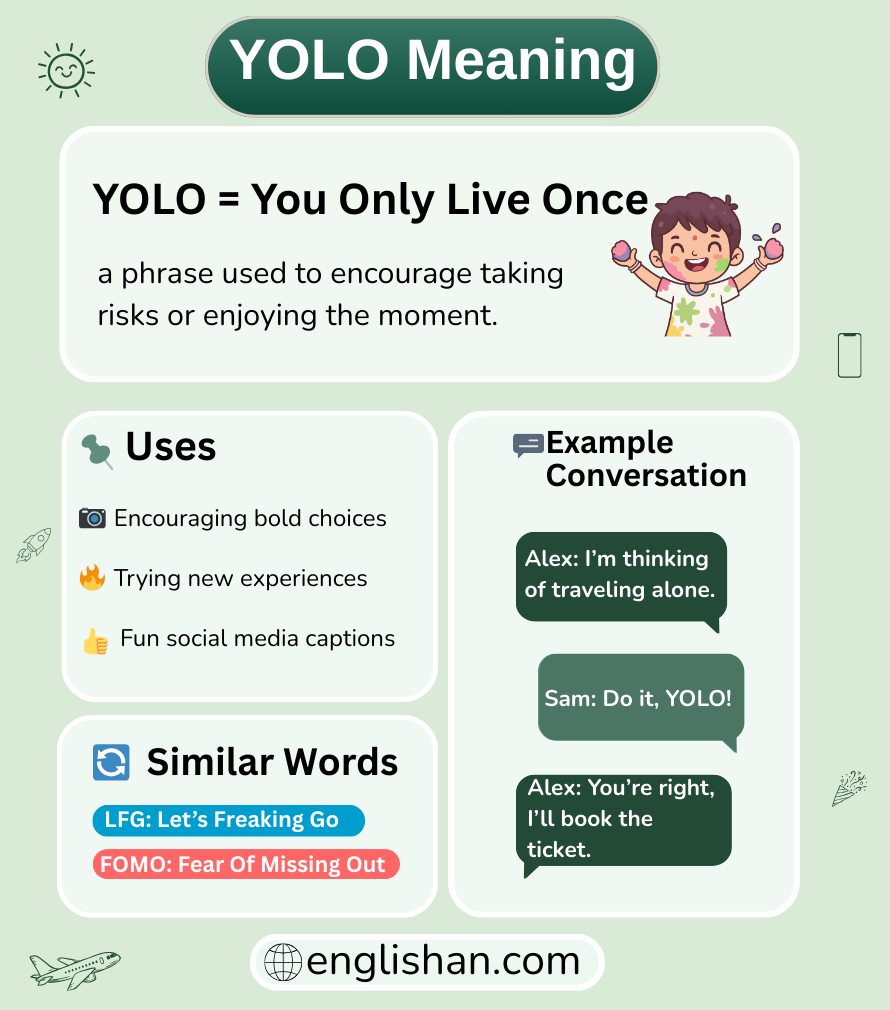
YOLO Stands For
This four-letter abbreviation stands directly for the phrase You Only Live Once. It grammatically acts as an interjection or a sentence fragment used to punctuate a statement of intent. While the letters are usually capitalized to show enthusiasm, they represent this specific motto of seizing the day.
How YOLO Is Used
People type this slang in social media captions and text messages to validate risky choices or expensive purchases. It acts as a verbal shield against criticism, implying that the joy of the experience outweighs the potential downsides. You will often see it used humorously to justify minor indulgences, like staying up late or skipping the gym.
Where YOLO Is Used
This term appears frequently on Instagram and Snapchat alongside photos of vacations, parties, or stunts. It is also common in spoken conversation among friends when convincing someone to do something scary or fun. While it was massive in 2012, it is now often used ironically or nostalgically in internet culture.
YOLO Examples
- Financial Risk: “I just bought the front-row tickets even though I’m broke. YOLO.”
- Dietary Choice: “Ordering the triple burger for lunch. YOLO.”
- Physical Stunt: “I’m going to jump off this cliff into the water. YOLO!”
Example Conversations Using YOLO
These dialogues illustrate how friends use the term to encourage risks or dismiss worries.
Jason: I really shouldn’t eat this pizza, I’m on a diet.
Mike: Come on, it’s just one cheat day. YOLO.
Jason: You’re right, pass me a slice.
Sarah: I want to text him, but I’m afraid he won’t reply.
Emily: Just do it. YOLO. What do you have to lose?
Sarah: Okay, I am sending it now.
David: That roller coaster looks terrifying. I don’t know if I can do it.
Jessica: We are only here for one day. YOLO, let’s get in line.
David: Fine, but you have to sit next to me.
YOLO Origin
The phrase “you only live once” has existed for centuries, but the acronym exploded in popularity in late 2011. It became a global phenomenon after the release of the song “The Motto” by rapper Drake, featuring Lil Wayne. The song’s hook cemented the term as the anthem for a generation, leading to widespread use in hashtags and merchandise.
Other Related Slang Words
These terms also relate to living in the moment or fearing exclusion.
- Carpe Diem: The Latin phrase for “Seize the Day.”
- FOMO: Fear Of Missing Out. Used when you are afraid to skip an event.
- LFG: Let’s Freaking Go. Used to express hype.
- Full Send: A slang term for doing something without hesitation.
Common YOLO Confusions
A frequent mix-up occurs with the technical term YOLO (You Only Look Once), which is a popular algorithm used in computer vision and AI for object detection. In tech circles, YOLO refers to code, not a lifestyle. Additionally, some people confuse it with Solo, which simply means doing something alone.
Key Takeaways
YOLO is short for you only live once, and people use it to justify taking a chance they might normally overthink. It carries the same spirit as seizing the moment, but in a more casual, internet friendly way. Sometimes it is serious, other times it is said with irony or humor when someone does something impulsive. Whether it is about trying something new or laughing off a risky choice, YOLO signals a push to act instead of holding back.
FAQs
It is considered outdated slang by Gen Z, often used ironically today.
No, it is a positive motto. However, it is often associated with stupid behavior.
No, he popularized the acronym, but the phrase existed long before him.
It is too informal and immature for professional settings.
You say it as a single word that rhymes with polo.
You May Also Like