Some vegetables grow well in cool weather and are often used in warm, cozy meals. Winter vegetables names include spinach, carrots, cabbage, radish, cauliflower, and turnip. Some grow underground, others have leafy tops, and many are full of nutrients like fiber and vitamins. These vegetables are mostly cooked in soups, stews, and daily winter dishes.
By learning winter vegetables names, you’ll easily talk about seasonal foods used in cooking and shopping during cold days.
List of Winter Vegetables Names
Winter vegetables are those that grow well in cold weather or are commonly harvested during the winter months. Below is a complete list of names in English.
- Carrot
- Cauliflower
- Cabbage
- Radish
- Turnip
- Spinach
- Green Peas
- Mustard Greens
- Broccoli
- Beetroot
- Sweet Potato
- Kohlrabi
- Spring Onion
- Lettuce
- Celery
- Garlic
- Onion
- Leek
- Parsnip
- Brussels Sprouts
- Collard Greens
- Swiss Chard
- Kale
- Endive
- Arugula
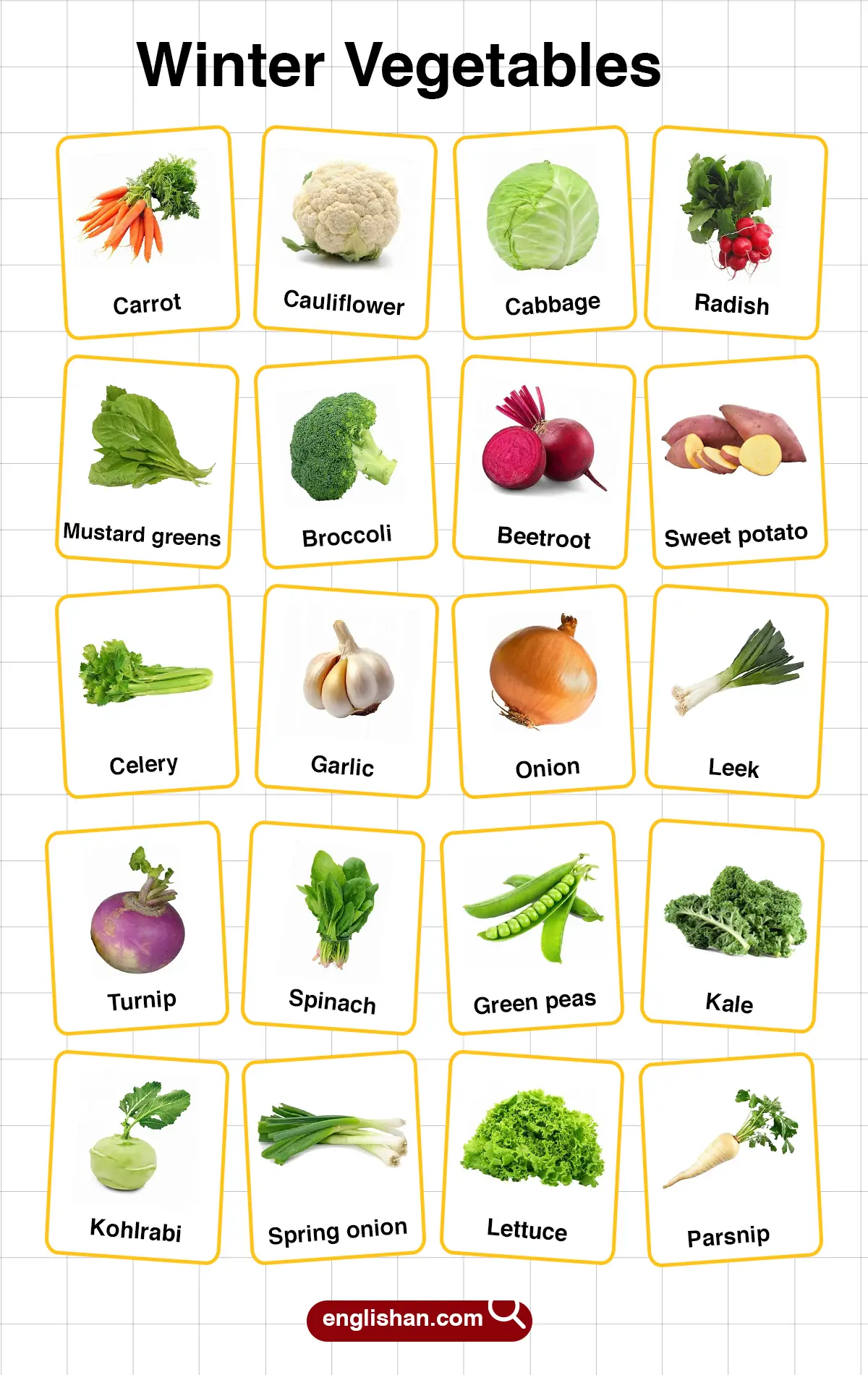
Types of Winter Vegetables
Winter vegetables grow best in cold weather. These include root vegetables, leafy greens, and squashes that stay fresh in low temperatures. They are full of nutrients that help the body stay healthy and warm during the winter months.
Root Vegetables
Root vegetables grow underground and stay fresh through cold months. Below is a list of common root vegetables often used in winter meals.
- Carrot: A long orange root that’s sweet, crunchy, and used in many dishes.
- Turnip: A round white vegetable with a purple top, often cooked in stews.
- Radish: A small, crisp root that’s usually white inside and red outside.
- Beetroot: Deep red, earthy-tasting root that’s great for soups.
- Parsnip: White root similar to carrots but with a sweeter taste.
- Sweet Potato: A starchy, sweet-tasting tuber often baked or mashed.
- Kohlrabi: A bulbous vegetable that’s crunchy like a turnip, often eaten raw or cooked.
Leafy Greens
Green Leafy Vegetables are soft vegetables with edible leaves. They grow well in cool weather. Below is a list of winter leafy greens.
- Spinach: Tender green leaves rich in iron and easy to cook.
- Kale: Curly dark leaves with a slightly bitter flavor.
- Mustard Greens: Spicy-tasting leaves used in soups or stir-fry.
- Swiss Chard: Bright green leaves with red or white stems, both are edible.
- Lettuce: A mild-flavored leafy vegetable used mostly in salads.
- Collard Greens: Large, flat leaves that are best when slow-cooked.
- Endive: Crisp leaves with a slightly bitter taste, often added to salads.
- Arugula: A peppery green usually eaten raw in salads or added to sandwiches.
Cruciferous Vegetables
Cruciferous vegetables grow well in winter and belong to the cabbage family. Below is a list of these vegetables used in winter dishes.
- Cabbage: Dense green or purple heads with crunchy leaves.
- Broccoli: Tree-like green clusters rich in vitamins and fiber.
- Cauliflower: White florets that can be roasted, steamed, or mashed.
- Brussels Sprouts: Small cabbage-like vegetables with a nutty flavor when roasted.
Onion Vegetables
This group includes vegetables with bulbs or stems that add strong flavor. Below is a list of winter onion family vegetables.
- Garlic: Small bulbs with strong smell and taste, often used as seasoning.
- Leek: A long white stalk with green leaves, mild and slightly sweet.
- Onion: Round bulb with layers, used in nearly every savory recipe.
- Spring Onion: Also called green onions; have a mild flavor and can be eaten raw or cooked.
Winter Squash
Winter squash have thick skins and keep well in cold. Below is a list of squash types common in winter meals.
- Butternut Squash: Bell-shaped with orange flesh and a sweet flavor.
- Acorn Squash: Small and dark green with a nutty taste.
- Delicata Squash: Cream-colored with green stripes, soft skin, and sweet flesh.
Vegetables in Winter Season
This section lists vegetables commonly found or harvested in winter months.
- Green Peas: Soft and sweet little green seeds. People eat them boiled, mashed, or mixed into rice and curries.
- Celery: Crunchy green stalks often eaten raw or in soup. Many people also dip them in sauces for snacks.
- Beetroot: A dark red root vegetable. It can be boiled, roasted, or juiced and is known to help with blood health.
- Sweet Potato: This root is sweet and soft after cooking. It’s commonly baked, mashed, or used in warm winter dishes.
- Parsnip: A pale root that looks like a white carrot. It tastes sweet when roasted and works well in soups.
- Spring Onion: Also called green onion. These are added to salads, fried rice, soups, and omelets for a light onion flavor.
- Endive: A leafy vegetable with a mild bitter taste. It’s often used in fresh salads or lightly cooked in warm meals.
- Collard Greens: Large green leaves full of vitamins and fiber. People cook them like spinach or add them to stews.
Conclusion
Knowing winter vegetables names helps you learn seasonal words in English. Vegetables like cabbage, carrot, and spinach are common in winter. These names improve your vocabulary and make reading and writing easier. Review them regularly to remember and use them correctly in everyday English.
FAQs About Winter Vegetables
Vegetables like spinach, radish, turnip, beetroot, and broccoli grow well in cool winter climates.
Yes, onions can grow in cool seasons and are often planted in late fall for winter or spring harvest.
You May Also Like
- Fruits And Vegetables Names
- Summer Vegetables Names
- Green Vegetables Names
- Vegetables Names For Kids
- Yellow Vegetables Names
- Vegetables Worksheets And Exercises