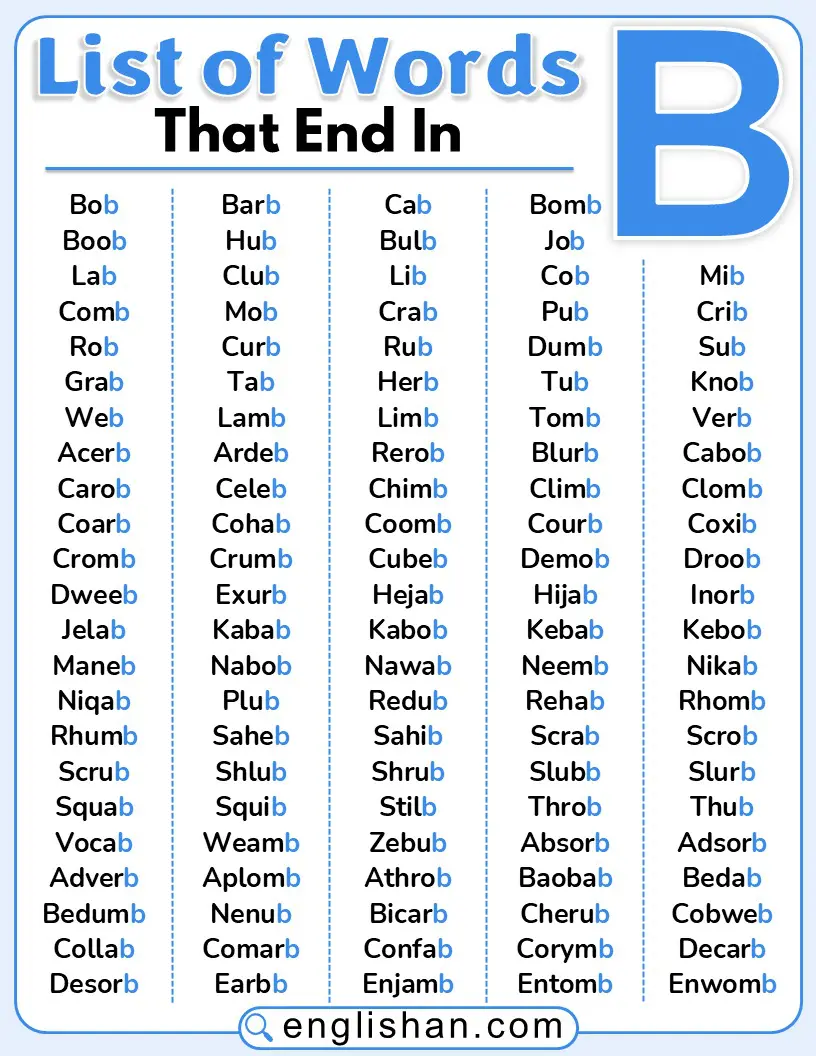
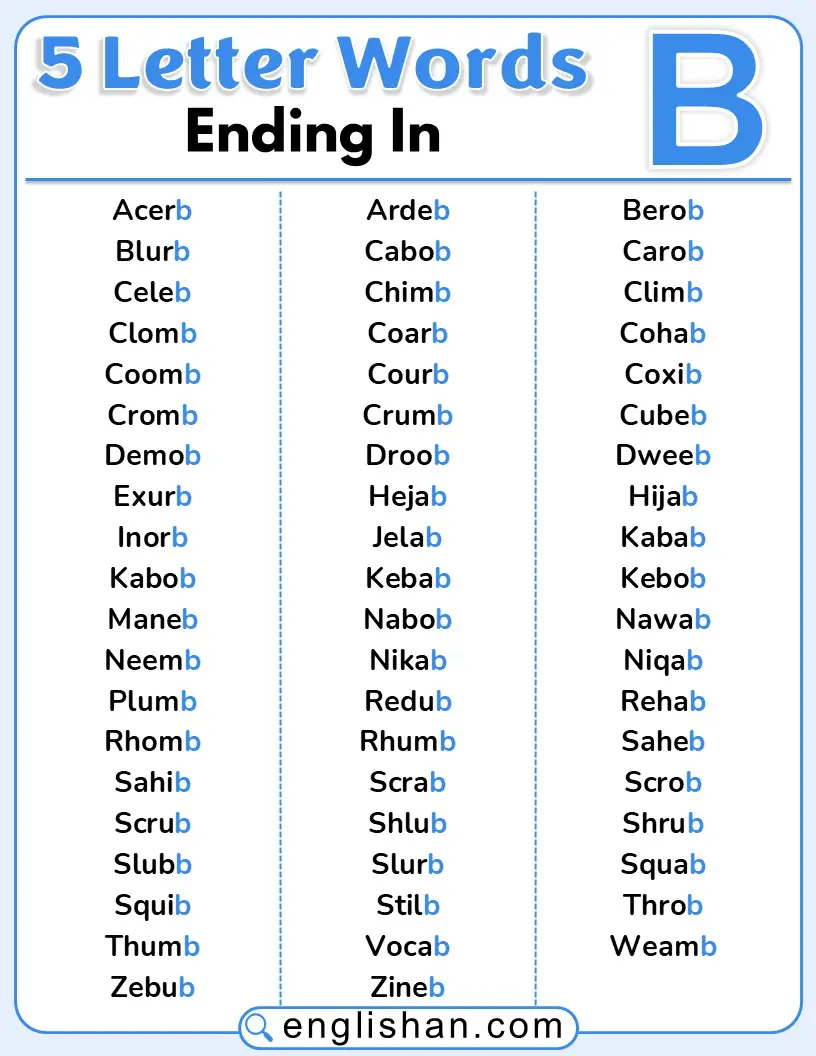
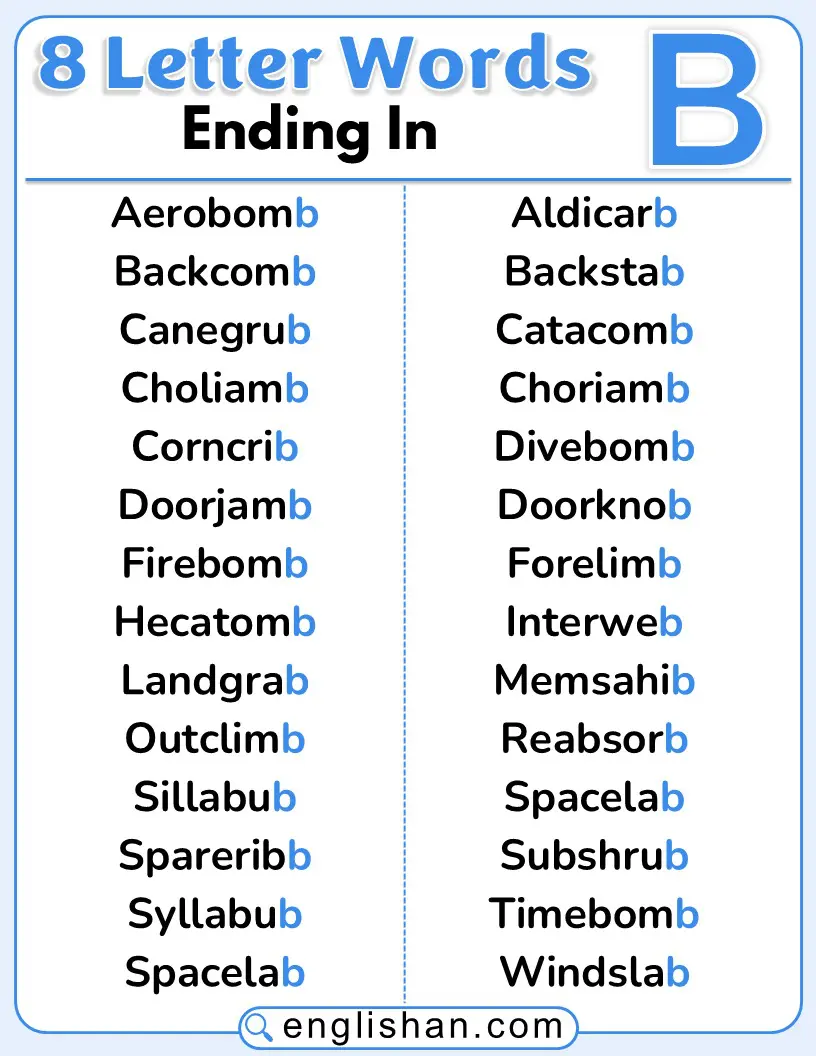
Words that end in B are not very common in English, which is exactly why many learners find them interesting. You might come across them while reading, playing word games, or building your vocabulary, and wonder if they are real words. In this article, we have compiled a list of English words that end in ‘B’ and presented them in a clear and easy-to-understand format. Whether you are a student, a teacher, or just curious about unusual word endings, this complete word list will help you learn and recognize them with confidence.
Words that end in B are English words whose final letter is B. These can include nouns, verbs, adjectives, or even slang and borrowed terms. While they are less common than words ending in other letters, they are still used in everyday English, games, writing, and online communication. Some examples include crab, bulb, pub, and blab.
Words that end in B are simply words whose last letter is B. These can include nouns, verbs, or even adjectives, though in English, most are nouns or borrowed from other languages, or slang terms used online.
Q2. What are common words that end in B?
Some common English words that end in B include objects, animals, or informal/slang terms. Examples include: • Crab • Pub • Slab • Rub • Blab
Q3. Can you give examples of words that end in B in sentences?
Sure! • Crab – The crab scuttled sideways across the sandy beach. • Pub – We met our friends at the local pub after work. • Slab – The chef placed a slab of chocolate on the counter. • Rub – You need to rub the ointment gently on the skin. • Blab – Don’t blab the secret to anyone; it’s private. • Hub – The airport is a major hub for international flights. • Mob – A mob of fans gathered outside the concert venue. • Web – The spider carefully wove its web between the branches. • Club – She joined a book club to meet new people.
Amelia Wright writes the daily word game challenges at Englishan.com, but she plays far beyond one grid. Most mornings move through a Spelling Bee style word hunt, a quick crossword, a few anagram rounds, and a Scrabble like rack in her head, words turning over while the coffee is still hot. And then there is Wordle, her favorite, the small five square heartbeat that sets the tone for the day. She notices what people can recall on the clock, where near spellings and double letters trigger doubt, and which everyday words still feel fair. Readers come for wins that feel earned: familiar vocabulary, steady difficulty, and none of the gotcha tricks that make a puzzle feel smug.