Learning the parts of an electric sewing machine helps users understand how it works and how to use it safely. Knowing each part by name makes it easier to solve problems, follow sewing instructions, and improve your sewing skills.
This post focuses on the electric sewing machine parts with their names and uses. It includes related terms like motor, foot pedal, and bobbin, giving you a better understanding of how these machines operate. This helps both beginners and students who want to learn basic machine vocabulary with pictures.
List of Electric Sewing Machine Parts Names
This section covers the outer and essential components you see and use while sewing. Below is a list of these major parts and their purpose.
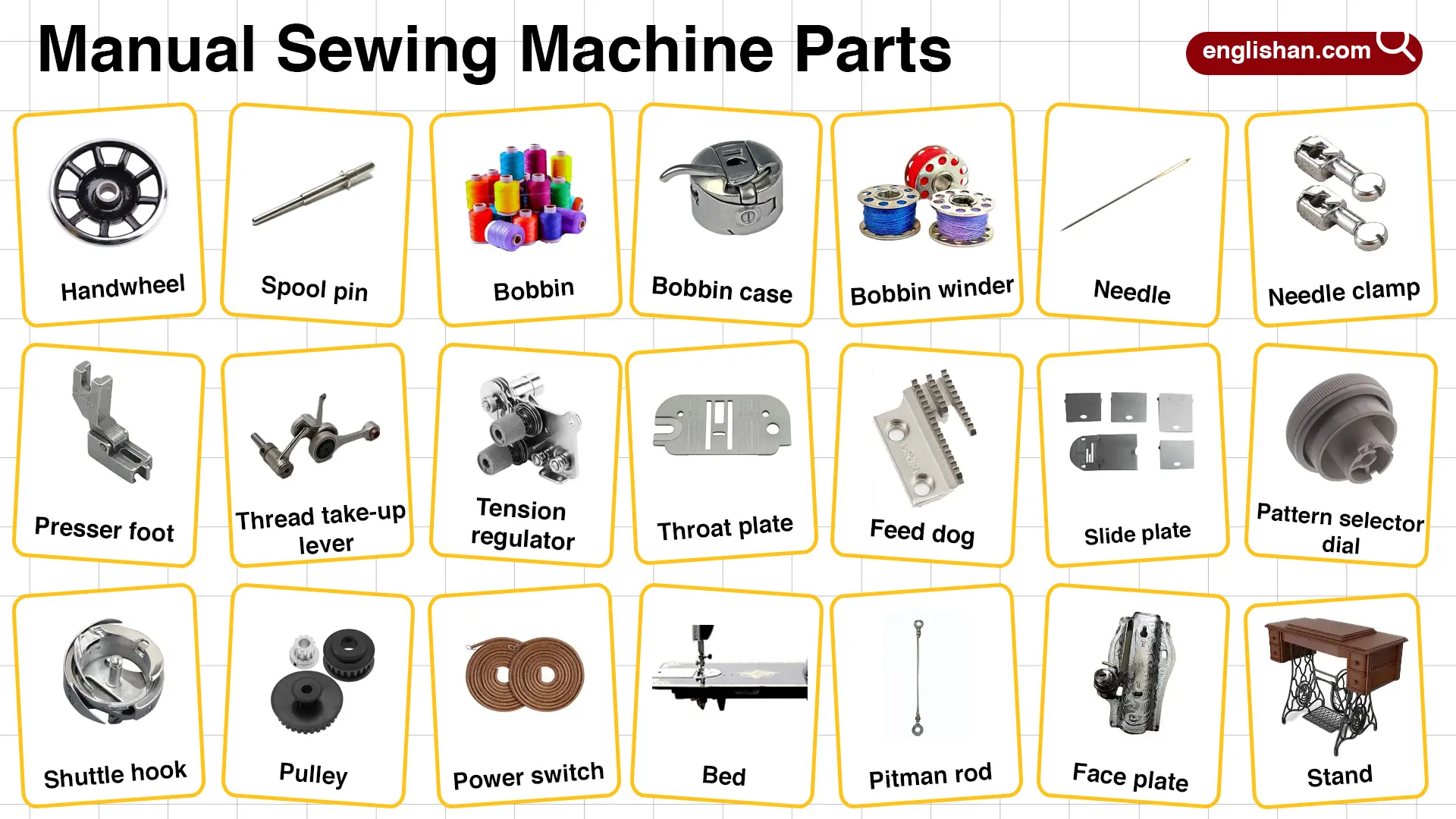
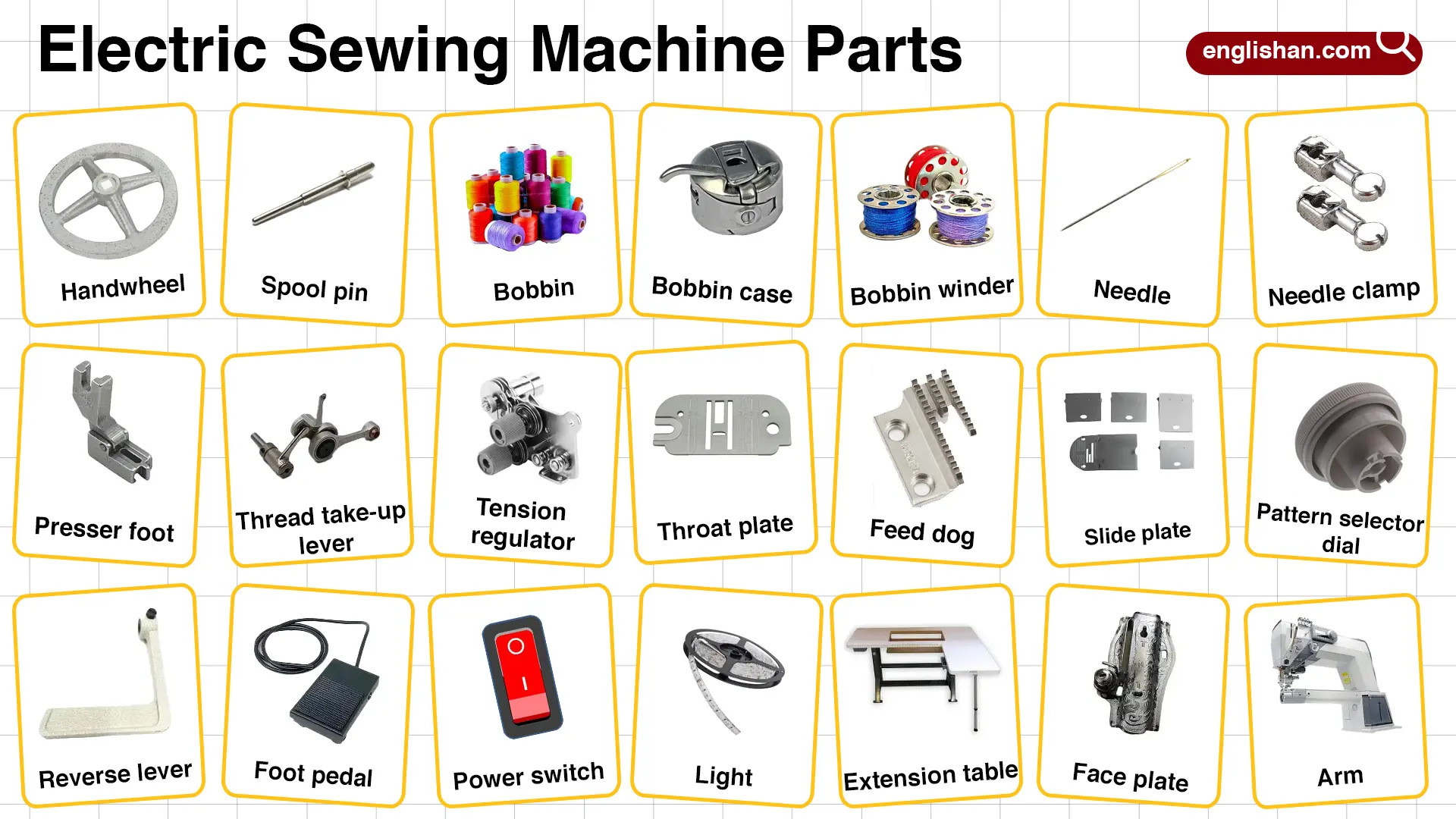
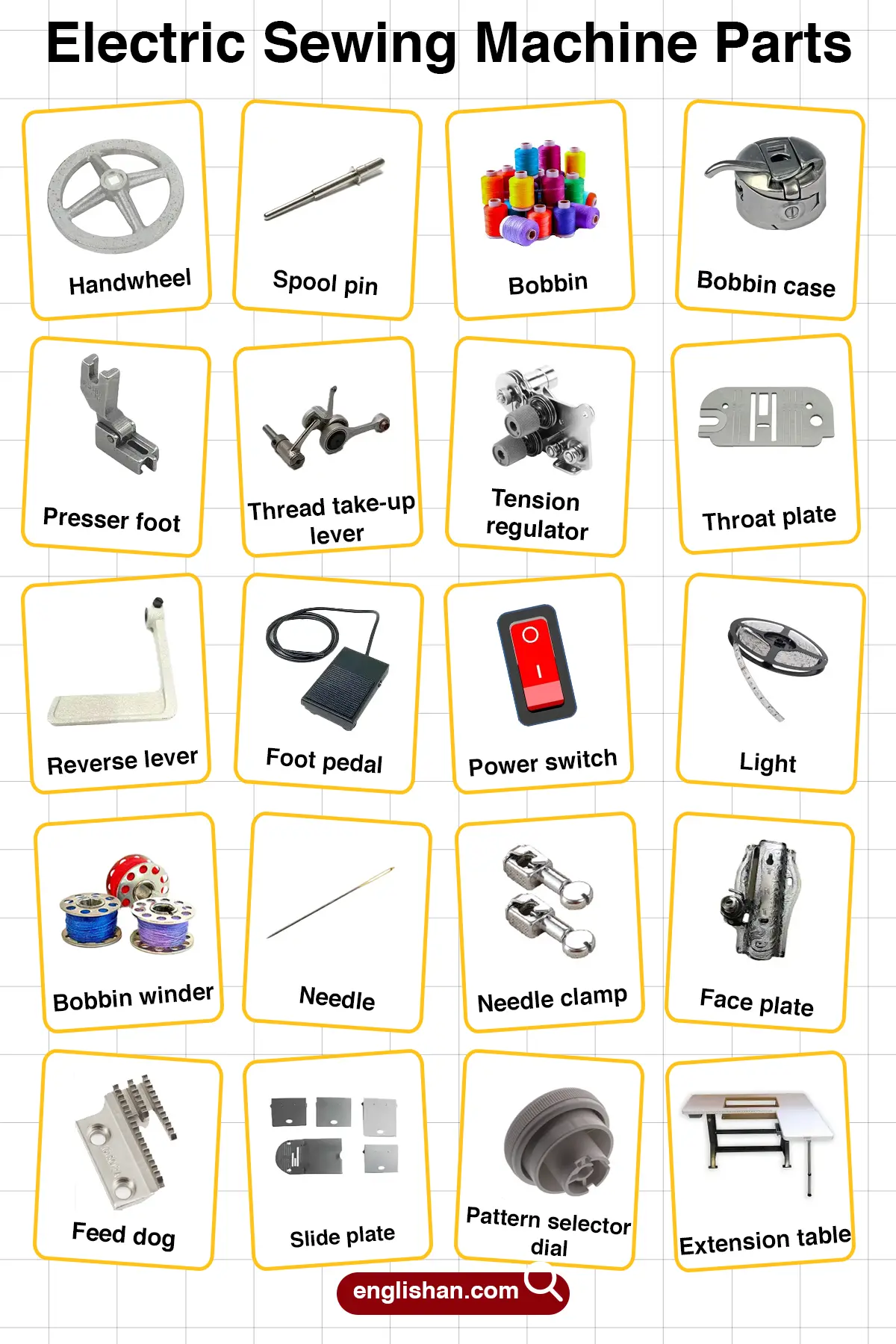
- Handwheel: Used to manually raise and lower the needle.
- Spool Pin: Holds the top thread spool in place.
- Bobbin: A small spool holding the lower thread inside the machine.
- Bobbin Case: Holds and guides the bobbin for lower thread tension.
- Bobbin Winder: Used to fill the bobbin with thread before sewing.
- Needle: Pierces the fabric and carries the upper thread.
- Needle Clamp: Holds the needle tightly in its position.
- Presser Foot: Keeps fabric flat while stitching.
- Presser Foot Lever: Lifts or lowers the presser foot.
- Thread Take-Up Lever: Pulls thread up and down during stitching.
- Tension Disc: Controls the tightness of the upper thread.
- Tension Regulator: Adjusts how tight or loose the upper thread is.
- Thread Guide: Directs thread from spool to needle.
- Throat Plate: Flat metal plate under the needle with guide lines.
- Feed Dog: Moves fabric forward while stitching.
- Slide Plate: Covers the bobbin area and gives access for insertion.
- Stitch Length Dial: Adjusts how long each stitch is.
- Stitch Width Dial: Sets how wide the zigzag stitch goes.
- Pattern Selector Dial: Lets you choose different stitch types.
- Reverse Lever: Makes the machine sew backward for reinforcement.
- Foot Pedal: Controls the speed of sewing.
- Power Switch: Turns the machine on and off.
- Light: Illuminates the sewing area.
- Extension Table: Increases workspace, especially for large fabrics.
- Face Plate: Covers internal parts near the needle bar.
- Arm: The horizontal part holding the needle and feed system.
- Bed: The base of the machine where fabric lies while sewing.
- Cover: Protective shell around the machine.
- Needle Plate: Sits above the feed dogs and guides stitching.
- Shuttle Hook: Rotates to catch the top thread and form stitches.
Parts of an Electric Sewing Machine
Electric sewing machines are made up of several key components that work together to stitch fabric smoothly and efficiently. Each part has a specific role—from powering the machine to handling the thread and fabric. Understanding these parts helps beginners learn how to operate the machine correctly and troubleshoot issues with ease.
Power Components of Electric Sewing Machine
These parts help power the machine and control its motion. They help maintain speed and ensure the motor operates properly.
- Motor: Powers the needle’s movement
- Foot Pedal: Adjusts how fast or slow the needle moves
- Power Switch: Activates or deactivates the entire machine
- Light: Helps the user see the stitching area clearly
Parts of Needle Area
This section includes the parts that move the needle and guide the fabric as you sew.
- Needle: Goes up and down to create stitches
- Needle Clamp: Keeps the needle secure
- Presser Foot: Holds the fabric flat
- Presser Foot Lever: Raises or lowers the presser foot
- Throat Plate: Provides surface for fabric and guides lines
- Needle Plate: Metal part where the needle passes through
- Feed Dog: Moves fabric under the needle after each stitch
Thread System of Electric Sewing Machine
These parts help manage the upper and lower threads while maintaining proper tension and flow during stitching.
- Spool Pin: Holds the upper thread spool
- Thread Guide: Directs thread smoothly to the needle
- Thread Take-Up Lever: Pulls thread to maintain flow
- Tension Disc: Controls thread tightness
- Tension Regulator: Adjusts thread tightness manually
- Bobbin: Supplies the lower thread
- Bobbin Case: Houses the bobbin securely
- Shuttle Hook: Loops thread from bobbin to form stitches
Parts of Control Panel
These parts allow you to adjust stitch settings to suit the fabric and design.
- Stitch Length Dial: Changes how long each stitch is
- Stitch Width Dial: Sets the width for zigzag and decorative stitches
- Pattern Selector Dial: Switches between straight, zigzag, and other stitches
- Reverse Lever: Backs up stitching for stronger seams
List of Internal Mechanical Parts
Drive Belt and Gears
These link the motor to the machine’s moving parts and help transfer power.
- Drive Belt: Connects motor to the handwheel and other parts
- Gears: Turn different components to move needle and thread
Bobbin System
Helps wind, place, and manage the lower thread from the bobbin.
- Bobbin Winder
- Bobbin Case
- Shuttle Hook
Circuit Board
Manages electric flow and allows the motor to function properly.
- Circuit Board: Processes signals and controls motor and settings
Manual vs Electric Machine Parts
Manual machines use physical effort through a wheel or treadle. They lack a motor, electrical controls, and often don’t have adjustable stitch types. Electric machines use power for faster stitching, and come with settings like stitch selector, foot pedal, and built-in lights. Control is simpler and sewing is more efficient.
Parts That Need Regular Care
Routine cleaning and checks help the machine last longer. These parts often collect lint or get misaligned.
- Feed Dogs: Clean to prevent skipping stitches
- Needle Plate: Remove dust and lint
- Bobbin Case: Wipe clean after every few uses
- Tension Disc: Keep free of thread fuzz
- Presser Foot: Check alignment and wear
- Drive Belt: Look for cracks or looseness
Conclusion
Understanding electric sewing machine parts names helps you use the machine correctly and safely. Each part plays a role in stitching. With this knowledge, you can sew more confidently, solve small issues, and take better care of your machine.
FAQs About Electric Sewing Machine Parts
The presser foot holds fabric down. The feed dog moves it forward as you sew. Both work together but have separate jobs.
No, foot pedals must match the brand and model. Using the wrong one can damage the machine or affect speed control.
The bobbin belongs to the lower thread system. It supplies the bottom thread needed to form stitches.
You May Also Like