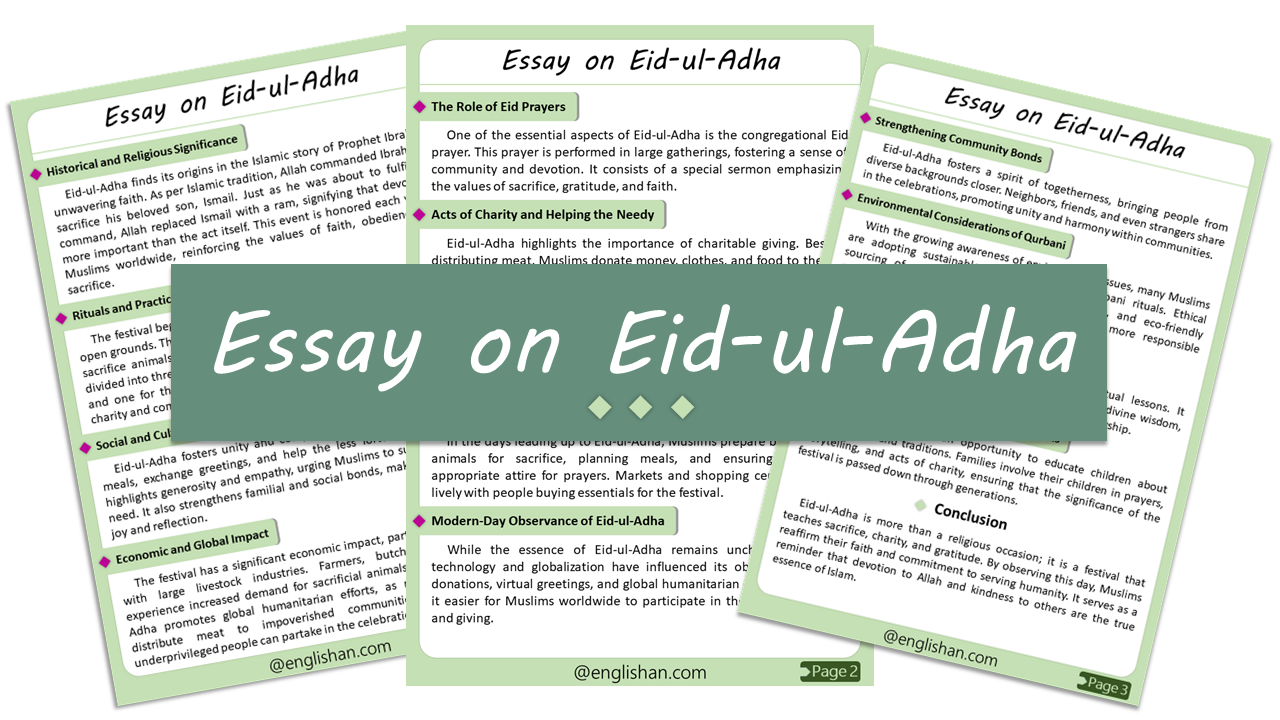
When writing about Eid-ul-Adha, it’s important to understand why Muslims around the world celebrate this special festival with prayers, sacrifice, and kindness. This essay on Eid-ul-Adha explains the meaning of the festival, how it is celebrated, and the lessons it teaches about faith, sharing, and helping others. It includes 10-line, 250-word, and 500-word formats to support students from primary to middle school. You can download this Eid-ul-Adha essay as a free PDF or image to study or print.
10 Lines Eid-ul-Adha Essay for Class 2 to Class 5
- Eid-ul-Adha is an important Islamic festival.
- It is also called the Festival of Sacrifice.
- Muslims remember Prophet Ibrahim’s obedience to Allah.
- A goat, cow, or sheep is sacrificed on this day.
- The meat is shared with family, friends, and the needy.
- People wear clean clothes and offer Eid prayer.
- Families prepare special food at home.
- It teaches kindness, sharing, and faith in Allah.
- Many people help the needy during this festival.
- Eid-ul-Adha spreads love and unity among people.

250 Words Essay on Eid-ul-Adha for Middle School
Eid-ul-Adha is an important Islamic festival. It is also called the Festival of Sacrifice. Muslims celebrate it to remember the story of Prophet Ibrahim, who showed great faith in Allah. This festival teaches us about obedience, trust, and helping others.
On Eid-ul-Adha, Muslims wear clean clothes and go to the mosque for a special prayer. Then they sacrifice an animal like a goat, cow, or sheep. This act reminds them of Prophet Ibrahim’s test. The meat from the animal is shared with family, friends, and poor people.
Many people also give money, clothes, or food to those in need. It is a time of kindness and caring. Families gather to eat together and thank Allah for His blessings. Children enjoy this day and learn the value of giving and sharing. The festival lasts for three days in many places.
In the end, Eid-ul-Adha is not just about food or new clothes. It is about love, faith, and helping others. It teaches Muslims to care for those who have less. This makes the world a better place. Eid-ul-Adha is a special time to grow in kindness and faith.
500 Words Eid-ul-Adha Essay for Upper Primary and Lower Secondary
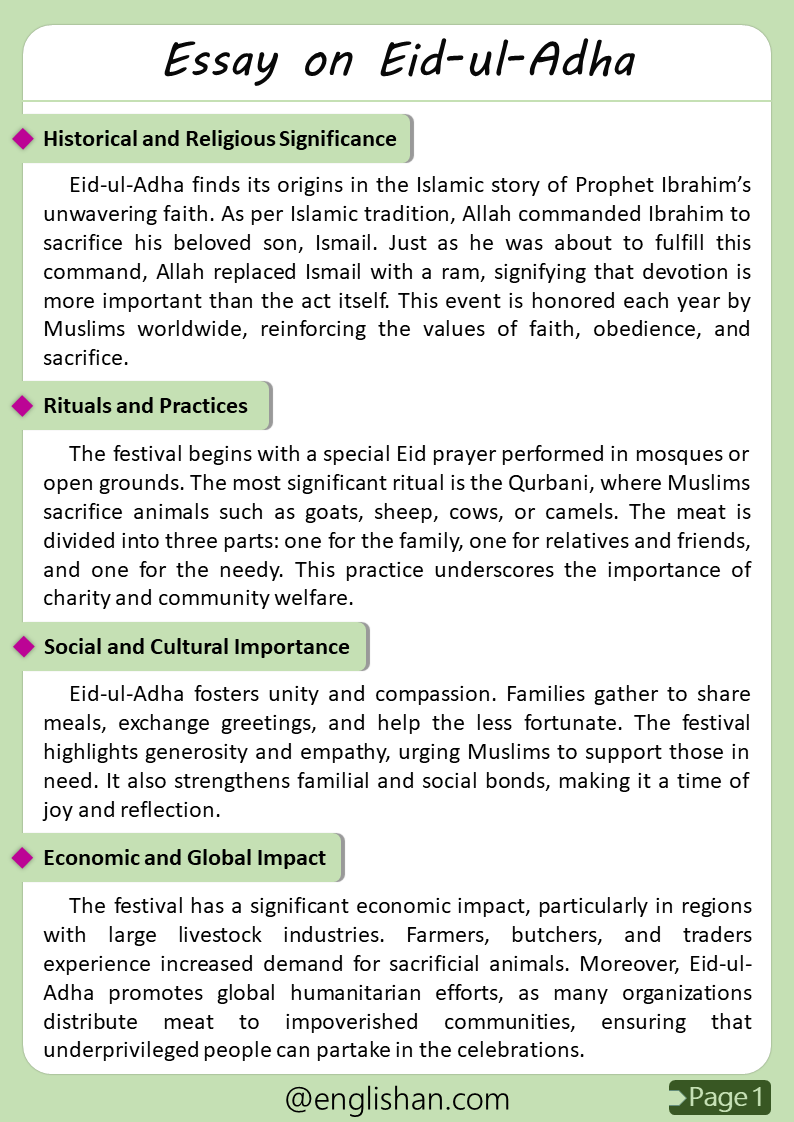
Historical and Religious Significance
Eid-ul-Adha finds its origins in the Islamic story of Prophet Ibrahim’s unwavering faith. As per Islamic tradition, Allah commanded Ibrahim to sacrifice his beloved son, Ismail. Just as he was about to fulfill this command, Allah replaced Ismail with a ram, signifying that devotion is more important than the act itself. This event is honored each year by Muslims worldwide, reinforcing the values of faith, obedience, and sacrifice.
Rituals and Practices
The festival begins with a special Eid prayer performed in mosques or open grounds. The most significant ritual is the Qurbani, where Muslims sacrifice animals such as goats, sheep, cows, or camels. The meat is divided into three parts: one for the family, one for relatives and friends, and one for the needy. This practice underscores the importance of charity and community welfare.
Social and Cultural Importance
Eid-ul-Adha fosters unity and compassion. Families gather to share meals, exchange greetings, and help the less fortunate. The festival highlights generosity and empathy, urging Muslims to support those in need. It also strengthens familial and social bonds, making it a time of joy and reflection.
Economic and Global Impact
The festival has a significant economic impact, particularly in regions with large livestock industries. Farmers, butchers, and traders experience increased demand for sacrificial animals. Moreover, Eid-ul-Adha promotes global humanitarian efforts, as many organizations distribute meat to impoverished communities, ensuring that underprivileged people can partake in the celebrations.
The Role of Eid Prayers
One of the essential aspects of Eid-ul-Adha is the congregational Eid prayer. This prayer is performed in large gatherings, fostering a sense of community and devotion. It consists of a special sermon emphasizing the values of sacrifice, gratitude, and faith.
Acts of Charity and Helping the Needy
Eid-ul-Adha highlights the importance of charitable giving. Besides distributing meat, Muslims donate money, clothes, and food to the less fortunate. This act of kindness strengthens societal bonds and ensures that everyone can celebrate the occasion.
Eid-ul-Adha and Family Gatherings
Family plays a central role in Eid-ul-Adha celebrations. Relatives visit each other, share meals, and exchange warm wishes. These gatherings reinforce the values of love, respect, and togetherness within families.
Preparing for Eid-ul-Adha
In the days leading up to Eid-ul-Adha, Muslims prepare by purchasing animals for sacrifice, planning meals, and ensuring they have appropriate attire for prayers. Markets and shopping centers become lively with people buying essentials for the festival.
Modern-Day Observance of Eid-ul-Adha
While the essence of Eid-ul-Adha remains unchanged, modern technology and globalization have influenced its observance. Online donations, virtual greetings, and global humanitarian efforts have made it easier for Muslims worldwide to participate in the spirit of sacrifice and giving.
Strengthening Community Bonds
Eid-ul-Adha fosters a spirit of togetherness, bringing people from diverse backgrounds closer. Neighbors, friends, and even strangers share in the celebrations, promoting unity and harmony within communities.
Environmental Considerations of Qurbani
With the growing awareness of environmental issues, many Muslims are adopting sustainable practices in their Qurbani rituals. Ethical sourcing of animals, proper waste management, and eco-friendly packaging for meat distribution contribute to a more responsible celebration.
The Spiritual Lessons of Eid-ul-Adha
Beyond the rituals, Eid-ul-Adha offers deep spiritual lessons. It teaches patience, selflessness, and unwavering faith in divine wisdom, reinforcing the importance of sincerity and humility in worship.
Educational Significance for Younger Generations
Eid-ul-Adha serves as an opportunity to educate children about Islamic values and traditions. Families involve their children in prayers, storytelling, and acts of charity, ensuring that the significance of the festival is passed down through generations.
Conclusion
Eid-ul-Adha is more than a religious occasion; it is a festival that teaches sacrifice, charity, and gratitude. By observing this day, Muslims reaffirm their faith and commitment to serving humanity. It serves as a reminder that devotion to Allah and kindness to others are the true essence of Islam.
Difficult Words Used in 500 Eid-ul-Adha Essay
| Word | Meaning |
|---|---|
| Commemorates | Honors or remembers an event |
| Sacrifice | Offering something valuable for a cause |
| Devotion | Deep religious commitment |
| Ritual | A religious or ceremonial practice |
| Empathy | The ability to understand and share the feelings of others |
| Humanitarian | Concerned with human welfare |
| Underprivileged | Lacking basic necessities and resources |
Eid-ul-Adha Essay PDF
You May Also Like