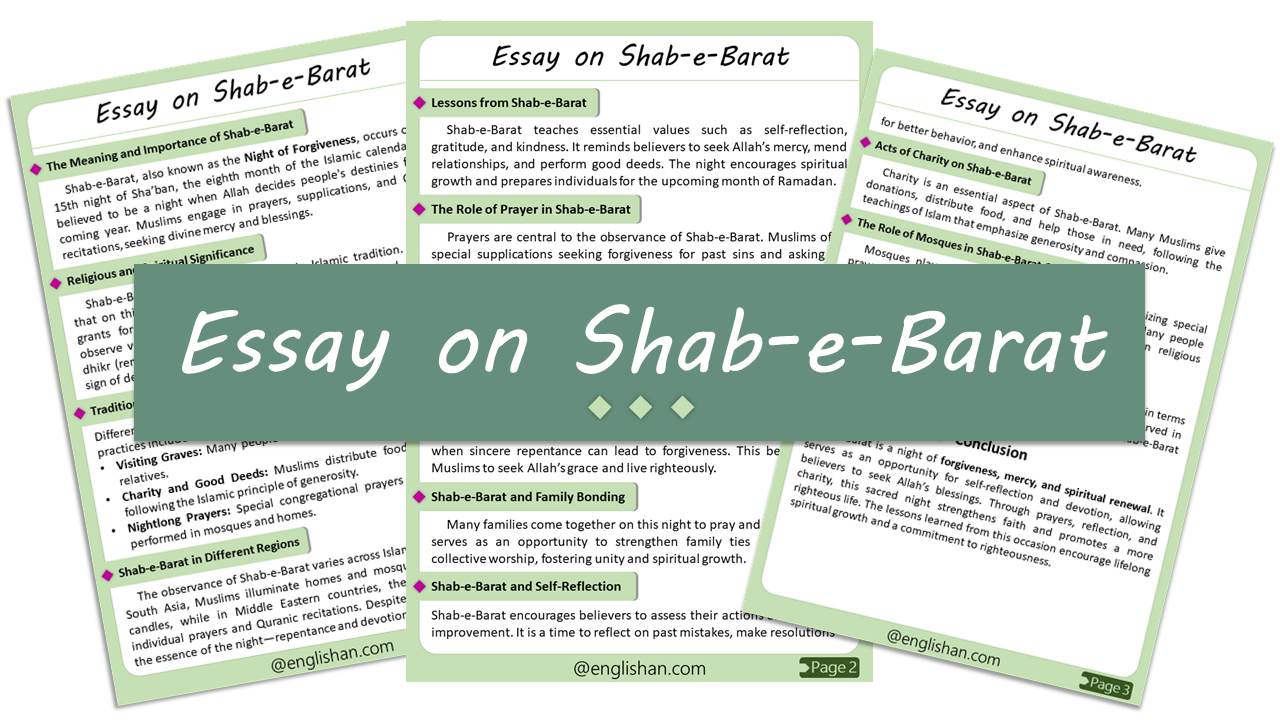
When writing about Shab-e-Barat, it’s important to understand its meaning, religious importance, and how it is observed by Muslims. This essay on Shab-e-Barat explains its origin, key activities, and the lessons of kindness and forgiveness it teaches. It’s written in 250 words to help students with school assignments or exams. You can download this Shab-e-Barat essay as a free PDF or image to study or print.
10 Lines Shab-e-barat Essay for Class 2 to Class 5
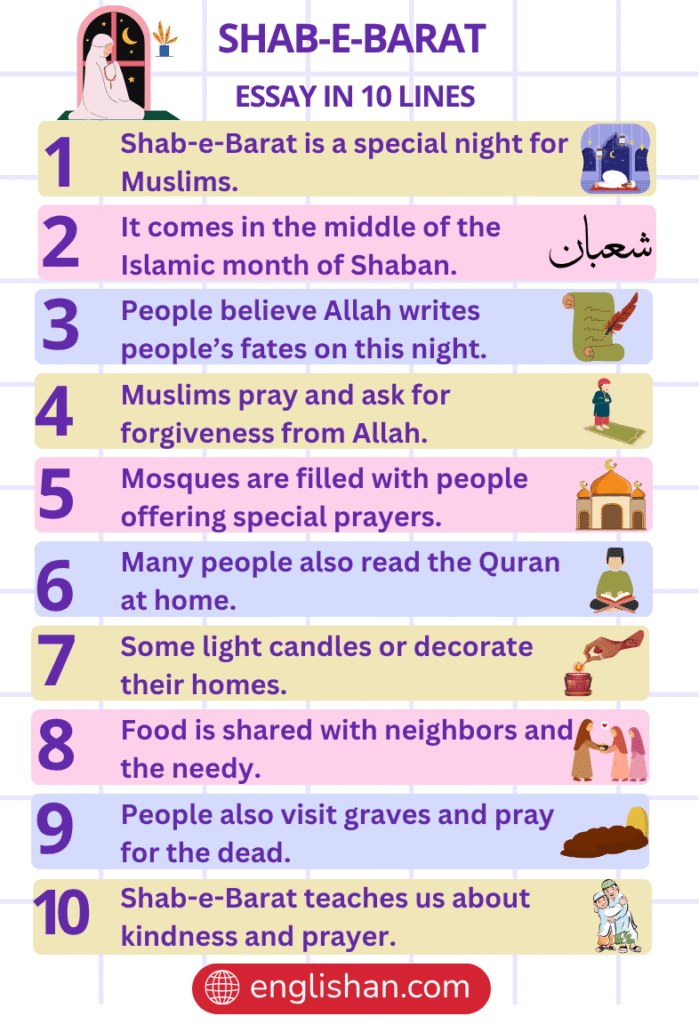
- Shab-e-Barat is a special night for Muslims.
- It comes in the middle of the Islamic month of Shaban.
- People believe Allah writes people’s fates on this night.
- Muslims pray and ask for forgiveness from Allah.
- Mosques are filled with people offering special prayers.
- Many people also read the Quran at home.
- Some light candles or decorate their homes.
- Food is shared with neighbors and the needy.
- People also visit graves and pray for the dead.
- Shab-e-Barat teaches us about kindness and prayer.
250 Words Essay on Shab-e-barat for Middle School
Shab-e-Barat is a blessed night in the Islamic calendar. It falls on the 15th night of the month of Shaban. Muslims believe that on this night, Allah decides the future of every person. It is also a night to pray for forgiveness and mercy.
On Shab-e-Barat, many Muslims stay awake all night. They pray in mosques or at home. Some people read the Quran or do special prayers called Nawafil. It is believed that good deeds on this night bring many blessings. People also ask Allah to forgive their sins.
Families cook special foods and share them with neighbors. They also give food to the needy. Some people light candles or small lamps around their homes. Many people visit the graves of their loved ones. They offer prayers for the souls of the dead.
In the end, Shab-e-Barat is not only about rituals. It is a time to think about life and improve our behavior. It reminds Muslims to stay kind, honest, and helpful. The night teaches us to ask for forgiveness and to forgive others. That is why Shab-e-Barat is considered a night of peace and hope.
500 Words Shab-e-barat Essay for Upper Primary and Lower Secondary
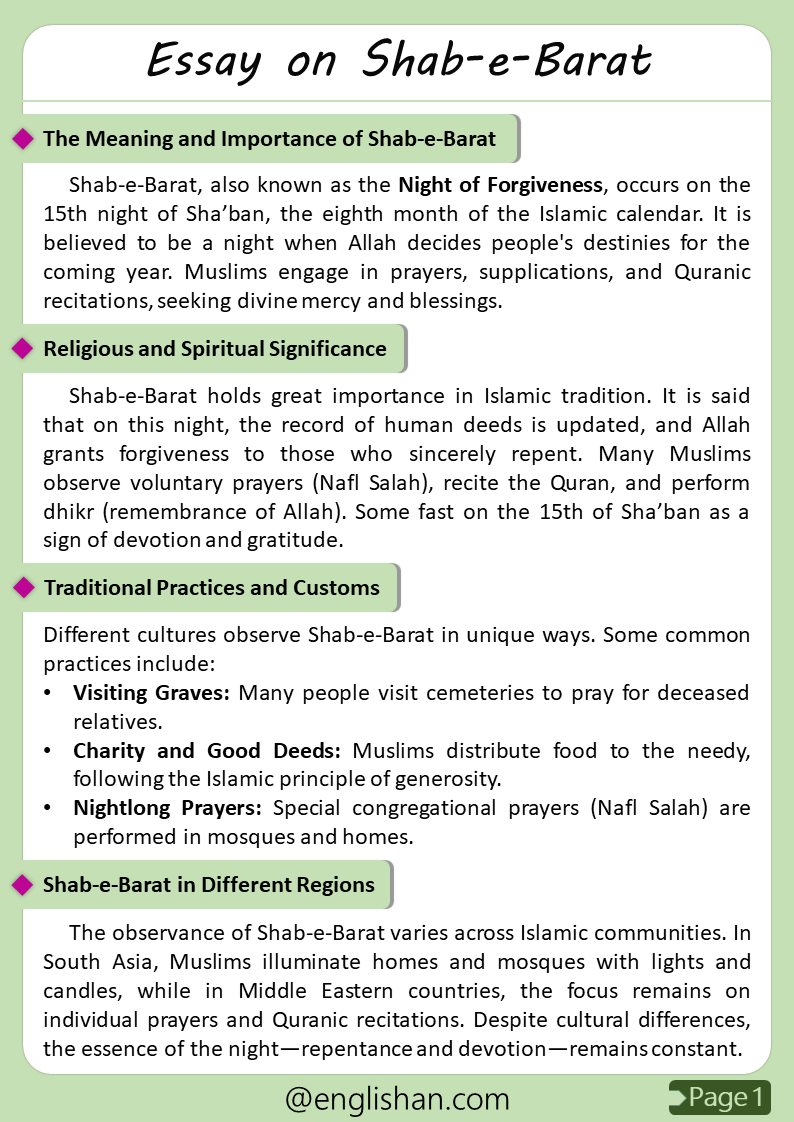
The Meaning and Importance of Shab-e-Barat
Shab-e-Barat, also known as the Night of Forgiveness, occurs on the 15th night of Sha’ban, the eighth month of the Islamic calendar. It is believed to be a night when Allah decides people’s destinies for the coming year. Muslims engage in prayers, supplications, and Quranic recitations, seeking divine mercy and blessings.
Religious and Spiritual Significance
Shab-e-Barat holds great importance in Islamic tradition. It is said that on this night, the record of human deeds is updated, and Allah grants forgiveness to those who sincerely repent. Many Muslims observe voluntary prayers (Nafl Salah), recite the Quran, and perform dhikr (remembrance of Allah). Some fast on the 15th of Sha’ban as a sign of devotion and gratitude.
Traditional Practices and Customs
Different cultures observe Shab-e-Barat in unique ways. Some common practices include:
- Visiting Graves: Many people visit cemeteries to pray for deceased relatives.
- Charity and Good Deeds: Muslims distribute food to the needy, following the Islamic principle of generosity.
- Nightlong Prayers: Special congregational prayers (Nafl Salah) are performed in mosques and homes.
Shab-e-Barat in Different Regions
The observance of Shab-e-Barat varies across Islamic communities. In South Asia, Muslims illuminate homes and mosques with lights and candles, while in Middle Eastern countries, the focus remains on individual prayers and Quranic recitations. Despite cultural differences, the essence of the night—repentance and devotion—remains constant.
Lessons from Shab-e-Barat
Shab-e-Barat teaches essential values such as self-reflection, gratitude, and kindness. It reminds believers to seek Allah’s mercy, mend relationships, and perform good deeds. The night encourages spiritual growth and prepares individuals for the upcoming month of Ramadan.
The Role of Prayer in Shab-e-Barat
Prayers are central to the observance of Shab-e-Barat. Muslims offer special supplications seeking forgiveness for past sins and asking for guidance in the future. These prayers reinforce a connection with Allah and promote inner peace.
Fasting on the 15th of Sha’ban
Many Muslims observe fasting on the 15th of Sha’ban as a form of devotion. Though not obligatory, fasting on this day is considered a noble practice that brings spiritual benefits and strengthens faith.
The Concept of Divine Mercy and Forgiveness
Shab-e-Barat emphasizes the boundless mercy of Allah. It is a night when sincere repentance can lead to forgiveness. This belief inspires Muslims to seek Allah’s grace and live righteously.
Shab-e-Barat and Family Bonding
Many families come together on this night to pray and share meals. It serves as an opportunity to strengthen family ties and engage in collective worship, fostering unity and spiritual growth.
Shab-e-Barat and Self-Reflection
Shab-e-Barat encourages believers to assess their actions and seek self-improvement. It is a time to reflect on past mistakes, make resolutions for better behavior, and enhance spiritual awareness.
Acts of Charity on Shab-e-Barat
Charity is an essential aspect of Shab-e-Barat. Many Muslims give donations, distribute food, and help those in need, following the teachings of Islam that emphasize generosity and compassion.
The Role of Mosques in Shab-e-Barat Observance
Mosques play a vital role during Shab-e-Barat, organizing special prayers and sermons that guide believers in worship. Many people gather in mosques to seek blessings and participate in religious activities.
Comparison with Other Islamic Nights of Worship
Shab-e-Barat shares similarities with nights like Laylatul Qadr in terms of seeking divine mercy. However, while Laylatul Qadr is observed in Ramadan with a focus on the revelation of the Quran, Shab-e-Barat emphasizes repentance and forgiveness.
Conclusion
Shab-e-Barat is a night of forgiveness, mercy, and spiritual renewal. It serves as an opportunity for self-reflection and devotion, allowing believers to seek Allah’s blessings. Through prayers, reflection, and charity, this sacred night strengthens faith and promotes a more righteous life. The lessons learned from this occasion encourage lifelong spiritual growth and a commitment to righteousness.
Difficult Words Used in 500 Shab-e-Barat Essay
| Word | Meaning |
|---|---|
| Supplication | A humble prayer or request to Allah |
| Remembrance | Act of recalling and honoring Allah (Dhikr) |
| Congregational | A prayer performed in a group |
| Destinies | Future events determined by Allah |
| Recitations | Reading of the Quran aloud |
| Devotion | Deep religious commitment |
| Spiritual | Related to the soul and religious beliefs |
| Repentance | Sincere regret and asking for forgiveness |
Shab-e-Barat Essay PDF
You May Also Like