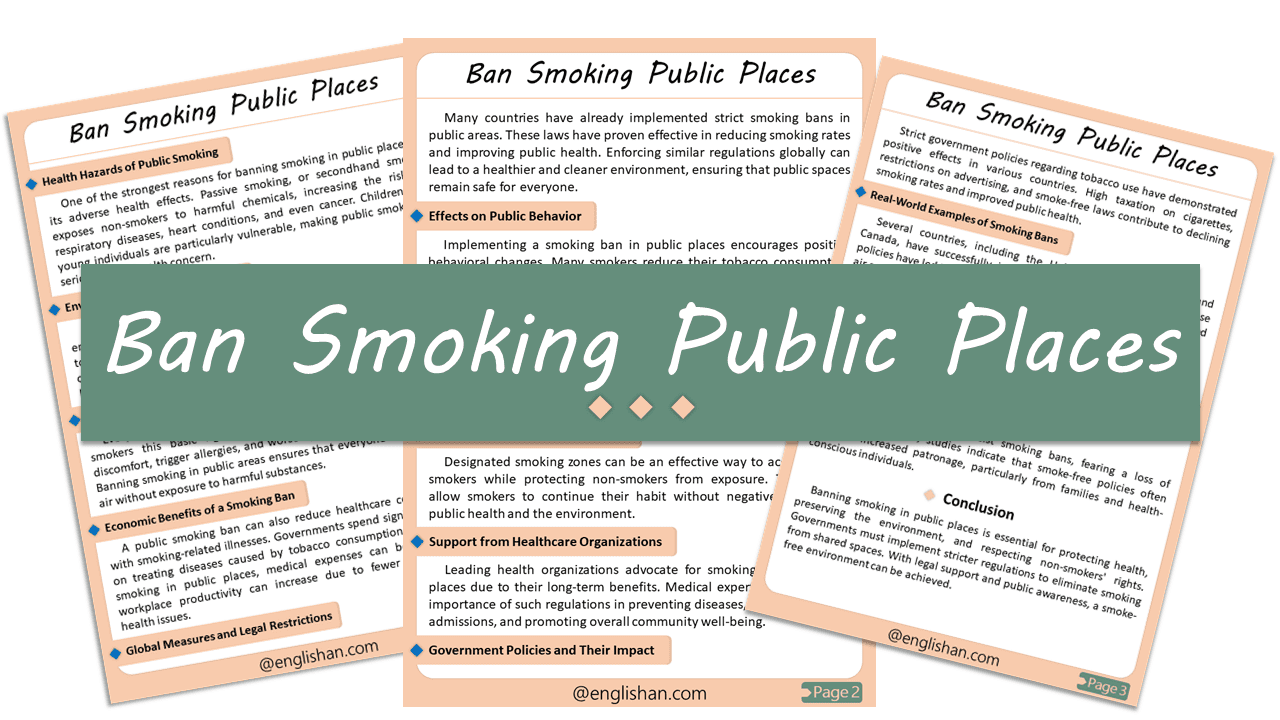
When writing about smoking in public places, it’s important to understand how smoking affects the health of people around us. This essay on smoking in public places explains the reasons why it should be banned, the health risks of secondhand smoke, and how banning smoking helps protect everyone. It’s written in 500 words to help students with homework or exams. You can download this smoking essay as a free PDF or image to study or print.
10 Lines Smoking in Public Places Should Be Banned Essay for Class 2 to Class 5
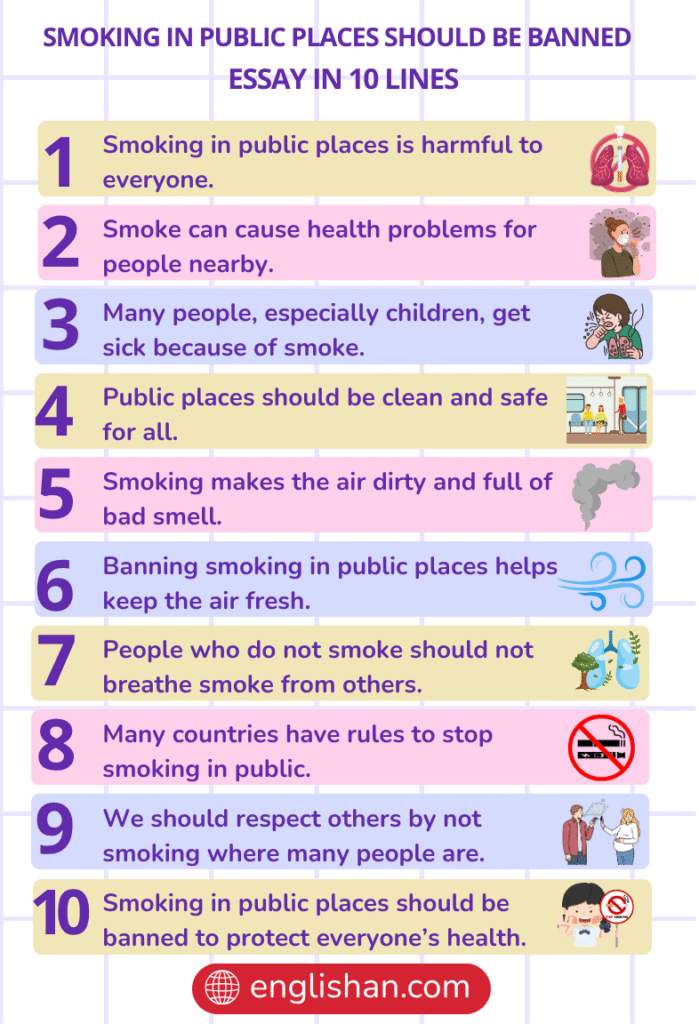
- Smoking in public places is harmful to everyone.
- Smoke can cause health problems for people nearby.
- Many people, especially children, get sick because of smoke.
- Public places should be clean and safe for all.
- Smoking makes the air dirty and full of bad smell.
- Banning smoking in public places helps keep the air fresh.
- People who do not smoke should not breathe smoke from others.
- Many countries have rules to stop smoking in public.
- We should respect others by not smoking where many people are.
- Smoking in public places should be banned to protect everyone’s health.
250 Words Essay on Smoking in Public Places Should Be Banned for Middle School
Smoking in public places is a serious problem that affects the health of many people. When someone smokes in a public area, the smoke spreads and harms others who do not smoke. This is called secondhand smoke, and it can cause many health issues like coughing, asthma, and even heart diseases. Children, young people, and sick individuals are especially vulnerable to these dangers.
Public places like parks, bus stops, restaurants, and schools should be safe and clean for everyone. Smoking in these areas makes the air polluted and unpleasant. It also creates a bad example for young people, who might think smoking is acceptable behavior.
Many countries and cities have already made laws to ban smoking in public places. These laws help reduce the risk of health problems and protect the rights of non-smokers to breathe clean air. Banning smoking also encourages smokers to quit or smoke less.
Everyone has the right to enjoy fresh air in public spaces. Smoking in public can harm people’s lungs, cause bad smells, and make the environment dirty with cigarette butts. To keep our communities healthy and safe, smoking should be banned in all public places.
In conclusion, banning smoking in public places is important to protect the health of all citizens. It helps create a cleaner, healthier, and more respectful environment for everyone to live in.
500 Words Smoking in Public Places Should Be Banned Essay for Upper Primary and Lower Secondary
Health Hazards of Public Smoking
One of the strongest reasons for banning smoking in public places is its adverse health effects. Passive smoking, or secondhand smoke, exposes non-smokers to harmful chemicals, increasing the risk of respiratory diseases, heart conditions, and even cancer. Children and young individuals are particularly vulnerable, making public smoking a serious public health concern.
Environmental Impact of Smoking
Public smoking not only harms individuals but also damages the environment. Cigarette butts, which are non-biodegradable, contribute to pollution, littering streets, parks, and beaches. Additionally, the chemicals in cigarettes can contaminate water sources and soil, causing long-term ecological harm.
Violation of Non-Smokers’ Rights
Everyone has the right to clean air, but public smoking denies non-smokers this basic right. Inhaling smoke involuntarily can cause discomfort, trigger allergies, and worsen pre-existing health conditions. Banning smoking in public areas ensures that everyone can enjoy fresh air without exposure to harmful substances.
Economic Benefits of a Smoking Ban
A public smoking ban can also reduce healthcare costs associated with smoking-related illnesses. Governments spend significant amounts on treating diseases caused by tobacco consumption. By prohibiting smoking in public places, medical expenses can be reduced, and workplace productivity can increase due to fewer smoking-related health issues.
Global Measures and Legal Restrictions
Many countries have already implemented strict smoking bans in public areas. These laws have proven effective in reducing smoking rates and improving public health. Enforcing similar regulations globally can lead to a healthier and cleaner environment, ensuring that public spaces remain safe for everyone.
Effects on Public Behavior
Implementing a smoking ban in public places encourages positive behavioral changes. Many smokers reduce their tobacco consumption when restrictions are enforced, leading to healthier lifestyles. Over time, such policies can contribute to decreasing smoking addiction rates.
Role of Awareness Campaigns
Public awareness campaigns play a crucial role in enforcing smoking bans. Educating people about the dangers of passive smoking and the benefits of smoke-free environments can encourage compliance and support for strict regulations.
Alternative Solutions for Smokers
Designated smoking zones can be an effective way to accommodate smokers while protecting non-smokers from exposure. These areas allow smokers to continue their habit without negatively impacting public health and the environment.
Support from Healthcare Organizations
Leading health organizations advocate for smoking bans in public places due to their long-term benefits. Medical experts emphasize the importance of such regulations in preventing diseases, reducing hospital admissions, and promoting overall community well-being.
Government Policies and Their Impact
Strict government policies regarding tobacco use have demonstrated positive effects in various countries. High taxation on cigarettes, restrictions on advertising, and smoke-free laws contribute to declining smoking rates and improved public health.
Real-World Examples of Smoking Bans
Several countries, including the United Kingdom, Australia, and Canada, have successfully implemented public smoking bans. These policies have led to significant reductions in smoking rates and improved air quality in urban areas.
Health Improvements After Smoking Bans
Research has shown that areas with smoking bans experience a decrease in hospital admissions for heart and respiratory diseases. These improvements highlight the effectiveness of smoke-free policies in protecting public health.
Impact on Businesses and Public Spaces
Some businesses initially resist smoking bans, fearing a loss of customers. However, studies indicate that smoke-free policies often result in increased patronage, particularly from families and health-conscious individuals.
Social Responsibility and Community Support
Communities play a crucial role in enforcing smoking bans. When individuals actively support smoke-free initiatives, public spaces become healthier and more inclusive for all.
Conclusion of Smoking in Public Places Should Be Banned Essay
Banning smoking in public places is essential for protecting health, preserving the environment, and respecting non-smokers’ rights. Governments must implement stricter regulations to eliminate smoking from shared spaces. With legal support and public awareness, a smoke-free environment can be achieved.
Difficult Words Used in 500 Smoking in Public Places Should Be Banned Essay
| Word | Meaning |
|---|---|
| Passive Smoking | Involuntary inhalation of tobacco smoke |
| Biodegradable | Capable of being decomposed naturally |
| Contaminate | To make something impure or harmful |
| Respiratory | Related to breathing or the lungs |
| Involuntarily | Without intention or choice |
Smoking in Public Places Should Be Banned Essay PDF
You May Also Like